The most common homestyle pork fried rice problem is bok choy that turns soggy and ginger that tastes harsh and raw. Both come from timing: greens added too early, and ginger that never gets a proper bloom in hot oil. The fix is staging. Bloom the ginger and garlic for 30 seconds first, cook the bok choy stems before the leaves, and add the leaves for just 30 seconds at the end of their step. This authentic pork fried rice recipe follows that order, and it is done in about 25 minutes.
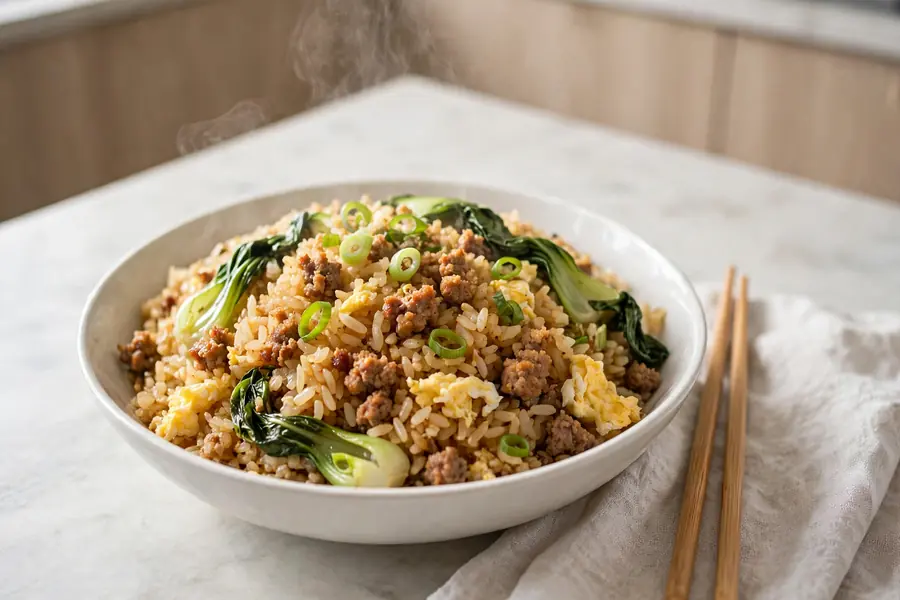
Menu of Authentic Pork Fried Rice Recipe
This authentic pork fried rice recipe covers why it works, the full ingredient list with US measurements, a troubleshooting table before the steps, step-by-step instructions, chef tips, substitutions, variations, storage and reheating guidance, and answers to common questions.
Why You’ll Love This Authentic Pork Fried Rice Recipe
- True Cantonese home flavor. Ginger, scallion, and white pepper create the clean, aromatic taste of a Chinese family kitchen.
- A complete meal in one pan. Pork for protein, rice for energy, and greens for freshness, all in about 25 minutes.
- Lighter than takeout. Less oil, no heavy sauces, and fresh vegetables keep it feeling wholesome.
Ingredients for Authentic Pork Fried Rice Recipe
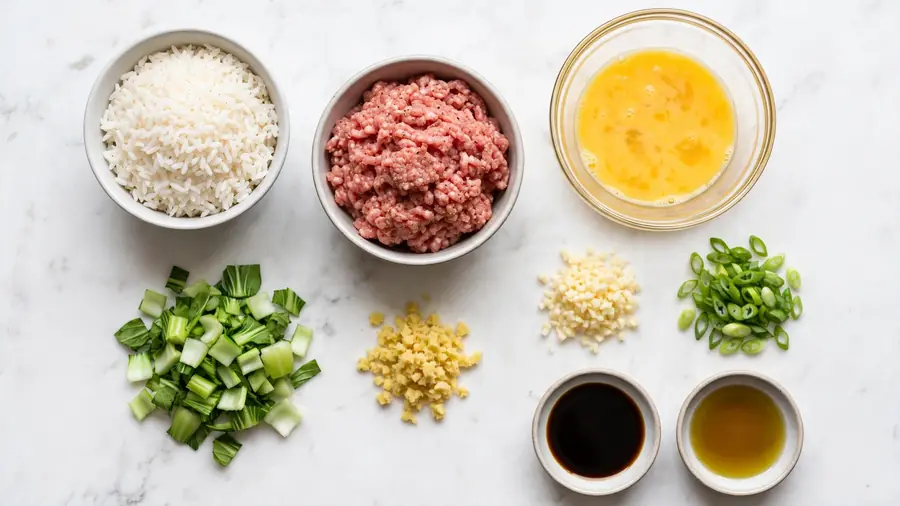
For the Seasoned Pork
- 1/2 pound ground pork (about 225 g)
- 1 tablespoon light soy sauce
- 1 teaspoon sugar
- 1/2 teaspoon white pepper
- 1 teaspoon Shaoxing wine or dry sherry (optional)
For the Fried Rice
- 3 cups cooked jasmine rice, chilled (day-old is best)
- 2 large eggs, beaten
- 2 tablespoons peanut oil or vegetable oil, divided
- 1 tablespoon minced fresh ginger (about a 1-inch piece)
- 2 cloves garlic, minced (about 2 teaspoons)
- 2 cups chopped baby bok choy (stems and leaves separated)
- 3 scallions, thinly sliced
- 1 and 1/2 tablespoons light soy sauce, plus more to taste
- 1 teaspoon toasted sesame oil
Notes on ingredients: Fresh ginger is essential to the homestyle flavor. It should be firm and smooth-skinned; avoid shriveled pieces, which taste woody. Baby bok choy is the classic green here. Choose heads with bright green leaves and firm white stems. Regular bok choy works too; just chop it smaller. Ground pork with some fat (80/20) stays juicy and renders flavorful fat for frying the rice. Fresh ginger beats powdered ginger completely in this dish. Jasmine rice is traditional, and its fragrance pairs naturally with ginger and scallion.
You will need: a wok or large 12-inch skillet, a wooden spoon or wok spatula, a sharp knife and cutting board, and measuring cups and spoons plus a small bowl for seasoning the pork.
Common Mistakes and How to Fix Them
| Common Problem | Why It Happens | How to Fix It |
|---|---|---|
| Ginger tastes harsh or raw | Not cooked long enough in the oil | Bloom minced ginger 30 seconds until fragrant before adding other ingredients |
| Bok choy is soggy | Leaves added too early or wok too crowded | Add leaves last for just 30 seconds; keep the heat high |
| Rice tastes bland | Under-seasoned or pork drippings discarded | Fry the rice in the pork drippings; taste and adjust soy sauce at the end |
| Pork is steamed, not browned | Pan overcrowded or heat too low | Let the pork sit undisturbed between stirs so the edges crisp |
| Dish is too salty | Extra soy sauce added without tasting | Season in stages and taste before the final adjustment |
How to Make Authentic Pork Fried Rice Recipe
Step 1: Season the Pork and Prep
In a bowl, mix the ground pork with the tablespoon of soy sauce, sugar, white pepper, and Shaoxing wine if using. Let it sit 10 minutes while you prep. Break up the cold rice, beat the eggs, mince the ginger and garlic, chop the bok choy (keeping stems and leaves separate), and slice the scallions. If you have no day-old rice, spread hot rice on a sheet pan and refrigerate it uncovered for at least an hour before cooking.
Step 2: Brown the Pork
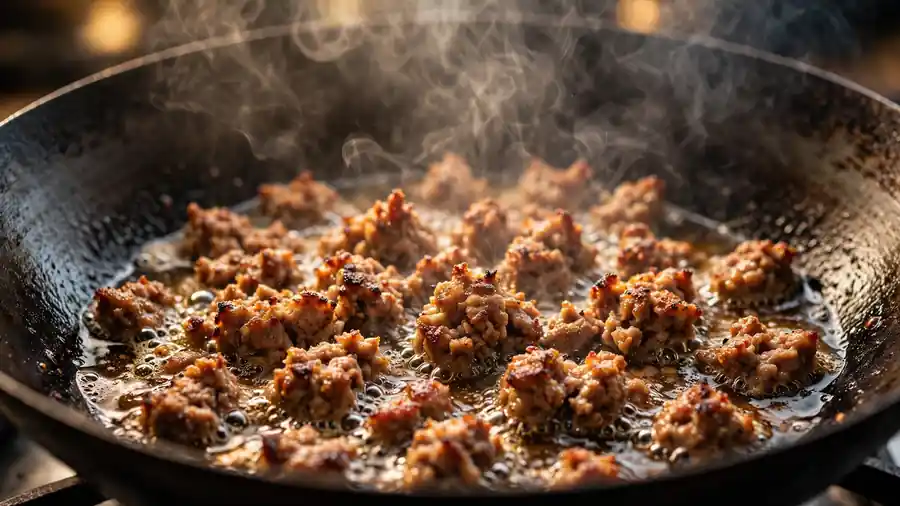
Heat 1 tablespoon of oil in the wok over medium-high heat until it shimmers. Add the seasoned ground pork and break it into small crumbles. Cook 4 to 5 minutes, letting it sit undisturbed for a minute at a time, until browned and crisped at the edges with no pink remaining. Move to a plate, leaving the rendered fat in the wok.
Step 3: Scramble the Eggs
Add a drizzle more oil if the wok looks dry. Scramble the beaten eggs into soft curds, about 30 to 45 seconds, and move them to the plate with the pork.
Step 4: Bloom the Ginger and Garlic
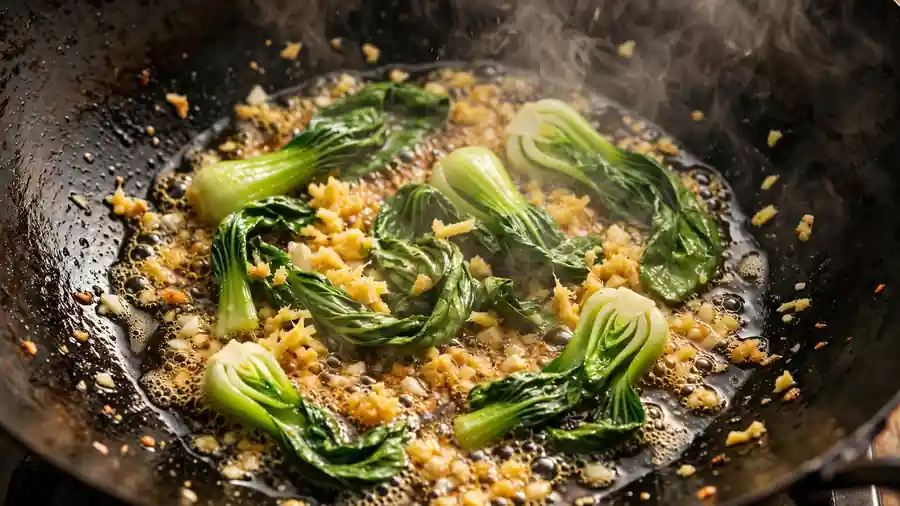
Add the remaining tablespoon of oil. Stir-fry the ginger and garlic for 30 seconds until very fragrant. Add the bok choy stems and cook 1 to 2 minutes until they start to soften, then add the leaves and toss 30 seconds until just wilted.
Step 5: Fry the Rice
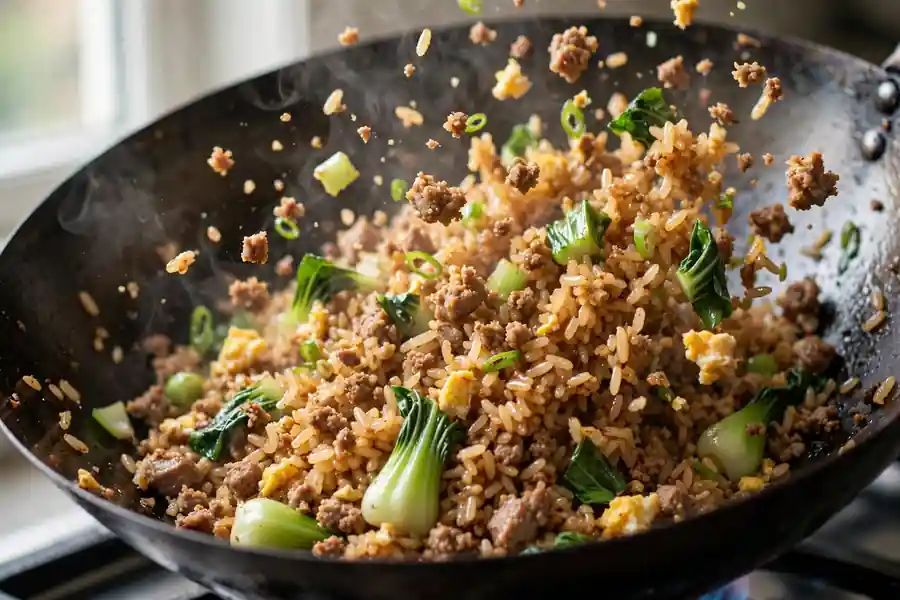
Add the cold rice to the wok and toss to coat it in the hot oil and pork drippings. Spread it in an even layer, let it sit 1 minute to develop golden spots, then toss and repeat. Fry 3 to 4 minutes until hot through and lightly toasted.
Step 6: Season and Finish
Drizzle the 1 and 1/2 tablespoons of soy sauce around the hot edge of the wok and toss 1 minute until evenly coated. Return the pork and eggs, add the sesame oil and scallions, and toss 30 seconds. Taste and add a splash more soy sauce if needed. Serve immediately.
Chef’s Tips for the Best Results
- Bloom the ginger first. Thirty seconds of ginger and garlic in hot oil before anything else builds the aromatic base that defines homestyle Cantonese flavor.
- Separate the bok choy stems and leaves. The stems need a head start; the leaves wilt in seconds. Adding them together gives you either raw stems or overcooked leaves.
- Leave the pork fat in the wok. Those seasoned drippings are liquid flavor. Frying the rice in them is a classic home-cook move that adds richness without extra oil.
Ingredient Substitutions
| Original Ingredient | Substitute | Expected Difference |
|---|---|---|
| Baby bok choy | Napa cabbage or spinach | Napa is milder; spinach wilts faster, so add it at the very end |
| Ground pork | Ground chicken or turkey | Leaner and milder; add an extra teaspoon of oil |
| Fresh ginger | 1/2 tsp ground ginger | Much less aromatic; fresh is strongly preferred |
| Shaoxing wine | Dry sherry or omit | Adds aroma to the pork seasoning; fine to skip |
| White pepper | Black pepper | Sharper heat; use a little less |
Recipe Variations
- Salted egg: Crumble 1 salted duck egg over the finished rice for a rich, traditional Cantonese touch.
- Mushroom: Add 1 cup sliced shiitake mushrooms with the bok choy stems for extra umami.
- Spicy homestyle: Add 1 teaspoon chili oil or sliced fresh chilies with the ginger.
- Lettuce instead of bok choy: Toss in 2 cups of shredded iceberg lettuce at the very end for the classic Cantonese crunch.
- Preserved vegetable: Add 2 tablespoons of rinsed, diced Tianjin preserved mustard greens with the ginger for authentic tangy depth.
Storage and Food Safety
Cool leftovers within 2 hours and transfer to airtight containers. Refrigerate up to 4 days. Freeze for up to 2 months in portioned freezer bags; thaw overnight in the refrigerator. Discard leftovers that smell sour or have sat at room temperature for more than 2 hours. The bok choy will soften on reheating but remains safe and tasty.
Meal-prep note: cook the rice 1 to 2 days ahead and refrigerate uncovered for the first hour. Season the ground pork in the morning and keep it refrigerated up to 8 hours. Wash and chop the bok choy up to 2 days ahead; store it wrapped in a damp paper towel. Mince the ginger and garlic a day ahead and refrigerate in a sealed container.
How to Reheat Authentic Pork Fried Rice Recipe
The skillet is best. Heat a teaspoon of oil over medium-high heat, add the cold rice, and stir-fry 3 to 4 minutes, adding a splash of water if it looks dry. The microwave works for single portions: place the rice in a bowl, sprinkle with a tablespoon of water, cover loosely, and heat 2 minutes, stirring halfway. Heat pork leftovers to 165 degrees F (74 degrees C) throughout.
More Rice Recipes to Try
If you enjoyed this recipe, you will love these other rice dishes from The World of Rice:
- Pork Fried Rice Recipe Authentic: Traditional Chinese Technique
- Authentic Chinese Shrimp Fried Rice Recipe: Traditional Technique, Pure Flavor
- Authentic Egg Fried Rice Recipe: Simple, Silky & Perfectly Golden
- Authentic Fried Rice Recipe With Egg: The Traditional Golden Method
Frequently Asked Questions
What makes this different from restaurant pork fried rice?
Homestyle Cantonese fried rice is lighter, more aromatic, and vegetable-forward, with ginger and fresh greens instead of heavy sauces and extra oil.
Can I use regular bok choy instead of baby bok choy?
Yes. Chop it into bite-size pieces and give the thicker stems an extra minute of cooking.
Is ground pork traditional in Cantonese fried rice?
Yes. Ground pork seasoned with soy and sugar is a common home-style choice because it is affordable, quick, and flavorful.
How do I keep bok choy from getting soggy?
Keep the heat high, add the leaves only at the end, and do not overcrowd the wok. They should wilt in about 30 seconds.
Can I make this ahead?
Prep everything up to 2 days ahead, but cook it fresh. Fried rice is at its best straight from the wok.
What if I do not have Shaoxing wine?
Dry sherry works well, or simply skip it. The pork is still well seasoned with soy sauce, sugar, and white pepper.
Final Thoughts
This authentic pork fried rice recipe is Cantonese comfort at its simplest: ginger, scallion, seasoned pork, fresh greens, and rice fried hot and fast. It is the everyday version worth knowing by heart.
See the dictionary definitions for ginger and garlic.

Prayvista Team is the editorial team behind Prayvista, The World of Rice. The team writes and reviews rice recipes for home cooks, and every article is checked by editor Sara Raza before publishing.