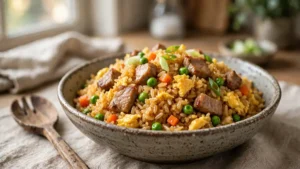
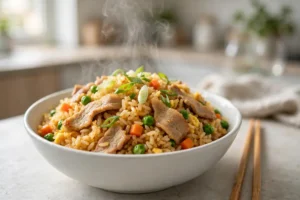
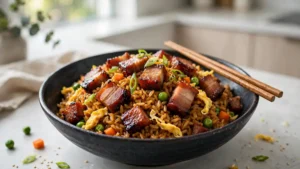
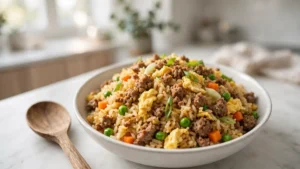
This fried rice recipe with pork is the home-style classic: tender pork, fluffy rice, sweet vegetables, and a savory homemade sauce that ties it all together. No takeout required, no complicated technique, just a satisfying skillet dinner in 25 minutes that uses up leftover rice and whatever pork you have on hand.
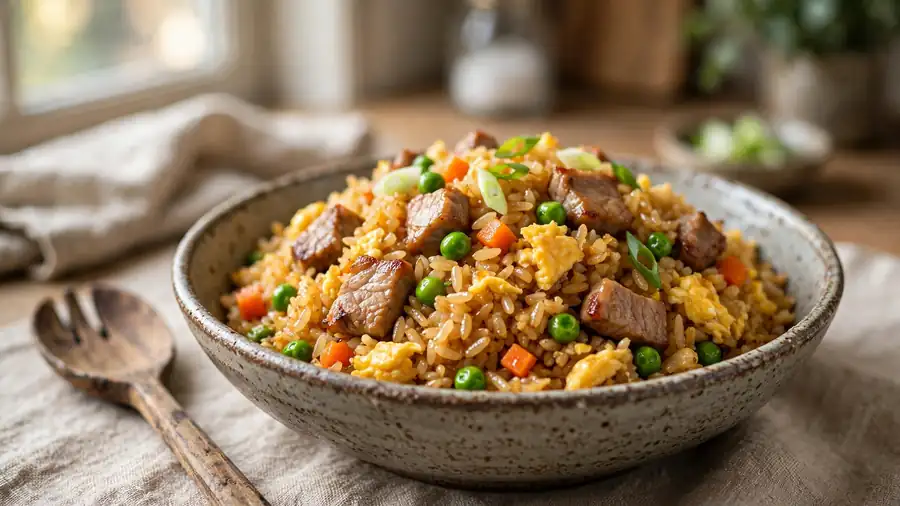
Menu of Fried Rice Recipe Pork
This fried rice recipe pork guide covers the full ingredient list with US measurements, step-by-step instructions, why it works, chef tips, a troubleshooting table, substitutions, variations, storage and reheating guidance, and answers to common questions.
Ingredients for Fried Rice Recipe Pork
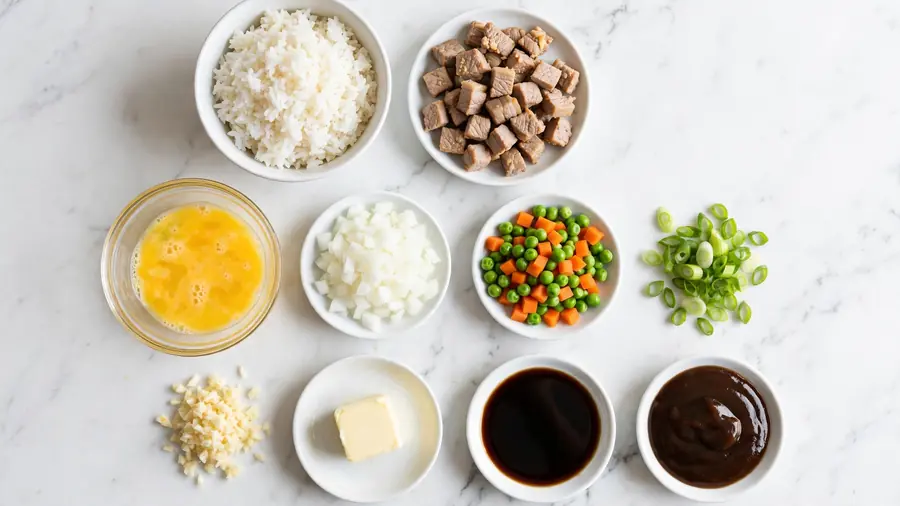
For the Fried Rice
- 3 cups cooked white rice, chilled (day-old is best)
- 2 cups diced cooked pork (leftover roast, pork chops, or tenderloin)
- 2 large eggs, beaten
- 3 tablespoons vegetable oil, divided
- 1 small onion, diced
- 1 cup frozen peas and carrots, thawed
- 3 scallions, sliced
- 2 cloves garlic, minced (about 2 teaspoons)
- 1 tablespoon butter
For the Savory Sauce
- 3 tablespoons soy sauce
- 1 tablespoon oyster sauce
- 1 teaspoon brown sugar
- 1 teaspoon toasted sesame oil
- 1/2 teaspoon black pepper
Notes on ingredients: Oyster sauce is the quiet star of this sauce. It adds umami and a gentle sweetness that makes the whole dish taste richer. Brown sugar balances the saltiness of the soy sauce. Any cooked pork works beautifully: leftover roast pork, pork chops, or pork tenderloin. Dice it into bite-size pieces so it warms through quickly. Long-grain white rice fries up the driest and most separate. Use regular soy sauce for the fullest flavor, or low-sodium if you prefer a lighter touch. Real butter, not margarine, gives the best finish; it melts into the hot rice and adds a silky richness.
You will need: a large 12-inch skillet or wok, a wooden spoon or spatula, a small bowl for mixing the sauce, and measuring cups and spoons.
How to Make Fried Rice Recipe Pork
Step 1: Mix the Sauce and Prep
Stir the soy sauce, oyster sauce, brown sugar, sesame oil, and black pepper in a small bowl until the sugar dissolves. Break up the cold rice so no clumps remain. Dice the cooked pork, thaw and drain the peas and carrots, dice the onion, mince the garlic, and slice the scallions.
Step 2: Warm the Pork
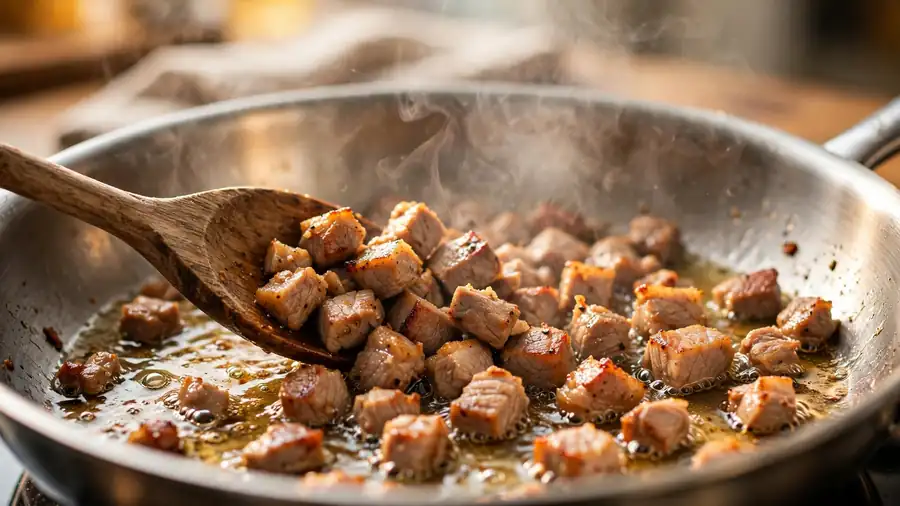
Heat 1 tablespoon of oil in the skillet over medium-high heat until it shimmers. Add the diced cooked pork and stir-fry 2 to 3 minutes until warmed through and lightly browned at the edges. Move to a plate. This step revives the pork’s flavor instead of just steaming it in the rice.
Step 3: Scramble the Eggs
Add another tablespoon of oil to the skillet. Pour in the beaten eggs and scramble into soft curds, about 30 to 45 seconds. Move to the plate with the pork.
Step 4: Cook the Vegetables
Add the remaining tablespoon of oil. Stir-fry the onion, garlic, peas, and carrots for 2 to 3 minutes until the onion softens and everything is hot and fragrant.
Step 5: Fry the Rice
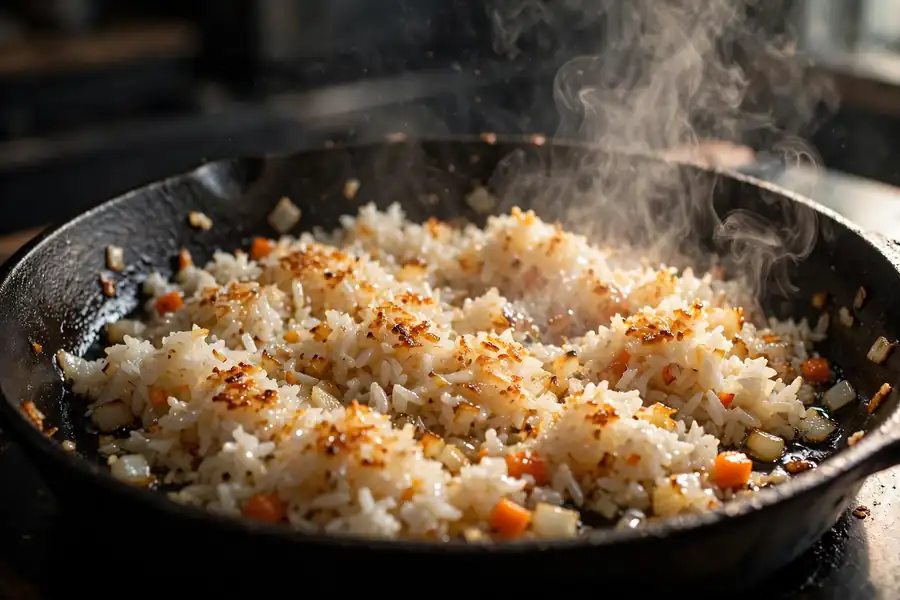
Add the cold rice and toss to coat with the hot oil. Spread it in an even layer, let it sit 1 minute to develop golden spots, then toss and repeat. Fry 3 to 4 minutes until hot through and lightly toasted. If the pan is crowded, fry the rice in two batches so it crisps instead of steams.
Step 6: Sauce, Butter, and Finish
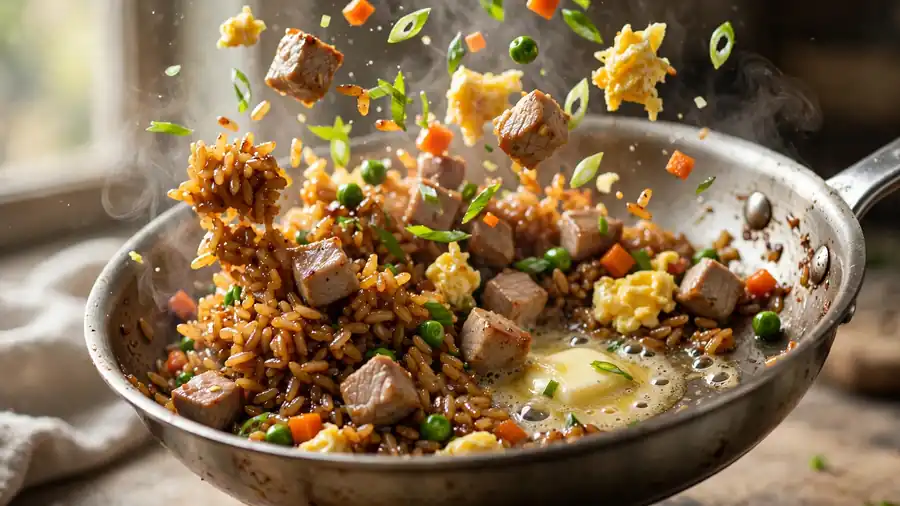
Pour the sauce evenly over the rice and toss 1 to 2 minutes until every grain is glossy and coated. Return the pork and eggs to the skillet. Add the butter and scallions, and toss until the butter melts and coats everything, about 30 seconds. Taste and adjust with a splash more soy sauce if needed. Serve hot. A fresh cucumber salad on the side is a good, crunchy contrast to the rich, buttery rice.
Why This Works
- The sauce is balanced before it touches the pan. Mixing the soy sauce, oyster sauce, brown sugar, and sesame oil first means the seasoning distributes evenly instead of pooling in spots.
- Oyster sauce adds rounded depth. It gives a savory depth and slight sweetness that plain soy sauce cannot match.
- Leftover pork only needs warming. It cannot overcook in the short warming step, and its roasted flavor adds richness the rice absorbs.
- Butter at the finish gives a silky sheen. A knob of butter at the end, a trick borrowed from Japanese-style fried rice, coats every grain.
Chef’s Tips for the Best Results
- Mix the sauce first, every time. Pre-mixing guarantees even seasoning. Pouring sauces straight from their bottles leads to salty pockets and bland spots.
- Brown the leftover pork. Warming diced pork in a hot, oiled pan for a couple of minutes brings back its roasted flavor and adds crispy edges.
- Add the butter off the highest heat. Stir it in at the end so it melts into a silky coating instead of browning or burning.
- Do not drown the rice. The sauce amount is measured to gloss the grains, not soak them. If you like it saucier, add a tablespoon more soy sauce, not double.
Common Mistakes and How to Fix Them
| Common Problem | Why It Happens | How to Fix It |
|---|---|---|
| Rice is soggy | Too much sauce or fresh rice used | Use chilled day-old rice; measure the sauce and toss to coat, not soak |
| Pork is dry | Overcooked when warming through | Warm diced pork just 2 to 3 minutes until hot; it is already cooked |
| Flavor is one-note | Sauce added without sugar or oyster sauce | The brown sugar and oyster sauce add the sweet-savory roundness |
| Butter tastes burnt | Added over screaming-high heat | Stir the butter in at the end with the heat slightly lowered |
| Vegetables are mushy | Overcooked before the rice joined | Cook vegetables just until hot, 2 to 3 minutes; they finish with the rice |
Ingredient Substitutions
| Original Ingredient | Substitute | Expected Difference |
|---|---|---|
| Cooked pork | Diced ham or cooked chicken | Ham is saltier; reduce soy sauce slightly |
| Oyster sauce | Hoisin sauce or extra soy sauce | Hoisin is sweeter; extra soy is saltier and less complex |
| Brown sugar | White sugar or honey | White sugar is less rich; honey adds floral notes |
| Butter | Extra tablespoon of oil | Loses the rich, silky finish |
| Peas and carrots | Any frozen vegetable mix | Thaw and drain well to avoid watering down the rice |
Recipe Variations
Garlic pork fried rice: Double the garlic and skip the oyster sauce for a simpler, punchier version.
Spicy: Add 1 teaspoon of sriracha or chili crisp to the sauce.
Pineapple pork: Fold in 1/2 cup diced pineapple with the vegetables for sweet contrast.
Mushroom pork: Add 1 cup sliced mushrooms with the onion for extra savory depth.
Egg-heavy: Use 4 eggs instead of 2 for a richer, more protein-packed fried rice.
Store, Reheat, and Prep Ahead
Cool leftovers within 2 hours and transfer to airtight containers. Refrigerate up to 4 days. Freeze for up to 2 months in portioned freezer bags; thaw overnight in the refrigerator. Discard leftovers that smell sour or have sat at room temperature for more than 2 hours.
To reheat, use a skillet: heat a teaspoon of oil over medium-high heat, add the cold rice, and stir-fry 3 to 4 minutes, adding a splash of water if it looks dry. A small extra knob of butter revives the richness. The microwave works for single servings: place the rice in a bowl, sprinkle with a tablespoon of water, cover loosely, and heat 2 minutes, stirring halfway. Heat pork leftovers to 165 degrees F (74 degrees C) throughout.
For prep ahead, cook the rice 1 to 2 days ahead and refrigerate uncovered for the first hour. Dice leftover pork and store it separately for up to 3 days. Mix the sauce and keep it in a jar in the fridge for up to a week. Chop the onion and scallions up to 2 days ahead.
More Rice Recipes to Try
If you enjoyed this recipe, you will love these other rice dishes from The World of Rice:
- Authentic Pork Fried Rice Recipe: Cantonese Homestyle Comfort
- Bbq Pork Fried Rice Recipe: Sweet, Smoky & Takeout Style
- Best Pork Fried Rice Recipe: Smoky, Savory & Better Than Takeout
- Chinese Pork Fried Rice Recipe: Classic Takeout Style at Home
Frequently Asked Questions
What kind of pork is best for fried rice?
Any cooked pork works: leftover roast, pork chops, or tenderloin. Dice it small so it warms through quickly and distributes evenly.
Can I use raw pork instead of cooked?
Yes. Slice or dice raw pork thin and cook it first in the hot skillet for 4 to 5 minutes until no pink remains, then remove it and continue the recipe.
What does oyster sauce add to fried rice?
A savory depth and gentle sweetness that rounds out the soy sauce. It is the ingredient that makes the sauce taste complete rather than just salty.
Can I make this without butter?
Yes. Use an extra tablespoon of oil instead. You will lose a little richness, but the flavor is still good.
How do I prevent mushy fried rice?
Use cold, day-old rice, keep the pan hot, and measure the sauce. Wet rice plus extra sauce is what causes sogginess.
Final Thoughts
This fried rice recipe with pork is proof that the best weeknight dinners come from leftovers and a good sauce. Savory, buttery, and endlessly flexible, it earns a permanent spot in the rotation.
See the dictionary definitions for white rice and onion.

Prayvista Team is the editorial team behind Prayvista, The World of Rice. The team writes and reviews rice recipes for home cooks, and every article is checked by editor Sara Raza before publishing.