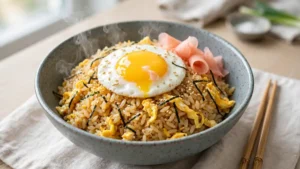
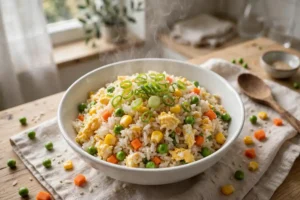
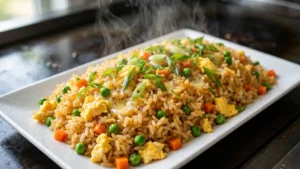
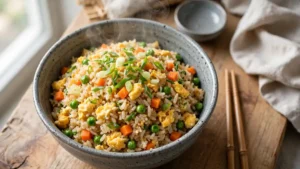
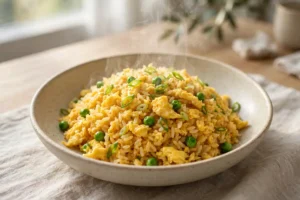
What separates a good beef fried rice from the best beef fried rice recipe is the sauce. Most versions season the rice with soy sauce alone, which gives salt but not depth. This recipe builds its sauce from five umami sources, soy sauce, oyster sauce, dark soy, beef stock, and toasted sesame oil, so every grain tastes rich and savory instead of just salty. It takes about 35 minutes.

Menu of Best Beef Fried Rice Recipe
This best beef fried rice recipe guide covers the full ingredient list with US measurements, step-by-step instructions, a troubleshooting table, substitutions, variations, storage and reheating guidance, and answers to common questions.
Ingredients for Best Beef Fried Rice Recipe
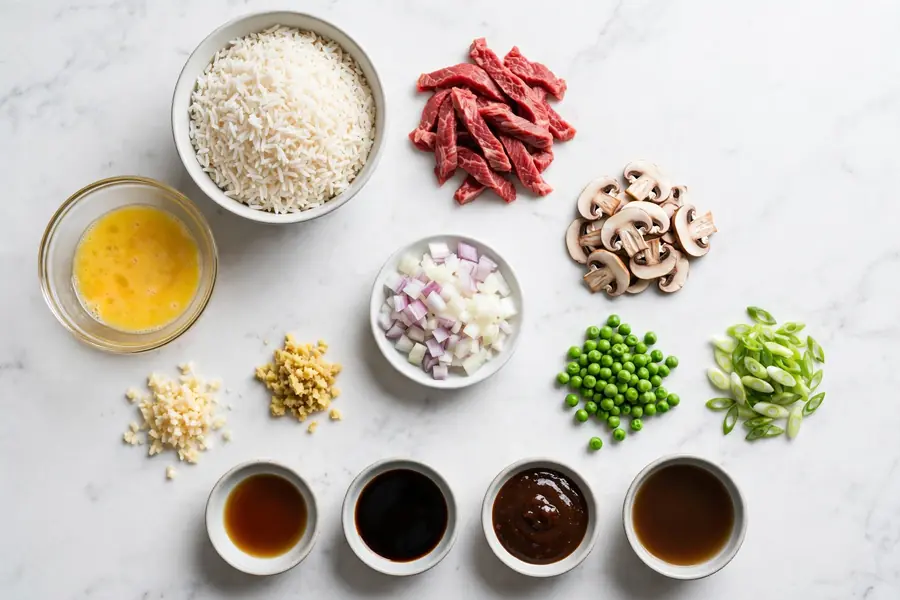
For the Velveted Beef
- 3/4 pound flank steak or sirloin, sliced thin against the grain (about 340 g)
- 1 tablespoon soy sauce
- 1 teaspoon cornstarch
- 1 teaspoon vegetable oil
- 1/4 teaspoon white pepper
For the Fried Rice
- 3 cups cooked long-grain rice, chilled overnight (about 1 cup uncooked)
- 2 tablespoons vegetable oil, divided
- 3 cloves garlic, minced (about 1 tablespoon)
- 1 tablespoon minced fresh ginger
- 1 small onion, diced
- 1 cup sliced mushrooms (cremini or shiitake)
- 1/2 cup frozen peas, thawed
- 2 large eggs, lightly beaten
- 3 green onions, sliced
For the Umami Sauce
- 2 tablespoons soy sauce
- 1 tablespoon oyster sauce
- 1 teaspoon dark soy sauce
- 2 tablespoons beef stock
- 1 teaspoon sesame oil
- 1 teaspoon sugar
- 1/4 teaspoon white pepper
Notes on ingredients: Dark soy sauce is thicker, darker, and slightly sweeter than regular soy sauce; find it at Asian grocery stores. It gives the rice its appetizing mahogany color. The beef stock seems unusual, but it is the secret to rice that tastes seasoned all the way through rather than just coated on the surface. Flank steak is ideal for velveting because its strong grain becomes tender when sliced thin across it; slice it partially frozen, about 30 minutes in the freezer, and the knife glides through cleanly. Use a real beef stock or a good low-sodium broth, not a bouillon cube dissolved in water. Fresh ginger, not powdered, gives the bright warmth that keeps the rich sauce from feeling heavy. For a tougher cut, a pinch of baking soda (about 1/8 teaspoon) in the velveting mix is a common restaurant trick to keep the beef tender.
Kitchen tools: a large wok or 12-inch heavy skillet, a sharp chef’s knife, a medium bowl for the beef, and a small bowl for the sauce.
How to Make Best Beef Fried Rice Recipe
Step 1: Velvet the Beef
Toss the beef strips with the soy sauce, cornstarch, vegetable oil, and white pepper in a medium bowl until every piece is lightly coated. Let it rest 15 minutes at room temperature. Meanwhile, stir the umami sauce ingredients together in a small bowl and break up the cold rice.
Step 2: Sear the Beef
Heat 1 tablespoon of oil in the wok over high heat until shimmering. Add the beef in a single layer and sear 1 to 2 minutes per side until browned with no pink showing. The cornstarch coating will look glossy. Remove to a plate. Do not overcook; the beef finishes later in the rice.

Step 3: Cook the Aromatics and Mushrooms
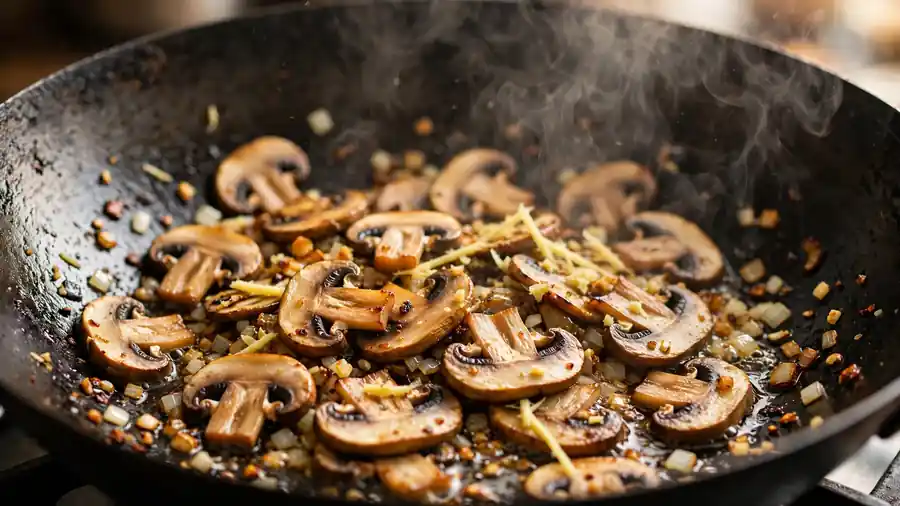
Add the remaining tablespoon of oil to the wok. Add the garlic, ginger, onion, and mushrooms. Stir-fry 3 minutes until the mushrooms release their liquid and start to brown, and the garlic turns golden. The mushrooms add another layer of umami, so let them get some color; give them 30 seconds of undisturbed contact at a time instead of stirring constantly.
Step 4: Scramble the Eggs
Push everything to the sides. Pour the beaten eggs into the center and scramble 30 seconds into soft curds. Break into pieces and stir through the mixture.
Step 5: Fry the Rice and Add the Sauce
Add the cold rice and toss 2 minutes to heat through. Pour the umami sauce evenly over the rice and toss constantly for 2 to 3 minutes. Watch as the rice absorbs the sauce and turns a rich mahogany color. The grains should look coated but not wet; if liquid pools, keep tossing over high heat until it absorbs. Tip: add the sauce to hot rice, not cold, since hot grains absorb it and cold grains just get coated. If stubborn rice clumps will not break up, a light sprinkle of water helps loosen them.
Step 6: Finish with Beef and Green Onions
Return the beef to the wok along with the peas. Toss 1 minute until everything is hot and the beef is warmed through. Stir in the green onions. Taste and adjust with a splash of soy sauce. Serve immediately.

Common Mistakes and How to Fix Them
| Common Problem | Why It Happens | How to Fix It |
|---|---|---|
| Beef is chewy | Sliced too thick or with the grain, or overcooked | Slice thin against the grain; sear fast and remove promptly |
| Rice is pale and bland | Not enough sauce, or sauce added to cold rice | Fry rice until hot first, then add the full sauce and toss 3 minutes |
| Dish tastes one-note salty | Only soy sauce used, no layering | Use the full umami sauce with oyster sauce, dark soy, and stock |
| Rice is wet and heavy | Too much stock, or heat too low after saucing | Keep heat high and toss until all liquid absorbs |
| Mushrooms are rubbery | Added too late or crowded the pan | Give them 3 full minutes with space to brown |
Ingredient Substitutions
| Original Ingredient | Substitute | Expected Difference |
|---|---|---|
| Flank steak | Sirloin or skirt steak | Similar results; slice thin either way |
| Dark soy sauce | 1 tsp molasses plus 1 tsp soy sauce | Close in color and sweetness |
| Oyster sauce | Hoisin sauce | Sweeter and thicker; reduce sugar by half |
| Beef stock | Chicken stock | Lighter flavor, still good |
| Fresh ginger | 1/4 tsp ground ginger | Less bright; use sparingly |
Recipe Variations
- Mushroom Lovers: Double the mushrooms and add a few dried shiitakes rehydrated in the beef stock for intense umami.
- Spicy Umami: Add 1 teaspoon of chili crisp to the sauce for a slow-building heat.
- Scallion Heavy: Double the green onions and add them in two stages, half with the vegetables and half at the end.
- Low Sodium: Use low-sodium soy sauce and stock, and increase the ginger and garlic to keep the flavor bold.
- Shaoxing Finish: For extra wok aroma, splash 1 tablespoon of Shaoxing wine around the edge of the hot wok just before serving and toss 20 seconds.
Store, Reheat, and Prep Ahead
Cool leftovers within 2 hours and refrigerate in airtight containers for up to 4 days. Freeze in portioned bags with the air pressed out for up to 2 months; thaw overnight in the refrigerator. Because the dish contains beef and eggs, discard anything left at room temperature longer than 2 hours, and reheat leftovers to 165 degrees F (74 degrees C) throughout.
To reheat, use a hot skillet with a teaspoon of oil, stirring 3 to 4 minutes until steaming; the absorbed sauce means it reheats without drying out. The microwave alternative: sprinkle with a tablespoon of water, cover loosely, and heat 2 minutes, stirring halfway. Finish with a few fresh sliced green onions to brighten it up.
For prep ahead, velvet the beef up to 24 hours ahead and keep it covered in the refrigerator. Cook the rice up to 4 days ahead; it only gets better for frying. Mix the umami sauce and keep it in a jar in the refrigerator for up to 2 weeks.
More Rice Recipes to Try
If you enjoyed this recipe, you will love these other rice dishes from The World of Rice:
- Beef Fried Rice Recipe: Tender Velveted Beef in Every Bite
- Beef Fried Rice Recipe Easy: A Simple Weeknight Dinner
- Chinese Beef Fried Rice Recipe: Takeout-Style & Better at Home
- Easy Beef Fried Rice Recipe: One Pan, 25 Minutes
Frequently Asked Questions
What is velveting and do I really need to do it?
Velveting coats thin meat in cornstarch and seasonings before a quick sear, keeping it silky and tender. It takes 15 minutes of resting time and makes a noticeable difference.
What is dark soy sauce and can I skip it?
Dark soy sauce is thicker and less salty than regular soy sauce, and it gives the rice its rich color. You can substitute molasses plus soy sauce, or just use extra regular soy sauce with a pinch of sugar.
Can I use ground beef instead of strips?
Yes. Brown 3/4 pound of ground beef well, breaking it into crumbles, and skip the velveting step. The texture will be different but the sauce still shines.
Why add beef stock to fried rice?
The stock carries the savory flavor into the rice instead of just coating the surface. It is the difference between rice that tastes seasoned and rice that tastes sauced.
How do I prevent the rice from getting mushy with the extra liquid?
Keep the heat high after adding the sauce and toss constantly until every bit of liquid absorbs. The rice should look glossy, not wet.
Final Thoughts
This best beef fried rice recipe proves that great flavor comes from layering, not from shortcuts. Velvet the beef, build the umami sauce, and let the hot rice drink it in. Try it this week and taste the difference that a real sauce makes.
See the dictionary definitions for soy sauce and sesame oil.

Prayvista Team is the editorial team behind Prayvista, The World of Rice. The team writes and reviews rice recipes for home cooks, and every article is checked by editor Sara Raza before publishing.