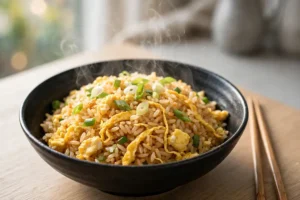
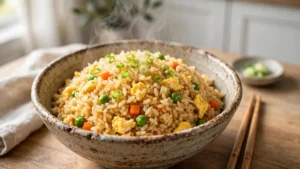
In Japan, fried rice is called yakimeshi, and it is home food, not restaurant food. It is what Japanese families make with leftover rice, a few vegetables, and whatever protein is on hand, seasoned from a Japanese pantry: soy sauce, a touch of mirin, sake, and dashi. This authentic Japanese fried rice recipe follows that tradition. There is no heavy garlic butter here. The flavor comes from umami: dashi granules melted into the rice, mirin for gentle sweetness, and sake for clean aroma.
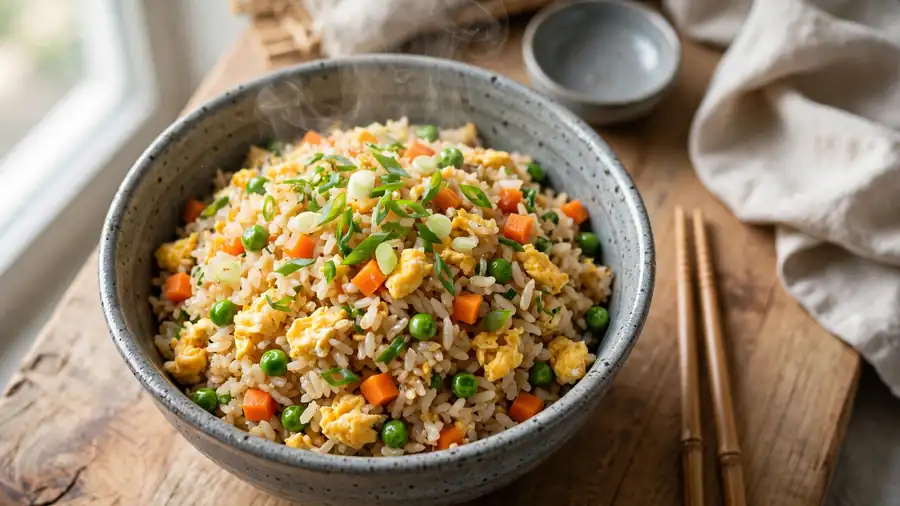
Menu of Authentic Japanese Fried Rice Recipe
This authentic Japanese fried rice recipe covers the yakimeshi tradition, the full ingredient list with US measurements, step-by-step instructions, a troubleshooting table, substitutions, variations, storage and reheating guidance, and answers to common questions.
Ingredients for Authentic Japanese Fried Rice Recipe
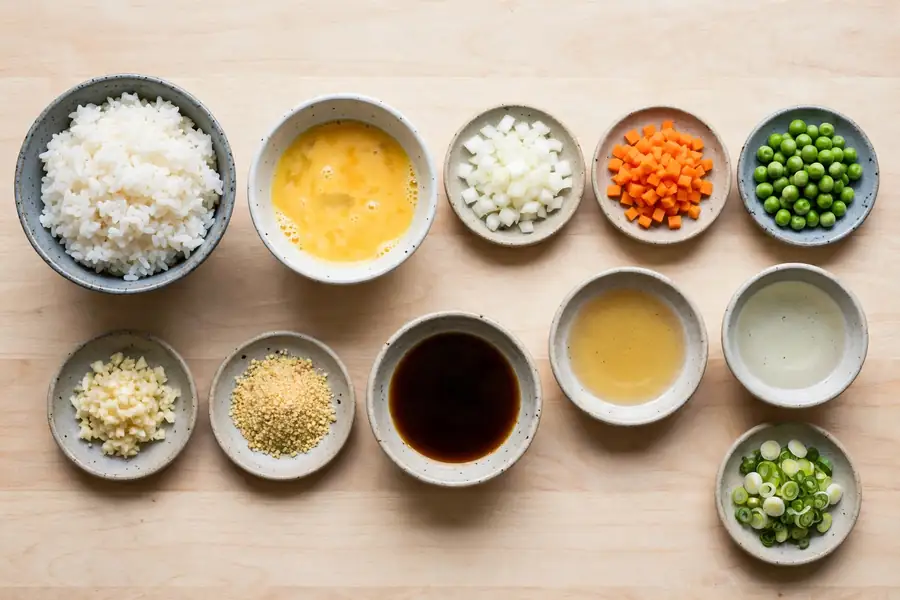
- 4 cups cooked short-grain white rice, chilled (day-old is best)
- 3 large eggs, lightly beaten
- 2 tablespoons neutral oil (such as vegetable or rice bran oil)
- 1 tablespoon sake
- 1 tablespoon mirin
- 2 tablespoons soy sauce
- 1 teaspoon dashi granules (hon-dashi style)
- 1/2 cup diced onion
- 1/2 cup diced carrot
- 1/2 cup frozen peas or edamame, thawed
- 2 cloves garlic, minced
- 1/2 teaspoon salt
- 1/4 teaspoon white pepper
- 2 scallions, thinly sliced
- 1 teaspoon toasted sesame seeds (optional)
Notes: Dashi granules are the key pantry item. Find them in the soup aisle of Asian grocery stores or well-stocked supermarkets, usually in small shakers or packets. A little goes a long way, so one container lasts many batches. Mirin is sweet cooking wine, not rice vinegar. Look for hon-mirin, which contains real fermented sweetness, rather than mirin-style seasoning with added corn syrup. Short-grain Japanese rice is the authentic choice. Its higher starch content gives yakimeshi a tender, slightly clingy texture, different from the separate grains of Chinese-style fried rice. Cook it a day ahead and chill it uncovered so the surface dries. Use real sake, the kind you could drink, not cooking wine with added salt. The alcohol cooks off in seconds and leaves clean aroma behind.
You will need: a large wok or deep skillet, a wooden spatula or rice paddle, a small bowl for the eggs, and a fork.
How to Make Authentic Japanese Fried Rice Recipe
Step 1: Break Up the Rice
Work through the chilled rice with a fork, separating every clump into individual grains. Short-grain rice clumps more than long-grain, so take your time. Fully separated grains are needed for even frying. If cold rice is stiff from the fridge, microwave it briefly until warm and loose before breaking it up.
Step 2: Cook the Eggs
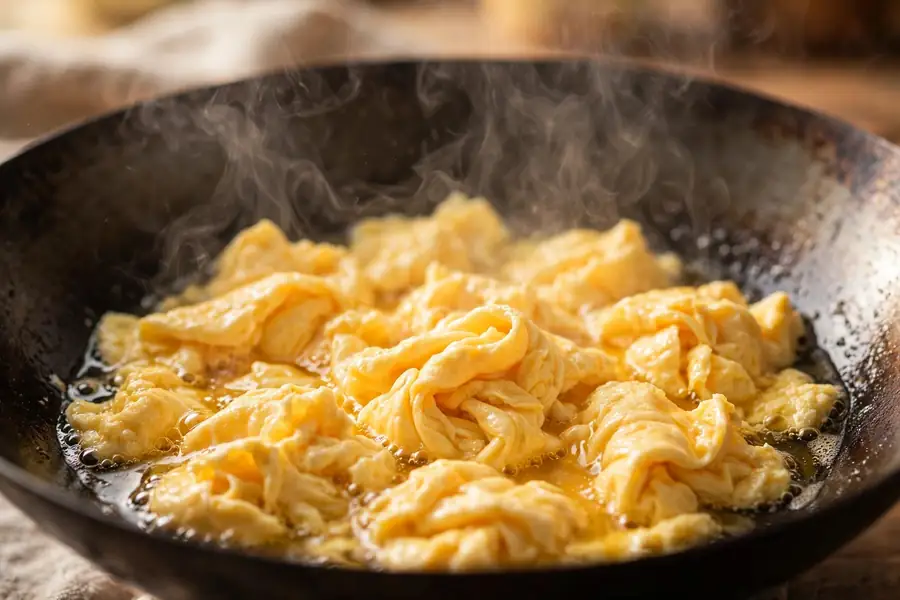
Heat 1 tablespoon of oil in the wok over medium-high heat until shimmering. Pour in the beaten eggs and scramble 30 to 40 seconds into soft curds. Transfer to a plate. Japanese-style egg should be tender and pale gold, not browned.
Step 3: Soften the Vegetables
Add the remaining tablespoon of oil to the wok over medium-high heat. Add the onion and carrot and cook 3 minutes until the onion is translucent. Add the garlic and peas, and cook 1 minute more.
Step 4: Fry the Rice
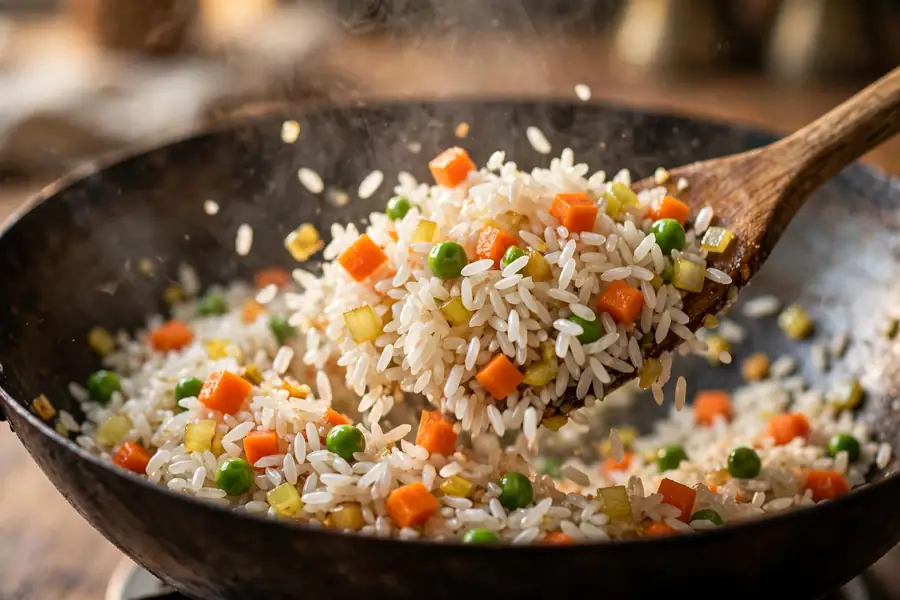
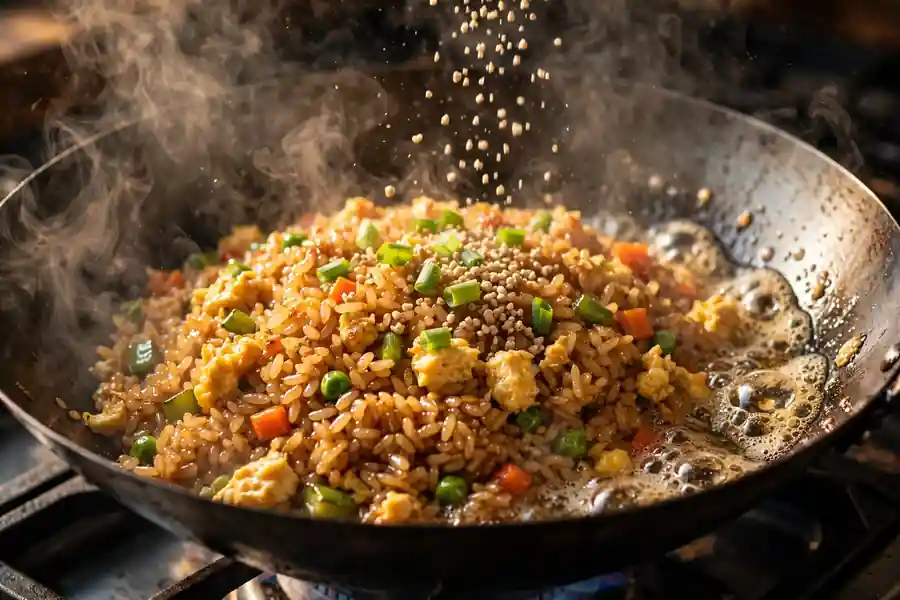
Raise the heat to high and add the rice. Toss to combine with the vegetables, then spread into a layer and rest 1 minute. Toss and repeat for 3 to 4 minutes until the rice is hot and a few grains are lightly golden. Short-grain rice will not brown as dramatically as long-grain; look for heat and a light toast instead. Keep batches small if your pan is crowded, since a deep pile steams rather than fries. Toss gently rather than mashing, so the grains stay intact.
Step 5: Add the Japanese Seasonings
Sprinkle the dashi granules evenly over the rice and toss 30 seconds so they melt into the hot grains. The granules need direct contact with the hot rice to dissolve, so add them before the liquids. Pour the sake around the hot edge of the pan and let it sizzle 10 seconds. Add the mirin and soy sauce, and toss 1 minute until everything is evenly seasoned.
Step 6: Finish and Serve
Return the eggs to the wok with the scallions, salt, and white pepper. Toss 30 seconds, taste, and adjust with a little more soy sauce if needed. Keep the seasoning light; the dashi already brings savoriness. Serve hot, sprinkled with sesame seeds if you like. For a classic presentation, pack the rice into a small bowl and invert it onto a plate, with pickled ginger on the side if you have it.
Common Mistakes and How to Fix Them
| Common Problem | Why It Happens | How to Fix It |
|---|---|---|
| Dashi granules stay gritty | Added after liquids, or the rice was not hot enough | Sprinkle onto hot rice first and toss before adding liquids |
| Rice is gummy | Short-grain rice used fresh, or stirred too much | Chill the rice overnight and toss gently, not constantly |
| Too sweet | Too much mirin, or mirin-style seasoning with added sugar | Measure the mirin; use hon-mirin if possible |
| Sake flavor is harsh | Sake added at the end without heat to cook it off | Add sake to the hot pan edge so it sizzles and evaporates |
| Bland despite seasoning | Dashi skipped or under-measured | Do not skip the dashi; it is the backbone of the flavor |
Ingredient Substitutions
| Original Ingredient | Substitute | Expected Difference |
|---|---|---|
| Dashi granules | 1 tsp mushroom powder plus a pinch of salt | Vegetarian-friendly; less oceanic depth |
| Mirin | 1 tbsp sugar dissolved in 1 tbsp water | Similar sweetness without the fermented complexity |
| Sake | Dry sherry | Close in function; slightly different aroma |
| Short-grain rice | Medium-grain rice | A bit less chewy; still authentic in feel |
| White pepper | Black pepper | Sharper heat; fine in small amounts |
Recipe Variations
- Pork yakimeshi: Add 1/2 pound of thinly sliced pork, seared 3 to 4 minutes before the vegetables, a Japanese home classic.
- Shrimp: Add 1/2 pound of small shrimp with the vegetables; they cook in 2 to 3 minutes.
- Tuna mayo style: Fold 1 can of drained tuna and 2 tablespoons of Japanese mayonnaise through the finished rice off the heat.
- Natto: Stir in a pack of natto at the end for a deeply traditional, pungent version adventurous eaters love.
Store, Reheat, and Prep Ahead
Cool within 2 hours and refrigerate in airtight containers up to 4 days. Freeze up to 2 months. Reheat until steaming. Discard leftovers that sat at room temperature longer than 2 hours or smell off.
To reheat, stir-fry in a skillet over medium-high heat with a teaspoon of oil for 3 minutes until steaming. Or microwave: sprinkle a tablespoon of water over the rice, cover loosely, and heat 2 minutes, stirring halfway.
For prep ahead, cook Japanese rice a day ahead specifically for yakimeshi. Dice the onion and carrot up to 2 days ahead. Keep dashi granules, mirin, and sake in the pantry so the dish is always 15 minutes away. Portion leftovers into single-serve containers.
More Rice Recipes to Try
If you enjoyed this recipe, you will love these other rice dishes from The World of Rice:
- Authentic Chinese Shrimp Fried Rice Recipe: Traditional Technique, Pure Flavor
- Authentic Egg Fried Rice Recipe: Simple, Silky & Perfectly Golden
- Authentic Fried Rice Recipe With Egg: The Traditional Golden Method
- Authentic Pork Fried Rice Recipe: Cantonese Homestyle Comfort
Frequently Asked Questions
What is the difference between yakimeshi and chahan?
They are essentially the same dish with different names. Yakimeshi is the Japanese word, and chahan comes from Chinese. Home-style yakimeshi tends to be seasoned more lightly.
Can I make this without dashi granules?
You can, but the dish loses its signature depth. Mushroom powder with a pinch of salt is the closest vegetarian alternative.
Is mirin the same as rice vinegar?
No. Mirin is a sweet cooking wine; rice vinegar is acidic. They are not interchangeable in this recipe.
Can I use brown rice?
Short-grain brown rice works and adds a nutty flavor, though it is less traditional. Chill it overnight the same way.
How do I keep short-grain rice from clumping?
Chill it uncovered so the surface dries, break it up thoroughly with a fork before cooking, and toss gently rather than mashing it in the pan.
Final Thoughts
This authentic Japanese fried rice recipe is yakimeshi as Japanese families make it: simple, subtle, and built on dashi, mirin, and sake rather than heavy sauces. Once you taste the difference, it becomes a regular in your rotation. Try it with whatever leftovers are in your fridge, the way it was meant to be made.
See the dictionary definitions for soy sauce and garlic.

Prayvista Team is the editorial team behind Prayvista, The World of Rice. The team writes and reviews rice recipes for home cooks, and every article is checked by editor Sara Raza before publishing.



1 thought on “Authentic Japanese Fried Rice Recipe: Real Yakimeshi at Home”