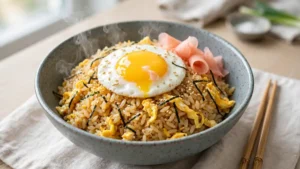
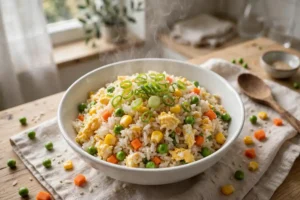
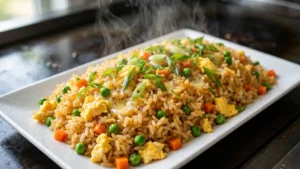
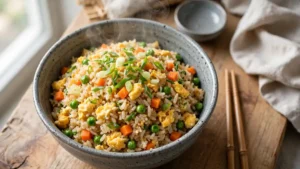
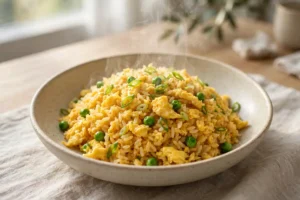
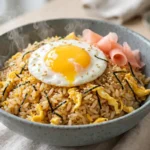
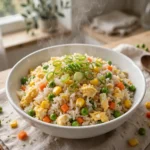
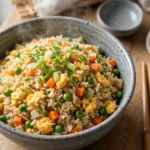
The most common soy-free fried rice problem is a dish that tastes too sweet and looks pale and under-seasoned. It happens when coconut aminos are used one-to-one like soy sauce, with nothing to balance them. The fix is a blend, not a single swap. This fried rice recipe without soy sauce builds the same savory, golden, satisfying wok of rice using coconut aminos, fish sauce, and a few smart seasonings, so nobody at the table misses the soy.
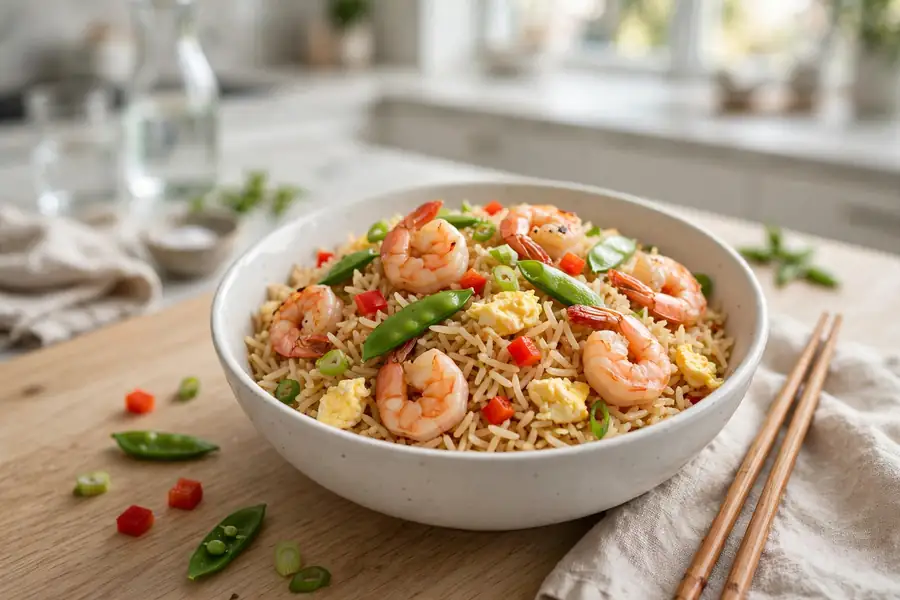
Menu of Fried Rice Recipe Without Soy Sauce
This fried rice recipe without soy sauce includes why the swap works, the full ingredient list with US measurements, a troubleshooting table before the steps, step-by-step instructions, chef tips, substitutions, variations, storage and reheating guidance, and answers to common questions.
Why You’ll Love This Fried Rice Recipe Without Soy Sauce
- It is soy free. Safe for soy allergies and soy-free diets, with no compromise on flavor.
- It still tastes like fried rice. Coconut aminos and fish sauce recreate the savory depth beautifully.
- It is fast. Twenty minutes, one pan, weeknight friendly.
Ingredients for Fried Rice Recipe Without Soy Sauce
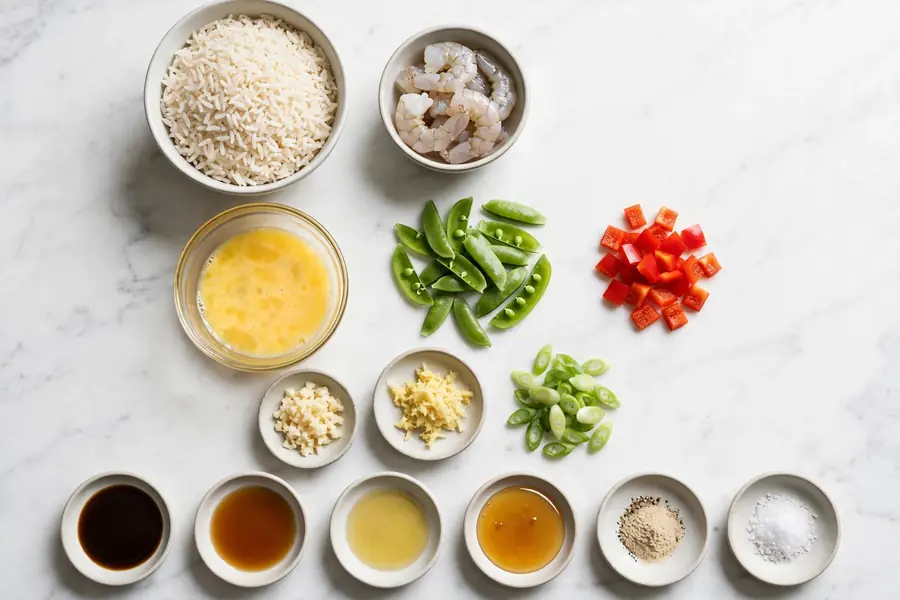
For the Fried Rice
- 4 cups cooked long grain rice, chilled overnight
- 12 ounces medium shrimp, peeled and deveined
- 3 large eggs, lightly beaten
- 1 cup sugar snap peas, halved
- 1/2 cup diced red bell pepper
- 3 green onions, thinly sliced
- 2 cloves garlic, minced
- 1 teaspoon grated fresh ginger
- 3 tablespoons avocado oil or vegetable oil, divided
- Salt and black pepper, for the shrimp
For the Soy-Free Seasoning Blend
- 3 tablespoons coconut aminos
- 2 teaspoons fish sauce
- 2 teaspoons toasted sesame oil
- 1 teaspoon honey or sugar
- 1/4 teaspoon ground white pepper
- 1/4 teaspoon salt, plus more to taste
Notes on ingredients: Coconut aminos are the closest soy-free stand-in: milder, slightly sweeter, and thinner than soy sauce. Find them in the condiment aisle of most supermarkets. Fish sauce adds the deep savoriness that coconut aminos alone cannot provide. Choose a fish sauce with a short ingredient list, ideally just anchovies and salt. A little goes a long way, so measure carefully. Medium shrimp, around 41 to 50 count per pound, cook quickly and stay tender. Pat them very dry before searing so they brown instead of steam. Long grain rice, cooked a day ahead, gives the most separate grains.
You will need: a large wok or 12-inch skillet, a wooden spoon or wok spatula, a small bowl for mixing the seasoning blend, and paper towels for patting the shrimp dry.
Common Mistakes and How to Fix Them
| Common Problem | Why It Happens | How to Fix It |
|---|---|---|
| Dish tastes too sweet | Coconut aminos were used one-to-one like soy sauce, with no balance | Include the fish sauce and white pepper; they counter the sweetness |
| Fish sauce flavor is overpowering | Too much was added, or it was not balanced with aminos | Measure carefully and start with less; the blend should smell savory, not fishy |
| Rice looks pale and under-seasoned | Expecting the dark color soy sauce gives | Coconut aminos color lightly; trust the glossy coating and the taste |
| Shrimp are rubbery | They were overcooked in the initial sear or left in the pan | Sear 1 to 2 minutes per side only, remove, and return at the very end |
| Overall flavor is bland | Not enough salt, since aminos are milder than soy sauce | Taste at the end and add salt a pinch at a time until savory |
How to Make Fried Rice Recipe Without Soy Sauce
Step 1: Prep Everything
Peel and devein the shrimp, then pat them completely dry and season lightly with salt and black pepper. Halve the snap peas, dice the bell pepper, slice the green onions, mince the garlic, and grate the ginger. Whisk the coconut aminos, fish sauce, honey, white pepper, and salt in a small bowl. Break up the cold rice and beat the eggs.
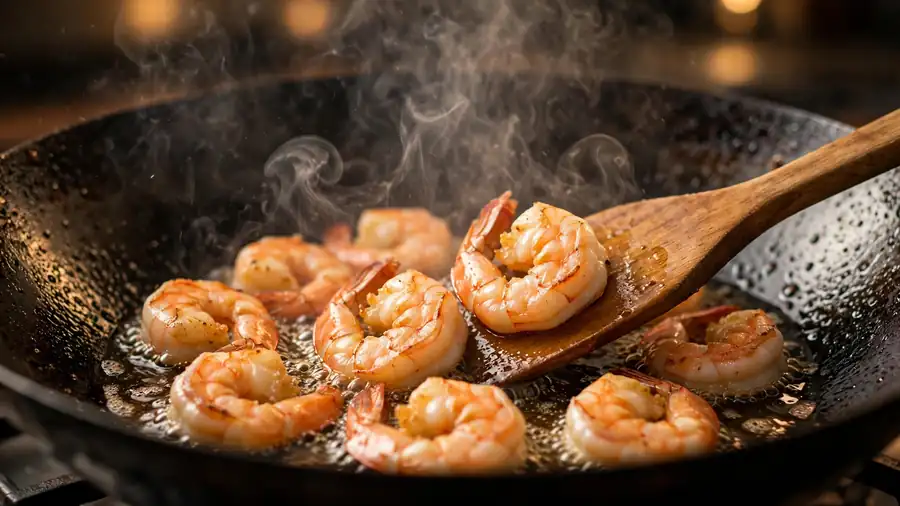
Step 2: Sear the Shrimp
Heat 1 tablespoon of oil in the wok over high heat until shimmering. Add the shrimp in a single layer and sear 1 to 2 minutes per side until pink, opaque, and lightly golden at the edges. Remove to a plate immediately; they will finish cooking later and overcooking makes them rubbery.
Step 3: Scramble the Eggs
Add a drizzle of oil if the pan looks dry. Scramble the eggs into soft curds over medium-high heat, about 45 seconds, until just set. Transfer to the plate with the shrimp.
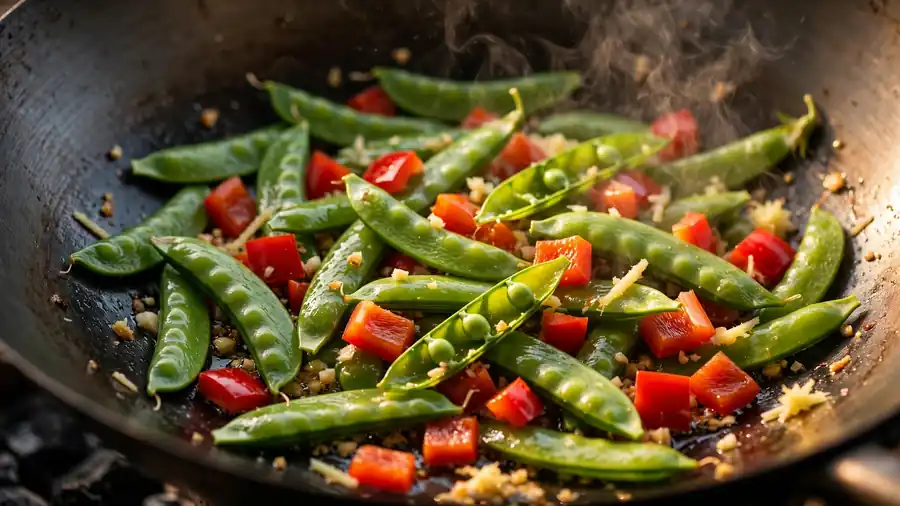
Step 4: Cook the Vegetables
Add another tablespoon of oil. Stir-fry the snap peas, bell pepper, garlic, and ginger 2 minutes until the vegetables are bright and crisp-tender and the aromatics are fragrant.
Step 5: Fry the Rice
Add the remaining tablespoon of oil and the cold rice. Stir-fry 3 to 4 minutes, tossing constantly, until the grains are hot through with lightly toasted spots. For a little extra texture, spread the rice out and leave it undisturbed for 30 seconds at a time so some grains crisp at the edges.
Step 6: Season and Finish
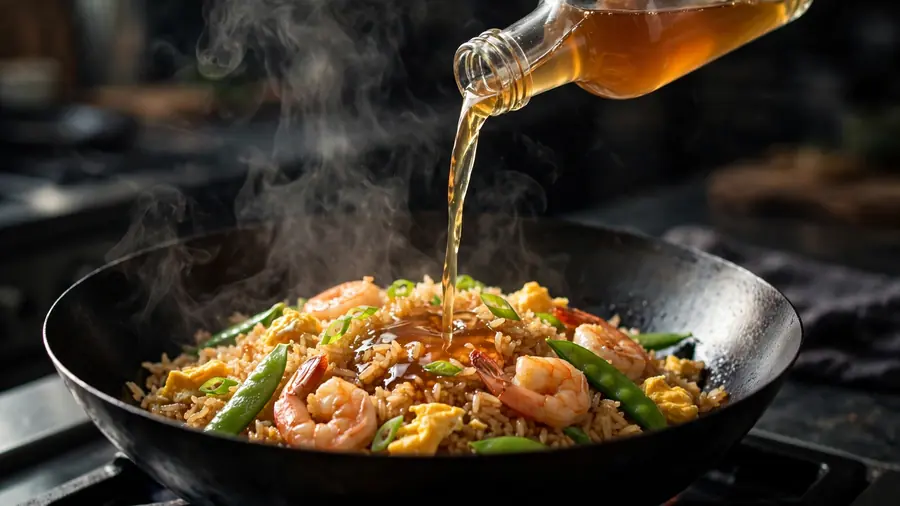
Pour the seasoning blend evenly over the rice and toss 1 to 2 minutes until the grains are lightly golden and glossy. The color will be paler than soy-sauce fried rice, which is normal. Return the shrimp and eggs to the wok with the green onions and toss 30 seconds. Taste and add a pinch more salt if needed. Drizzle with the sesame oil, toss once, and serve.
Chef’s Tips for the Best Results
- Expect a paler color. Coconut aminos do not darken rice the way soy sauce does. Judge doneness by glossiness and taste, not by a deep brown color.
- Balance the sweetness. Coconut aminos are naturally sweet. The fish sauce and white pepper counter that, so do not skip them or the dish tastes flat and sugary.
-
Add fish sauce gradually. It is potent. The measured two teaspoons are balanced, but if you are new to it, start with one and taste before adding the second.
-
Thaw the peas first. Frozen peas straight from the bag drop the pan temperature and steam the rice. Spread them on a plate for 10 minutes before cooking.
- Add a spoonful of fish-free oyster sauce for depth. Coconut aminos alone can taste one-note sweet, and the oyster sauce adds the savory backbone that soy sauce would normally give.
Ingredient Substitutions
| Original Ingredient | Substitute | Expected Difference |
|---|---|---|
| Coconut aminos | 2 tbsp fish sauce plus 1 tbsp water and 1 tsp honey, mixed | Saltier and less sweet; use less total and taste carefully |
| Fish sauce | 1 tbsp mushroom seasoning powder plus 1 tsp salt | Vegetarian; less complex but still savory |
| Shrimp | Diced chicken breast or cubed firm tofu | Chicken needs 4 to 5 minutes; tofu should be crisped first |
| Honey | Sugar | Dissolves fine when whisked; no flavor difference once cooked |
| Snap peas | Snow peas or green beans, thinly sliced | Similar crunch; green beans need an extra minute |
Recipe Variations
- Chicken version: Swap the shrimp for 12 ounces of diced chicken breast, seared 4 to 5 minutes until cooked through.
- Vegetarian version: Skip the shrimp and fish sauce. Use mushroom seasoning and extra coconut aminos, plus crispy tofu for protein.
- Spicy version: Add 1 teaspoon of chili garlic sauce to the seasoning blend.
- Pineapple version: Add 3/4 cup of diced pineapple with the bell pepper for sweet and savory contrast.
- Extra veggie version: Add shredded cabbage or sliced mushrooms with the snap peas for more bulk.
- Sweet chili finish: Serve with sweet chili sauce on the side or a spoonful of sriracha for heat, which suits the lighter-colored seasoning.
Storage and Food Safety
Cool leftovers within 2 hours and refrigerate in airtight containers for up to 3 days when shrimp is involved, or 4 days for chicken or vegetarian versions. Freeze portions for up to 2 months in sealed bags and thaw overnight in the refrigerator. Discard leftovers that smell off or have sat at room temperature for more than 2 hours.
Meal-prep note: peel and devein shrimp up to a day ahead and keep them covered in the coldest part of the fridge. Cook rice 1 to 2 days ahead. Chop vegetables and mix the seasoning blend a day ahead; the blend keeps a week refrigerated. Cook the full dish fresh for the best shrimp texture.
How to Reheat Fried Rice Recipe Without Soy Sauce
Reheat in a hot skillet for the best texture. Heat a teaspoon of oil over medium-high heat, add the cold rice, and stir-fry 3 to 4 minutes until steaming, adding a splash of water if dry. A tiny drizzle of coconut aminos refreshes the seasoning. In the microwave, sprinkle with a tablespoon of water, cover loosely, and heat 2 minutes, stirring halfway. Reheat shrimp or egg versions to 165 degrees F (74 degrees C) throughout.
More Rice Recipes to Try
If you enjoyed this recipe, you will love these other rice dishes from The World of Rice:
- Fried Rice Recipe Soy Sauce: Classic, Savory & Perfectly Seasoned
- Chicken Fried Rice Sauce Recipe: The Secret to Takeout Flavor
- Easy Shrimp Fried Rice Recipe Without Vegetables: Simple, Clean & Fast
- Fried Rice Recipe Oyster Sauce: Restaurant-Style With Smoky Wok Flavor
Frequently Asked Questions
What can I use instead of soy sauce in fried rice?
Coconut aminos plus a little fish sauce is the best swap. Together they provide salt, umami, and mild sweetness similar to soy sauce.
Is tamari a soy-free alternative?
No. Tamari is still made from soybeans, so it is not safe for soy allergies. It is usually gluten free, but it is not soy free.
Will fried rice taste different without soy sauce?
Slightly. It will be a touch sweeter and paler, but with fish sauce and proper seasoning it still tastes rich and savory.
Is coconut aminos healthier than soy sauce?
It is lower in sodium and soy free, but it still contains salt and should be used in similar moderation.
Can I make this recipe vegan and soy free?
Yes. Replace the fish sauce with mushroom seasoning, skip the shrimp and eggs, and use crispy tofu. Check that your coconut aminos are vegan.
Does coconut aminos need to be refrigerated?
Refrigeration after opening is recommended and keeps the flavor fresh longer. An opened bottle lasts several months chilled.
Final Thoughts
This fried rice recipe without soy sauce proves that a soy allergy, or an empty soy sauce bottle, is no reason to skip fried rice night. Lean on coconut aminos for gentle saltiness, fish sauce for depth, and bold technique for the rest.
See the dictionary definitions for fish sauce and sesame oil.

Prayvista Team is the editorial team behind Prayvista, The World of Rice. The team writes and reviews rice recipes for home cooks, and every article is checked by editor Sara Raza before publishing.