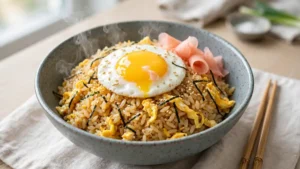
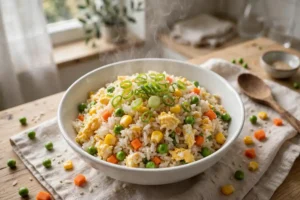
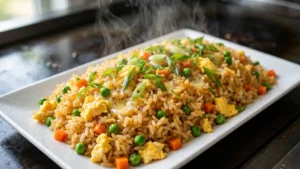
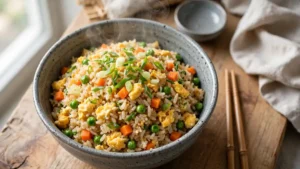
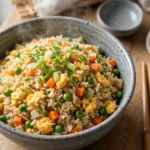
Every great fried rice starts with the sauce. This sauce for fried rice recipe is the all-purpose house blend that works with chicken, shrimp, pork, tofu, or just vegetables: salty, savory, lightly sweet, and aromatic, ready in two minutes with no cooking at all. Keep a jar in the refrigerator and fried rice night becomes almost automatic.

Menu of Sauce for Fried Rice Recipe
This sauce for fried rice recipe guide covers why the blend works, the complete ingredient list with US measurements, step-by-step instructions for the sauce plus a demonstration vegetable fried rice, why the technique works, chef tips, a troubleshooting table, substitutions, variations, storage and reheating guidance, and answers to common questions.
Ingredients for Sauce for Fried Rice Recipe

For the All-Purpose Sauce (Makes About 3/4 Cup)
- 1/3 cup low-sodium soy sauce
- 1/4 cup oyster sauce
- 1 tablespoon Shaoxing wine
- 1 tablespoon toasted sesame oil
- 1 tablespoon sugar
- 3/4 teaspoon ground white pepper
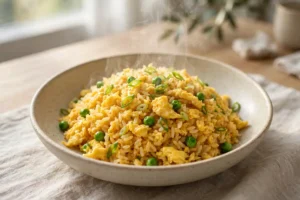
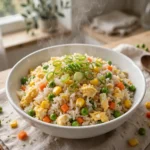
To Demonstrate: Simple Vegetable Fried Rice (Serves 4)
- 3 tablespoons of the sauce
- 4 cups cooked long grain rice, chilled overnight
- 2 large eggs, lightly beaten (optional)
- 1 cup frozen peas and carrots, thawed and patted dry
- 1 cup shredded cabbage
- 3 green onions, sliced
- 2 cloves garlic, minced
- 3 tablespoons vegetable oil, divided
Notes on ingredients: Low-sodium soy sauce is the right base because oyster sauce contributes its own salt; regular soy sauce can push the blend over the edge. Look for toasted sesame oil, which is amber colored and nutty, rather than pale untoasted oil. Shaoxing wine is sold at Asian grocery stores; dry sherry is the closest substitute. For the oyster sauce, thicker premium brands coat the rice better than thin ones. If you keep kosher, vegetarian, or shellfish-free, mushroom-based vegetarian oyster sauce is an excellent one-to-one swap.
You will need: a small bowl and whisk, or a jar with a tight lid for shaking, measuring cups and spoons, a large wok or 12-inch skillet for the demonstration fried rice, and a wooden spoon or wok spatula.
How to Make Sauce for Fried Rice Recipe
Step 1: Combine the Sauce Ingredients
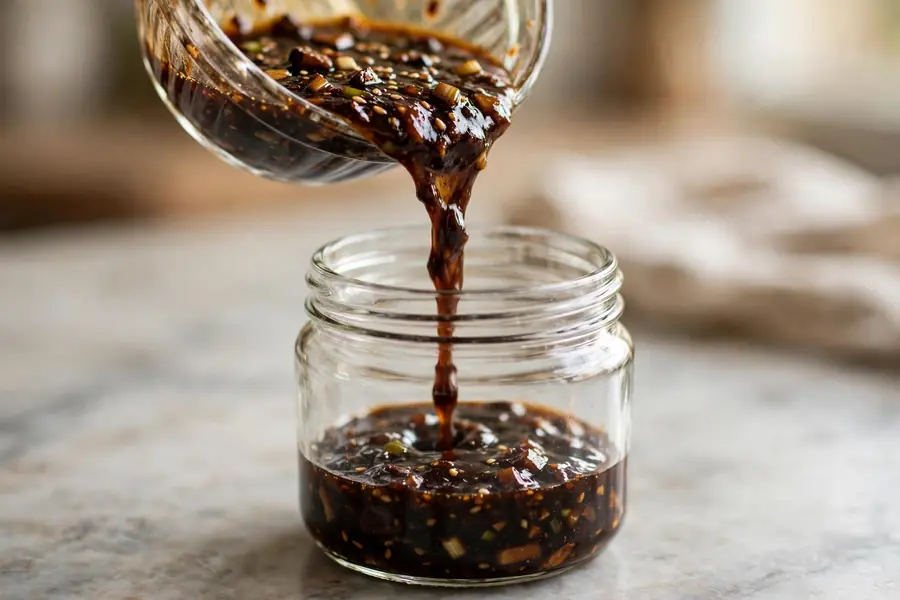
Add the soy sauce, oyster sauce, Shaoxing wine, sesame oil, sugar, and white pepper to a bowl or jar. Whisk or shake vigorously until the sugar dissolves completely and the mixture looks smooth and glossy. Taste a drop: it should be boldly savory with a gentle sweetness. Remember it will be diluted across a whole pan of rice. Plan on 2 to 3 tablespoons of sauce per 4 cups of cooked rice. Start with 2 tablespoons for a lighter seasoning and add more to taste.
Step 2: Store or Use Immediately
Pour the sauce into a clean jar with a tight lid. It is ready to use right away, and it keeps in the refrigerator for up to 3 weeks. Label the jar with the date so you know when you made it.

Step 3: Prep the Demonstration Fried Rice
Thaw the peas and carrots and pat them dry. Shred the cabbage, slice the green onions, and mince the garlic. Break up the cold rice. Beat the eggs if using. Measure 3 tablespoons of sauce into a small dish.
Step 4: Cook the Eggs and Vegetables
Heat 1 tablespoon of oil in the wok over medium-high heat. Scramble the eggs into soft curds, about 45 seconds, and remove to a plate. Add another tablespoon of oil, then the peas, carrots, cabbage, and garlic. Stir-fry 2 to 3 minutes until the vegetables are hot and the garlic is fragrant.
Step 5: Fry the Rice
Add the remaining tablespoon of oil and the cold rice. Stir-fry 3 to 4 minutes, tossing constantly, until the grains are hot through with lightly toasted spots.
Step 6: Add the Sauce and Finish
Pour the measured sauce evenly over the rice and toss 1 to 2 minutes until every grain is glossy and evenly seasoned. Return the eggs to the wok with the green onions and toss 30 seconds. Taste and add another teaspoon of sauce if you like it bolder. Serve hot.

Why This Works
- Four pillars carry the flavor. Soy sauce provides salt and color, oyster sauce adds deep umami and body, sesame oil brings the nutty aroma people associate with restaurant fried rice, and sugar rounds off the saltiness so the sauce tastes balanced rather than harsh.
- Shaoxing wine and white pepper finish it. The wine adds background complexity, and white pepper gives gentle warmth.
- Pre-mixing matters because fried rice cooks in minutes. There is no time to measure five bottles over a screaming-hot wok, and splashing them in separately creates salty pockets and bland spots. A unified sauce pours evenly and caramelizes lightly on contact with the hot rice for that signature takeout glaze.
- One batch seasons three or four full woks. The measured ratio means the same great result every time.
Chef’s Tips for the Best Results
- Taste the sauce before you trust it. It should taste slightly too strong on its own, since a whole pan of plain rice will mellow it. If it tastes perfect straight, it will be under-seasoned in the dish.
- Shake the jar every time. Sesame oil floats to the top in storage. A good shake re-emulsifies the blend so each pour has the full flavor.
- Pour over rice, never onto bare metal. Sauce hitting an empty screaming-hot wok can scorch in seconds. The rice cushions it and lets it glaze instead of burn.
-
Write the ratio on the jar. A piece of tape reading “2 to 3 tbsp per 4 cups rice” saves you from looking it up every time.
-
Use about 2 tablespoons of sauce per cup of rice. That ratio seasons without drowning the grains, and it scales cleanly whether you are frying two cups or six.
- Keep a fried rice sauce thin. It should coat the grains, not cling like a stir fry glaze. A sauce that is too thick turns the rice sticky instead of glossy.
Common Mistakes and How to Fix Them
| Common Problem | Why It Happens | How to Fix It |
|---|---|---|
| Finished rice is too salty | Too much sauce was used for the amount of rice | Stick to 2 to 3 tbsp per 4 cups rice; add more only after tasting |
| Sauce tastes flat or dull | Old sesame oil, or the sugar was skipped | Use fresh toasted sesame oil and do not skip the sugar |
| Oil separates and floats on top | The jar sat undisturbed in the fridge | Shake vigorously before every use to re-emulsify |
| Sauce scorched and bitter | Poured into an empty overheated wok | Always pour over the rice, never onto bare hot metal |
| Inconsistent results batch to batch | Sauce was eyeballed instead of measured | Measure with tablespoons and note your preferred amount |
Ingredient Substitutions
| Original Ingredient | Substitute | Expected Difference |
|---|---|---|
| Oyster sauce | Vegetarian mushroom oyster sauce | Shellfish free and vegan; nearly identical depth |
| Shaoxing wine | Dry sherry | Very close; slightly less malty |
| Low-sodium soy sauce | Coconut aminos | Sweeter and milder; reduce sugar to 2 tsp |
| White pepper | Black pepper | More pungent and visible; use 1/2 tsp |
| Sugar | Honey | Dissolves easily; adds a faint floral note |
Recipe Variations
Spicy house sauce: Whisk in 1 tablespoon of chili garlic sauce or 2 teaspoons of sriracha per batch.
Garlic lover’s sauce: Add 1 teaspoon of garlic powder or 2 cloves of finely grated fresh garlic to the jar.
Teriyaki-style sauce: Double the sugar and add 1 teaspoon of grated ginger for a sweeter, glossy glaze.
Low-sodium version: Use low-sodium versions of both soy and oyster sauce, and season the rice with 2 tablespoons instead of 3, adding extra garlic and scallions for flavor.
Gluten-free version: Replace soy sauce with tamari and confirm the oyster sauce and Shaoxing wine are certified gluten free.
Simmered sauce: If the sugar will not dissolve, warm the sauce gently in a small saucepan just until it dissolves, then cool it completely before jarring. Do not boil it.
Store, Reheat, and Prep Ahead
Refrigerate the sauce in a sealed jar for up to 3 weeks. The high salt content keeps it safe, but discard it if you see mold or notice an off smell. Always use a clean spoon to portion it out. The demonstration fried rice follows standard rules: cool within 2 hours, refrigerate up to 4 days, freeze up to 2 months.
To reheat the demonstration fried rice, use a hot skillet. Heat a teaspoon of oil over medium-high heat, add the cold rice, and stir-fry 3 to 4 minutes until steaming, adding a splash of water if dry. A fresh teaspoon of sauce perks up leftovers that have mellowed overnight. For the microwave, sprinkle with a tablespoon of water, cover loosely, and heat 2 minutes, stirring halfway. Reheat egg-containing portions to 165 degrees F (74 degrees C).
For prep ahead, make a double batch of sauce and you are set for a month of fried rice nights. Cook rice in bulk and portion it for the fridge. Pre-chop hardy vegetables like carrots and cabbage; they keep 3 to 4 days. Keep sliced green onions in a damp paper towel inside a sealed bag.
More Rice Recipes to Try
If you enjoyed this recipe, you will love these other rice dishes from The World of Rice:
- Chicken Fried Rice Sauce Recipe: The Secret to Takeout Flavor
- Fried Rice Recipe Oyster Sauce: Restaurant-Style With Smoky Wok Flavor
- Fried Rice Recipe Soy Sauce: Classic, Savory & Perfectly Seasoned
- Fried Rice Recipe With Oyster Sauce: Deep, Savory & Better Than Takeout
Frequently Asked Questions
What is the best sauce for fried rice?
A balanced blend of soy sauce, oyster sauce, sesame oil, sugar, white pepper, and Shaoxing wine covers all the bases: salt, umami, aroma, sweetness, and warmth.
How much sauce should I add to fried rice?
Use 2 to 3 tablespoons per 4 cups of cooked rice. Start with less; you can always add more after tasting.
How long does homemade fried rice sauce last?
Up to 3 weeks in a sealed jar in the refrigerator. Shake well before each use.
Can I use this sauce for noodles?
Yes. It makes an excellent quick lo mein or stir-fried noodle sauce. Toss 2 tablespoons with a pound of cooked noodles and your choice of vegetables.
Is oyster sauce necessary?
It adds a lot of depth, but you can substitute hoisin sauce or vegetarian mushroom oyster sauce with good results.
Final Thoughts
This sauce for fried rice recipe is the single upgrade that improves every fried rice you make from here on. Whisk it once, keep it in the fridge, and measure it out each time for consistent, restaurant-worthy results.
See the dictionary definitions for soy sauce and sesame oil.

Prayvista Team is the editorial team behind Prayvista, The World of Rice. The team writes and reviews rice recipes for home cooks, and every article is checked by editor Sara Raza before publishing.