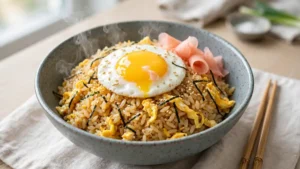
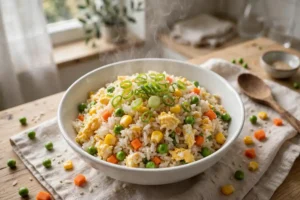
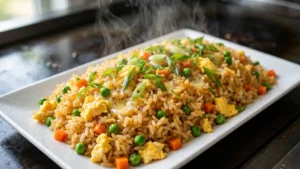
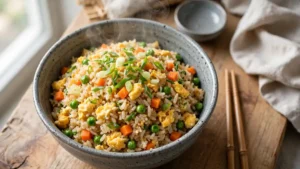
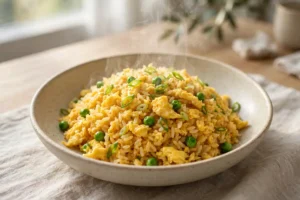
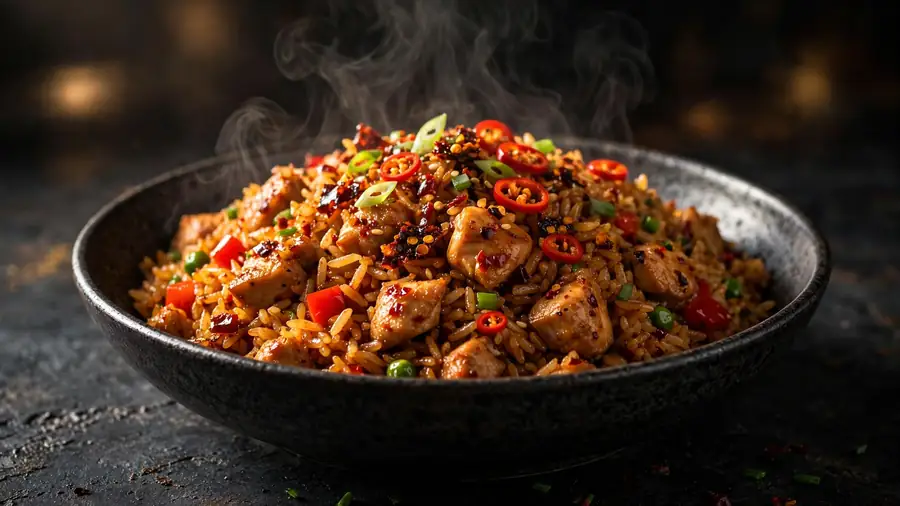
This spicy chicken fried rice recipe layers heat three ways: chili crisp in the cooking oil, fresh chilies with the aromatics, and a drizzle of sriracha at the end. The result is warming and bold without being punishing, with enough flavor underneath the heat to keep every bite interesting. Heat added early mellows into the dish; heat added late stays sharp.
Menu of Spicy Chicken Fried Rice Recipe
This spicy chicken fried rice recipe covers the full ingredient list with US measurements, step-by-step instructions with tips folded in, a troubleshooting table, substitutions, variations, storage and reheating guidance, and answers to common questions.
Ingredients for Spicy Chicken Fried Rice Recipe
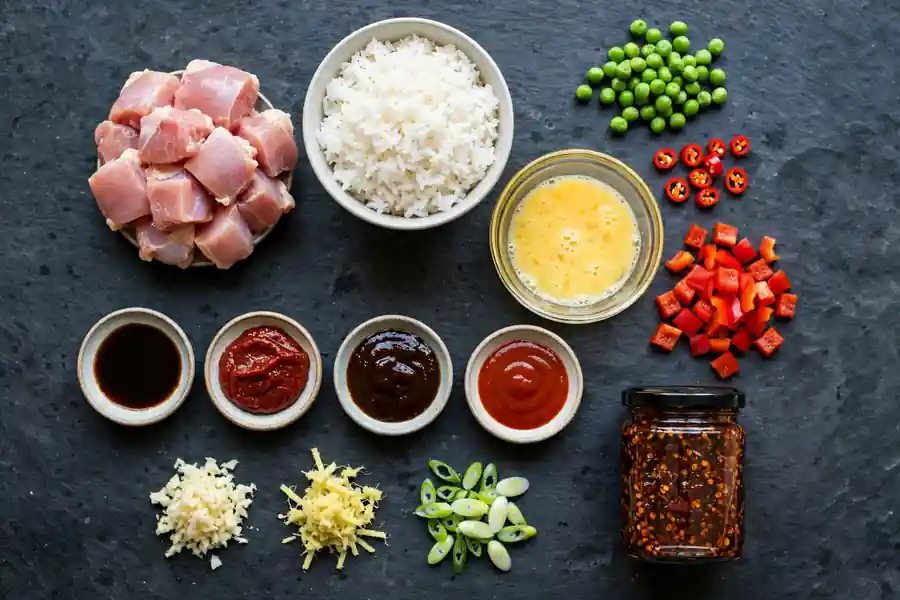
For the Chicken and Rice
- 1 pound boneless, skinless chicken thighs, cut into 1/2-inch pieces
- 3 cups cooked jasmine rice, chilled (day-old is best)
- 2 large eggs, lightly beaten
- 1 red bell pepper, diced
- 1 cup frozen peas, thawed
- 4 scallions, thinly sliced, whites and greens separated
- 3 cloves garlic, minced (about 1 tablespoon)
- 1 tablespoon fresh ginger, grated
- 2 fresh Thai chilies or 1 serrano, thinly sliced (seeds removed for less heat)
- 2 tablespoons vegetable oil, divided
- 1 tablespoon chili crisp, plus more for serving
For the Spicy Sauce
- 3 tablespoons low-sodium soy sauce
- 1 tablespoon gochujang or chili garlic sauce
- 1 tablespoon oyster sauce
- 1 teaspoon rice vinegar
- 1 teaspoon toasted sesame oil
- 1 teaspoon sriracha, plus more to taste
Notes on ingredients: Chicken thighs stay juicy under high heat and bold seasoning. Chili crisp brings heat plus crunchy, savory bits. Gochujang adds a fermented depth and rounded warmth that plain hot sauce cannot match. Start with the listed amounts for a solid medium heat.
Kitchen tools in one line: a large skillet or wok, a spatula, and a small bowl for the sauce.
How to Make Spicy Chicken Fried Rice Recipe
Step 1: Prep Everything
Break up the cold rice so no clumps remain. Cut the chicken into even 1/2-inch pieces and pat dry. Slice the chilies, mince the garlic, grate the ginger, dice the bell pepper, and slice the scallions. Whisk the sauce ingredients together in a small bowl. This recipe moves fast at high heat, so everything must be ready before the pan gets hot.
Step 2: Bloom the Chili Crisp and Cook the Chicken
Heat 1 tablespoon of vegetable oil in the large skillet or wok over medium-high heat. Add the chili crisp and stir 30 seconds until fragrant and sizzling; this blooms the chilies and infuses the oil. Tip: blooming first distributes the heat through the fat, while adding chili crisp at the end gives raw, harsh heat. Add the chicken in a single layer and cook 5 to 6 minutes, turning occasionally, until golden on the edges and cooked through to 165 degrees F (74 degrees C). Transfer to a plate.

Step 3: Scramble the Eggs
Add a drizzle of oil to the pan if needed. Scramble the beaten eggs 30 to 45 seconds into soft curds and transfer to the plate with the chicken. Tip: pull the eggs while still slightly moist; they finish cooking with the hot rice.
Step 4: Sauté Vegetables and Fresh Chilies
Add the remaining tablespoon of oil. Add the bell pepper, peas, and scallion whites and stir-fry 2 minutes. Add the sliced fresh chilies, garlic, and ginger and cook 30 to 60 seconds until fragrant. Tip: keep the kitchen ventilated, since frying fresh chilies releases capsaicin into the air. Add aromatics after the vegetables and keep them moving, or the garlic and chilies will burn.

Step 5: Fry the Rice
Add the cold rice, press into an even layer, and let sit 1 minute undisturbed. Stir and toss 3 to 4 minutes until hot and lightly toasted in spots. The rice picks up the chili-infused oil still coating the pan. Tip: do not stir in the first minute, or the grains never get a chance to toast.
Step 6: Sauce and Finish
Return the chicken and eggs to the pan. Pour the spicy sauce evenly over everything and toss 1 to 2 minutes until glossy and well coated. Drizzle in the sesame oil, add the scallion greens, and toss 30 seconds. Taste and add more sriracha or chili crisp if you want it hotter. Tip: taste before serving, since chilies vary in strength, and use sriracha for sharp heat or chili crisp for rich heat. Serve immediately with extra chili crisp on the side.
Common Mistakes and How to Fix Them
| Common Problem | Why It Happens | How to Fix It |
|---|---|---|
| Dish is painfully hot | Too many heat sources at full strength | Remove chili seeds, halve the fresh chilies, and add extra heat only at the table |
| Heat is flat and one-note | Only one heat source was used | Layer chili crisp, gochujang, and a finishing drizzle for complexity |
| Chicken is dry | Thighs overcooked at very high heat | Cook just until 165 degrees F and remove promptly; thighs are forgiving but not invincible |
| Garlic and chilies burned | They went in too early or the heat was too high | Add aromatics after the vegetables and keep them moving for under a minute |
| Spice overwhelms all other flavor | No sweetness or acid to balance | Add a teaspoon of sugar or honey and a splash of rice vinegar to round it out |
| Sauce tastes bitter or scorched | Gochujang cooked too long at high heat | Add the gochujang sauce only at the final toss and keep the heat moderate, since its sugars burn fast |
Ingredient Substitutions
| Original Ingredient | Substitute | Expected Difference |
|---|---|---|
| Gochujang | Chili garlic sauce | Sharper, less fermented depth; use the same amount |
| Chili crisp | 1 tsp red pepper flakes bloomed in oil | Similar heat but none of the crunchy savory bits |
| Thai chilies | 1 jalapeno, sliced | Milder and fruitier; a safer choice for moderate spice lovers |
| Chicken thighs | Chicken breast | Leaner; watch closely to avoid drying out |
| Oyster sauce | Hoisin sauce | Sweeter; reduce any added sugar elsewhere |
Recipe Variations
- Korean-inspired: Lean into the gochujang and finish with sesame seeds and extra scallions.
- Sichuan style: Add Sichuan peppercorns with the aromatics for a tingling, numbing heat alongside the chili.
- Mild version: Halve the fresh chilies and chili crisp, and skip the finishing sriracha.
- Extra hot version: Keep the chili seeds in and add extra chili crisp and sriracha at the table.
- Spicy shrimp fried rice: Swap the chicken for shrimp, cooking them 2 minutes per side, and keep the sauce the same. Serving note: a fried egg on top and a lime wedge on the side cool the finish and brighten the heat.
- Extra vegetable version: Add shredded carrots, chopped green beans, or corn with the bell pepper for more color and bulk without changing the heat.
Store, Reheat, and Prep Ahead
Cool leftovers within 2 hours and refrigerate in airtight containers for up to 4 days. The chili flavors meld and deepen overnight, so day-two leftovers are excellent. Freeze for up to 2 months in portioned bags. Discard anything left at room temperature for more than 2 hours.
To reheat, stir-fry in a skillet over medium-high heat with a teaspoon of oil for 3 to 4 minutes until steaming; the high heat revives the toasted texture and reawakens the chili aroma. For the microwave, sprinkle with a tablespoon of water, cover loosely, and heat 2 minutes, stirring halfway. Add a fresh drizzle of chili crisp or sriracha after reheating, since some heat fades. Reheat to 165 degrees F (74 degrees C) throughout.
For prep ahead, cook the rice a day ahead, mix the sauce in a jar for up to a week, and slice the chilies and aromatics the morning of cooking.
More Rice Recipes to Try
If you enjoyed this recipe, you will love these other rice dishes from The World of Rice:
- Benihana Chicken Fried Rice Recipe: The Famous Teppanyaki Copycat
- Best Easy Chicken Fried Rice Recipe: 15-Minute Shortcut Dinner
- Best Recipe For Chicken Fried Rice: Takeout-Style at Home
- Blackstone Chicken Fried Rice Recipe: Juicy Hibachi-Style Chicken on the Griddle
Frequently Asked Questions
How spicy is this recipe as written?
Medium. Most spice-tolerant eaters will find it warming and bold but comfortable. If you are sensitive to heat, halve the fresh chilies and the chili crisp.
Can I make this without fresh chilies?
Yes. The chili crisp and gochujang carry plenty of heat on their own. You will lose the bright top note of fresh chili, but the dish still tastes complete.
What is chili crisp and where do I find it?
Chili crisp is a Chinese condiment of chili flakes, oil, and crispy savory bits like garlic and shallots. Find it in the Asian aisle of most supermarkets or at Asian grocery stores.
Can I use chicken breast instead of thighs?
Yes, but thighs handle the high heat and bold seasoning better. If you use breast, cut even pieces and pull them from the pan the moment they are cooked through.
How do I tone down leftovers that turned out too spicy?
Serve them with cooling sides like sliced cucumber or a dollop of plain yogurt. Mixing in extra plain rice also dilutes the heat effectively.
Final Thoughts
Build the heat in stages, balance it with a little sweetness and acid, and taste before you serve. That is how this spicy chicken fried rice recipe stays bold instead of just hot.
See the dictionary definitions for jasmine rice and soy sauce.

Prayvista Team is the editorial team behind Prayvista, The World of Rice. The team writes and reviews rice recipes for home cooks, and every article is checked by editor Sara Raza before publishing.