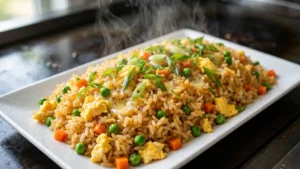
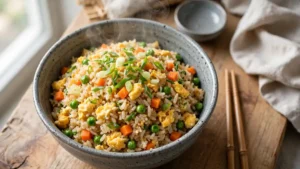
Thai shrimp fried rice is the dish that converts people who think fried rice is boring. Plump shrimp, fragrant jasmine rice, and a sweet-savory sauce of fish sauce and sugar come together in one hot wok, finished with lime and fresh herbs. It balances salty, sweet, sour, and a little heat in every bite, and it takes about 25 minutes.

Menu of Thai Shrimp Fried Rice Recipe
This Thai shrimp fried rice recipe covers the full ingredient list with US measurements, step-by-step wok instructions, why the Thai seasoning works, chef tips, a troubleshooting table, substitutions, variations, storage and reheating guidance, and answers to common questions.
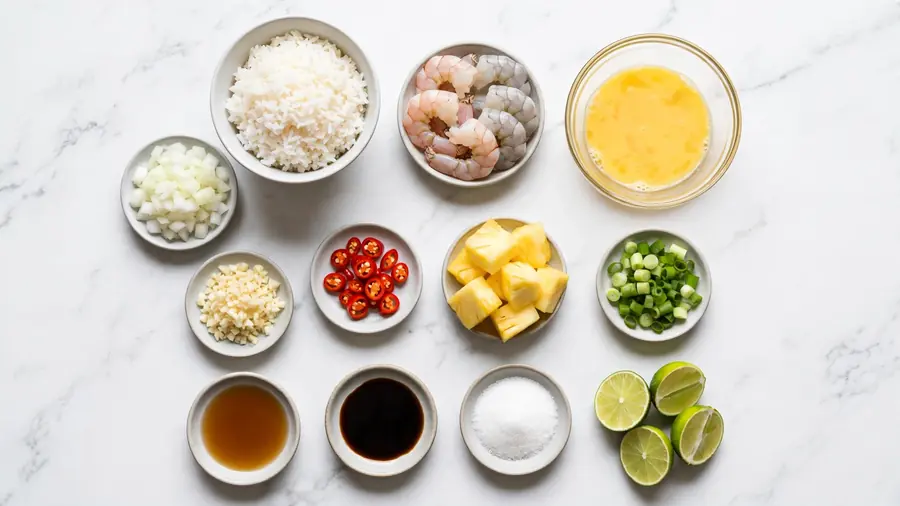
Ingredients for Thai Shrimp Fried Rice Recipe
For the Shrimp
- 1 pound large shrimp (about 450 g), peeled and deveined, tails on or off
- 1 tablespoon vegetable oil
- 1/4 teaspoon salt
- 1/4 teaspoon black pepper
For the Fried Rice
- 3 cups cooked jasmine rice, chilled (day-old is best)
- 3 large eggs, lightly beaten
- 1 small yellow onion, diced
- 3 cloves garlic, minced
- 1 to 2 Thai chilies, thinly sliced (optional)
- 1 cup diced fresh pineapple (optional, for classic Thai style)
- 3 tablespoons vegetable oil, divided
- 3 green onions, thinly sliced
For the Sauce
- 2 tablespoons fish sauce
- 1 tablespoon soy sauce
- 1 tablespoon sugar
- 1 teaspoon oyster sauce
- 1/2 teaspoon white pepper
For Serving
- Lime wedges
- Fresh cilantro leaves
- Sliced cucumber
Notes on ingredients: Fish sauce is the backbone of this dish. Choose one with only anchovies and salt on the label for the cleanest flavor. The sugar might look like a lot, but it balances the salt of the fish sauce and creates the sweet-savory profile that defines the dish. Large shrimp, 16/20 or 21/25 count, give the best bite; they sear in 2 minutes without overcooking and stay plump through the final toss. Pat them very dry before searing so they brown instead of steam. Thai chilies bring real heat; use one for mild warmth or two for a proper kick, and serrano peppers are the closest substitute.
You will need: a large wok or 12-inch skillet, a wok spatula or wooden spoon, tongs for flipping shrimp, small bowls for the sauce, beaten eggs, and prepped shrimp, and a citrus squeezer for the lime wedges.
How to Make Thai Shrimp Fried Rice Recipe
Step 1: Prep Everything
Pat the shrimp dry and season with salt and pepper. Break up the chilled rice so no clumps remain. Stir the sauce together in a small bowl and beat the eggs in another. Dice the onion, mince the garlic, slice the chilies, and cut the lime into wedges. This Thai shrimp fried rice recipe moves fast, so keep everything within reach.
Step 2: Sear the Shrimp
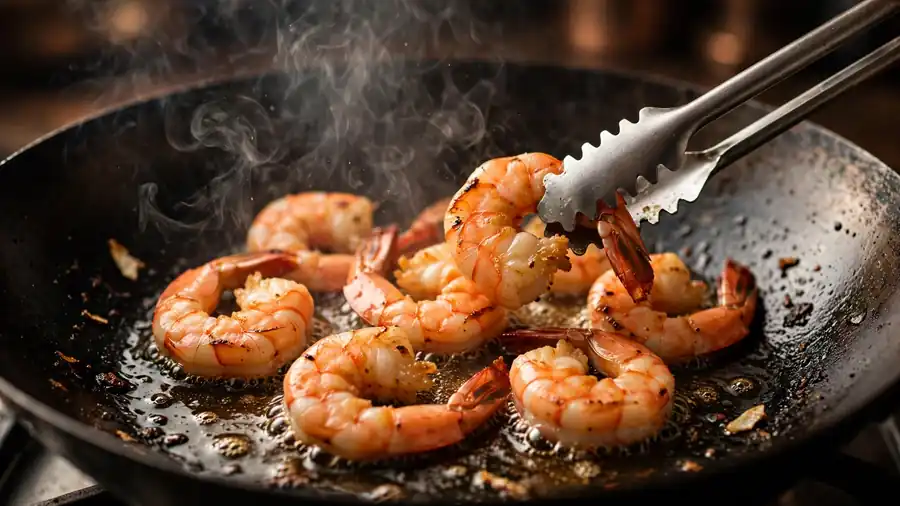
Heat 1 tablespoon of oil in the wok over high heat until it shimmers and just starts to smoke. Add the shrimp in a single layer and sear 90 seconds without moving, then flip and cook 60 seconds more until pink, curled, and opaque. Transfer immediately to a plate. They will finish cooking when tossed back in.
Step 3: Scramble the Eggs
Reduce the heat to medium-high and add 1 tablespoon of oil. Pour in the beaten eggs and scramble 45 to 60 seconds into soft curds. Move to the plate with the shrimp while still slightly glossy.
Step 4: Saute the Aromatics
Add the remaining tablespoon of oil and turn the heat back to high. Add the onion and stir-fry 2 minutes until softened. Add the garlic and chilies and cook 30 seconds until fragrant and golden at the edges. If using pineapple, add it now and cook 1 minute until it picks up a little caramelization.

Step 5: Fry the Rice
Add the cold rice to the wok and toss to combine with the aromatics. Spread it out and let it sit 60 to 90 seconds so the bottom toasts, then toss and repeat for 3 to 4 minutes total. The grains should be hot through and lightly golden in spots.
Step 6: Sauce and Finish
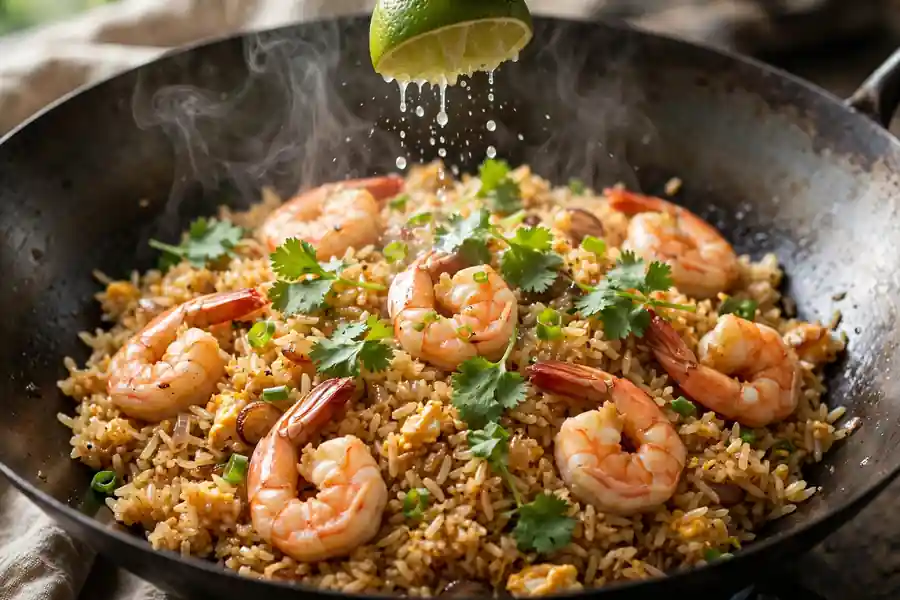
Pour the sauce evenly over the rice and toss 1 minute until every grain is glossy and coated. Return the shrimp and eggs to the wok and toss 1 minute to warm through. The shrimp are done when they are opaque and curled into a C shape; a tight O means they are overcooked. Stir in the green onions, squeeze half a lime over the rice, and toss once more. Serve immediately with lime wedges, cilantro, and cucumber. As a serving option many Thai recipes use, set out a small bowl of chili fish sauce, sliced chili in fish sauce with a squeeze of lime, so each person can add heat and salt at the table.
Why This Works
- Thai seasoning is different from Chinese-style seasoning. Fish sauce gives savory depth and sugar gives balance, creating the sweet-salty profile Thai food is known for, with lime adding the sour note.
- Jasmine rice suits the dish. Its fragrance complements the shrimp and herbs, and chilled day-old jasmine rice fries up as separate, glossy grains.
- Shrimp need separate cooking. Searing them first and adding them back at the end keeps them plump instead of rubbery.
- High heat does the work. A very hot wok lets the shrimp sear instead of steam and the rice toast instead of clump.
Chef’s Tips for the Best Results
- Dry the shrimp thoroughly. Moisture is the enemy of a good sear. Pat the shrimp with paper towels until they feel tacky before they hit the wok.
- Taste the sauce before cooking. It should taste salty, sweet, and bold. Fish sauce brands vary in strength, so adjust with a little more sugar or fish sauce until the balance is right.
- Serve with the lime, always. The fresh lime wedge is not optional garnish. That squeeze of acidity at the table is what makes the flavors pop.
- Toss the shrimp gently at the end. One minute to warm through is enough; longer tossing breaks the eggs and tightens the shrimp.
Common Mistakes and How to Fix Them
| Common Problem | Why It Happens | How to Fix It |
|---|---|---|
| Shrimp are rubbery | Overcooked from searing too long or too crowded | Sear 90 seconds per side max and add back at the very end |
| Rice is mushy | Fresh rice used or wok not hot enough | Use chilled day-old rice and preheat the wok until smoking |
| Dish tastes too salty | Too much fish sauce or reduced too far | Balance with sugar and lime; measure the sauce carefully |
| Dish tastes flat | Missing the sour note | Squeeze fresh lime over the finished rice and serve wedges |
| Pineapple makes it watery | Added too early or canned in juice | Use fresh pineapple, add after the aromatics, and cook 1 minute only |
Ingredient Substitutions
| Original Ingredient | Substitute | Expected Difference |
|---|---|---|
| Large shrimp | Diced chicken breast or firm tofu | Chicken needs 4 to 5 minutes; tofu should be pressed and seared |
| Fish sauce | Soy sauce plus a squeeze of lime | Less deep and funky; lime adds brightness |
| Jasmine rice | Long-grain white rice | Less fragrant but fries the same way |
| Thai chilies | Serrano pepper or red pepper flakes | Similar heat; serrano is closest in flavor |
| Fresh pineapple | Mango chunks | Sweeter and softer; add at the same step |
| White pepper | Black pepper | Slightly sharper; use the same amount |
Recipe Variations
Pineapple shrimp fried rice: Use the full cup of pineapple and serve the rice in a hollowed pineapple half for a classic presentation.
Spicy Thai: Double the chilies and finish with a teaspoon of chili oil for serious heat.
Thai basil shrimp fried rice: Add 1 cup of Thai basil leaves in the final 30 seconds for a peppery, aromatic twist.
Cashew crunch: Toss in 1/3 cup of toasted cashews at the end for texture and richness.
Tom yum style: Add 1 tablespoon of tom yum paste with the garlic for a lemongrass-lime depth.
Store, Reheat, and Prep Ahead
Cool leftovers within 2 hours and refrigerate in airtight containers up to 3 days. Shrimp leftovers are best eaten sooner rather than later. Freeze portions up to 1 month, though the shrimp texture softens after freezing; thaw overnight in the refrigerator. Discard leftovers that smell off or sat at room temperature more than 2 hours. Reheat shrimp-containing leftovers to 165 degrees F (74 degrees C).
To reheat, use a skillet with a teaspoon of oil over medium-high, add the cold rice, and stir-fry 3 to 4 minutes until steaming hot, adding a splash of water if it looks dry. Avoid overcooking the shrimp; just warm them through. The microwave works too: sprinkle with a tablespoon of water, cover loosely, and heat 2 minutes, stirring halfway. Serve with a fresh lime wedge to brighten the flavors.
For prep ahead, peel and devein the shrimp a day ahead and keep them refrigerated in a sealed container. Cook the rice a day ahead and chill uncovered. Chop the onion and mix the sauce up to 2 days ahead. The actual cooking takes 15 minutes, so keep the components separate until then. Store lime wedges and fresh herbs separately and add them fresh at serving.
More Rice Recipes to Try
If you enjoyed this recipe, you will love these other rice dishes from The World of Rice:
- Authentic Chinese Shrimp Fried Rice Recipe: Traditional Technique, Pure Flavor
- Authentic Shrimp Fried Rice Recipe: Wok-Fried, Plump & Juicy
- Authentic Thai Fried Rice Recipe: The Classic Home Version
- Authentic Thai Pineapple Fried Rice Recipe (Khao Phad Sapparot)
Frequently Asked Questions
Can I use frozen shrimp?
Yes. Thaw them completely in the refrigerator, then drain and pat very dry. Wet shrimp steam instead of sear.
What is the difference between Thai and Chinese fried rice?
Thai fried rice uses fish sauce and sugar for a sweet-savory balance, plus lime and fresh herbs at serving. Chinese-style leans on soy sauce and sesame oil.
How do I keep shrimp from overcooking?
Sear them hot and fast, 90 seconds per side, remove them from the wok, and add them back only for the final minute.
Can I make this without fish sauce?
Yes, use soy sauce plus a squeeze of lime. The flavor will be less authentically Thai but still delicious.
Is this recipe spicy?
Only mildly, from the optional Thai chilies. Leave them out for no heat, or add two for a real kick.
Final Thoughts
This Thai shrimp fried rice recipe delivers the sweet, salty, and sour balance that makes Thai food so craveable, with juicy shrimp in every bite. Sear the shrimp hot, fry the rice in a smoking wok, and finish with fresh lime.
See the dictionary definitions for jasmine rice and fish sauce.

Prayvista Team is the editorial team behind Prayvista, The World of Rice. The team writes and reviews rice recipes for home cooks, and every article is checked by editor Sara Raza before publishing.