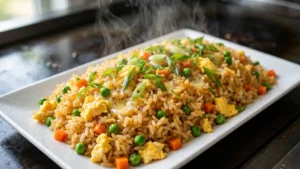
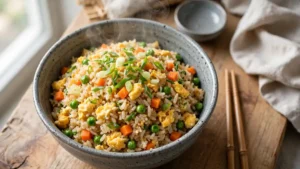
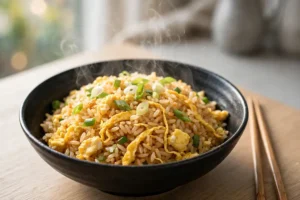
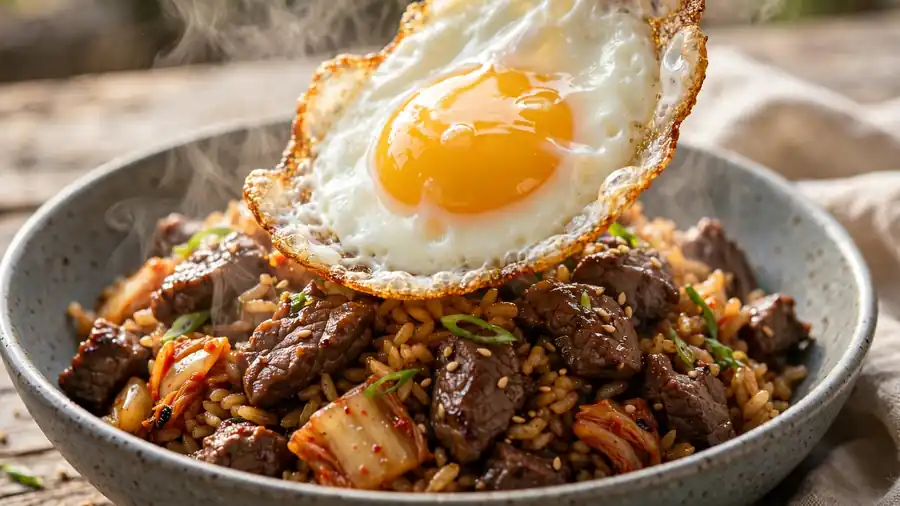
Bulgogi fried rice works when the beef is sliced paper thin, seared fast so the sugary marinade caramelizes instead of burning, and the kimchi juice is used in a measured amount. This bulgogi fried rice recipe follows that order, and finishes with a fried egg whose runny yolk mixes into the rice.
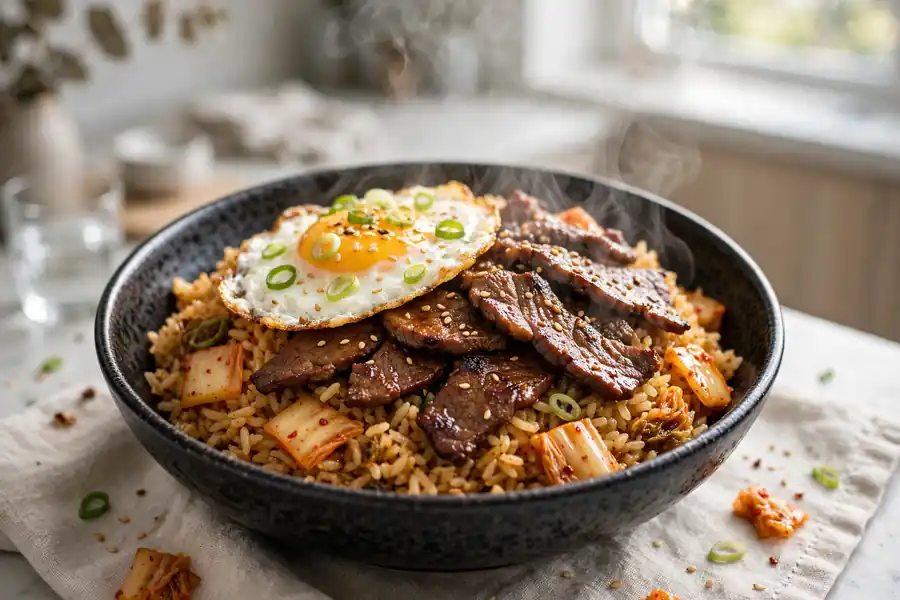
Why You’ll Love This Bulgogi Fried Rice Recipe
- It is sweet, savory, and tangy at once. The pear-sweetened marinade, the caramelized beef, and the fermented kimchi balance each other.
- It is a complete meal. Beef, rice, vegetables, and a fried egg cover the whole plate.
- The marinade does the heavy lifting. Twenty minutes is enough, and up to 24 hours in the refrigerator is even better.
What Makes This Recipe Work?
Grated pear in the marinade contains an enzyme that softens the beef, while its sugar helps the meat caramelize quickly over high heat. Kimchi and its juice add tang and depth, but only 2 tablespoons of juice are used, so the rice stays dry enough to fry. Searing the beef in a single layer, then cooking the vegetables and kimchi in the same pan, lets the browned bits from the beef flavor everything that follows.
Menu of Bulgogi Fried Rice Recipe
This bulgogi fried rice recipe covers why it works, the full ingredient list with US measurements, how to choose the best ingredients, the tools that help, step-by-step instructions, chef tips, a troubleshooting table, substitutions, variations, a practical cooking scenario, storage and reheating guidance, nutrition estimates, and answers to common questions.
Ingredients for Bulgogi Fried Rice Recipe
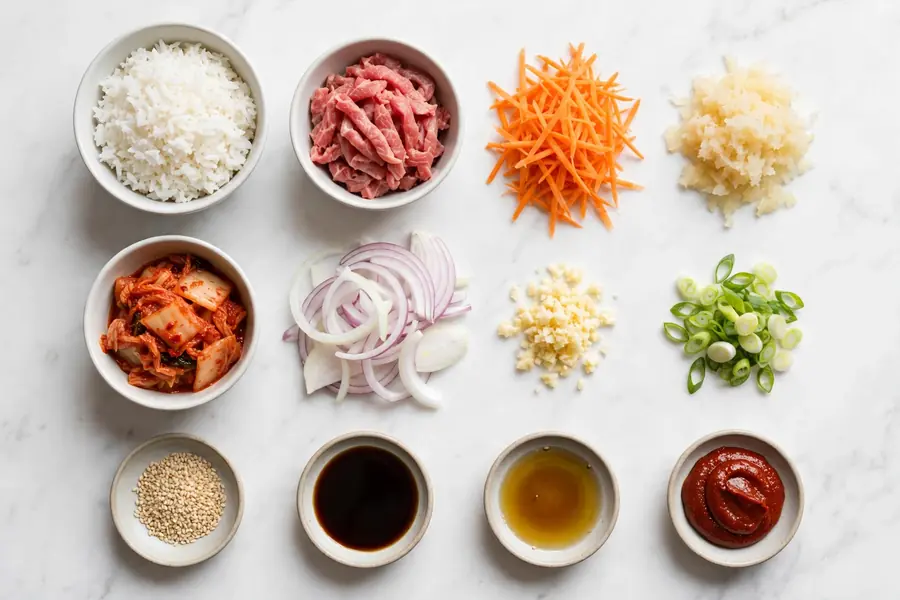
For the Bulgogi Marinade
- 3/4 pound beef sirloin or chuck, sliced very thin (about 1/8 inch)
- 3 tablespoons soy sauce
- 2 tablespoons sugar
- 1 tablespoon toasted sesame oil
- 2 cloves garlic, minced
- 1 teaspoon grated fresh ginger
- 2 tablespoons grated Asian pear or regular pear (or 1 tablespoon extra sugar)
- 1 scallion, thinly sliced
- 1/2 teaspoon black pepper
For the Fried Rice
- 3 cups cooked short or medium-grain white rice, chilled (day-old is best)
- 1 cup chopped kimchi, plus 2 tablespoons kimchi juice
- 1/2 yellow onion, thinly sliced
- 1 cup shredded carrots or diced bell pepper
- 2 tablespoons vegetable oil, divided
- 1 tablespoon soy sauce, plus more to taste
- 1 teaspoon gochujang (Korean chili paste), optional
- 4 large eggs, for frying
- 2 scallions, thinly sliced, for garnish
- 1 tablespoon toasted sesame seeds
Best Ingredients to Use
Sirloin or chuck sliced against the grain is ideal. Many Asian grocery stores sell pre-sliced bulgogi beef, which saves time and gives you the perfect thin cut. If slicing yourself, freeze the beef for 30 to 45 minutes first; firm meat slices much thinner. Short or medium-grain rice is traditional in Korean cooking and gives a slightly chewy, satisfying texture. Use well-fermented kimchi for the tangiest flavor; fresh kimchi is milder.
Kitchen Tools You’ll Need
A large skillet, a bowl for the marinade, a separate skillet for the eggs, and a spatula.
How to Make Bulgogi Fried Rice Recipe
Step 1: Marinate the Beef
Whisk the soy sauce, sugar, sesame oil, garlic, ginger, grated pear, scallion, and black pepper in a bowl. Add the thin beef slices and toss to coat. Marinate at least 20 minutes at room temperature, or up to 24 hours in the refrigerator. This bulgogi fried rice recipe gets its deep flavor from this step, so do not skip the marinating time.
Step 2: Prep Everything
Chop the kimchi, slice the onion, shred the carrots, and slice the scallions. Break up the cold rice. Measure the soy sauce and gochujang. Keep everything near the stove.
Step 3: Sear the Bulgogi
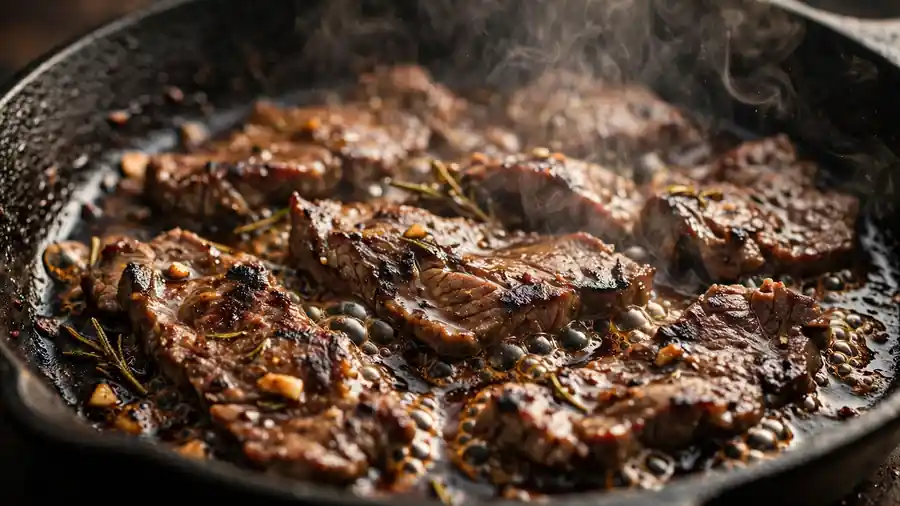
Heat 1 tablespoon of oil in the skillet over high heat until shimmering. Add the marinated beef in a single layer, letting excess marinade drip off. Sear 2 to 3 minutes, undisturbed for the first minute, until caramelized and browned at the edges. The sugar in the marinade will char quickly, which is desirable, but watch so it does not burn. Transfer to a plate.
Step 4: Cook the Vegetables and Kimchi
In the same pan, add the onion and carrots and stir-fry 2 minutes. Add the chopped kimchi and kimchi juice and cook 2 minutes more, until the kimchi softens and its liquid reduces. Scrape up the browned bits from the beef; that is pure flavor.
Step 5: Fry the Rice
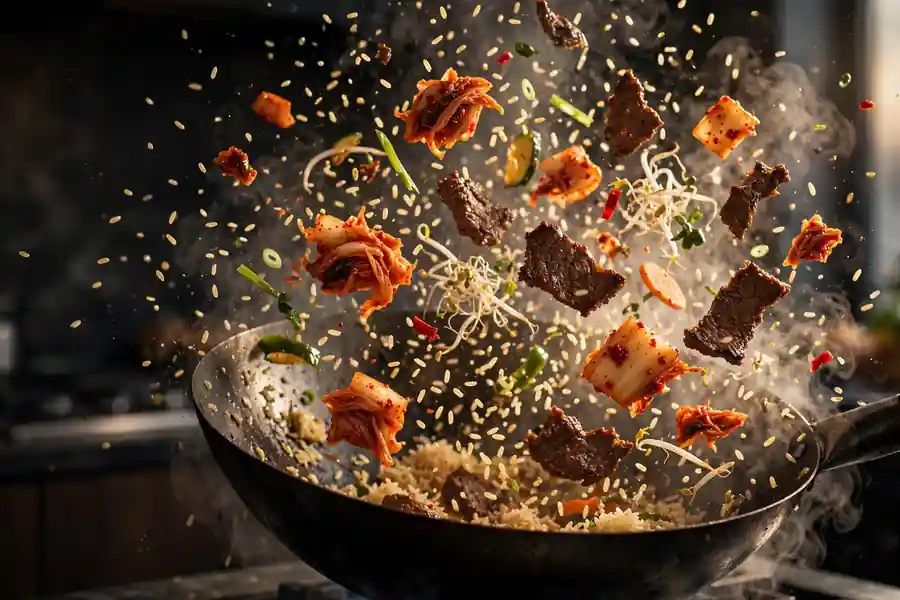
Add the cold rice and the remaining tablespoon of oil. Toss constantly for 3 to 4 minutes until hot and starting to crisp in spots. Stir in the soy sauce and gochujang if using, and toss 1 minute until evenly coated. Return the beef to the pan and toss 30 seconds to combine.
Step 6: Fry the Eggs and Serve
In a separate skillet, fry the 4 eggs sunny-side up in a little oil until the whites are set and the edges are crisp, about 2 to 3 minutes. Spoon the rice into bowls, top each with a fried egg, and garnish with scallions and sesame seeds. The yolk should be runny so it mixes into the rice.
Chef’s Tips for the Best Results
- Slice the beef paper thin. Thick slices turn chewy no matter how good the marinade is. Partially freezing the beef makes thin slicing easy, or buy pre-sliced bulgogi beef.
- Do not crowd the beef. Sear in a single layer so the marinade caramelizes instead of steaming. If your pan is small, sear in two batches.
- Use the kimchi juice. The liquid from the kimchi jar adds tangy depth to the rice. Two tablespoons is enough to flavor the dish without making it soggy.
Common Mistakes and How to Fix Them
| Common Problem | Why It Happens | How to Fix It |
|---|---|---|
| Beef is chewy | Slices too thick, or overcooked | Slice 1/8 inch thin against the grain; sear only 2 to 3 minutes |
| Marinade burns | Sugar in the marinade scorches over too-high heat for too long | Keep the beef moving after the first minute; remove as soon as edges caramelize |
| Dish is too sweet | Too much sugar, or sweet kimchi | Reduce sugar to 1 tablespoon; taste and balance with extra kimchi or soy sauce |
| Rice is soggy | Too much kimchi juice, or fresh rice | Use only 2 tablespoons kimchi juice and cold, day-old rice |
| Egg yolks break | Eggs flipped or handled roughly | Fry sunny-side up and slide gently onto the rice; do not flip |
Ingredient Substitutions
| Original Ingredient | Substitute | Expected Difference |
|---|---|---|
| Asian pear | Regular pear or 1 tbsp extra sugar | Same tenderizing effect; slightly less traditional |
| Beef sirloin | Ground beef or pork | Ground meat cooks faster; less chewy texture |
| Gochujang | Sriracha or chili flakes | Similar heat but less fermented depth |
| Kimchi | Sauerkraut plus 1 tsp gochugaru | Tangy but less complex; missing the fermented chili flavor |
| Short-grain rice | Jasmine rice | Less chewy; still fries well |
Recipe Variations
Cheese bulgogi fried rice: Top the finished rice with shredded mozzarella and broil 2 minutes until melted, a popular Korean comfort-food twist.
Spicy: Double the gochujang and add sliced fresh chilies with the vegetables.
Pork bulgogi: Swap the beef for thinly sliced pork shoulder marinated the same way; it needs 1 extra minute of searing.
Vegetarian: Replace the beef with king oyster mushrooms or extra-firm tofu, marinated in the same sauce.
Leftover bulgogi shortcut: If you already have cooked bulgogi, chop about 1 cup of it and skip the marinating and searing steps. Add it with the rice in Step 5 just to heat through.
Nori garnish: Top each bowl with a few strips of shredded nori along with the scallions and sesame seeds for extra savory flavor.
Practical Cooking Scenario
This is a good weekend-to-weeknight bridge: marinate the beef the night before, cook the rice a day ahead, and the stir-fry itself takes about 15 minutes. Fry the eggs fresh at serving time, since reheated fried eggs are never as good.
Storage and Food Safety
Cool leftovers within 2 hours and refrigerate in airtight containers for up to 3 days. Store fried eggs separately if possible; they are best fresh. Freeze the rice (without the egg) for up to 2 months in freezer bags; thaw overnight in the refrigerator. Discard leftovers that smell off or sat at room temperature more than 2 hours.
How to Reheat Bulgogi Fried Rice Recipe
The best way to reheat this bulgogi fried rice recipe is in a skillet. Heat a teaspoon of oil over medium-high heat, add the cold rice, and stir-fry 3 to 4 minutes until hot and crisp at the edges. Fry a fresh egg to top it. The microwave works for quick portions. Sprinkle with a tablespoon of water, cover loosely, and heat 2 minutes, stirring halfway. Heat to 165 degrees F (74 degrees C) throughout.
Meal Prep Tips
Marinate the beef up to 24 hours ahead. Cook the rice a day ahead and chill it. Chop the kimchi, onion, and carrots up to 2 days ahead. Fry the eggs fresh when serving.
Nutrition Information
This is a filling main dish with beef, eggs, rice, and vegetables, so its protein is high and its fat comes mainly from the beef, oil, and egg yolks. Exact values vary with the cut of beef and the kimchi used, so treat any estimate as approximate.
More Rice Recipes to Try
If you enjoyed this recipe, you will love these other rice dishes from The World of Rice:
- Authentic Chinese Shrimp Fried Rice Recipe: Traditional Technique, Pure Flavor
- Authentic Egg Fried Rice Recipe: Simple, Silky & Perfectly Golden
- Authentic Fried Rice Recipe With Egg: The Traditional Golden Method
- Authentic Japanese Fried Rice Recipe: Real Yakimeshi at Home
Frequently Asked Questions
What cut of beef is best for bulgogi fried rice?
Sirloin or chuck sliced 1/8 inch thin against the grain. Pre-sliced bulgogi beef from an Asian grocery store is the easiest option.
Can I skip the pear in the marinade?
Yes. It tenderizes the beef, but the marinade still works without it. Add an extra tablespoon of sugar to keep the sweetness balanced.
Is bulgogi fried rice spicy?
Only mildly, from the kimchi. The gochujang is optional. Add more gochujang or fresh chilies if you want real heat.
Can I make this without kimchi?
Yes, but you lose the tangy contrast. Add an extra vegetable like zucchini or mushrooms, and a squeeze of rice vinegar at the end for acidity.
Can I prepare this ahead of time?
Marinate the beef and prep the vegetables ahead, but stir-fry just before serving. Leftovers keep 3 days refrigerated.
What do I serve with bulgogi fried rice?
Nothing is required, since it is a complete meal. A simple cucumber salad or extra kimchi on the side is a nice touch.
Final Thoughts
Thin beef, a hot pan, measured kimchi juice, and a runny fried egg on top: that is the whole bulgogi fried rice formula. Marinate ahead, sear fast, and serve it hot.
See the dictionary definitions for sugar and soy sauce.

Prayvista Team is the editorial team behind Prayvista, The World of Rice. The team writes and reviews rice recipes for home cooks, and every article is checked by editor Sara Raza before publishing.