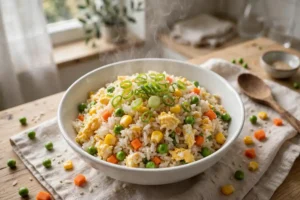
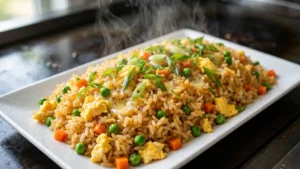
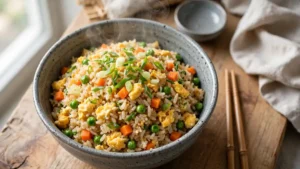
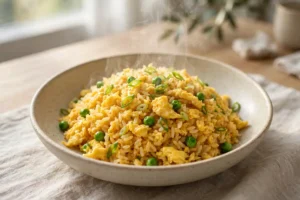
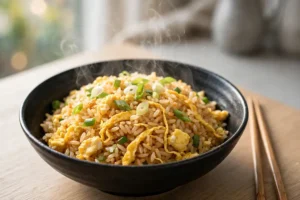
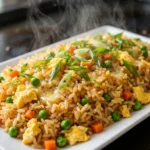
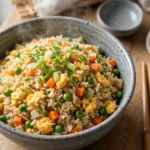
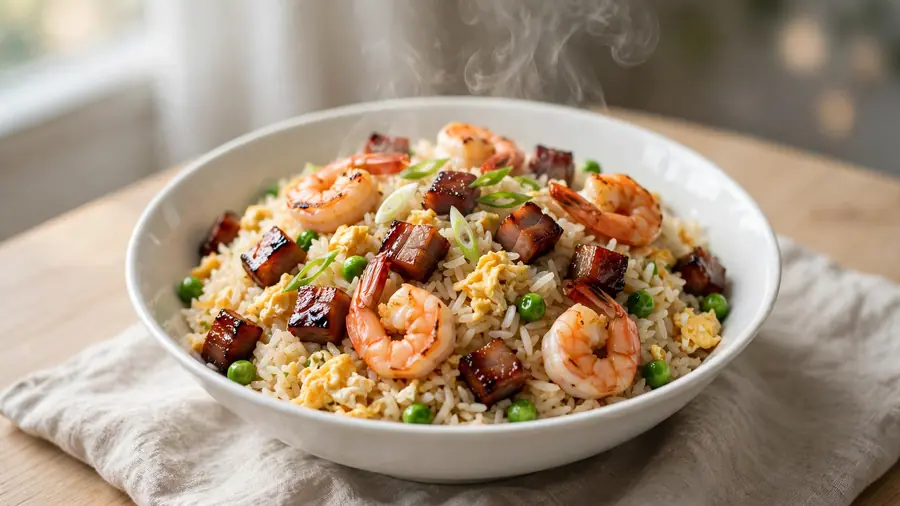
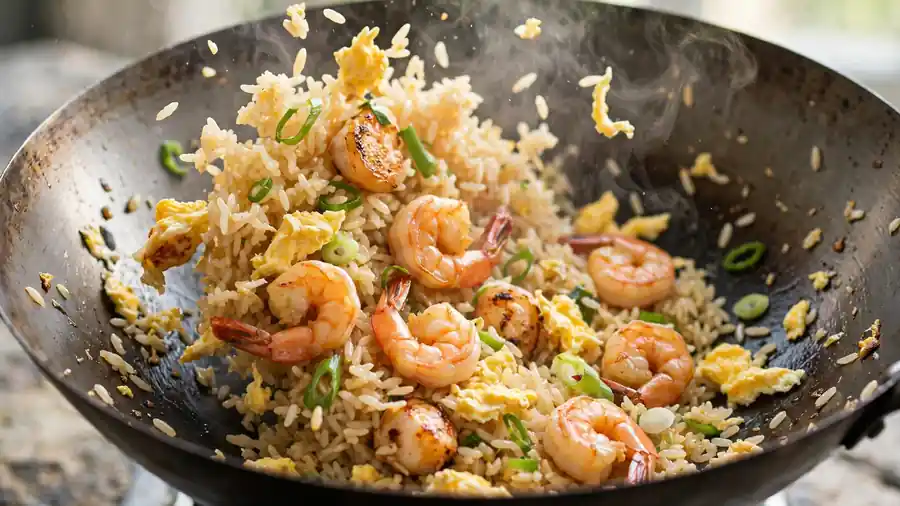
Real Cantonese fried rice is a study in restraint. Golden grains, fluffy egg, sweet char siu, and plump shrimp, seasoned with little more than salt, white pepper, and light soy sauce. This Cantonese fried rice recipe shows you the authentic technique: fierce heat, cold rice, and the smoky breath of the wok known as wok hei.
Unlike heavy sauced versions, a proper Cantonese fried rice recipe lets each ingredient speak. The rice is seasoned lightly so the sweetness of the shrimp and the caramel edges of the char siu pork come through.
Why You’ll Love This Cantonese Fried Rice Recipe
It is authentically flavored. Light seasoning, white pepper, and wok hei give the true Cantonese taste.
It cooks in 25 minutes. Fast enough for weeknights, impressive enough for guests.
The texture is perfect. Separate, chewy grains with golden egg and juicy shrimp in every bite.
It is balanced and not greasy. Just enough oil and sauce, so it eats light despite the flavor.
It teaches real technique. Master this method and every fried rice you make afterward improves.
What Makes This Recipe Work?
Cantonese cooking prizes wok hei, the smoky aroma that comes from food hitting a screaming-hot, well-seasoned wok. This only happens above very high heat, which is why the wok must be nearly smoking before anything goes in.
The second principle is seasoning restraint. Cantonese fried rice uses less soy sauce than many Western versions, often just enough to tint the rice pale gold. Salt and white pepper do the heavy lifting, keeping flavors clean and distinct. Cold day-old rice completes the trio, frying into separate grains that soak up seasoning evenly.
Menu of Cantonese Fried Rice Recipe
This Cantonese fried rice recipe covers why it works, the full ingredient list with US measurements, how to choose the best ingredients, the tools that help, step-by-step instructions, chef tips, a troubleshooting table, substitutions, variations, storage and reheating guidance, nutrition estimates, and answers to common questions.
Ingredients for Cantonese Fried Rice Recipe
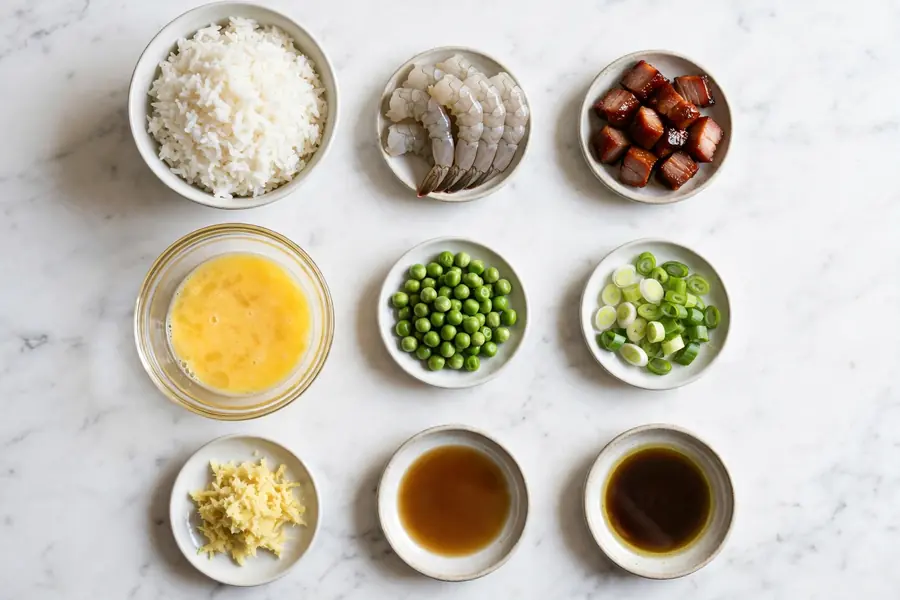
For the Fried Rice
- 3 cups cooked long-grain jasmine rice, chilled (day-old is best)
- 1/2 pound medium shrimp (about 225 g), peeled and deveined
- 1/2 cup char siu pork, diced (about 4 ounces)
- 3 large eggs, lightly beaten
- 1/2 cup frozen peas, thawed
- 3 spring onions (scallions), thinly sliced
- 1 teaspoon grated fresh ginger
- 3 tablespoons peanut or vegetable oil, divided
For the Seasoning
- 1 1/2 tablespoons light soy sauce
- 1 teaspoon Shaoxing wine
- 1/2 teaspoon salt, plus more to taste
- 1/2 teaspoon white pepper
- 1 teaspoon sesame oil
Shaoxing wine adds a subtle fragrance that defines authentic Cantonese flavor. Light soy sauce seasons without darkening the rice too much. White pepper gives a gentle warmth that black pepper would overpower.
Best Ingredients to Use
Jasmine rice is the traditional choice in Cantonese kitchens. Its light fragrance suits the clean seasoning, and the grains fry up distinct. Char siu pork from a Chinese barbecue shop gives the best results; homemade or store-bought roast pork are fine backups.
Buy shrimp with shells on and peel them yourself if you can. They taste sweeter and stay juicier than pre-peeled shrimp. Look for light soy sauce labeled “light” or “thin” rather than all-purpose, which is saltier and darker.
Kitchen Tools You’ll Need
- A large carbon-steel wok if you have one. Its seasoning and heat response create the best wok hei.
- A wok spatula or flat wooden spatula for tossing and breaking up rice.
- Measuring cups and spoons, plus small bowls for the prepped ingredients.
How to Make Cantonese Fried Rice Recipe
Step 1: Prep Everything
Peel and devein the shrimp and pat them dry. Dice the char siu, slice the spring onions, and grate the ginger. Beat the eggs. Break up the cold rice until no clumps remain. This Cantonese fried rice recipe moves very fast over high heat, so every ingredient must be ready before you start.
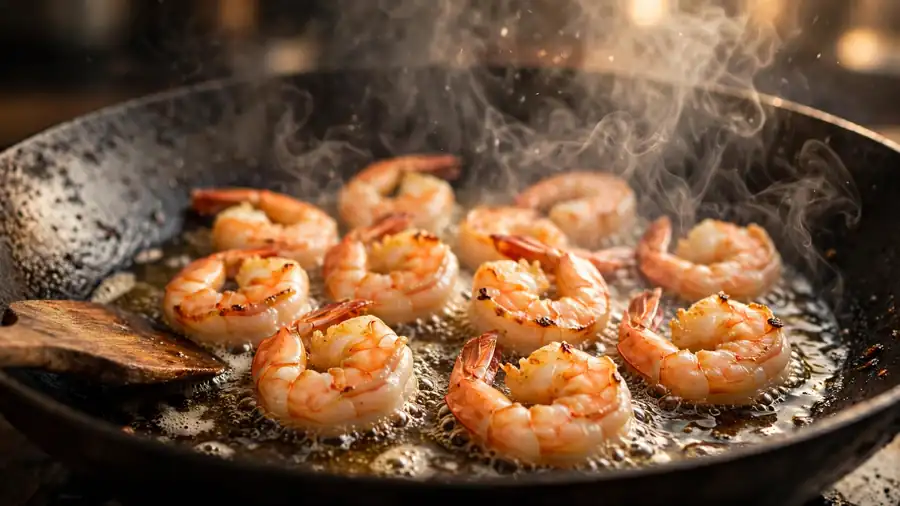
Step 2: Sear the Shrimp
Heat 1 tablespoon of oil in the wok over high heat until smoking. Add the shrimp in a single layer and sear 1 minute per side until pink, curled, and just opaque. Remove to a plate immediately. They will finish in the final toss; overcooking now makes them rubbery.
Step 3: Scramble the Eggs
Add another tablespoon of oil and reduce heat slightly to medium-high. Pour in the eggs and scramble into large, soft curds, 30 to 45 seconds. Break them into bite-size pieces and move to the plate with the shrimp.
Step 4: Warm the Char Siu and Aromatics
Add the remaining tablespoon of oil to the wok over high heat. Add the ginger and the white parts of the spring onions and stir-fry 20 seconds until fragrant. Add the char siu and peas, tossing 1 minute until the pork edges crisp slightly and the peas are hot.
Step 5: Fry the Rice
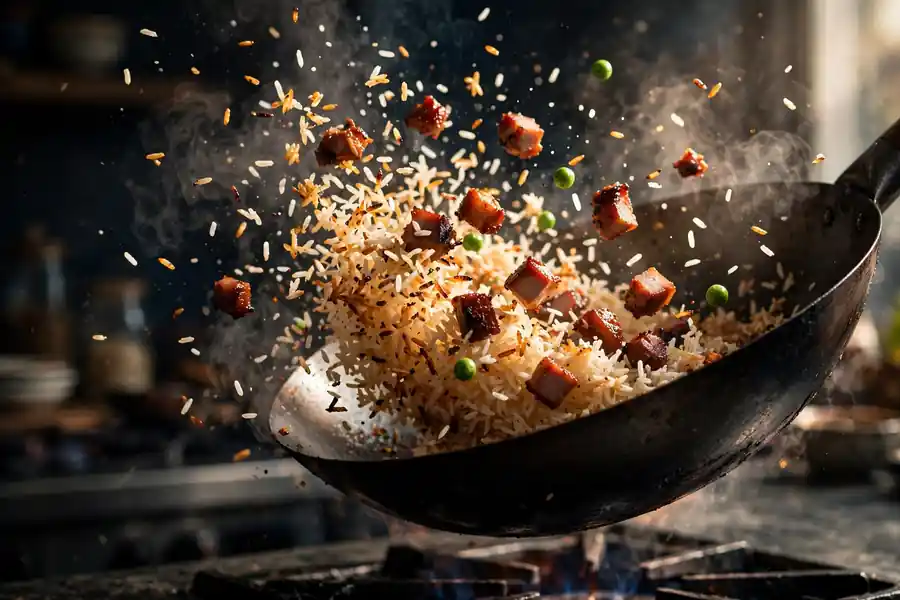
Add the cold rice and toss 3 to 4 minutes over high heat, breaking up clumps. Press the rice against the hot wok surface and let it sit 20 to 30 seconds between tosses so golden, smoky spots develop. This is where wok hei forms.
Step 6: Season and Combine
Drizzle the Shaoxing wine around the edge of the wok so it sizzles and evaporates. Add the light soy sauce, salt, and white pepper, tossing 1 minute until the rice is evenly seasoned and pale gold. Return the shrimp and eggs, toss 1 minute more, and finish with sesame oil and the green spring onions. Serve immediately.
Chef’s Tips for the Best Results
Dry the shrimp thoroughly. Surface moisture steams instead of sears. Pat with paper towels until completely dry before they hit the wok.
Season lightly, then taste. Authentic Cantonese fried rice is never dark brown. Start with the listed soy sauce and add more only if needed.
Let the rice sit between tosses. Constant stirring prevents browning. Give the rice 20 to 30 seconds of contact with the hot wok for those smoky golden spots.
Common Mistakes and How to Fix Them
| Common Problem | Why It Happens | How to Fix It |
|---|---|---|
| No smoky flavor | Wok not hot enough | Heat until the oil smokes before adding food; use the highest burner setting |
| Rice is dark and heavy | Too much soy sauce | Use only 1 1/2 tbsp light soy sauce; the rice should be pale gold, not brown |
| Shrimp are rubbery | Overcooked in the sear step | Sear just until pink and opaque, then remove; they finish in the final toss |
| Eggs are in tiny dry bits | Eggs over-scrambled at high heat | Use medium-high heat and pull the eggs while soft and in large curds |
| Rice clumps together | Fresh rice or cold wok | Use day-old chilled rice and break up all clumps before frying |
Ingredient Substitutions
| Original Ingredient | Substitute | Expected Difference |
|---|---|---|
| Char siu pork | Diced cooked ham or roast pork | Less sweet and smoky; add a pinch of sugar with the pork |
| Shaoxing wine | Dry sherry | Very close in flavor; use the same amount |
| Light soy sauce | Regular soy sauce | Darker color and saltier; reduce to 1 tbsp and add salt separately |
| Peanut oil | Vegetable or canola oil | Slightly less nutty flavor; no functional difference |
| Fresh shrimp | Frozen shrimp, thawed and dried | Nearly identical if thawed fully and patted very dry |
Recipe Variations
Yangzhou classic: Add 2 tablespoons diced bamboo shoots and swap peas for diced carrot for the traditional Yangzhou version.
Chicken Cantonese: Replace shrimp with 1/2 pound diced chicken breast, cooked through in the sear step.
Vegetarian: Skip the shrimp and char siu; use 1 cup diced king oyster mushrooms and extra egg.
Salted fish upgrade: Add 1 tablespoon minced salted fish with the ginger for the classic Hong Kong restaurant depth.
XO sauce version: Stir 1 teaspoon of XO sauce into the rice with the soy sauce for a deeper seafood savor.
Practical Cooking Scenario
Suppose you have leftover jasmine rice and a half pound of shrimp that needs to be used tonight. Peel and prep the shrimp while the rice comes out of the fridge and the sauce ingredients are measured. The sear-fry-toss sequence takes about 12 minutes of active cooking. To serve four with a vegetable side, pair it with quick blanched gai lan with oyster sauce while the wok is still hot.
Storage and Food Safety
Cool leftovers within 2 hours. Spread the rice on a plate to cool fast, then pack into airtight containers. Refrigerate up to 4 days. Freeze up to 2 months in portioned bags with the air pressed out, and thaw overnight in the refrigerator. Discard rice that smells sour or sat out more than 2 hours. Note: cooked rice also freezes well in a single layer on a tray first, then bagged, and it can go straight from the freezer into a hot wok.
How to Reheat Cantonese Fried Rice Recipe
The best way to reheat this Cantonese fried rice recipe is in a hot wok or skillet. Heat a teaspoon of oil over high heat, add the cold rice, and stir-fry 3 to 4 minutes until steaming. A splash of water helps if it looks dry.
The microwave works too. Sprinkle with a tablespoon of water, cover loosely, and heat 2 minutes, stirring halfway. Since this dish contains shrimp and pork, reheat to 165 degrees F (74 degrees C) throughout.
Meal Prep Tips
Cook the jasmine rice a day ahead and chill uncovered 30 minutes before covering. Peel and devein shrimp up to 1 day ahead and keep refrigerated. Dice char siu up to 3 days ahead. Slice spring onions and mix the seasoning up to 2 days ahead. If you cook on an electric stove, a wide heavy skillet gives more contact with the heat than a round-bottomed wok.
Nutrition Information
Approximate nutrition per serving (makes 4 servings): 460 calories, 26 g protein, 56 g carbohydrates, 13 g fat, 2 g fiber, 890 mg sodium. These are estimates only and vary with ingredient brands, oil amounts, shrimp size, and portion sizes.
More Rice Recipes to Try
If you enjoyed this recipe, you will love these other rice dishes from The World of Rice:
- Authentic Chinese Shrimp Fried Rice Recipe: Traditional Technique, Pure Flavor
- Authentic Egg Fried Rice Recipe: Simple, Silky & Perfectly Golden
- Authentic Fried Rice Recipe With Egg: The Traditional Golden Method
- Authentic Japanese Fried Rice Recipe: Real Yakimeshi at Home
Frequently Asked Questions
What makes fried rice Cantonese style?
Light seasoning with white pepper and light soy sauce, jasmine rice, char siu pork and shrimp, and high-heat cooking for wok hei. It is paler and cleaner tasting than heavily sauced versions.
Can I make this without a wok?
Yes. A large heavy skillet or cast iron pan over the highest heat works. You get less wok hei, but the technique and seasoning still produce great rice.
How do I get wok hei on a home stove?
Use maximum heat, a dry well-seasoned wok, small batches, and let the rice sit undisturbed between tosses so it chars slightly. A useful extra step is to heat the oil with the spring onion whites first so the oil itself picks up scallion flavor before the rice goes in.
Can I prepare this recipe ahead of time?
Yes. Cook the rice a day ahead, prep the shrimp and char siu up to a day ahead, and measure the seasoning in advance. The cooking takes about 15 minutes.
How should I store leftovers?
Cool within 2 hours, refrigerate in airtight containers up to 4 days, or freeze up to 2 months. Thaw frozen rice overnight in the fridge.
Can I make this recipe healthier?
Use less oil with a good nonstick wok, add extra peas and diced vegetables, choose lean char siu, and keep the salt moderate.
Final Thoughts
This Cantonese fried rice recipe is proof that restraint creates flavor. Hot wok, cold rice, light seasoning, and quick hands give you golden grains with real smokiness.
See the dictionary definitions for shrimp and soy sauce.

Prayvista Team is the editorial team behind Prayvista, The World of Rice. The team writes and reviews rice recipes for home cooks, and every article is checked by editor Sara Raza before publishing.