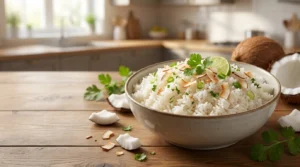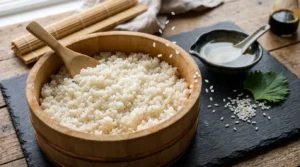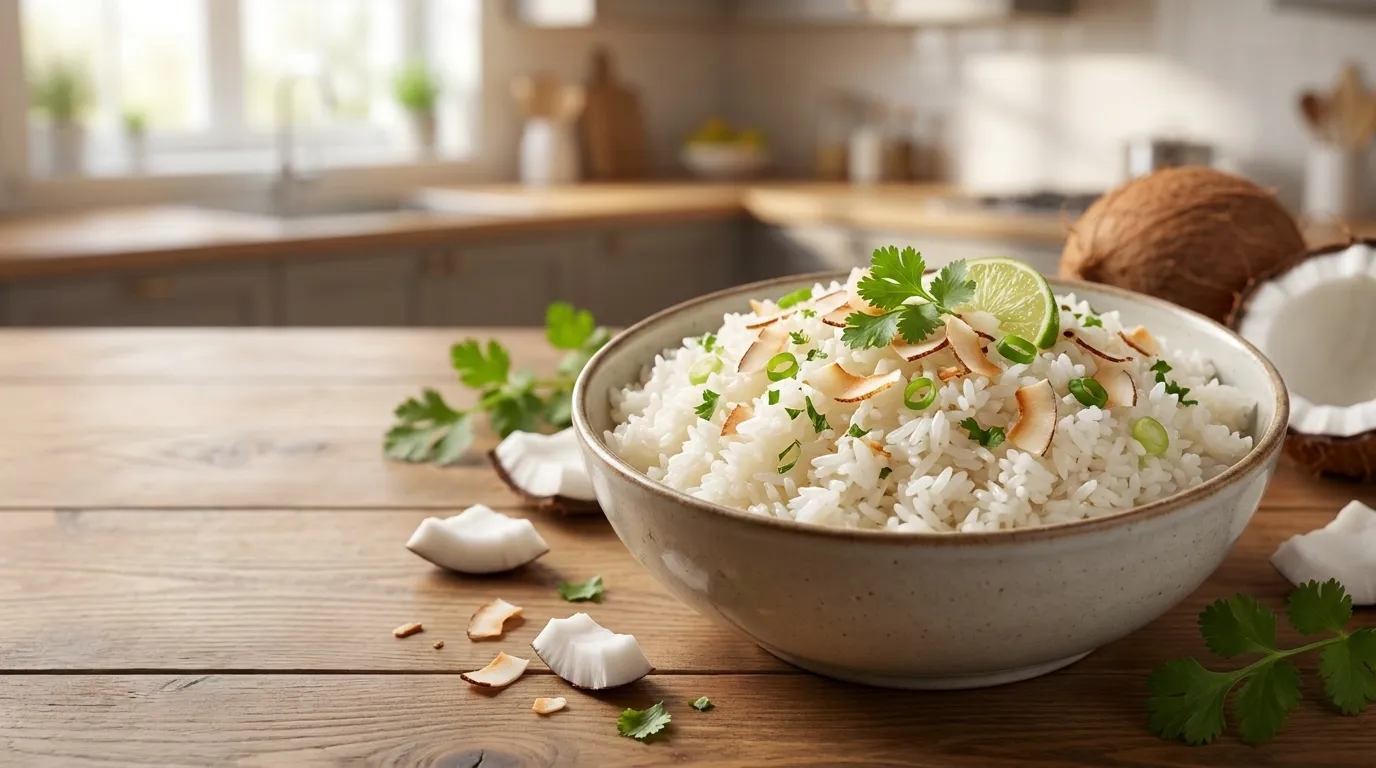
This coconut rice recipe makes fluffy, fragrant rice with a naturally sweet coconut flavor. Cook jasmine or long-grain rice with coconut milk, water, salt, and a little oil for an easy side dish ready in about 30 minutes.
Coconut Rice Recipe at a Glance
| Recipe Detail | Information |
| Prep Time | 5 minutes |
| Cook Time | 20 minutes |
| Total Time | 25 minutes |
| Servings | 4 |
| Cuisine | Asian-inspired |
| Course | Side Dish |
| Difficulty | Easy |
| Calories | About 240 per serving |
| Best Rice | Jasmine or long-grain white rice |
| Main Flavor | Creamy coconut |
Why You’ll Love This Coconut Rice Recipe
This coconut rice recipe is one of those simple dishes that can make an ordinary dinner feel special. The rice cooks in coconut milk, giving every grain a gentle sweetness and rich aroma.
Unlike complicated rice dishes, this one needs only a handful of ingredients. You can prepare it on the stovetop while working on the main course.
The finished rice should be fluffy, tender, and lightly creamy without becoming mushy. It pairs especially well with grilled chicken, shrimp, salmon, curries, and spicy dishes.
If you love rice recipes that require little effort but deliver plenty of flavor, this is a great one to keep in your regular dinner rotation.
Menu of Coconut Rice Recipe
- Coconut rice ingredients
- How to choose the best rice
- Kitchen tools you need
- How to make coconut rice
- Chef’s tips for fluffy rice
- Common mistakes to avoid
- Easy coconut rice variations
- What to serve with coconut rice
- How to store and reheat it
- Coconut rice nutrition
- Frequently asked questions
- Final serving tips
Ingredients for Coconut Rice
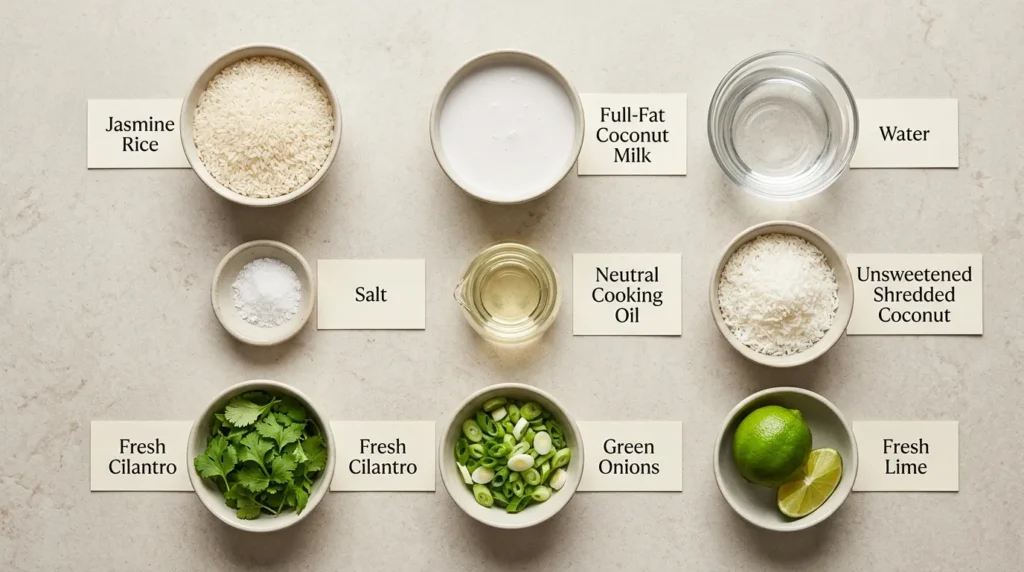
You only need a few pantry-friendly ingredients.
Rice
Use jasmine rice for soft, fragrant coconut rice. Long-grain white rice also works very well.
Avoid using too much rice without adjusting the liquid because the balance between rice and coconut milk is important for the final texture.
Coconut Milk
Use full-fat canned coconut milk for the richest flavor. Shake the can well before opening so the coconut cream and liquid are properly combined.
Light coconut milk can be used, but the finished rice will have a less creamy taste.
Water
Water helps balance the richness of the coconut milk and provides enough liquid for the rice to cook properly.
Salt
Salt is essential because it prevents the coconut flavor from tasting overly sweet or flat.
Oil or Butter
A small amount of neutral oil or butter adds richness and helps give the rice a smooth texture.
Optional Garnishes
For serving, try:
- Toasted shredded coconut
- Fresh cilantro
- Sliced green onions
- Lime wedges
- Chopped cashews
- Fresh chili slices
Kitchen Tools You Need
You don’t need special equipment for this recipe.
- Medium saucepan with a tight-fitting lid
- Measuring cups
- Measuring spoons
- Fine-mesh strainer
- Fork for fluffing
- Wooden spoon or spatula
A heavy-bottomed saucepan is especially helpful because it distributes heat evenly and reduces the chance of the rice burning.
How to Make Coconut Rice
Step 1: Rinse the Rice
Place the rice in a fine-mesh strainer and rinse it under cool water.
Continue rinsing until the water becomes mostly clear. This removes excess surface starch and helps prevent sticky, clumpy rice.
Drain the rice thoroughly.
Step 2: Combine the Ingredients
Add the rinsed rice, coconut milk, water, salt, and oil to a saucepan.
Stir gently to combine.
For a balanced flavor, you want the coconut milk to add richness without making the rice excessively heavy.
Step 3: Bring It to a Boil
Place the saucepan over medium-high heat.
Bring the mixture to a gentle boil. Once you see steady bubbling, stir the rice once.
Don’t continue stirring throughout the cooking process because excessive stirring can release starch and make the rice sticky.
Step 4: Cover and Simmer
Reduce the heat to low and cover the saucepan tightly.
Let the rice simmer for about 15–18 minutes, or until the liquid has been absorbed and the grains are tender.
Keep the lid closed as much as possible. Every time you remove it, steam escapes and the cooking temperature changes.
Step 5: Rest the Rice
Turn off the heat and leave the saucepan covered for another 5–10 minutes.
This resting period is one of the easiest ways to improve rice texture. The remaining steam finishes cooking the grains and helps distribute moisture evenly.
Step 6: Fluff and Serve
Remove the lid and gently fluff the rice with a fork.
Taste and adjust the salt if necessary.
Top with toasted coconut, cilantro, green onions, or a squeeze of fresh lime before serving.
Chef’s Tips for Perfect Coconut Rice
Rinse the Rice Well
Rinsing is especially important when using white rice. It removes excess starch and gives you lighter, more separate grains.
Use Full-Fat Coconut Milk
For restaurant-style flavor, full-fat coconut milk is the better choice. It gives the rice a deeper coconut aroma and richer texture.
Don’t Over-Stir
Once the rice starts cooking, leave it alone. Too much stirring can make the finished rice gummy.
Keep the Lid Closed
The steam inside the saucepan is part of the cooking process. Avoid repeatedly checking the rice.
Let It Rest
Don’t skip the resting stage. Five to ten minutes of covered resting can make a noticeable difference in texture.
Add Lime at the End
If the rice tastes rich or slightly sweet, a little fresh lime juice can brighten the entire dish.
Common Coconut Rice Mistakes
| Mistake | Why It Happens | How to Fix It |
| Mushy rice | Too much liquid | Measure ingredients carefully |
| Hard rice | Not enough liquid or cooking time | Add a small amount of hot water and continue cooking |
| Sticky rice | Excess starch or stirring | Rinse rice and avoid stirring |
| Burnt bottom | Heat is too high | Use low heat after boiling |
| Weak coconut flavor | Too much water or light coconut milk | Use full-fat coconut milk |
| Bland rice | Not enough salt | Season before cooking |
Easy Coconut Rice Variations
Coconut Lime Rice
Add fresh lime zest while cooking and a little lime juice after the rice has finished.
This version is bright, fresh, and excellent with grilled seafood.
Coconut Rice With Cilantro
Fold chopped fresh cilantro into the cooked rice just before serving.
The herbs balance the richness of the coconut milk beautifully.
Coconut Rice With Toasted Coconut
Toast unsweetened shredded coconut in a dry skillet until lightly golden.
Sprinkle it over the finished rice for extra coconut flavor and a pleasant crunch.
Spicy Coconut Rice
Add a finely chopped chili or a pinch of red pepper flakes to the cooking liquid.
The mild sweetness of coconut pairs surprisingly well with heat.
Coconut Rice With Cashews
Top the finished rice with toasted chopped cashews.
The combination of creamy rice and crunchy nuts makes a simple side dish much more satisfying.
What to Serve With Coconut Rice
Coconut rice is versatile enough to work with many different meals.
Grilled Chicken
Serve it alongside grilled or roasted chicken with a fresh salad and lime.
Shrimp
Coconut rice and garlic butter shrimp make an easy weeknight dinner. The creamy rice balances the savory seafood.
Salmon
Grilled or pan-seared salmon works particularly well with coconut rice and a fresh vegetable side.
Thai or Indian Curries
The mild sweetness of coconut rice can balance spicy curry sauces beautifully.
Black Beans
For a simple meatless meal, serve coconut rice with seasoned black beans, avocado, and fresh salsa.
Grilled Vegetables
Bell peppers, zucchini, asparagus, and broccoli all make excellent partners for coconut rice.
How to Store Coconut Rice
Refrigerator
Let the rice cool and transfer it to an airtight container.
Refrigerate for up to 3–4 days.
Freezer
For longer storage, place cooled rice in freezer-safe containers or bags.
Freeze for up to 2 months for the best texture.
Reheating
Add the rice to a microwave-safe bowl with a tablespoon or two of water.
Cover loosely and microwave until steaming hot, stirring halfway through.
You can also reheat it gently in a saucepan with a splash of water.
Coconut Rice Nutrition
Nutrition varies depending on the type and amount of coconut milk used.
An approximate serving contains:
| Nutrient | Approximate Amount |
| Calories | 240 |
| Carbohydrates | 38 g |
| Protein | 4 g |
| Fat | 9 g |
| Fiber | 1 g |
| Sodium | 300 mg |
For more precise nutritional information, calculate the recipe using the exact brands and quantities of ingredients you use.
Frequently Asked Questions
Can I make coconut rice with brown rice?
Yes. Brown rice can be used, but it requires more liquid and a longer cooking time than white rice. Follow the cooking directions for your specific brown rice.
Can I use jasmine rice for coconut rice?
Absolutely. Jasmine rice is one of the best choices because its natural floral aroma works beautifully with coconut milk.
Why is my coconut rice mushy?
Mushy rice usually results from too much liquid, overcooking, or excessive stirring. Measure the liquid carefully and allow the rice to cook undisturbed.
Can I use light coconut milk?
Yes. Light coconut milk works, but the rice will have a less creamy and less pronounced coconut flavor than rice made with full-fat coconut milk.
Can I make coconut rice without a rice cooker?
Yes. This recipe is designed for a regular saucepan, so you don’t need a rice cooker.
Is coconut rice sweet?
Coconut rice has a naturally mild sweetness from the coconut milk, but properly seasoned rice should not taste like dessert. Salt and savory toppings help create a balanced flavor.
Can I make coconut rice ahead of time?
Yes. Coconut rice can be made ahead and refrigerated. Reheat it with a small splash of water to restore moisture.
Conclusion
This coconut rice recipe is an easy way to turn everyday rice into a flavorful side dish. Coconut milk gives the rice a subtle sweetness, creamy texture, and beautiful aroma without requiring complicated ingredients.
The most important tricks are simple: rinse the rice, measure your liquid carefully, cook it gently, keep the lid closed, and let the rice rest before fluffing.
Serve it with shrimp, grilled chicken, salmon, curry, vegetables, or beans for a complete meal. Once you get comfortable with the basic recipe, you can easily customize it with lime, cilantro, toasted coconut, chilies, or cashews.
For busy weeknights, family dinners, or weekend entertaining, this coconut rice recipe is an easy side dish that’s flavorful enough to stand on its own.
Benihana Fried Rice Recipe: Better Than Takeout

I am Eliaz ,a professional cook and food writer with over 10 years of experience in the kitchen. I have worked with a wide range of rice dishes and cooking styles, and I enjoy sharing the techniques and practical lessons I have learned through years of cooking.