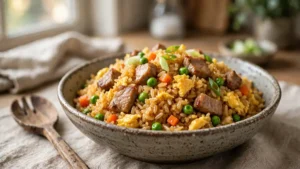
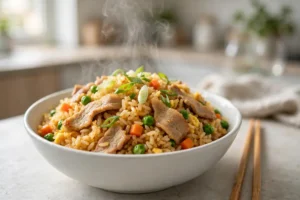
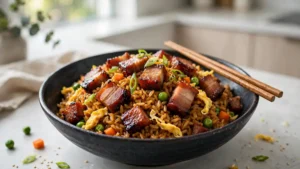
The most common gluten free fried rice problem is hidden gluten. Regular soy sauce and oyster sauce both contain wheat, so a recipe that looks safe can fail on one bottle. The fix is simple: swap to tamari and a gluten-free oyster-style sauce, check every label, and keep the pan clean. Do that, and this gluten free chicken fried rice recipe tastes exactly like the takeout classic, ready in about 30 minutes.

Menu of Gluten Free Chicken Fried Rice Recipe
This gluten free chicken fried rice recipe covers why it works, the full ingredient list with US measurements, a troubleshooting table before the steps, step-by-step instructions, chef tips, substitutions, variations, storage and reheating guidance, and answers to common questions.
Why You’ll Love This Gluten Free Chicken Fried Rice Recipe
- It is completely gluten free. Every sauce and seasoning is chosen to be safe, with label-checking tips included.
- It tastes like the real thing. Tamari is rich and savory, so you will not miss regular soy sauce.
- It is a full meal. Chicken, eggs, rice, and vegetables in one pan.
Ingredients for Gluten Free Chicken Fried Rice
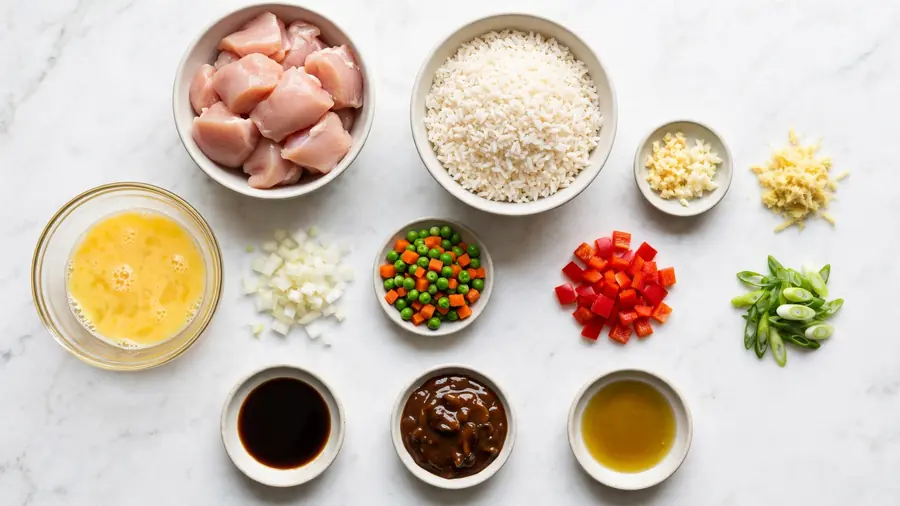
For the Chicken
- 1 pound chicken breast, cut into 1/2-inch pieces (about 450 g)
- 1 tablespoon gluten-free tamari
- 1 teaspoon cornstarch
- 1/2 teaspoon garlic powder
For the Fried Rice
- 4 cups cooked jasmine rice, chilled (day-old is best)
- 3 tablespoons vegetable oil or avocado oil, divided
- 3 large eggs, lightly beaten
- 1 small onion, diced
- 1 cup frozen peas and carrots, thawed
- 1 red bell pepper, diced
- 3 cloves garlic, minced (about 1 tablespoon)
- 1 tablespoon fresh ginger, grated
- 3 green onions, sliced
For the Gluten-Free Sauce
- 1/4 cup gluten-free tamari
- 1 tablespoon gluten-free oyster-style sauce
- 1 teaspoon toasted sesame oil
- 1 teaspoon rice vinegar
- 1/2 teaspoon sugar
- 1/4 teaspoon white pepper
Notes: always check labels. Look for a certified gluten-free mark on tamari and oyster-style sauce, since recipes and manufacturing lines change. Cornstarch is naturally gluten free, but buy a brand labeled gluten free if you are highly sensitive, to avoid cross-contact. Tamari is brewed mainly from soybeans with little or no wheat, giving a slightly richer, less sharp flavor than regular soy sauce. For celiac cooking, also check that your rice vinegar and any spice blends are certified gluten free, and use a clean pan or a thoroughly washed wok.
You will need: a large wok or 12-inch skillet, a wooden spoon or wok spatula, a cutting board and sharp knife, and a small bowl for the sauce.
Common Mistakes and How to Fix Them
| Common Problem | Why It Happens | How to Fix It |
|---|---|---|
| Hidden gluten sneaks in | Regular soy or oyster sauce used by habit | Use only tamari and sauces labeled gluten free |
| Chicken is dry | Overcooked past 165 degrees F | Use a thermometer; pull the chicken as soon as it is done |
| Rice is mushy | Fresh rice used, or pan overcrowded | Use cold, day-old rice; fry in a single layer |
| Dish tastes flat | Tamari under-measured, or no acid | Add a splash of rice vinegar or an extra teaspoon of tamari |
| Sauce tastes too sharp | Some tamari brands are saltier than others | Start with 3 tablespoons and add more to taste |
How to Make Gluten Free Chicken Fried Rice Recipe
Step 1: Prep Everything
Toss the chicken pieces with 1 tablespoon of tamari, cornstarch, and garlic powder. Set aside for 10 minutes. Break up the cold rice so no clumps remain. Whisk the sauce ingredients together in a small bowl. Dice the vegetables, mince the garlic, and grate the ginger. This recipe moves fast once the heat is on.
Step 2: Sear the Chicken
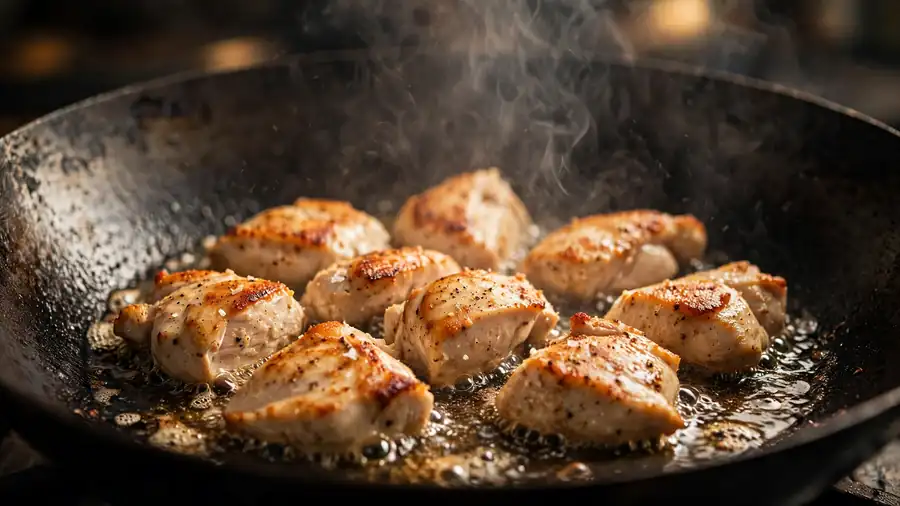
Heat 1 tablespoon of oil in the wok over high heat until shimmering. Add the chicken in a single layer and cook 5 to 6 minutes, tossing occasionally, until golden on the edges and cooked through with no pink in the center. A thermometer should read 165 degrees F (74 degrees C). Transfer to a plate.
Step 3: Scramble the Eggs
Lower the heat to medium-high. Add 1 tablespoon of oil. Pour in the beaten eggs and scramble into soft curds, about 30 to 45 seconds, until just set but still moist. Remove to the plate with the chicken.
Step 4: Cook the Vegetables
Return the heat to high and add 1 tablespoon of oil. Add the onion, peas and carrots, and bell pepper. Stir-fry 2 to 3 minutes until bright and just tender. Add the garlic and ginger and cook 1 minute more until fragrant and golden at the edges.
Step 5: Fry the Rice
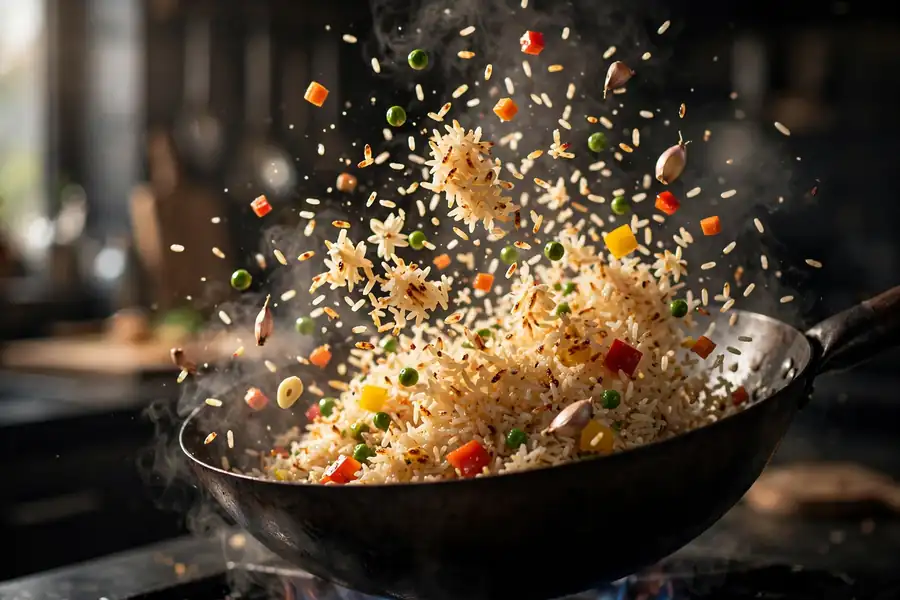
Add the cold rice. Break up any clumps and stir-fry 3 to 4 minutes, tossing constantly, until hot through and golden in spots. The grains should feel dry and separate.
Step 6: Sauce and Finish
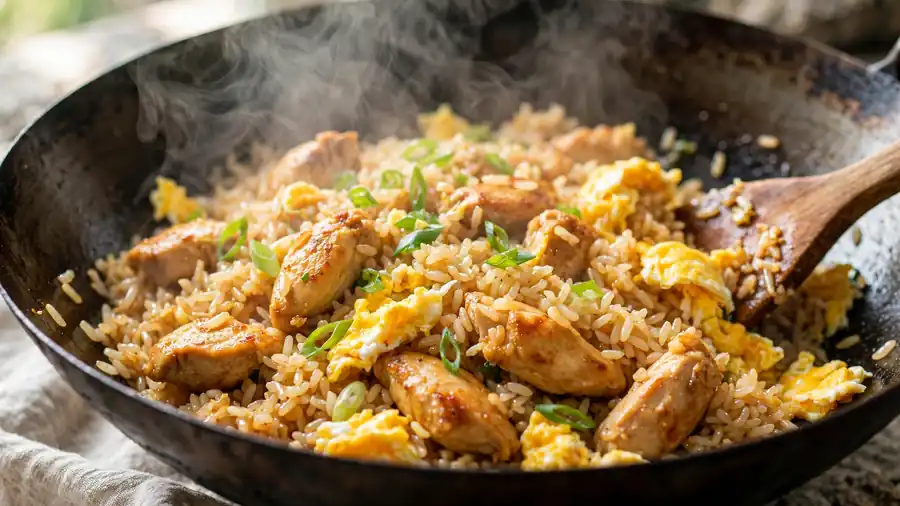
Pour the sauce evenly over the rice and toss 1 minute until every grain is glossy and coated. Return the chicken and eggs to the wok. Toss 1 minute to warm through. Scatter the green onions over the top and serve immediately.
Chef’s Tips for the Best Results
- Read every label, every time. Manufacturers change recipes. Tamari, oyster-style sauce, and even rice vinegar can vary, so check for a gluten-free claim on each bottle before you cook.
- Avoid cross-contact. If your household also cooks with regular soy sauce, use a freshly washed pan and clean utensils. Even a splash of regular soy sauce in the wok matters for someone with celiac disease.
- Marinate the chicken. The tamari and cornstarch coating keeps the chicken juicy and seasons it from the inside, so the dish tastes complete even with a lighter sauce hand.
Ingredient Substitutions
| Original Ingredient | Substitute | Expected Difference |
|---|---|---|
| Gluten-free tamari | Coconut aminos (certified gluten free) | Milder and sweeter; reduce the sugar in the sauce |
| Gluten-free oyster-style sauce | Extra tamari plus 1 tsp honey | Less rich and glossy; still savory |
| Chicken breast | Shrimp, pork, or firm tofu | Shrimp cook in 3 minutes; press tofu before crisping |
| Jasmine rice | Brown rice or cauliflower rice | Brown rice is chewier; cauliflower rice is low carb |
| Vegetable oil | Avocado oil or peanut oil | All work; choose a high smoke point oil |
Recipe Variations
- Spicy: Add 2 teaspoons of gluten-free chili garlic sauce to the sauce mix; check the label first.
- Shrimp version: Swap in 1 pound of peeled shrimp, seared 2 to 3 minutes and added back at the end.
- Vegetable heavy: Double the vegetables and add shredded cabbage or snap peas for extra crunch.
- Pineapple: Add 3/4 cup of diced fresh pineapple with the bell pepper for sweet and savory contrast.
- Snow peas and sprouts: Add snow peas, bean sprouts, or diced water chestnuts with the vegetables, ingredients several gluten-free fried rice recipes use for crunch.
Storage and Food Safety
Cool leftovers within 2 hours, then move to airtight containers. Refrigerate up to 4 days. Freeze portions in freezer bags with the air pressed out for up to 2 months, and thaw overnight in the refrigerator. Discard leftovers that smell off or have been at room temperature more than 2 hours. When reheating for someone with celiac disease, use clean utensils and a clean pan to avoid cross-contact with gluten-containing foods.
Meal-prep note: cook the rice a day ahead and chill it; that is the most important prep step. Cut the chicken and toss it with the tamari marinade up to 24 hours ahead. Dice the vegetables up to 2 days ahead. Whisk the sauce and keep it in a jar for a week.
How to Reheat Gluten Free Chicken Fried Rice Recipe
The best way to reheat this gluten free chicken fried rice recipe is in a skillet. Heat a teaspoon of oil over medium-high heat, add the cold rice, and stir-fry 3 to 4 minutes, adding a tablespoon of water if it looks dry.
For the microwave, place a serving in a bowl, sprinkle with a tablespoon of water, cover loosely, and heat 2 minutes, stirring halfway. Heat leftovers with chicken and eggs to 165 degrees F (74 degrees C) throughout.
More Rice Recipes to Try
If you enjoyed this recipe, you will love these other rice dishes from The World of Rice:
- Easy Gluten Free Fried Rice Recipe: Safe, Flavorful & Full of Texture
- Benihana Chicken Fried Rice Recipe: The Famous Teppanyaki Copycat
- Best Easy Chicken Fried Rice Recipe: 15-Minute Shortcut Dinner
- Best Recipe For Chicken Fried Rice: Takeout-Style at Home
Frequently Asked Questions
Is tamari always gluten free?
Most tamari is brewed with little or no wheat, but not all of it is certified gluten free. Always check the label for a gluten-free claim, especially if you are cooking for someone with celiac disease.
Is oyster sauce gluten free?
Traditional oyster sauce contains wheat. Use a sauce specifically labeled gluten-free oyster-style sauce, or substitute extra tamari with a teaspoon of honey.
Can I use coconut aminos instead of tamari?
Yes, if the brand is certified gluten free. Coconut aminos are milder and sweeter, so reduce the sugar in the sauce and taste as you go.
How do I avoid cross-contact in my kitchen?
Wash the wok, utensils, and cutting board thoroughly before cooking, and keep gluten-free sauces separate from regular ones. Even small splashes of regular soy sauce matter for celiac safety.
Can I make this recipe dairy free too?
It already is dairy free. Just confirm your sauces contain no dairy, which standard tamari and oyster-style sauces do not.
Can I use quinoa instead of rice?
Yes. Several gluten-free fried rice recipes use cooked and cooled quinoa the same way. Use 3 cups, chilled, and fry it 3 to 4 minutes until hot through.
Final Thoughts
This gluten free chicken fried rice recipe proves that dietary needs never have to mean boring food. Safe swaps, a hot pan, and cold rice are all it takes for a dinner everyone enjoys.
See the dictionary definitions for soy sauce and cornstarch.

Prayvista Team is the editorial team behind Prayvista, The World of Rice. The team writes and reviews rice recipes for home cooks, and every article is checked by editor Sara Raza before publishing.