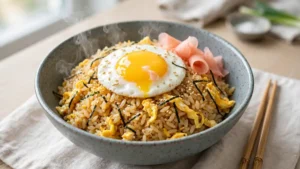
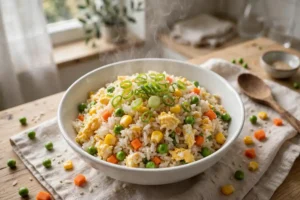
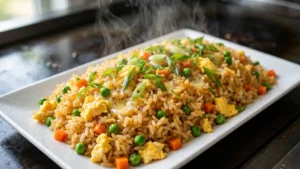
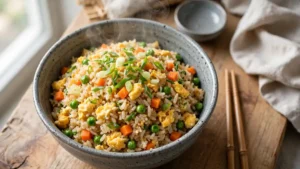
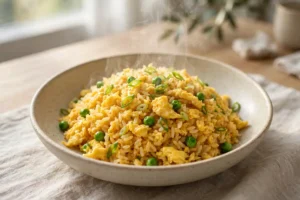
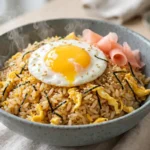
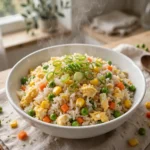
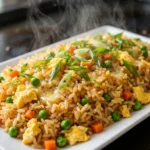
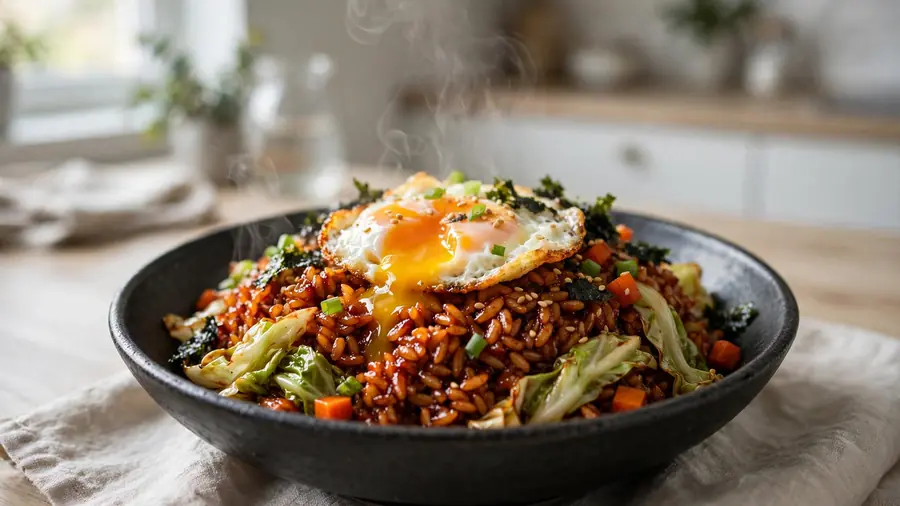
Gochujang fried rice is for spice lovers who want the Korean chili kick without kimchi. The star is gochujang itself: sweet, funky, and fiery, caramelized in a hot wok until it coats every grain in a glossy red glaze. This gochujang fried rice recipe builds the dish around that paste with garlic, vegetables, and a fried egg on top.
Unlike kimchi fried rice, this gochujang fried rice recipe has no sour tang, just pure sweet heat and umami. It is endlessly adaptable: keep it vegetarian, load it with chicken or shrimp, or dial the spice from gentle warmth to full fire.
Why You’ll Love This Gochujang Fried Rice Recipe
The flavor is bold but simple. One paste carries the sweet heat, the savor, and the glaze.
It is fast. About 25 minutes, one pan, and no kimchi required.
It adapts to any eater. Vegetarian as written, or loaded with chicken, shrimp, or tofu.
The egg on top makes it a meal. A runny yolk melting into spicy grains is hard to beat.
Leftovers get better. The flavor deepens overnight as the glaze soaks in.
What Makes This Recipe Work?
Blooming the gochujang is the key step. Ninety seconds of frying with garlic caramelizes the paste’s sugars and deepens its flavor from one-dimensional heat into something sweet, toasty, and complex. Vegetables cook in that glaze, rice fries in it next, and a honey-soy finish balances the spice. Cold, day-old rice keeps the grains separate so the thick sauce coats rather than clumps.
Menu of Gochujang Fried Rice Recipe
This gochujang fried rice recipe covers why it works, the full ingredient list with US measurements, ingredient selection advice, the tools you need, step-by-step instructions, chef tips, a troubleshooting table, substitutions, variations, storage and food safety guidance, reheating instructions, meal prep notes, nutrition estimates, and answers to common questions.
Ingredients for Gochujang Fried Rice Recipe
For the Fried Rice
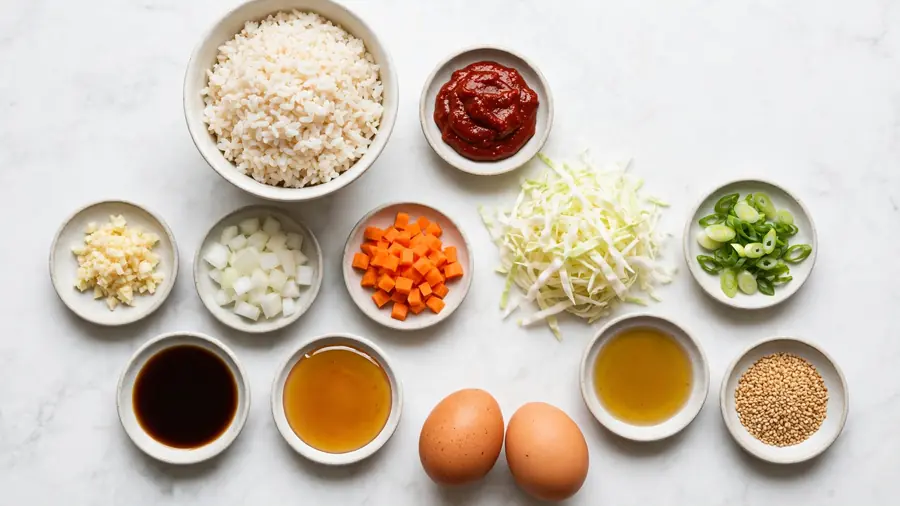
- 4 cups cooked medium-grain rice, chilled overnight
- 3 tablespoons gochujang (Korean chili paste)
- 3 cloves garlic, minced
- 1 tablespoon neutral oil
- 1 small onion, diced
- 1 medium carrot, diced
- 1 cup shredded cabbage or diced zucchini
- 2 green onions, thinly sliced
For the Seasoning
- 1 tablespoon soy sauce
- 1 teaspoon honey or sugar
- 1 teaspoon toasted sesame oil
- 1/2 teaspoon fine sea salt, to taste
For Serving (Optional)
- 4 fried eggs
- 1 tablespoon toasted sesame seeds
- Roasted seaweed sheets (gim), torn
The honey helps the gochujang caramelize and rounds out the heat. If you prefer, brown sugar works just as well.
Best Ingredients to Use
Gochujang quality matters enormously since it is the main flavor. Look for a brand with a short ingredient list led by fermented chili and rice. It should taste sweet, spicy, and deeply savory, not just hot. The paste keeps for many months in the refrigerator after opening.
Medium-grain rice fries into the best texture for absorbing the thick glaze. Long-grain rice works but the sauce sits on the surface rather than clinging. Whatever you use, it must be cold and day-old. If you only have freshly cooked rice, spread it on a baking sheet and cool it completely first, or chill it in the freezer for about 15 minutes, so it firms up before frying.
Shredded cabbage is the classic vegetable pairing. It wilts into sweet, tender ribbons that soak up the spicy sauce. Napa cabbage is ideal; regular green cabbage works fine.
Kitchen Tools You’ll Need
- A large wok or 12-inch heavy skillet.
- A wok spatula or stiff wooden spoon for breaking up the gochujang.
- A cutting board and knife for dicing vegetables.
- A small bowl for mixing the seasoning.
- A separate small skillet for frying eggs if serving them on top.
How to Make Gochujang Fried Rice Recipe
Step 1: Prep the Vegetables and Rice
Dice the onion and carrot into small even pieces. Shred the cabbage, mince the garlic, and slice the green onions. Break up the cold rice so no clumps remain. Stir the soy sauce, honey, and salt together in a small bowl. Keep the gochujang measured and ready. This gochujang fried rice recipe moves fast once the wok is hot.
Step 2: Bloom the Gochujang
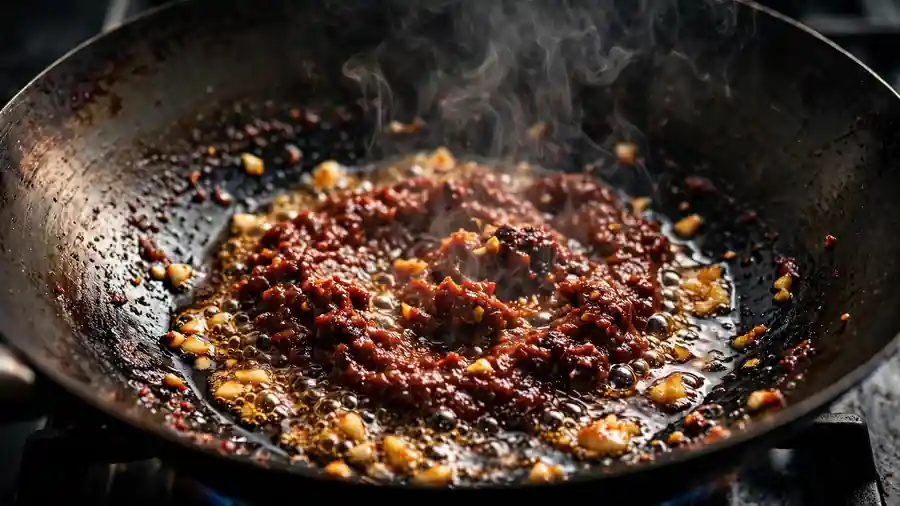
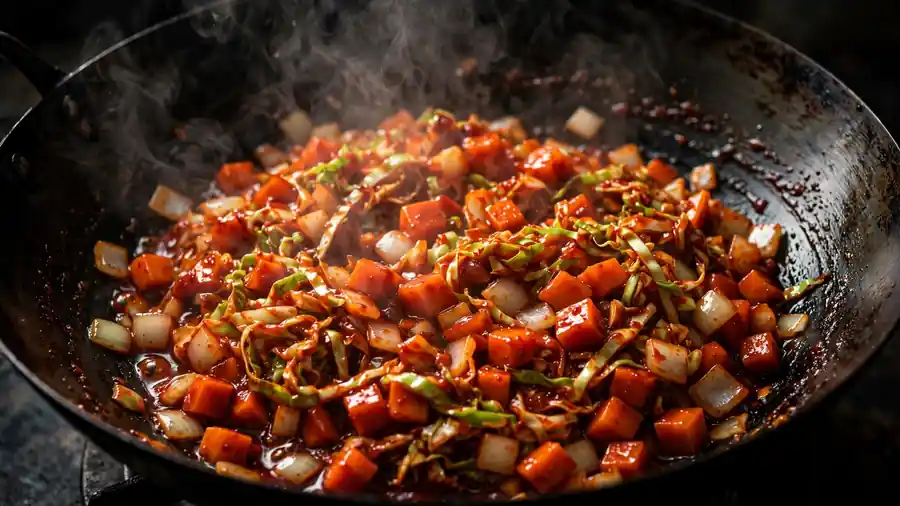
Heat the oil in the wok over medium-high heat until shimmering. Add the garlic and gochujang together and stir-fry 1 to 2 minutes, breaking up the paste, until it darkens slightly and smells sweet and toasty. This blooming step caramelizes the sugars and deepens the flavor dramatically.
Step 3: Cook the Vegetables
Add the onion, carrot, and cabbage to the wok. Stir-fry 3 to 4 minutes until the vegetables soften and pick up the red glaze. The cabbage should wilt but keep a little bite. If the paste starts sticking, add a tablespoon of water to loosen it.
Step 4: Fry the Rice
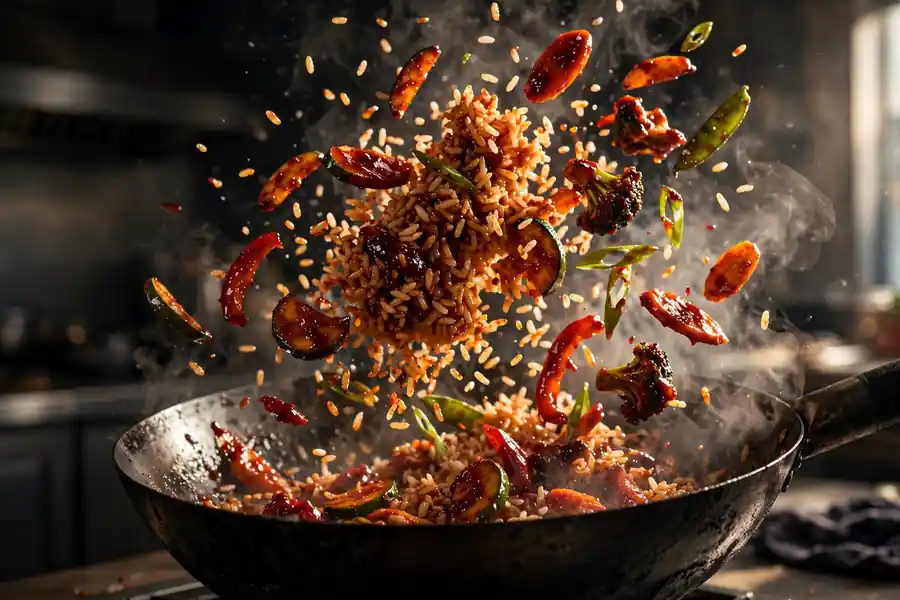
Add the cold rice and break up any clumps, tossing everything together. Stir-fry 3 to 4 minutes, pressing the rice flat between tosses, until the grains are hot and evenly coated in the glossy red sauce. Every grain should glisten.
Step 5: Season and Finish
Pour the soy sauce and honey mixture over the rice and toss 1 minute until absorbed. Taste and adjust: more honey if too spicy, more soy sauce if too flat. Turn off the heat, drizzle in the sesame oil, and toss with the green onions. Serve immediately, topped with a fried egg, sesame seeds, and torn seaweed if you like.
Chef’s Tips for the Best Results
Always bloom the gochujang. Raw gochujang stirred into rice tastes one-dimensional. Ninety seconds of frying transforms it into something sweet, deep, and complex.
Control the heat with honey, not water. If the spice overwhelms, a little extra honey or sugar tames it while improving caramelization. Water just dilutes the flavor.
Keep the vegetables slightly crisp. Mushy vegetables disappear into the rice. Three to four minutes keeps them tender with enough bite to contrast the soft grains.
Taste before the final seasoning. Gochujang brands vary wildly in salt and heat. The measured seasoning is a starting point; your palate is the final judge.
Common Mistakes and How to Fix Them
| Common Problem | Why It Happens | How to Fix It |
|---|---|---|
| Gochujang tastes raw and harsh | Added with the rice instead of bloomed first | Fry the paste with garlic 1 to 2 minutes before adding anything else |
| Too spicy to eat | Too much gochujang, or a very hot brand | Add honey or sugar to tame heat; serve with a fried egg and extra rice |
| Sauce is uneven and blotchy | Gochujang added in cold clumps | Bloom the paste smooth first, then toss rice thoroughly |
| Rice turns mushy | Fresh rice used, or vegetables released too much water | Use day-old chilled rice; cook vegetables until their moisture evaporates |
| Paste burns and sticks | Heat too high during blooming, or no oil | Bloom over medium-high with enough oil; add a splash of water if sticking |
Ingredient Substitutions
| Original Ingredient | Substitute | Expected Difference |
|---|---|---|
| Gochujang | 2 tbsp sriracha plus 1 tbsp miso paste | Similar heat, less fermented sweetness and depth |
| Honey | Brown sugar | Nearly identical caramelization; slightly deeper flavor |
| Cabbage | Diced zucchini or bell pepper | Sweeter and softer; less classic texture |
| Medium-grain rice | Jasmine rice | More fragrant and looser; sauce clings less |
| Soy sauce | Tamari | Slightly richer; use the same amount |
Recipe Variations
Chicken gochujang fried rice: Sear 1 pound of diced chicken breast before blooming the gochujang, then fold back in at the end. A complete high-protein dinner.
Shrimp version: Sear 3/4 pound of shrimp for 1 minute per side and add back at the end. Sweet shrimp balance the spicy glaze.
Vegetarian deluxe: Add 1 cup of diced mushrooms and 1/2 block of cubed firm tofu, seared golden before the vegetables. Hearty without meat.
Cheese topping: Spread 1/2 cup shredded mozzarella over the finished rice and cover 1 minute until melted. The classic Korean spice-tamer.
Extra vegetable: Add 1 cup of bean sprouts in the last minute of cooking. They stay crunchy and fresh against the rich sauce.
Extra heat: Add 1/2 tablespoon of gochugaru (Korean chili flakes) with the gochujang when blooming, for a sharper, drier heat on top of the paste’s sweetness.
Ginger and bell pepper version: Fry 2 teaspoons of finely chopped ginger with the garlic, then add 1/2 cup of sliced bell peppers with the other vegetables. The ginger adds a warm, sharp edge and the peppers stay slightly crisp against the soft glaze.
Sliced beef version: Season 1/2 pound of thinly sliced beef with salt, pepper, and a pinch of garlic powder, sear it in a single layer over high heat, set it aside, and fold it back through the finished rice. The seared beef makes the dish heartier without changing the gochujang base.
Practical Cooking Scenario
Picture a cold evening when you want something warming and bold but have no kimchi in the fridge. The gochujang blooms while you chop the cabbage, the rice fries in one continuous flow, and 25 minutes later you are eating from a steaming bowl with a fried egg slowly melting into the spicy grains. This is the recipe that makes a half-used tub of gochujang finally earn its fridge space.
Storage and Food Safety
Cool leftovers within 2 hours and refrigerate in airtight containers up to 4 days. The flavor deepens overnight as the glaze soaks in. Freeze in portioned bags up to 2 months with air pressed out; thaw overnight in the refrigerator. Discard leftovers that smell off or have been at room temperature more than 2 hours.
How to Reheat Gochujang Fried Rice Recipe
Reheat this gochujang fried rice recipe in a skillet for the best texture. Heat a teaspoon of oil over medium-high heat, add the cold rice, and stir-fry 3 to 4 minutes until steaming hot, adding a splash of water if the glaze looks dry.
For the microwave, place a portion in a bowl, sprinkle with a tablespoon of water, cover loosely, and heat 2 minutes, stirring halfway. Top with a freshly fried egg after reheating.
Meal Prep Tips
Dice the onion, carrot, and cabbage up to 2 days ahead; store in sealed containers. Mince the garlic up to 3 days ahead. Cook and chill the rice a day ahead. Mix the soy sauce, honey, and salt and refrigerate up to 1 week. Measure the gochujang into a small container so it is ready to bloom. Fry eggs fresh for serving.
Nutrition Information
Approximate nutrition per serving (makes 4 servings, without fried egg): 400 calories, 9 g protein, 66 g carbohydrates, 10 g fat, 4 g fiber, 820 mg sodium. Add about 90 calories and 6 g protein per fried egg. These are estimates only. Actual values vary with gochujang brand, honey amount, oil, portion sizes, and preparation methods.
More Rice Recipes to Try
If you enjoyed this recipe, you will love these other rice dishes from The World of Rice:
- Authentic Chinese Shrimp Fried Rice Recipe: Traditional Technique, Pure Flavor
- Authentic Egg Fried Rice Recipe: Simple, Silky & Perfectly Golden
- Authentic Fried Rice Recipe With Egg: The Traditional Golden Method
- Authentic Japanese Fried Rice Recipe: Real Yakimeshi at Home
Frequently Asked Questions
What does gochujang taste like?
Sweet, spicy, and deeply savory with a fermented funk. It is thicker and sweeter than hot sauce, with complexity from the fermentation.
Is gochujang fried rice very spicy?
It has a solid medium heat. Three tablespoons across four servings gives a pleasant warmth. Reduce to 2 tablespoons for mild, or increase to 4 for serious heat.
Can I make gochujang fried rice without kimchi?
Yes, that is the whole point of this recipe. All the Korean flavor comes from the gochujang paste, garlic, and sesame oil.
Where do I buy gochujang?
Most supermarkets carry it in the international aisle, and every Asian grocery store stocks multiple brands. It keeps for months in the fridge after opening.
Can I make this vegan?
Yes. Use sugar instead of honey and skip the fried egg, or top with avocado. The base recipe is already plant based.
What protein goes best with gochujang fried rice?
Chicken and shrimp are the most popular. Tofu and mushrooms work beautifully for vegetarian versions. The spicy-sweet glaze flatters almost any protein.
Final Thoughts
This gochujang fried rice recipe is sweet heat in its purest form: caramelized chili paste, glossy grains, and crunchy vegetables from one pan. Bloom that gochujang properly and the rest takes care of itself.
See the dictionary definitions for Jasmine rice and soy sauce.

Prayvista Team is the editorial team behind Prayvista, The World of Rice. The team writes and reviews rice recipes for home cooks, and every article is checked by editor Sara Raza before publishing.