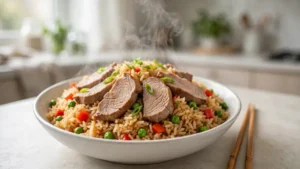
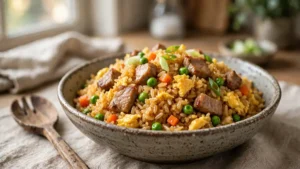
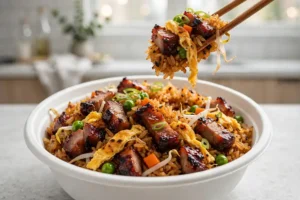
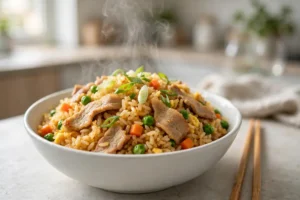
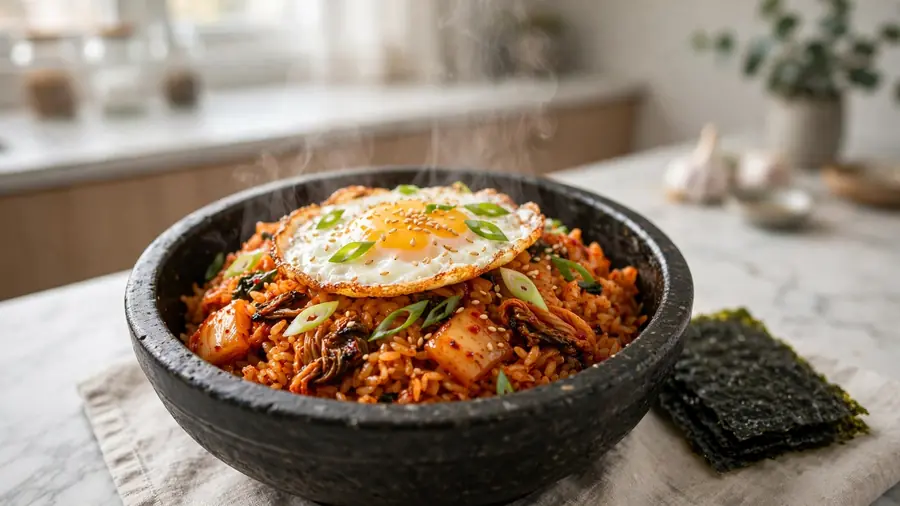
Every Korean household has its own version of kimchi fried rice, and for good reason. It is the dish that turns aging kimchi and leftover rice into something craveable: tangy, spicy, savory, with crispy edges and a glossy finish. This recipe for kimchi fried rice follows the classic method step by step, with the details that separate great from merely good.
A proper recipe for kimchi fried rice respects the fermentation. The kimchi is chopped and fried until caramelized, its juice becomes part of the seasoning, and the rice crisps in the rendered flavors. Topped with a fried egg and finished with sesame oil, it is humble food at its finest.
Menu of Recipe For Kimchi Fried Rice
This recipe for kimchi fried rice covers the full ingredient list with US measurements, step-by-step instructions, why the classic technique works, chef tips, a troubleshooting table, substitutions, variations, storage and reheating guidance, and answers to common questions.
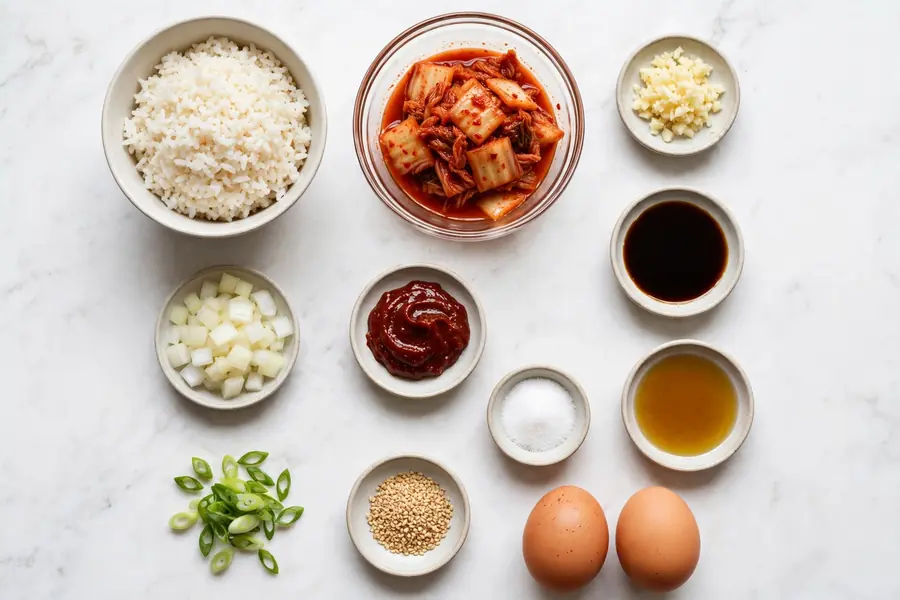
Ingredients for Recipe For Kimchi Fried Rice
For the Kimchi Base
- 1 1/2 cups napa cabbage kimchi, chopped
- 3 tablespoons kimchi juice from the jar
- 1 tablespoon neutral oil
- 2 cloves garlic, minced
- 1/2 small onion, diced (optional)
For the Rice and Seasoning
- 4 cups cooked short-grain rice, chilled overnight
- 1 tablespoon gochujang (Korean chili paste)
- 1 tablespoon soy sauce
- 1 teaspoon sugar
- 1/2 teaspoon fine sea salt, to taste
For Finishing
- 1 teaspoon toasted sesame oil
- 2 green onions, thinly sliced
- 1 tablespoon toasted sesame seeds
- 4 fried eggs, for serving
Notes on ingredients: Napa cabbage kimchi is the traditional choice. Its broad leaves chop into satisfying pieces and its juice is plentiful. Radish kimchi (kkakdugi) also works and adds extra crunch. The kimchi should be at least 2 to 3 weeks old, ideally a month. It should smell pleasantly sour and taste tangy enough to make you pucker slightly. If your kimchi is fresh and mild, the dish will taste flat no matter what else you do; in that case, add a teaspoon of rice vinegar to the seasoning. Short-grain rice is traditional in Korea and gives the characteristic slightly sticky, chewy texture. Cook it with a little less water than usual the day before so it firms up well in the refrigerator. Gochujang is optional in the strictest traditional versions, where kimchi alone provides the spice, but one tablespoon deepens the color and adds a sweet fermented heat that most modern cooks prefer.
You will need: a large wok or 12-inch heavy skillet (cast iron holds heat beautifully for the crispy rice step), a wok spatula or stiff wooden spoon, a cutting board and knife for chopping kimchi, a small bowl for the seasoning mix, and a separate skillet for frying the eggs.
How to Make Recipe For Kimchi Fried Rice
Step 1: Chop the Kimchi and Prep Everything
Chop the kimchi into bite-size pieces, roughly 1-inch squares. Kitchen scissors cut kimchi cleanly and keep the juice off your cutting board. Before chopping, squeeze the kimchi over a bowl to press out extra juice, then top up from the jar to 3 tablespoons if needed. Removing that water up front keeps the rice from turning soggy. Mince the garlic, dice the onion, and slice the green onions. Break up the cold rice completely. Stir the gochujang, soy sauce, sugar, and kimchi juice together until the gochujang dissolves. This recipe for kimchi fried rice moves in stages, so have everything staged before heating the pan.
Step 2: Fry the Kimchi Until Caramelized
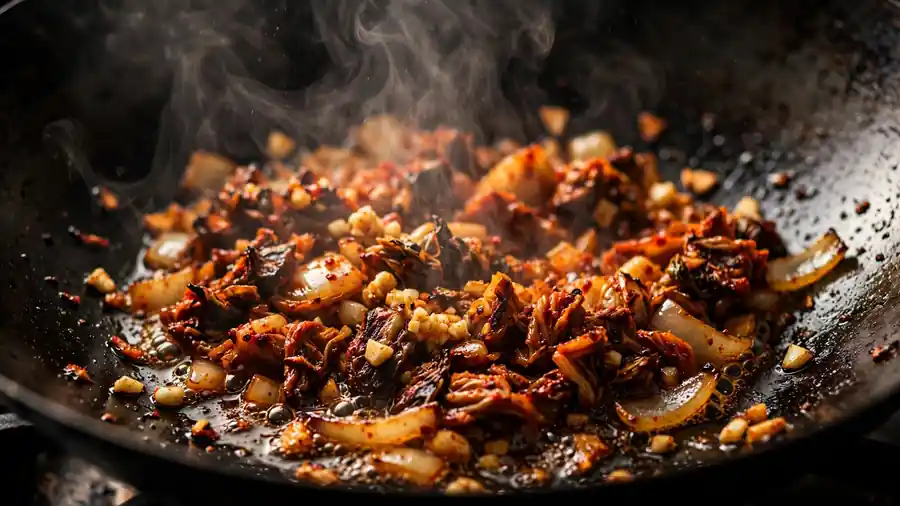
Heat the oil in the wok over medium-high heat until shimmering. Add the onion and garlic and stir-fry 30 seconds until fragrant. Add the chopped kimchi and stir-fry 3 to 4 minutes, until it softens, darkens to a deeper red, and smells sweet and caramelized. You should see lightly browned edges on some pieces.
Step 3: Add the Rice and Crisp It
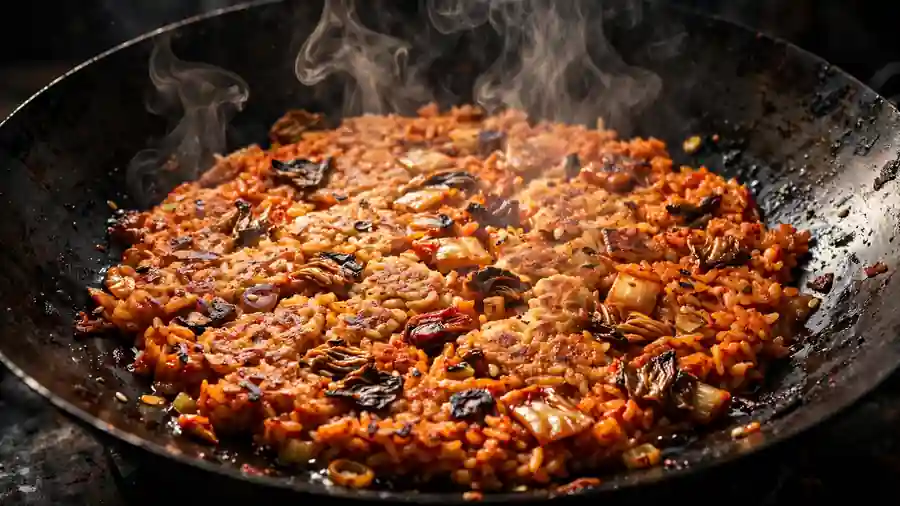
Add the cold rice to the wok. Toss with the kimchi to combine, breaking up any last clumps. Spread the rice across the pan, press it flat, and leave undisturbed for 2 minutes to form a golden crispy layer. Toss once and press again for 1 minute more. The rice should be hot throughout with crispy, chewy patches.
Step 4: Season Evenly
Pour the gochujang and kimchi juice mixture over the rice. Toss 1 to 2 minutes until every grain is evenly coated in the glossy red sauce. Taste carefully: it should be tangy, spicy, and savory in balance. Adjust with a pinch more sugar if too sour, or a few drops of soy sauce if too flat.
Step 5: Finish and Serve
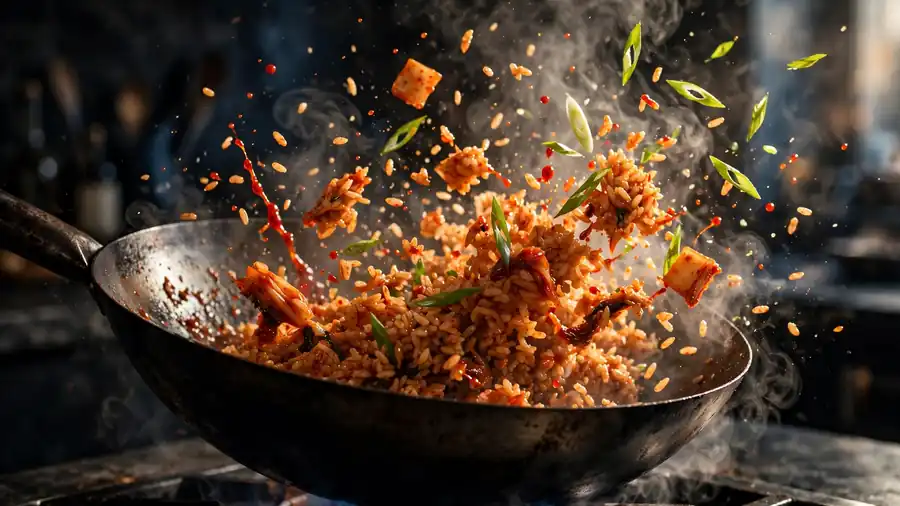
Turn off the heat. Drizzle with sesame oil and toss with the green onions and sesame seeds. Divide among warm bowls and top each with a fried egg. Serve immediately while the crispy bits are at their best.
Why This Works
- Aged kimchi does the flavor work. Two to four weeks of fermentation gives the sour depth that fresh kimchi cannot.
- Caramelizing changes the kimchi. Three to four minutes of real frying turns sharp tang into deep, sweet flavor.
- The juice seasons the rice. Kimchi liquid in the seasoning mix spreads the fermented flavor to every grain.
- Pressing builds the crust. An undisturbed rest against the hot pan creates the golden, chewy-crisp layer.
Chef’s Tips for the Best Results
- Judge the kimchi before you start. Taste it raw. Very sour kimchi needs the full teaspoon of sugar; mildly sour kimchi needs less. Adjusting to your actual jar beats following any fixed amount blindly.
- Caramelize, do not just warm, the kimchi. Three to four minutes of real frying changes the flavor from sharp to deep. Pale, barely heated kimchi makes a pale, barely flavored dish.
- Warm the bowls. Kimchi fried rice cools fast, and cold rice firms up unpleasantly. Warm bowls in a low oven or with hot water keep the texture perfect to the last bite.
- Fry the eggs to order. A fried egg with set whites and a runny yolk is the classic crown. Cook them while the rice rests for 1 minute off the heat, then plate everything together.
Common Mistakes and How to Fix Them
| Common Problem | Why It Happens | How to Fix It |
|---|---|---|
| Dish tastes flat and dull | Kimchi too fresh and mild | Use kimchi aged 2 to 4 weeks; add extra juice or a teaspoon of rice vinegar |
| Rice is soggy | Too much kimchi juice, or fresh rice used | Fry kimchi until dry before adding rice; always use day-old chilled rice |
| Too sour to enjoy | Very old kimchi plus maximum juice | Increase sugar to 2 teaspoons and add a little more rice to dilute |
| No crispy texture | Rice never pressed, or heat too low | Press flat and rest undisturbed 2 minutes over medium-high heat |
| Uneven red color | Gochujang not dissolved before adding | Whisk gochujang fully into the kimchi juice and soy sauce first |
Ingredient Substitutions
| Original Ingredient | Substitute | Expected Difference |
|---|---|---|
| Napa cabbage kimchi | Radish kimchi (kkakdugi) | Crunchier texture, slightly sharper flavor |
| Gochujang | 1 tsp gochugaru plus 1 tsp miso | Less sweetness, similar heat and depth |
| Short-grain rice | Medium-grain rice | Very close; slightly looser grains |
| Soy sauce | Fish sauce (1 tsp) | Deeper umami with a funkier edge; use less |
| Sesame oil | Perilla oil | More herbal nuttiness; authentically Korean |
Recipe Variations
Classic Spam addition: Crisp 1 cup of cubed Spam before the kimchi and fold back in at the end. The most popular Korean variation.
Tuna kimchi fried rice: Add a drained 5-ounce can of tuna with the rice. A beloved budget comfort version.
Bacon version: Render 4 chopped bacon slices first and fry the kimchi in the bacon fat. Smoky and indulgent.
Cheese crust: After seasoning, top with 3/4 cup mozzarella, cover 2 minutes until melted and bubbly. A Korean restaurant favorite.
Vegetable heavy: Add 1 cup each of diced zucchini and mushrooms with the kimchi. They absorb the spicy seasoning beautifully.
Enoki version: Wilt 1 pack of enoki mushrooms separately in sesame oil with a little garlic for 1 to 2 minutes, set them aside, and fold them through at the very end. Cooking them apart keeps them light instead of soggy under the kimchi sauce.
Store, Reheat, and Prep Ahead
Cool leftovers within 2 hours and refrigerate in airtight containers up to 4 days. Kimchi fried rice keeps exceptionally well; the fermented flavors meld and deepen overnight. Freeze in portioned bags up to 2 months with air pressed out; thaw overnight in the refrigerator. Discard leftovers that smell off beyond normal kimchi tang or have been at room temperature more than 2 hours.
To reheat, use a skillet: heat a teaspoon of oil over medium-high heat, add the cold rice, press flat, and cook 2 minutes undisturbed to rebuild crispiness, then toss 2 minutes more until steaming hot. For the microwave, place a portion in a bowl, sprinkle with a tablespoon of water, cover loosely, and heat 2 minutes, stirring halfway. Fry a fresh egg to top it after reheating.
For prep ahead, chop the kimchi up to 4 days ahead; it keeps perfectly in its juice in a sealed jar. Cook and chill the rice a day ahead. Premix the gochujang, soy sauce, sugar, and kimchi juice and refrigerate up to 1 week. Slice green onions up to 3 days ahead. This is an excellent meal prep dish because the flavors improve overnight; portion into containers and fry fresh eggs at serving time.
More Rice Recipes to Try
If you enjoyed this recipe, you will love these other rice dishes from The World of Rice:
- Easy Kimchi Fried Rice Recipe: Spicy, Tangy & Ready in 20 Minutes
- Kimchi Fried Rice Recipe: Classic Korean Kimchi Bokkeumbap
- Kimchi Fried Rice Recipe Easy: Spicy, Tangy & Ready in 20 Minutes
- Kimchi Fried Rice Recipe Spam: Crispy Spam, Kimchi, and Melty Cheese
Frequently Asked Questions
How old should kimchi be for fried rice?
At least 2 to 3 weeks, ideally a month or more. The sourness that develops with age is the flavor foundation of the dish. Fresh kimchi tastes flat here.
Do I need gochujang in kimchi fried rice?
Not strictly. Traditional versions rely on kimchi alone. One tablespoon of gochujang deepens the color and adds sweet heat, and most modern recipes include it.
Why is restaurant kimchi fried rice redder than mine?
Restaurants use well-aged kimchi with plenty of juice plus gochujang, and they fry the kimchi long enough to concentrate the color. More juice and a full caramelizing fry close the gap.
Is kimchi fried rice good for meal prep?
Excellent. It keeps 4 days refrigerated and the flavor improves overnight. Portion it out and add a freshly fried egg when serving.
What do Koreans serve with kimchi fried rice?
Often just a fried egg and some roasted seaweed. A simple soup like doenjang jjigae or a cold cucumber side dish rounds out the meal.
Final Thoughts
This recipe for kimchi fried rice is Korean comfort food in its purest form: tangy fermented kimchi, crispy rice, and a runny fried egg, all from one wok. Let your kimchi age, fry it with patience, and press that rice.
See the dictionary definitions for soy sauce and Fish sauce.

Prayvista Team is the editorial team behind Prayvista, The World of Rice. The team writes and reviews rice recipes for home cooks, and every article is checked by editor Sara Raza before publishing.