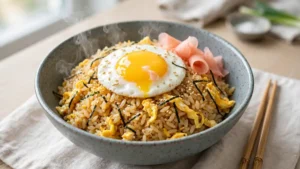
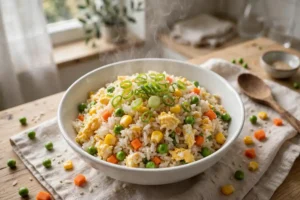
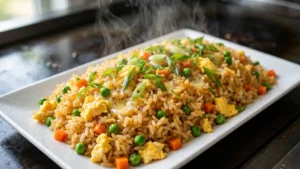
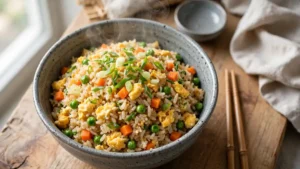
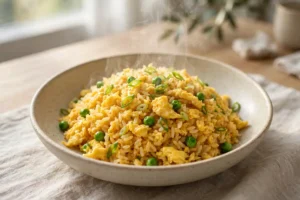
Japanese fried rice, called yakimeshi or chahan, is lighter and cleaner than its Chinese takeout cousin. This Japanese fried rice recipe uses short bursts of high heat, a simple soy-based seasoning, and fluffy scrambled egg to make a dish that tastes delicate, savory, and deeply comforting. The Japanese approach skips the heavy sauces. Instead, a little soy sauce, a pinch of chicken stock powder, and white pepper season the rice, while long green onions and your choice of ham or char siu add sweetness. It cooks in about 20 minutes.

Menu of Japanese Fried Rice Recipe
This Japanese fried rice recipe covers the full ingredient list with US measurements, step-by-step instructions with heat levels, why the technique works, chef tips, a troubleshooting table, substitutions, variations, storage and reheating guidance, and answers to common questions.
Ingredients for Japanese Fried Rice Recipe
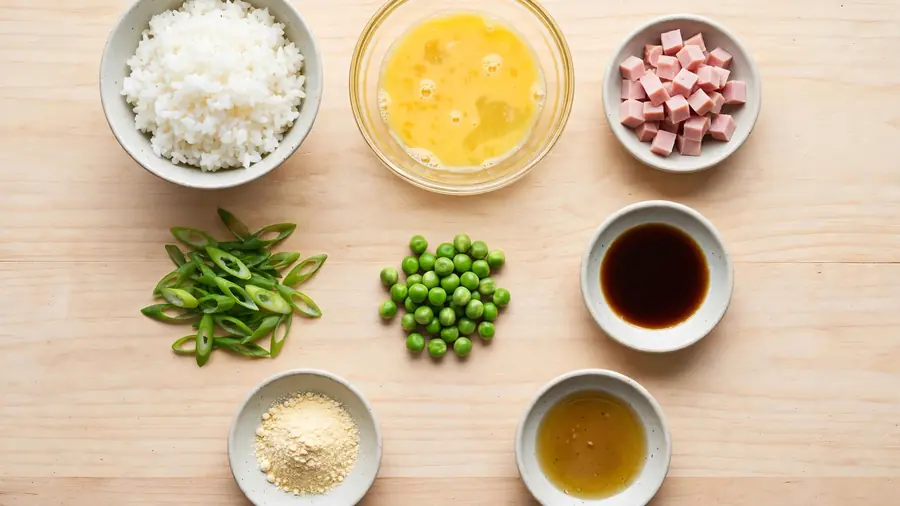
For the Fried Rice
- 3 cups cooked short-grain or medium-grain rice, chilled (day-old is best)
- 3 large eggs, lightly beaten
- 1 tablespoon vegetable oil
- 1 tablespoon toasted sesame oil
- 1/2 cup diced ham or char siu pork
- 4 long green onions (negi), thinly sliced, whites and greens separated
- 1/2 cup frozen peas, thawed (optional)
For the Seasoning
- 2 tablespoons light soy sauce
- 1 teaspoon chicken stock powder (such as Knorr or Ajinomoto)
- 1/2 teaspoon white pepper
- 1/2 teaspoon sugar
- Salt to taste
Notes on ingredients: Short-grain Japanese rice gives the most authentic result, since its slight stickiness holds the egg coating beautifully. Use light Japanese soy sauce, such as Kikkoman, rather than dark soy sauce, which would overpower the delicate flavor and darken the rice too much. Chicken stock powder adds savory depth without watering the rice down. No day-old rice? Spread freshly cooked rice on a tray, let it cool completely, and chill it until dry before cooking.
You will need: a large wok or 12-inch nonstick skillet, a wooden spoon or silicone spatula, and a small bowl for the eggs and another for the seasoning.
How to Make Japanese Fried Rice Recipe
Step 1: Prep Everything
Dice the ham, slice the green onions with whites and greens separated, and thaw the peas. Lightly beat the eggs in a small bowl. Stir the chicken stock powder, white pepper, sugar, and a pinch of salt into the soy sauce until dissolved. Break up the cold rice so no clumps remain.
Step 2: Coat the Rice with Egg
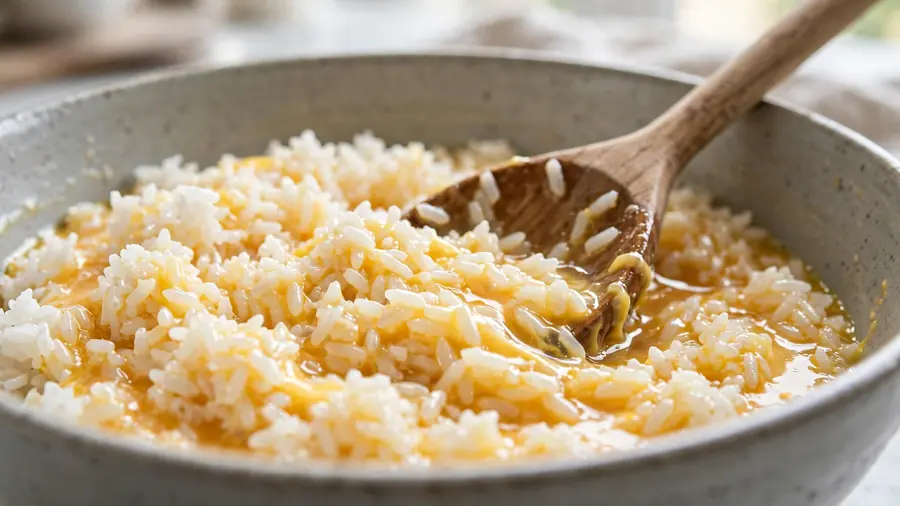
Place the cold rice in a large bowl. Pour about two-thirds of the beaten eggs over the rice and mix gently with a spoon until every grain is lightly coated. Set the remaining beaten egg aside. This coating step is what gives yakimeshi its signature separate, fluffy grains.
Step 3: Sear the Ham and Aromatics
Heat the vegetable oil in the wok or skillet over high heat until it shimmers. Add the diced ham and the white parts of the green onions. Stir-fry 1 to 2 minutes until the ham edges start to brown and the onions soften and smell sweet.
Step 4: Fry the Rice
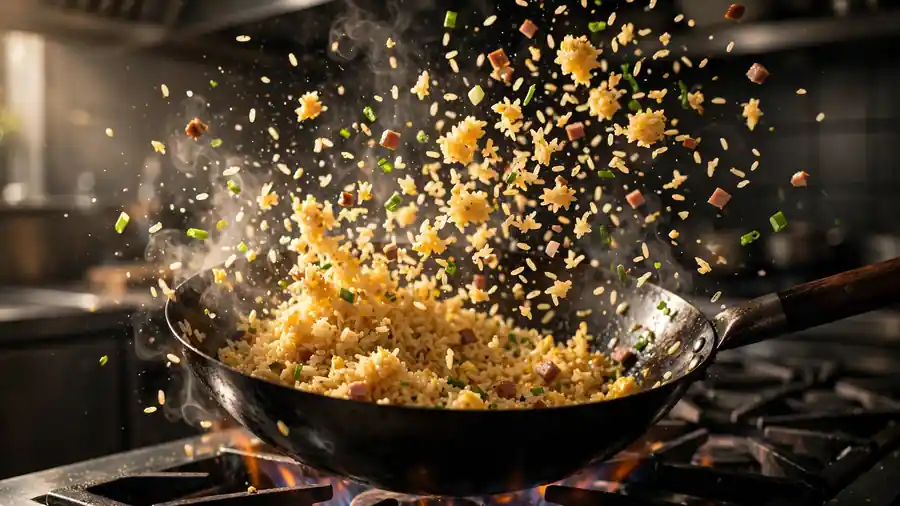
Add the egg-coated rice to the hot pan. Toss and press it against the surface, then toss again, repeating for 3 to 4 minutes. The rice should be hot through, with the egg coating setting into a light, fluffy layer around each grain and a few golden toasted spots forming.
Step 5: Season
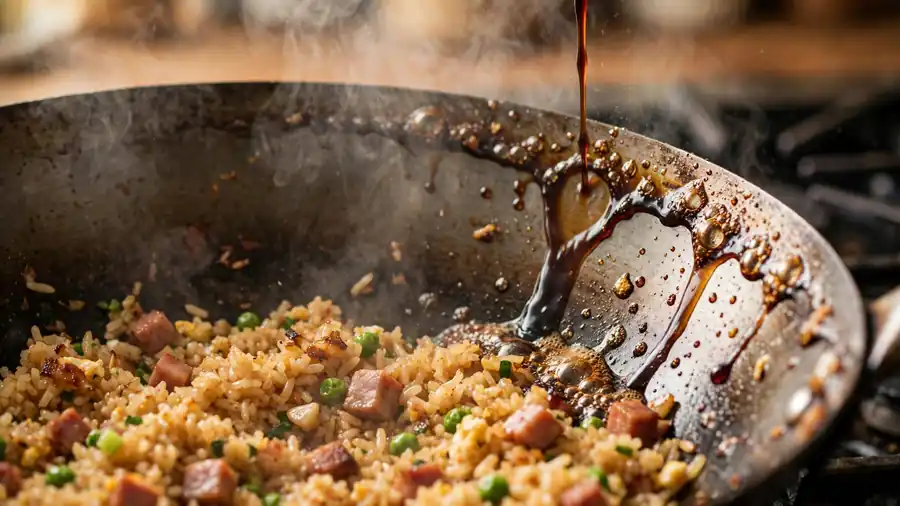
Drizzle the soy sauce mixture around the edge of the hot pan, not directly onto the rice, so it sizzles and caramelizes for a few seconds before you toss. Toss everything 1 minute until the seasoning is evenly distributed and the pan looks dry. Add the peas if using.
Step 6: Finish with Egg and Green Onions
Push the rice to one side and pour the remaining beaten egg into the empty space. Scramble it 20 to 30 seconds into soft curds, then fold it through the rice. Drizzle with sesame oil, toss in the green onion greens, and taste for salt. Serve immediately in warm bowls.
Why This Works
- Egg coating keeps grains separate. The beaten egg forms a thin layer around each grain, so the finished dish stays fluffy instead of clumping.
- Seasoning stays minimal on purpose. A small amount of soy sauce at the edge of the hot pan caramelizes slightly for aroma, while chicken stock powder adds depth without extra liquid.
- High heat and constant motion toast lightly. The grains pick up toasted spots without the heavy char of wok hei, keeping the flavor clean and balanced.
- Short-grain rice holds the coating. Its slight stickiness is an asset here, letting the egg cling without turning the rice heavy.
Chef’s Tips for the Best Results
- Coat the rice, do not drown it. Two-thirds of the egg is enough for a thin coating. Too much egg makes the rice heavy and custardy instead of fluffy.
- Add soy sauce at the pan’s edge. The brief sizzle against the hot metal caramelizes the sauce and adds a toasty aroma you cannot get by pouring it over the rice directly.
- Keep everything moving. Constant tossing over high heat toasts the grains evenly without burning. If your pan is small, cook in two batches rather than crowding.
- Use a nonstick pan for this technique. It makes the egg coating step far easier and helps the rice release cleanly.
Common Mistakes and How to Fix Them
| Common Problem | Why It Happens | How to Fix It |
|---|---|---|
| Rice turns mushy | Fresh rice used, or too much egg coating | Use cold, day-old rice and coat with only two-thirds of the egg |
| Rice sticks to the pan | Pan not hot enough before rice goes in | Heat oil until shimmering; a nonstick pan helps with this technique |
| Dish tastes bland | Seasoning added to cool rice, or under-measured stock powder | Season hot rice in the pan and dissolve stock powder fully in the soy sauce |
| Eggs turn rubbery | Overcooked in the final scramble | Scramble the final egg just 20 to 30 seconds until barely set |
| Rice is soggy | Too much soy sauce, or vegetables added wet | Measure the soy sauce and pat thawed peas dry |
Ingredient Substitutions
| Original Ingredient | Substitute | Expected Difference |
|---|---|---|
| Short-grain rice | Medium-grain or long-grain rice | Less plump and authentic, but fries up fine |
| Diced ham | Diced char siu, shrimp, or chicken | Char siu adds sweetness; shrimp makes it lighter |
| Chicken stock powder | 1 teaspoon dashi powder | Slightly more oceanic flavor, very Japanese |
| Light soy sauce | Tamari | A bit richer and darker; still works well |
| Long green onions (negi) | Regular green onions | Slightly sharper; use the same amount |
| White pepper | Black pepper | A touch more pungent; reduce slightly |
Recipe Variations
Shrimp yakimeshi: Swap the ham for 8 ounces of peeled shrimp, seared 2 minutes per side and folded in at the end.
Garlic butter yakimeshi: Melt a tablespoon of butter with a minced garlic clove into the finished rice for a richer, restaurant-style flavor.
Vegetable yakimeshi: Skip the meat and add diced carrots, corn, and edamame with the green onion whites.
Kimchi yakimeshi: Stir in 1/2 cup chopped kimchi with the ham for a tangy, spicy twist.
Store, Reheat, and Prep Ahead
Cool leftovers within 2 hours and refrigerate in airtight containers for up to 4 days. Freeze for up to 2 months in portioned freezer bags with the air pressed out, and thaw overnight in the refrigerator. Discard leftovers that smell sour, feel slimy, or sat at room temperature longer than 2 hours.
To reheat, stir-fry in a skillet over medium-high heat with a teaspoon of oil for 3 to 4 minutes, adding a tablespoon of water if it looks dry. The microwave works too: sprinkle with a tablespoon of water, cover loosely, and heat 2 minutes, stirring halfway, until steaming hot throughout.
For prep ahead, cook the rice a day ahead, dice the ham and slice the green onions up to 2 days ahead, and mix the seasoning in a small jar. Do the egg-coating step right before cooking, not in advance, so the rice does not get soggy sitting in raw egg.
More Rice Recipes to Try
If you enjoyed this recipe, you will love these other rice dishes from The World of Rice:
- Authentic Japanese Fried Rice Recipe: Real Yakimeshi at Home
- Best Fried Rice Recipe Japanese: Yakimeshi vs. Chahan vs. Hibachi
- Best Japanese Fried Rice Recipe: Restaurant Quality at Home
- Fried Rice Recipe Japanese: The Classic Chahan Method
Frequently Asked Questions
What is the difference between yakimeshi and chahan?
Both mean Japanese fried rice. Yakimeshi is the Japanese term, while chahan comes from Chinese influence. The cooking style and seasoning are essentially the same.
Can I use long-grain rice for Japanese fried rice?
Yes. Short-grain rice is more authentic and gives a plumper texture, but long-grain rice fries up well and stays separate easily.
Why coat the rice with egg first?
The thin egg coating keeps the grains separate and gives yakimeshi its signature light, fluffy texture. It also adds a subtle richness throughout.
Can I make this without chicken stock powder?
Yes, though you will lose some savory depth. Add an extra teaspoon of soy sauce and a pinch more salt, or substitute dashi powder.
Can I use freshly cooked rice?
It is not ideal, but you can. Spread the hot rice on a tray in a thin layer, let it cool completely, and chill it until the grains feel dry before frying, so it does not turn mushy.
Final Thoughts
This Japanese fried rice recipe shows how simple seasoning and good technique create something special. Coat the rice with egg, keep the pan hot, season at the edge, and finish with fresh green onions. Serve it in warm bowls, with pickled ginger or sliced cucumber on the side if you like, as a light dinner or a side dish.
See the dictionary definitions for soy sauce and pepper.

Prayvista Team is the editorial team behind Prayvista, The World of Rice. The team writes and reviews rice recipes for home cooks, and every article is checked by editor Sara Raza before publishing.