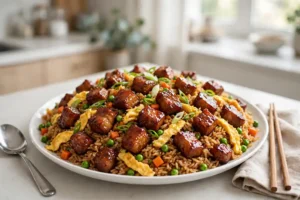
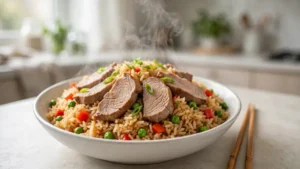
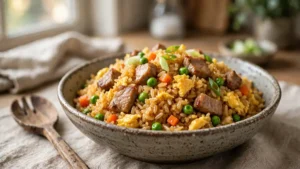
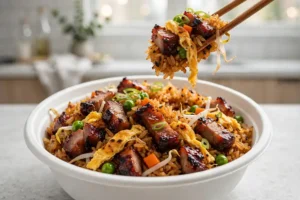
In Japan, fried rice is called chahan or yakimeshi, and it has its own distinct character. Lighter and less oily than many Chinese versions, Japanese fried rice is seasoned simply, often with butter, and prized for a fluffy texture where every grain stays separate. This fried rice recipe Japanese style gives you the classic method used in ramen shops and home kitchens across Japan.
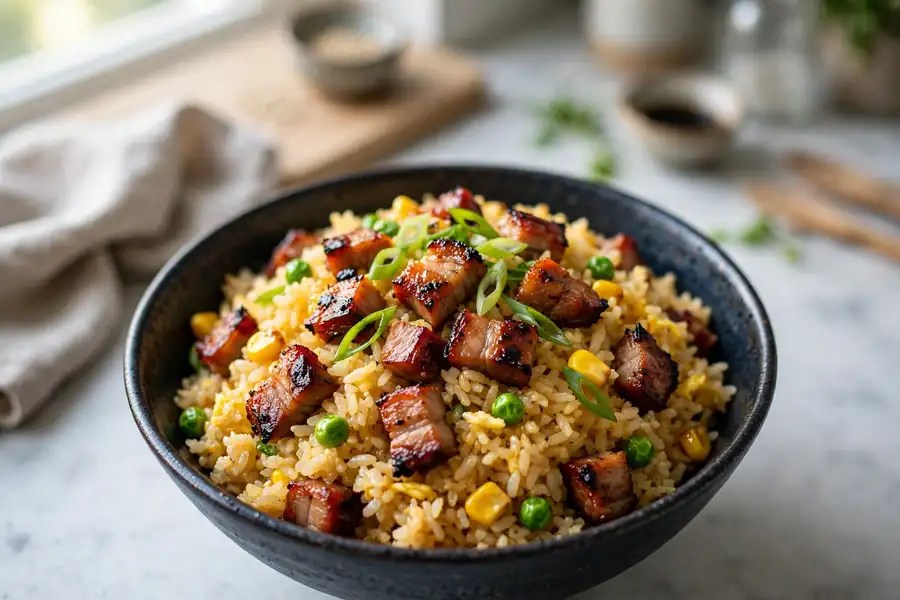
Why You’ll Love This Fried Rice Recipe Japanese
It teaches a distinct technique. Coating cold rice with egg before frying keeps the grains separate and golden.
It is light, not greasy. Seasoning stays simple: soy sauce, salt, white pepper, butter, and sesame oil.
It is fast. Once the rice is coated, the cooking takes only a few minutes.
It is flexible. Pork, chicken, seafood, or vegetables all work with the same method.
What Makes This Recipe Work?
The egg coating is the key step. Mixed into cold rice, the egg coats each grain, so the grains stay separate in the pan and turn golden instead of clumping. Cold rice matters too: hot rice would start cooking the egg into clumps before it reaches the pan. Short or medium-grain rice is traditional, and the egg coating is what makes it work here despite its stickier nature. Butter and sesame oil go in off the heat at the end, so they finish the rice without turning greasy.
Menu of Fried Rice Recipe Japanese
This fried rice recipe Japanese guide covers why it works, the complete ingredient list with US measurements, how to choose the best ingredients, the tools that help, detailed step-by-step instructions, chef tips, a troubleshooting table, substitutions, variations, storage and reheating guidance, nutrition estimates, and answers to common questions.
Ingredients for Fried Rice Recipe Japanese
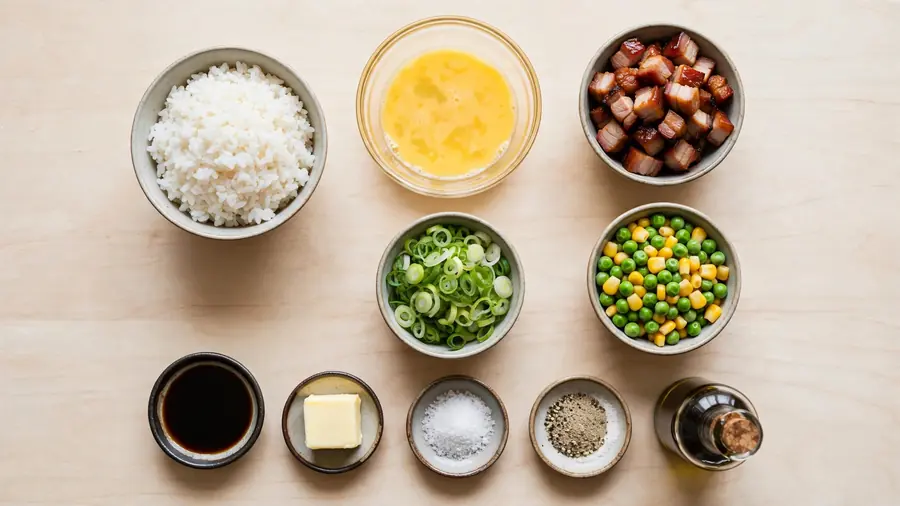
- 4 cups cooked short or medium-grain white rice, chilled overnight
- 3 large eggs, lightly beaten
- 1 tablespoon vegetable oil
- 1 tablespoon toasted sesame oil, divided
- 8 ounces char siu pork, Chinese barbecue pork, or ham, diced (about 1 1/2 cups)
- 1/2 cup frozen peas, thawed
- 1/2 cup corn kernels, thawed if frozen
- 3 green onions, thinly sliced, whites and greens separated
- 2 tablespoons soy sauce
- 1 tablespoon unsalted butter
- 1/2 teaspoon salt
- 1/4 teaspoon white pepper
Best Ingredients to Use
Short or medium-grain rice is traditional for chahan, and it works here because the egg coating keeps the grains separate. If you only have long-grain rice, it works too, though the texture will be slightly different. Keep the seasoning light: Japanese fried rice should stay golden, not dark brown from too much soy sauce.
Kitchen Tools You’ll Need
- A wok or large skillet that holds high heat.
- A spatula or wooden paddle for tossing the rice.
- A large bowl for coating the rice with egg.
How to Make Fried Rice Recipe Japanese
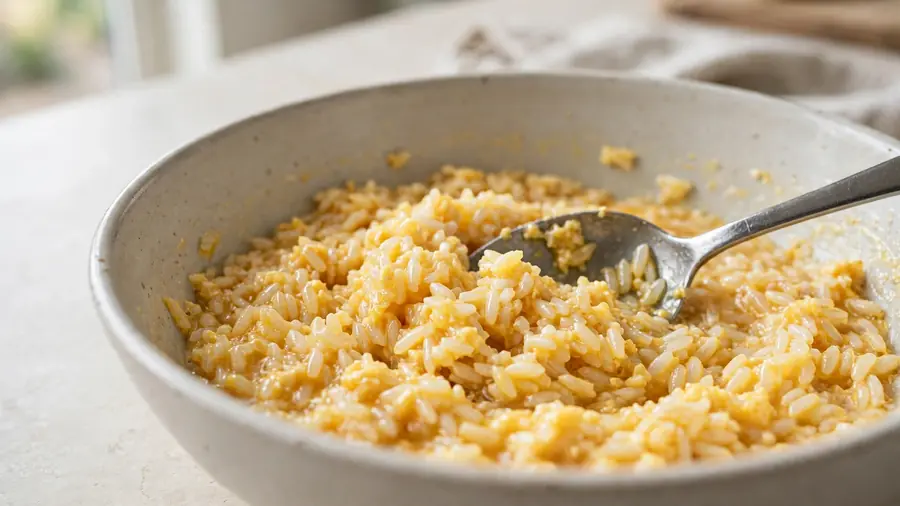
Step 1: Coat the Rice with Egg
Place the cold rice in a large bowl and break up all the clumps. Pour the beaten eggs over the rice and mix thoroughly with your hands or a spoon until every grain is coated. Take a full minute to coat the rice evenly. Set aside.
Step 2: Sear the Pork
Heat the vegetable oil in the wok or skillet over high heat until shimmering. Add the diced pork and stir-fry 2 to 3 minutes, until the edges caramelize and crisp slightly. Add the white parts of the green onions and stir-fry 30 seconds.
Step 3: Fry the Egg-Coated Rice
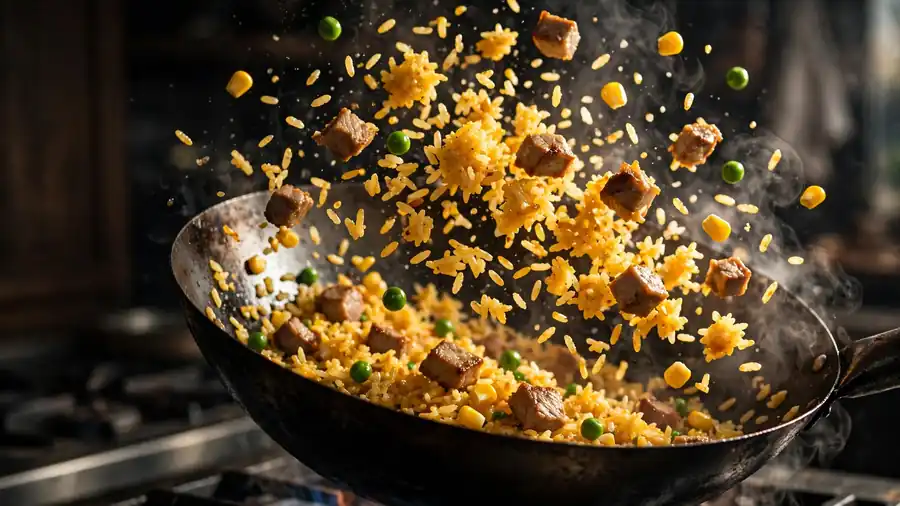
Add the egg-coated rice to the pan and spread it out. Stir-fry 4 to 5 minutes, tossing constantly, until the rice is hot through, the egg coating is set, and the grains look golden and separate. Listen for a light crackling sound, which means the grains are toasting nicely.
Step 4: Add Vegetables and Season
Add the peas and corn and toss 1 minute. Drizzle the soy sauce around the edges of the pan and toss to coat. Sprinkle with salt and white pepper.
Step 5: Finish with Butter and Sesame
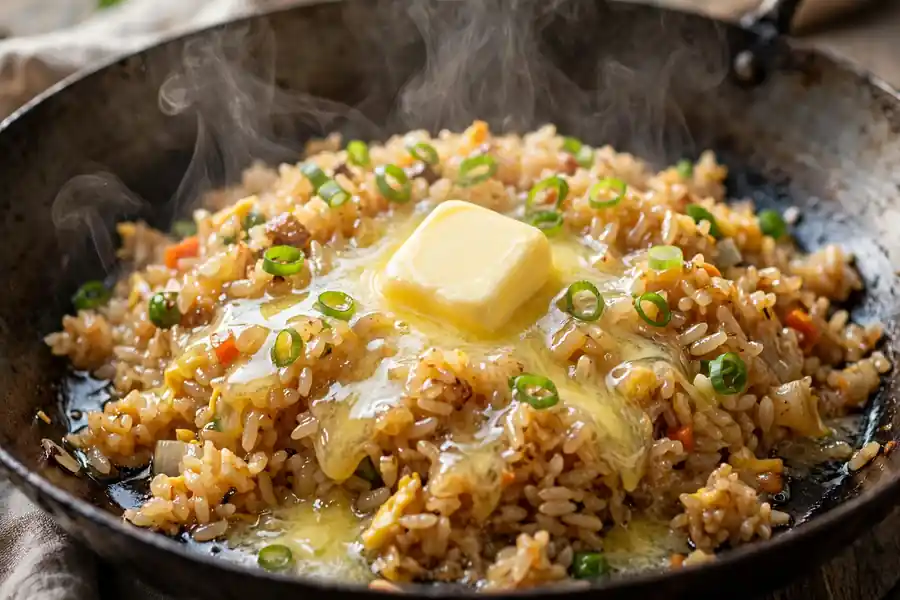
Remove the pan from the heat. Add the butter and 1 teaspoon of the sesame oil and toss until the butter melts through the rice. Shower with the green onion tops and serve immediately.
Chef’s Tips for the Best Results
Mix the egg into cold rice, not hot. Cold rice absorbs the egg coating evenly. Hot rice would start cooking the egg into clumps before it reaches the pan.
Keep the seasoning light. Japanese fried rice should taste delicate. Start with the listed amounts, taste, and add only a little more soy sauce if needed.
Serve immediately. Chahan is at its best steaming hot from the wok. The fluffy texture firms up as it cools, so have bowls ready before you start the final toss.
Common Mistakes and How to Fix Them
| Common Problem | Why It Happens | How to Fix It |
|---|---|---|
| Egg forms clumps instead of coating | Rice was hot when the egg was added, or not mixed well | Use cold rice and mix thoroughly for a full minute |
| Rice is sticky | Fresh rice used, or the egg coating was skipped | Chill rice overnight and always coat with egg first |
| Dish tastes bland | Seasoning too light, or pork omitted | Taste and adjust soy sauce; the pork adds a lot of flavor |
| Rice turned dark brown | Too much soy sauce added | Use only 2 tablespoons; Japanese fried rice should stay golden |
| Butter made it greasy | Butter added over high heat instead of off heat | Remove the pan from heat before adding butter |
Ingredient Substitutions
| Original Ingredient | Substitute | Expected Difference |
|---|---|---|
| Char siu pork | Diced ham | Less sweet and aromatic; add a pinch of sugar |
| Char siu pork | Cooked shrimp | Lighter and sweeter; add in the last 2 minutes |
| Short-grain rice | Long-grain white rice | Looser grains; still good with the egg coating |
| White pepper | Black pepper | Sharper bite and visible flecks |
| Butter | Extra sesame oil | Less rich; more pronounced nutty aroma |
Recipe Variations
Yakimeshi with chicken: Replace the pork with 8 ounces of diced chicken thigh, seared first until cooked through.
Seafood chahan: Use a mix of shrimp and imitation crab sticks, a combination common in Japanese home cooking.
Kimchi chahan: Add 1/2 cup of chopped kimchi with the pork for a tangy, spicy Korean-Japanese fusion.
Vegetable chahan: Skip the meat and add diced carrots, mushrooms, and bean sprouts for a vegetarian version.
Practical Cooking Scenario
This is a good use for leftover short-grain rice and a small amount of pork or ham. Coat the rice first, then cook fast over high heat. If the pan is crowded, the rice steams instead of toasting, so cook in two batches for a larger amount.
Storage and Food Safety
Cool leftovers within 2 hours and refrigerate in airtight containers up to 4 days. Freeze portions up to 2 months in freezer bags with the air pressed out, and thaw overnight in the refrigerator. Discard leftovers left at room temperature longer than 2 hours.
How to Reheat Fried Rice Recipe Japanese
Reheat in a skillet over medium-high heat with a teaspoon of oil, stirring until steaming. The microwave works too: sprinkle with a tablespoon of water, cover loosely, and heat 2 minutes, stirring halfway.
Meal Prep Tips
Cook the rice a day ahead and chill it overnight. Dice the pork and slice the green onions ahead, keeping the whites and greens separate, so the fast cooking steps are uninterrupted.
Nutrition Information
Approximate nutrition per serving (makes 4 servings): about 400 calories, with protein from the eggs and pork and carbohydrates mainly from the rice. Actual values vary with ingredient brands and portion sizes.
More Rice Recipes to Try
If you enjoyed this recipe, you will love these other rice dishes from The World of Rice:
- Authentic Japanese Fried Rice Recipe: Real Yakimeshi at Home
- Best Fried Rice Recipe Japanese: Yakimeshi vs. Chahan vs. Hibachi
- Best Japanese Fried Rice Recipe: Restaurant Quality at Home
- Hibachi Japanese Fried Rice Recipe: The Teppanyaki Griddle Method
Frequently Asked Questions
What is the difference between chahan and yakimeshi?
They are essentially the same dish. Chahan comes from the Chinese word for fried rice, while yakimeshi is the native Japanese term. Both refer to Japanese-style fried rice.
Why do you mix egg into the rice before frying?
The egg coats each grain, keeping them separate and giving the rice a golden color and fluffy texture. It is the signature technique of Japanese fried rice.
Can I use long-grain rice for chahan?
Yes. Short or medium-grain rice is traditional, but long-grain rice works well, especially with the egg-coating technique.
How do I keep Japanese fried rice from getting mushy?
Use cold, day-old rice, keep the pan very hot, and do not overcrowd it. The egg coating also helps keep grains separate.
Can I make this vegetarian?
Yes. Skip the pork and add extra vegetables like mushrooms, carrots, and bean sprouts. Use a vegetarian-friendly soy sauce.
How should I store leftovers?
Cool within 2 hours, refrigerate in airtight containers up to 4 days, or freeze up to 2 months. Thaw frozen portions overnight in the refrigerator.
Final Thoughts
Coat the rice, keep the heat high, and season lightly. That is the whole method, and it is why chahan stays fluffy and golden instead of heavy and dark.
See the dictionary definitions for butter and soy sauce.

Prayvista Team is the editorial team behind Prayvista, The World of Rice. The team writes and reviews rice recipes for home cooks, and every article is checked by editor Sara Raza before publishing.