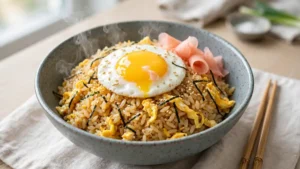
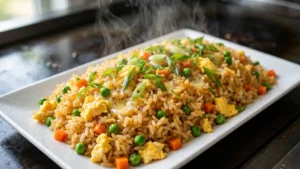
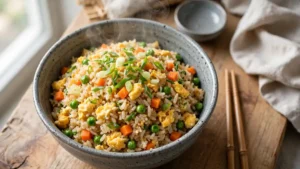
Yesterday’s pork roast is today’s best dinner. This leftover pork fried rice recipe turns cooked pork, whether it is roast loin, pork chops, tenderloin, or Chinese roast pork, into a sizzling wok of savory, golden fried rice in about twenty minutes. The hard work is already done: the pork is cooked and seasoned; it just needs to be cut into bite-size pieces and warmed through at the right moment so it stays juicy.
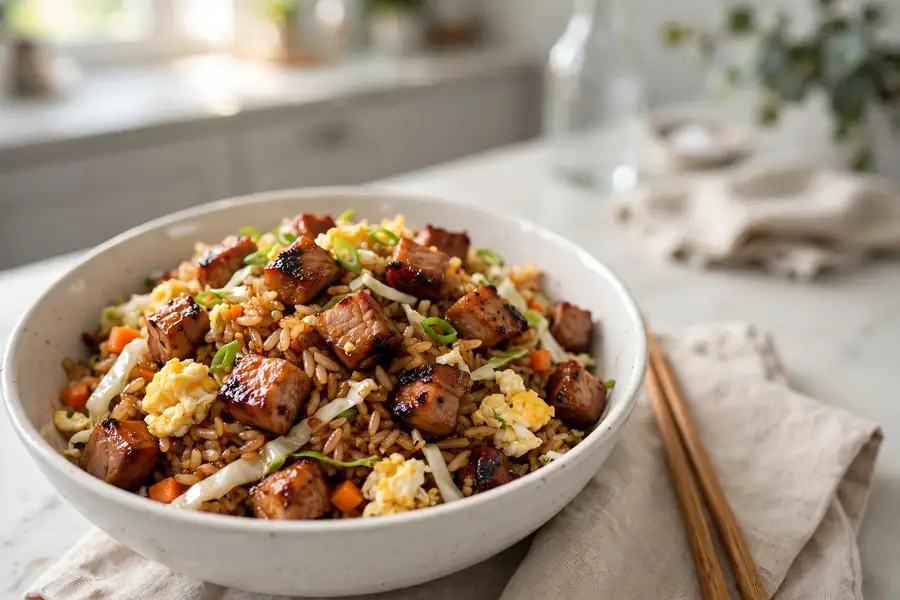
Why You’ll Love This Leftover Pork Fried Rice Recipe
It rescues leftovers. Cooked pork that might otherwise go to waste becomes the star of a new meal.
It is fast. With the pork already cooked, dinner is twenty minutes away.
It is deeply savory. Already-seasoned pork brings flavor the rice absorbs as it fries.
It is flexible. Roast pork, chops, tenderloin, pulled pork, or char siu all work.
It stretches a budget. A pound of leftover pork feeds four generously when paired with rice.
What Makes This Recipe Work?
The central challenge with leftover pork is dryness. Cooked pork tightens up when it is heated a second time, so the method protects it: the pork is cut into small pieces, added late in the cooking, and tossed just long enough to heat through. Small pieces also mean more surface area to pick up the sauce.
The rice technique stays classic. Cold, day-old rice fries into separate grains, and a hot wok gives the lightly caramelized spots that define good fried rice. Matching the sauce to the pork’s original seasoning matters too; a sweet char siu needs less sugar in the sauce, while plain roast pork welcomes a bolder hand with the seasonings.
Menu of Leftover Pork Fried Rice Recipe
This leftover pork fried rice recipe covers why it works, the full ingredient list with US measurements, how to choose and prep your leftover pork, the tools you need, step-by-step instructions, chef tips, a troubleshooting table, substitutions, variations, a practical cooking scenario, storage and food safety, reheating, meal prep tips, nutrition estimates, and frequently asked questions.
Ingredients for Leftover Pork Fried Rice Recipe
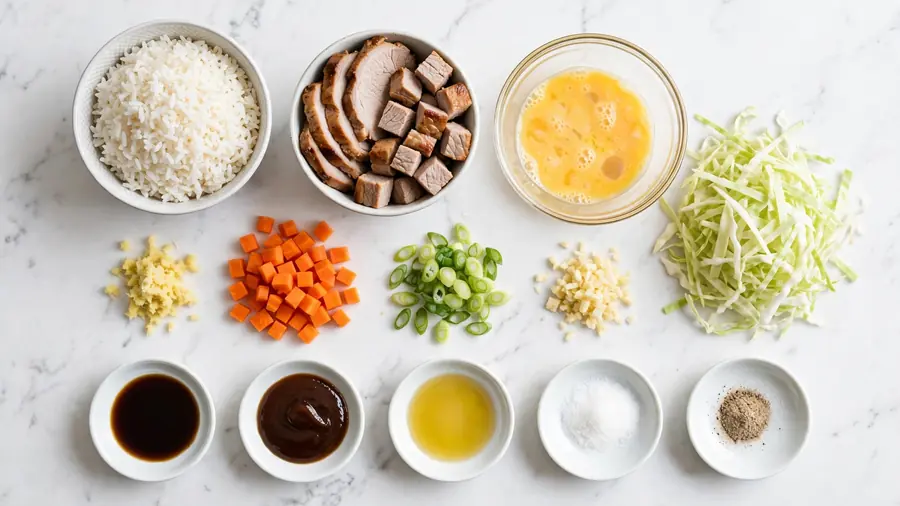
For the Fried Rice
- 4 cups cooked long grain or jasmine rice, chilled overnight
- 2 cups cooked pork, cut into 1/2-inch pieces (about 12 ounces)
- 2 large eggs, lightly beaten
- 1 cup shredded cabbage or diced bok choy
- 1/2 cup diced carrots
- 4 green onions, thinly sliced
- 2 cloves garlic, minced
- 1 teaspoon grated fresh ginger
- 3 tablespoons vegetable oil, divided
For the Sauce
- 2 1/2 tablespoons soy sauce (use 2 if your pork was heavily seasoned)
- 1 tablespoon oyster sauce
- 2 teaspoons toasted sesame oil
- 1 teaspoon sugar
- 1/2 teaspoon ground white pepper
Any cooked pork works: sliced roast loin, chopped pork chops, leftover tenderloin, pulled pork, or Chinese char siu. Trim off any large pieces of fat, but leave a little; it renders and flavors the rice.
Best Ingredients to Use
Cut the pork into uniform 1/2-inch pieces so every bite heats evenly. If you are using pulled pork, break it into small chunks rather than shreds, which can dry out fast. Taste your pork first: sweet-glazed char siu needs less sugar in the sauce, while plain roast pork can take the full amount. Long grain or jasmine rice, cooked a day ahead and chilled, gives the best fried texture. Shredded cabbage holds up well in the hot wok and adds a pleasant crunch without watering down the pan.
Kitchen Tools You’ll Need
- A large wok or 12-inch skillet.
- A sharp chef’s knife and cutting board for portioning the pork.
- A wooden spoon or wok spatula.
- A small bowl for mixing the sauce.
- An instant-read thermometer for checking the pork’s final temperature.
How to Make Leftover Pork Fried Rice Recipe
Step 1: Prep the Pork and Vegetables
Cut the cooked pork into 1/2-inch pieces, trimming excess fat. Taste a piece and note how salty or sweet it already is; you will adjust the sauce later. Shred the cabbage, dice the carrots, slice the green onions, mince the garlic, and grate the ginger. Whisk the sauce ingredients in a small bowl. Break up the cold rice and beat the eggs.
Step 2: Scramble the Eggs
Heat 1 tablespoon of oil in the wok over medium-high heat until shimmering. Scramble the eggs into soft curds, about 45 seconds, until just set. Transfer to a plate.
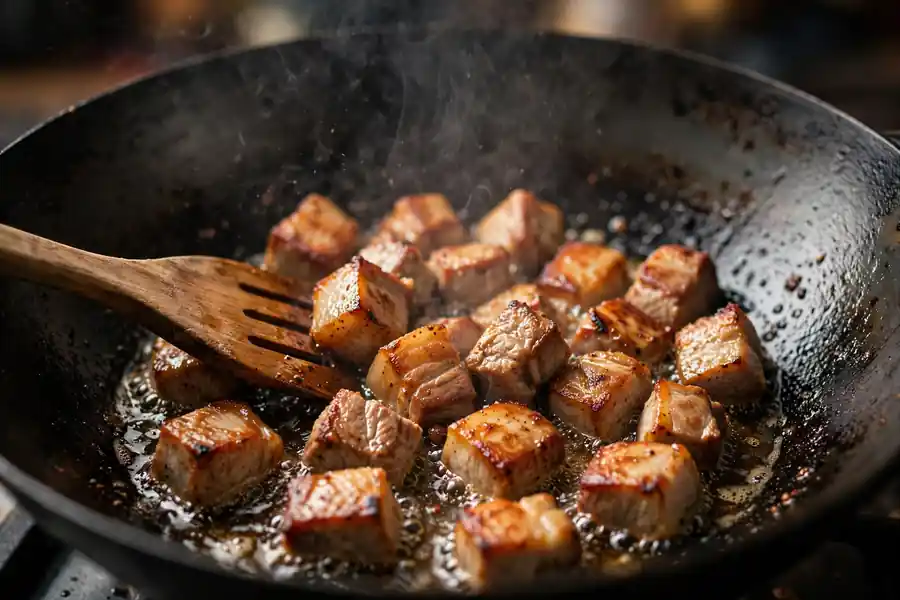
Step 3: Sear the Pork Pieces
Add another tablespoon of oil and raise the heat to high. Add the pork in a single layer and sear 2 to 3 minutes, turning once, until the edges pick up a little color and the pieces are hot. You are warming and lightly crisping, not fully cooking. Remove to a plate so it does not overcook while the rice fries.
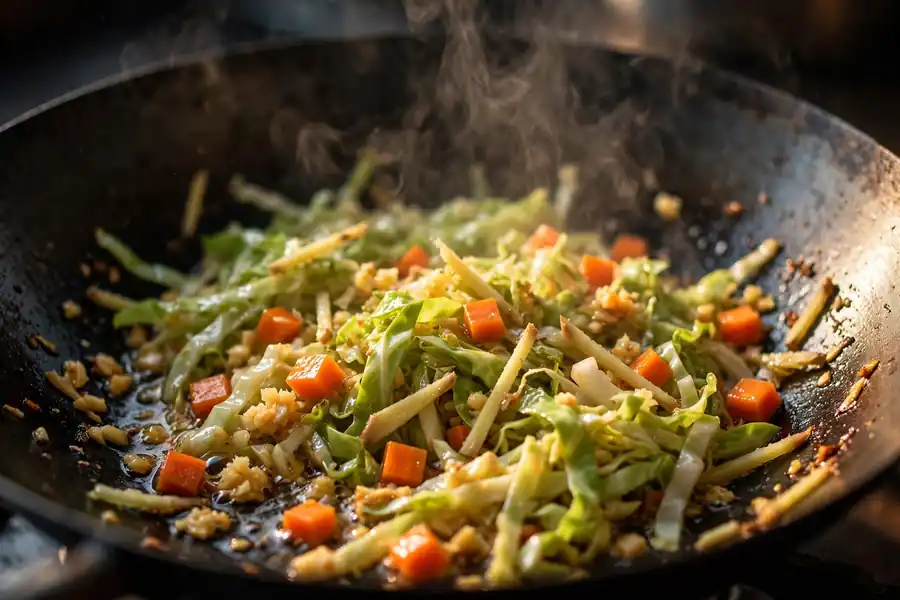
Step 4: Cook the Vegetables
Add the carrots, cabbage, garlic, and ginger to the wok with a drizzle of oil if dry. Stir-fry 2 to 3 minutes until the cabbage wilts slightly but still has crunch and the garlic is fragrant.
Step 5: Fry the Rice and Sauce
Add the remaining tablespoon of oil and the cold rice. Stir-fry 3 to 4 minutes until hot through with toasted spots. Pour the sauce evenly over the rice and toss 1 to 2 minutes until glossy and evenly colored. If your pork was already salty, start with a little less sauce and add more to taste.
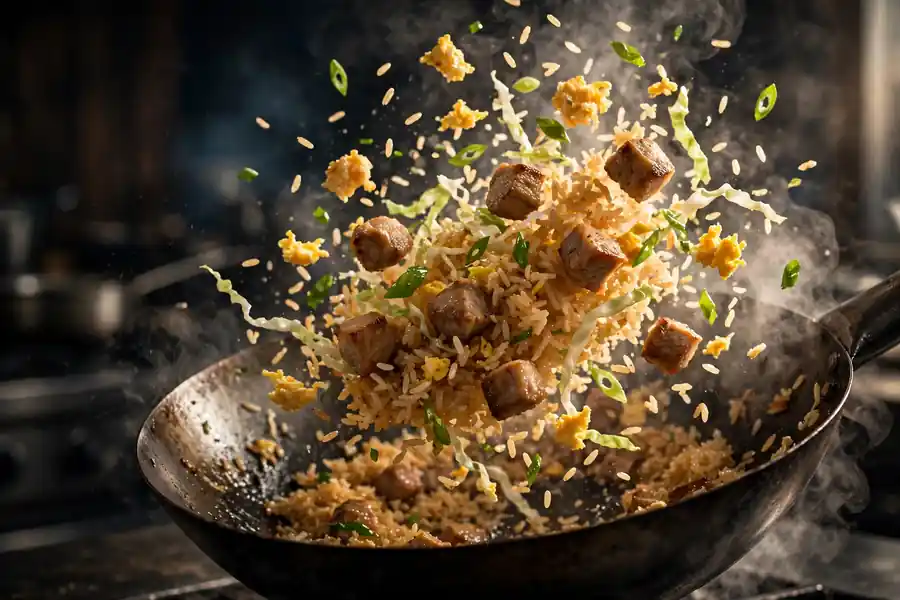
Step 6: Combine and Finish
Return the pork and eggs to the wok along with the green onions. Toss gently 1 minute until everything is heated through. The pork should reach 165 degrees F (74 degrees C). Drizzle with the sesame oil if you have not already included it, toss once, and serve immediately.
Chef’s Tips for the Best Results
Add the pork late and briefly. Cooked pork only needs 2 to 3 minutes of high heat. Any longer and it turns tough and dry.
Taste the pork before seasoning the rice. A salty smoked pork needs less soy sauce; a plain roast welcomes more. Adjusting after tasting prevents an over-salted pan.
Cut pieces small and even. Half-inch pieces heat through in the time it takes to toss, with no cold centers and no overcooked edges.
Warm the pork separately. Searing it on its own gives you control. Tossing cold pork in with the rice steams everything and cools the pan down.
Crisp the pork first, then set it aside. Browning the chopped pork on its own until the edges turn crisp, and returning it only at the end, keeps it flavorful instead of steamed soft by the rice.
Add the soy sauce near the end. Seasoning late keeps the rice from soaking up liquid too early and turning mushy.
Common Mistakes and How to Fix Them
| Common Problem | Why It Happens | How to Fix It |
|---|---|---|
| Pork turns dry and chewy | It was cooked too long in the wok a second time | Sear briefly, remove, and return only for the final minute |
| Dish is too salty | The pork was already well seasoned and full sauce was added | Taste the pork first and reduce the soy sauce accordingly |
| Pork pieces are cold in the middle | Pieces were cut too large or added straight from the fridge | Cut 1/2-inch pieces and let the pork sit at room temperature 15 minutes |
| Rice is mushy | Fresh rice was used, or the wok was overcrowded | Use chilled day-old rice and fry in a single layer |
| Flavors taste muddled | A sweet-glazed pork clashed with a sweet sauce | For char siu or glazed pork, cut the sugar in the sauce or skip it |
Ingredient Substitutions
| Original Ingredient | Substitute | Expected Difference |
|---|---|---|
| Roast pork loin | Leftover pork chops, tenderloin, or pulled pork | Chops are leaner; pulled pork is richer and shreds more |
| Char siu | Any sweet-glazed leftover pork | Similar sweet-savory profile; reduce added sugar |
| Shredded cabbage | Diced bok choy or bean sprouts | Bok choy is milder; bean sprouts add extra crunch |
| Oyster sauce | Hoisin sauce | Sweeter; reduce sugar to 1/2 teaspoon |
| Jasmine rice | Long grain white rice | Slightly less fragrant; fries up equally well |
Recipe Variations
Char siu style: Use Chinese roast pork, add 1/2 cup of diced pineapple, and finish with extra green onions for a sweet-savory Cantonese feel.
Spicy pork: Add 1 teaspoon of chili garlic sauce to the sauce mixture for heat that complements rich pork.
Carnitas style: Use leftover carnitas-style pork, swap the cabbage for diced bell pepper, and finish with lime wedges and cilantro.
Mushroom and pork: Add 1 cup of sliced shiitake mushrooms with the vegetables for extra umami depth.
Breakfast fried rice: Skip the cabbage, add extra egg, and serve with a fried egg on top for a hearty morning meal.
Five-spice and onion: Add a small diced onion with the carrots and a pinch of Chinese five-spice with the sauce for a warmer, takeout-style aroma.
Practical Cooking Scenario
Sunday’s pork roast left you with a container of sliced loin nobody is excited about. Monday evening, cut it into cubes while the wok heats, shred half a cabbage, and whisk the sauce. Twenty minutes later the pork is unrecognizable in the best way: caramelized at the edges, tossed through glossy rice, and gone by the end of dinner.
Storage and Food Safety
This dish involves twice-cooked pork, so handle it carefully. Cool leftovers within 2 hours and refrigerate in airtight containers for up to 4 days. Do not reheat pork fried rice more than once. Freeze portions for up to 2 months in sealed bags and thaw overnight in the refrigerator. Discard anything left at room temperature for more than 2 hours.
How to Reheat Leftover Pork Fried Rice Recipe
The skillet is best. Heat a teaspoon of oil over medium-high heat, add the cold rice, and stir-fry 3 to 4 minutes until steaming hot, adding a splash of water if dry. In the microwave, sprinkle with a tablespoon of water, cover loosely, and heat 2 minutes, stirring halfway. Because this contains pork, reheat to 165 degrees F (74 degrees C) throughout and serve immediately.
Meal Prep Tips
Portion the pork when you first store the leftovers so it is ready to dice. Cook rice 1 to 2 days ahead. Chop vegetables and mix the sauce a day ahead. The finished fried rice packs into lunch containers for up to 4 days; keep it refrigerated and reheat only the portion you will eat.
Nutrition Information
Approximate nutrition per serving (makes 4 servings), based on roast pork loin: 500 calories, 30 g protein, 56 g carbohydrates, 16 g fat, 2 g fiber, 900 mg sodium. These are estimates only. Actual values vary with the cut of pork, its original seasoning, soy sauce brand, oil amount, portion sizes, and preparation methods.
More Rice Recipes to Try
If you enjoyed this recipe, you will love these other rice dishes from The World of Rice:
- Authentic Pork Fried Rice Recipe: Cantonese Homestyle Comfort
- Bbq Pork Fried Rice Recipe: Sweet, Smoky & Takeout Style
- Best Pork Fried Rice Recipe: Smoky, Savory & Better Than Takeout
- Chinese Pork Fried Rice Recipe: Classic Takeout Style at Home
Frequently Asked Questions
What kind of leftover pork works best?
Roast loin, pork chops, tenderloin, pulled pork, and char siu all work. Cut any of them into 1/2-inch pieces and warm them briefly so they stay juicy.
How do I keep leftover pork from drying out in fried rice?
Sear it quickly over high heat, remove it from the pan, and return it only for the final minute. Small, even pieces heat through fast.
Can I use pulled pork?
Yes. Break it into small chunks rather than fine shreds, which dry out quickly, and warm it briefly at the end.
Should I adjust the sauce for seasoned pork?
Yes. Taste the pork first. If it is salty or sweet-glazed, reduce the soy sauce or sugar in the sauce to compensate.
How long does pork fried rice last in the fridge?
Up to 4 days in airtight containers. Cool it within 2 hours and reheat only once, to 165 degrees F.
Can I freeze pork fried rice?
Yes, for up to 2 months in sealed freezer bags. Thaw overnight in the refrigerator before reheating.
Final Thoughts
This leftover pork fried rice recipe turns yesterday’s roast into tonight’s favorite dinner. Cut the pork small, sear it fast, taste before you season, and keep that wok hot.
See the dictionary definitions for jasmine rice and white rice.

Prayvista Team is the editorial team behind Prayvista, The World of Rice. The team writes and reviews rice recipes for home cooks, and every article is checked by editor Sara Raza before publishing.