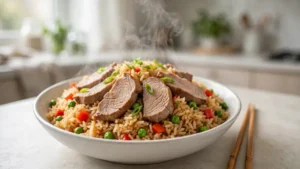
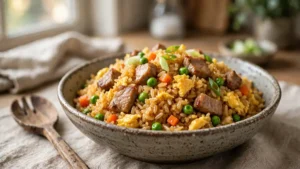
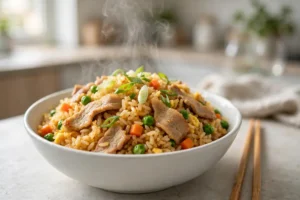
Pork tenderloin is the leanest, most tender cut of pork, and when sliced thin and cooked hot and fast, it turns silky and juicy in minutes. This pork tenderloin fried rice recipe pairs that lean, delicate pork with a ginger-scallion seasoning that keeps the whole dish light and fresh. Because tenderloin has almost no fat, the technique matters: a quick velveting marinade and a 90-second sear are all it takes. Overcook it by even a minute and it toughens.
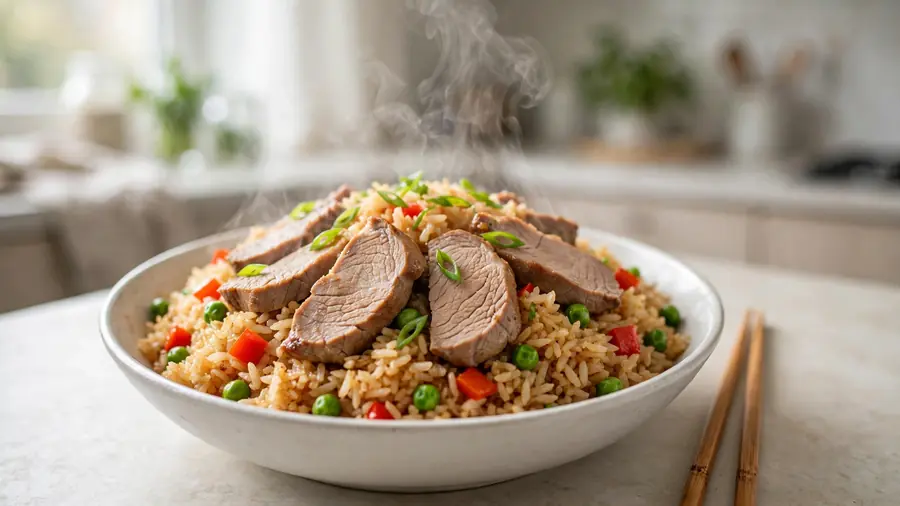
Menu of Pork Tenderloin Fried Rice Recipe
This pork tenderloin fried rice recipe covers the full ingredient list with US measurements, step-by-step instructions, a troubleshooting table, substitutions, variations, storage and reheating guidance, and answers to common questions.
Ingredients for Pork Tenderloin Fried Rice Recipe
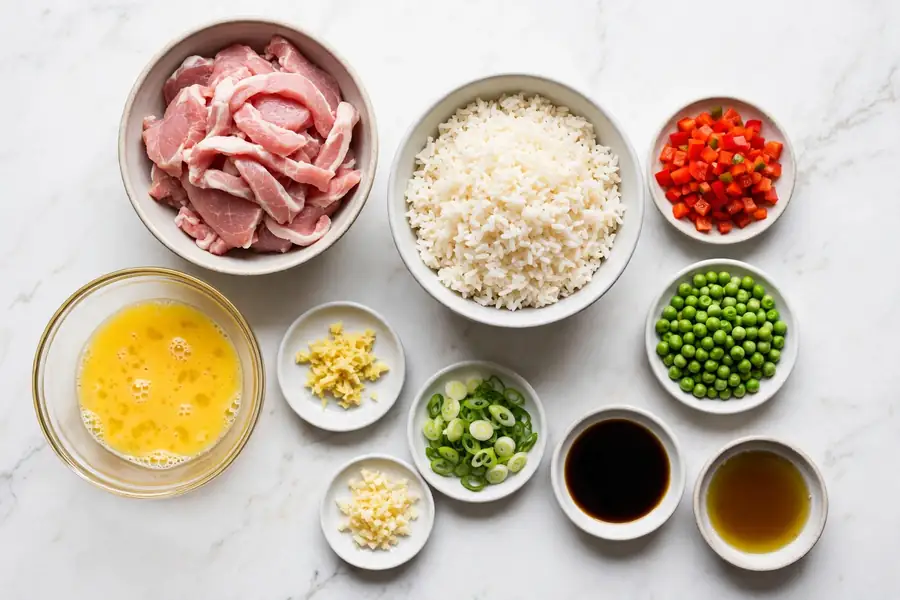
For the Velveted Tenderloin
- 12 ounces pork tenderloin, sliced 1/4 inch thick against the grain (about 340 g)
- 1 egg white, lightly beaten
- 1 tablespoon cornstarch
- 1 tablespoon Shaoxing wine or dry sherry
- 1/2 teaspoon kosher salt
- 1 teaspoon vegetable oil
For the Fried Rice
- 3 cups cooked jasmine rice, chilled (day-old is best)
- 2 large eggs, beaten
- 3 tablespoons vegetable oil or avocado oil, divided
- 1 tablespoon minced fresh ginger
- 2 cloves garlic, minced (about 2 teaspoons)
- 1/2 cup diced red bell pepper
- 1/2 cup frozen peas, thawed
- 4 scallions, thinly sliced (white and green parts separated)
- 2 tablespoons light soy sauce
- 1/2 teaspoon white pepper
- 1 teaspoon toasted sesame oil
Notes on ingredients: Look for the grain lines running along the tenderloin and slice across them. Thin slices against the grain are the single biggest factor in tender results. Choose a pork tenderloin that is pink with minimal silverskin; trim off the silvery membrane before slicing, since it stays tough when cooked. Partially freezing the tenderloin for 20 minutes makes thin, even slicing much easier. Jasmine rice is ideal for its fragrance and separate grains. Fresh ginger is essential here; its warmth is the backbone of the seasoning. Avocado oil is a great high-heat choice for searing the lean pork.
You will need: a very sharp chef’s knife, a wok or large 12-inch skillet, a wok spatula or wooden spoon, and a cutting board, measuring cups and spoons, and a bowl for the marinade.
How to Make Pork Tenderloin Fried Rice Recipe
Step 1: Slice and Velvet the Tenderloin
Trim the silverskin from the tenderloin. Slice it 1/4 inch thick against the grain. Toss the slices with the egg white, cornstarch, Shaoxing wine, salt, and teaspoon of oil until lightly coated. Cover and refrigerate 15 to 20 minutes. Tip: do not skip the velveting. With a fatty cut you might get away with it, but with lean tenderloin, the cornstarch and egg white shield is what keeps it juicy.
Step 2: Prep Everything
Break up the cold rice so no clumps remain. Beat the eggs. Mince the ginger and garlic, dice the bell pepper, thaw the peas, and slice the scallions. Keep everything within reach; the cooking moves fast.
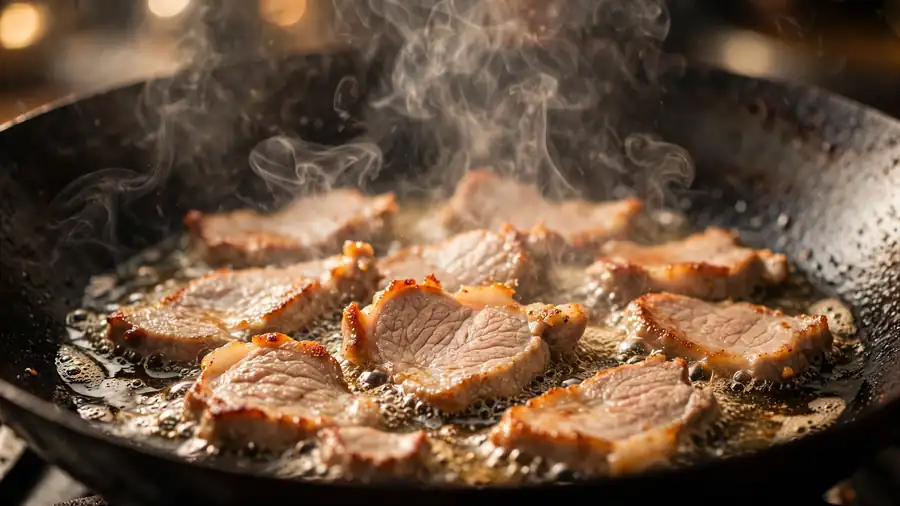
Step 3: Sear the Tenderloin
Heat 1 tablespoon of oil in the wok over high heat until it just starts to smoke. Add the pork slices in a single layer. Sear 60 to 90 seconds per side until just cooked through with a light golden sear. Remove to a plate immediately. Do not cook a second longer; the pork finishes with residual heat. Tip: time the sear, do not eyeball it. Ninety seconds per side over maximum heat is enough for 1/4-inch slices, so set a timer if you are unsure.
Step 4: Scramble the Eggs
Add a drizzle of oil if needed and reduce the heat to medium-high. Scramble the eggs into soft curds, about 30 to 45 seconds, and move them to the plate with the pork.
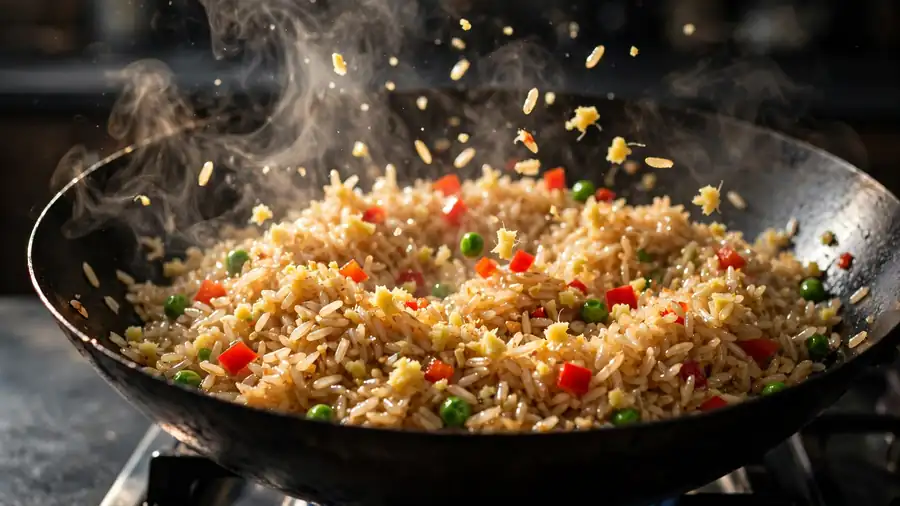
Step 5: Aromatics, Vegetables, and Rice
Add the remaining oil and turn the heat back to high. Stir-fry the ginger, garlic, scallion whites, and bell pepper for 2 minutes until fragrant and the pepper softens slightly. Add the peas and toss 30 seconds. Add the cold rice, toss to coat, spread in an even layer, and let it sit 1 minute to develop golden spots. Toss and repeat for 3 to 4 minutes total. Note: add the ginger after the pork is out, with the heat at high but not smoking, so it does not burn.
Step 6: Season and Finish
Drizzle the soy sauce around the hot edge of the wok and sprinkle in the white pepper. Toss 1 minute until evenly coated. Return the pork and eggs to the wok, add the sesame oil and scallion greens, and toss 30 seconds just to warm through. Serve immediately. Removing the pork the second it is done matters: leaving it in the wok while you fry the rice is how tenderloin turns tough.

Common Mistakes and How to Fix Them
| Common Problem | Why It Happens | How to Fix It |
|---|---|---|
| Pork is tough and chewy | Overcooked or sliced with the grain | Slice 1/4 inch thick against the grain; sear 90 seconds per side max |
| Silverskin left on | Tough membrane not trimmed | Trim all silvery membrane before slicing; it never softens |
| Pork sticks to the wok | Pan not hot enough before adding | Heat the oil until it lightly smokes before the pork goes in |
| Rice is bland | Delicate pork needs enough seasoning | Do not under-salt; the measured soy sauce plus white pepper is balanced |
| Ginger burns | Added too early over extreme heat | Add ginger after the pork is out, with the heat at high but not smoking |
Ingredient Substitutions
| Original Ingredient | Substitute | Expected Difference |
|---|---|---|
| Pork tenderloin | Pork loin, sliced thin | Slightly less tender; velveting is even more important |
| Shaoxing wine | Dry sherry or 1 tbsp water | Sherry is closest; water loses some aroma |
| Red bell pepper | Diced carrots or snap peas | Carrots need an extra minute; snap peas stay crisp |
| White pepper | Black pepper | Sharper and more visible |
| Avocado oil | Vegetable or peanut oil | All handle high heat well |
Recipe Variations
- Lemon-ginger: Add 1 teaspoon of lemon zest with the ginger for a bright, fresh twist.
- Asparagus: Add 1 cup of diagonally sliced asparagus with the bell pepper in spring.
- Spicy: Add 1 teaspoon of chili crisp with the sesame oil at the end.
- Mushroom: Add 1 cup of sliced shiitake mushrooms with the vegetables for deeper umami.
- Lettuce cups: Serve in butter lettuce cups with extra scallions for a light, fresh presentation.
- Oven-roasted option: If you prefer to cook the tenderloin whole, roast it to an internal temperature of 145 degrees F, rest it 5 minutes, then dice it and fold it in at the end in place of the seared slices.
Store, Reheat, and Prep Ahead
Cool leftovers within 2 hours and transfer to airtight containers. Refrigerate up to 4 days. Freeze for up to 2 months in portioned freezer bags; thaw overnight in the refrigerator. Discard leftovers that smell sour or have sat at room temperature for more than 2 hours. Because tenderloin is so lean, avoid reheating it aggressively or it will toughen.
To reheat gently in a skillet, heat a teaspoon of oil over medium heat, not high, add the cold rice, and stir-fry 3 to 4 minutes, adding a splash of water if it looks dry. The microwave works for single portions: place the rice in a bowl, sprinkle with a tablespoon of water, cover loosely, and heat 90 seconds, stirring halfway. Avoid overheating. Heat pork leftovers to 165 degrees F (74 degrees C) throughout.
For prep ahead, cook the rice 1 to 2 days ahead and refrigerate uncovered for the first hour. Slice and velvet the tenderloin up to 4 hours ahead; do not marinate longer or the texture softens too much. Chop the vegetables and aromatics up to 2 days ahead. Cook fresh for the best pork texture.
More Rice Recipes to Try
If you enjoyed this recipe, you will love these other rice dishes from The World of Rice:
- Authentic Pork Fried Rice Recipe: Cantonese Homestyle Comfort
- Bbq Pork Fried Rice Recipe: Sweet, Smoky & Takeout Style
- Best Pork Fried Rice Recipe: Smoky, Savory & Better Than Takeout
- Chinese Pork Fried Rice Recipe: Classic Takeout Style at Home
Frequently Asked Questions
Why use pork tenderloin instead of other cuts?
It is the leanest, most tender cut of pork. Sliced thin and cooked fast, it stays silky and juicy, and it is high in protein with very little fat.
How do I keep pork tenderloin from getting tough?
Slice it thin against the grain, velvet it in cornstarch and egg white, sear it hot and fast for 90 seconds per side, and remove it from the heat immediately.
What is the silverskin and do I have to remove it?
The silverskin is the tough, silvery membrane on the tenderloin. Yes, trim it off; it does not break down during cooking and stays chewy.
Can I use a different oil?
Yes. Any neutral high-heat oil works: vegetable, canola, peanut, or avocado oil.
Can I make this with brown rice?
Yes. Use chilled cooked brown rice and give it an extra 1 to 2 minutes of frying. The texture is chewier but still good.
Final Thoughts
This pork tenderloin fried rice recipe shows what a great cut of pork can do: lean, tender slices, bright ginger-scallion flavor, and golden fried rice in about 30 minutes. It is fried rice with a little extra finesse.
See the dictionary definitions for cornstarch and salt.

Prayvista Team is the editorial team behind Prayvista, The World of Rice. The team writes and reviews rice recipes for home cooks, and every article is checked by editor Sara Raza before publishing.