Thai crab fried rice turns a simple pan of rice into something special. Sweet lumps of crab folded through garlicky jasmine rice, brightened with lime and white pepper, taste like a seaside restaurant in Bangkok. This Thai crab fried rice recipe brings that balance to your kitchen in about 25 minutes.
The trick is treating the crab gently. It goes in last, just long enough to warm through, so the sweet lumps stay intact instead of shredding into the rice.
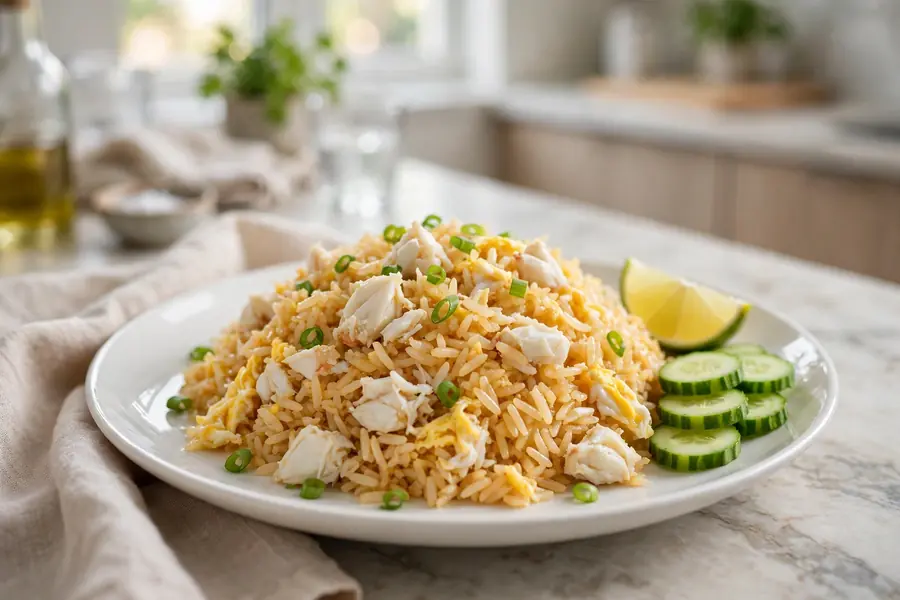
Menu of Thai Crab Fried Rice Recipe
This Thai crab fried rice recipe guide covers the full ingredient list with US measurements, step-by-step instructions, why the technique works, chef tips, a troubleshooting table, substitutions, variations, storage and reheating guidance, and answers to common questions.
Ingredients for Thai Crab Fried Rice Recipe

For the Fried Rice
- 3 cups cooked jasmine rice, chilled (day-old is best)
- 8 ounces lump crab meat, picked over for shells
- 2 large eggs, lightly beaten
- 3 cloves garlic, minced (about 1 tablespoon)
- 1/2 medium onion, finely diced
- 2 green onions, sliced, plus extra for garnish
- 3 tablespoons vegetable oil, divided
- 1 tablespoon unsalted butter (optional, for richness)
For the Seasoning
- 1 1/2 tablespoons fish sauce
- 1 tablespoon soy sauce
- 1/2 teaspoon white pepper
- 1/2 teaspoon sugar
- 2 teaspoons fresh lime juice, plus lime wedges for serving
- Sliced cucumber and extra lime wedges, for serving
Notes on ingredients: Use real lump crab meat, fresh or pasteurized from the refrigerated seafood section. Claw meat works and costs less, but the flavor is stronger and the pieces are smaller. Avoid imitation crab if you want the true Thai restaurant taste, though it is an acceptable budget swap. Jasmine rice is traditional; its light floral aroma pairs well with crab and lime. A fish sauce with only anchovies and salt on the label gives the cleanest flavor. Check the crab carefully for bits of shell, and pat it dry gently with paper towels so it does not water down the rice.
You will need: a large wok or 12-inch skillet with high sides, a wooden spoon or wok spatula for gentle folding, measuring cups and spoons, a small bowl for the seasoning mix, and paper towels for patting the crab dry.
How to Make Thai Crab Fried Rice Recipe
Step 1: Prep Everything
Break up the chilled rice so no clumps remain. Mince the garlic, dice the onion, and slice the green onions. Pick through the crab meat for shells and pat it dry. Stir the fish sauce, soy sauce, white pepper, and sugar in a small bowl. This Thai crab fried rice recipe cooks in minutes once the wok is hot.
Step 2: Scramble the Eggs
Heat 1 tablespoon of oil in the wok over medium-high heat until shimmering. Pour in the beaten eggs and scramble into soft curds, 30 to 45 seconds. Remove to a plate while still slightly moist.

Step 3: Soften the Aromatics
Add another tablespoon of oil and the onion. Stir-fry 1 to 2 minutes until soft and translucent. Add the garlic and cook 30 seconds more, stirring constantly, until fragrant and just golden. Do not let the garlic brown past gold.
Step 4: Fry the Rice
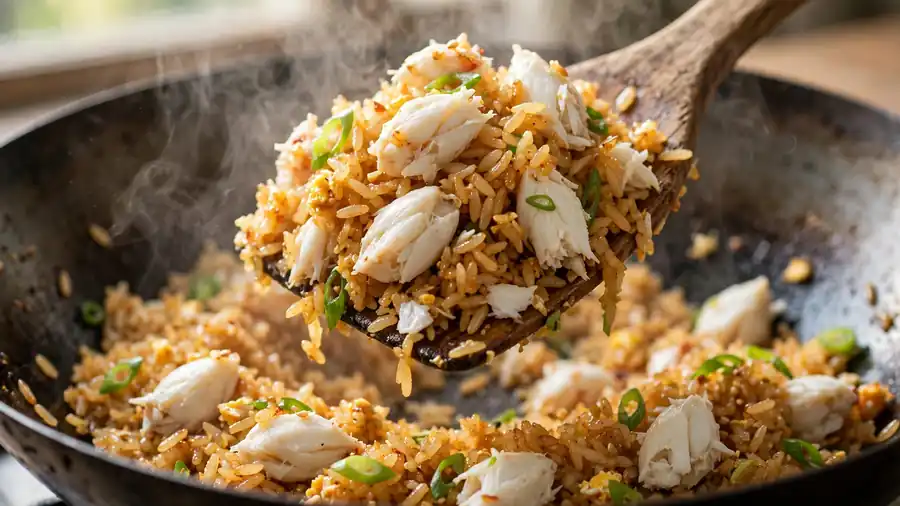
Add the remaining tablespoon of oil and the cold rice. Break up any remaining clumps and stir-fry 3 to 4 minutes, tossing constantly, until the grains are hot through and starting to toast in spots. The rice should smell nutty and look slightly golden.
Step 5: Season the Rice
Pour the seasoning mixture evenly over the rice and toss for 1 minute until every grain is coated and glossy. Taste a grain; it should be savory with a hint of sweetness and pepper warmth. Adjust with a splash more fish sauce if needed.
Step 6: Fold in the Crab
Reduce the heat to medium. Return the eggs to the wok and add the crab meat, butter if using, and the sliced green onions. Fold gently for 60 to 90 seconds, just until the crab is warmed through. Use a folding motion, not vigorous stirring, so the lumps stay intact. Squeeze the lime juice over everything, toss once more, and serve immediately with cucumber slices and lime wedges.

Why This Works
- The crab is protected. Crab meat is delicate and already cooked, so the rice fries first and the crab folds in during the last minute, warming without breaking apart.
- White pepper is traditional. It gives a warm, earthy heat that black pepper cannot quite replicate.
- Lime keeps it lively. A squeeze at the table cuts through the richness and keeps every bite bright.
- Seasoning comes before the crab. The rice absorbs seasoning as it fries, so it is tasted and adjusted before the crab joins, when aggressive re-seasoning would break it.
Chef’s Tips for the Best Results
- Add the crab last and handle it gently. Fold, never stir aggressively, so you get visible lumps of crab in every serving.
- Pat the crab dry. Excess liquid steams the rice and dulls the seasoning.
- Season in two passes. Taste after the sauce goes in and adjust before the crab joins.
- Serve a small bowl of prik nam pla on the side. This Thai table condiment of fish sauce with sliced chilies lets each diner add salt and heat to taste, which is how many Thai restaurants serve crab fried rice.
Common Mistakes and How to Fix Them
| Common Problem | Why It Happens | How to Fix It |
|---|---|---|
| Crab breaks into shreds | Stirred too hard or added too early | Fold the crab in during the last 90 seconds with a gentle folding motion |
| Rice turns soggy | Wet crab added, or fresh rice used | Pat crab dry; use cold, day-old jasmine rice |
| Dish tastes flat | Under-seasoned, or lime juice forgotten | Taste before adding crab and adjust fish sauce; finish with fresh lime juice |
| Garlic tastes bitter | Garlic overcooked before rice was added | Add garlic after the onion and cook only 30 seconds until just golden |
| Crab tastes fishy | Old or low-quality crab meat | Buy pasteurized lump crab from the refrigerated case and smell it; it should smell sweet and ocean-fresh |
Ingredient Substitutions
| Original Ingredient | Substitute | Expected Difference |
|---|---|---|
| Lump crab meat | Claw crab meat or imitation crab | Claw meat is stronger flavored and shreds more; imitation crab is sweeter and firmer but less authentic |
| Fish sauce | Soy sauce plus a squeeze of lime | Less deep umami; still savory but missing the Thai character |
| White pepper | Black pepper | Sharper, more biting heat; use slightly less |
| Jasmine rice | Long-grain white rice | Less fragrant but fries up well |
| Butter | Extra tablespoon of vegetable oil | Less rich and creamy; still works fine |
Recipe Variations
Spicy Thai style: Add 1 to 2 thinly sliced Thai chilies with the garlic for real heat, and finish with a drizzle of chili oil.
Shrimp and crab: Add 1/2 pound of seared shrimp along with the crab for a double seafood version.
Curry powder twist: Some Thai restaurants add 1 teaspoon of mild curry powder with the seasoning for a golden color and warm spice note.
Vegetable boost: Add 1/2 cup of diced red bell pepper and a handful of baby spinach with the aromatics for color and nutrition.
Thai basil finish: Scatter a handful of Thai basil leaves over the finished rice. The anise-like aroma is a common restaurant garnish and suits the lime and crab.
Store, Reheat, and Prep Ahead
Cool leftovers within 2 hours and refrigerate in airtight containers. Because this dish contains seafood, eat leftovers within 2 days for the best quality and safety. Freezing is not recommended; the crab becomes rubbery and watery when thawed. Discard leftovers that smell sour or fishy, or that sat at room temperature longer than 2 hours.
To reheat, warm gently in a skillet over medium heat with a teaspoon of oil, stirring, for 3 to 4 minutes with a splash of water until steaming. High heat toughens the crab. The microwave works for single portions: sprinkle with a tablespoon of water, cover loosely, and heat 90 seconds, stirring halfway. Heat seafood leftovers to 165 degrees F (74 degrees C) throughout.
For prep ahead, cook the rice a day ahead. Pick through the crab for shells and store it in a sealed container in the coldest part of the fridge for up to 2 days. Mince the garlic and dice the onion up to 2 days ahead. Mix the seasoning sauce and keep it in a jar up to a week. Do not combine anything until cooking time.
More Rice Recipes to Try
If you enjoyed this recipe, you will love these other rice dishes from The World of Rice:
- Authentic Thai Fried Rice Recipe: The Classic Home Version
- Authentic Thai Pineapple Fried Rice Recipe (Khao Phad Sapparot)
- Quick Basil Fried Rice Recipe Thai Style: 20-Minute Weeknight Dinner
- Authentic Basil Thai Fried Rice Recipe: Fragrant, Spicy & Better Than Takeout
Frequently Asked Questions
Can I use imitation crab in Thai crab fried rice?
Yes. It is a budget-friendly swap. Add it the same way at the end, and expect a sweeter, firmer texture and less delicate flavor than real crab.
How do I keep the crab meat from breaking apart?
Fold it in gently during the last 60 to 90 seconds of cooking. Use a spatula to lift and fold rather than stirring, and keep the heat at medium once the crab goes in.
What is the best rice for crab fried rice?
Day-old jasmine rice is best. The grains stay separate and the floral aroma complements the crab and lime.
Can I make this recipe ahead of time?
Prep everything ahead, but cook it fresh. Fried rice with crab is best served immediately, and crab leftovers keep only 2 days.
Can I add curry powder to crab fried rice?
Yes. About 1 teaspoon of mild yellow curry powder added with the seasoning gives a golden color and warm spice that many Thai restaurants use.
Final Thoughts
This Thai crab fried rice recipe proves that a special dinner does not need a long ingredient list. Fry the rice properly, season it boldly, and fold the crab in gently at the end so every bite has sweet, intact lumps. Try it this weekend with fresh lime and cucumber on the side.
See the dictionary definitions for jasmine rice and pepper.

Prayvista Team is the editorial team behind Prayvista, The World of Rice. The team writes and reviews rice recipes for home cooks, and every article is checked by editor Sara Raza before publishing.








1 thought on “Thai Crab Fried Rice Recipe: Fragrant, Sweet & Restaurant Style”