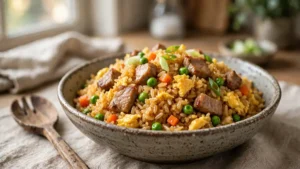
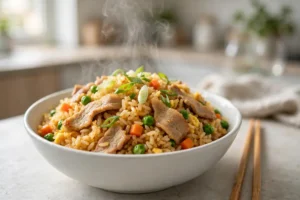
In Thailand, this dish is called khao phad horapa, and basil is not a garnish; it is the soul of the recipe. A generous handful of Thai basil wilts into hot fried rice at the very last second, releasing a peppery, almost anise-like aroma that defines the dish. This basil Thai fried rice recipe is built around that moment, with everything else seasoned to let the basil shine. It takes about 20 minutes once your ingredients are prepped.

Why You’ll Love This Basil Thai Fried Rice Recipe
The basil is the star. Two full cups of Thai basil give every bite a fresh, peppery aroma.
It tastes authentically Thai. The flavor profile mirrors the street-style dish: salty fish sauce, heat, and fragrant herbs.
It is fast. About 20 minutes once your ingredients are prepped.
It is naturally light. A little oil, lean protein, and a mountain of fresh herbs.
It is flexible. Use chicken, pork, shrimp, or tofu; the basil method stays the same.
What Makes This Recipe Work?
Thai basil contains aromatic compounds that are highly volatile, which means heat destroys them fast. Adding the basil in the final 30 seconds, off the fiercest heat, preserves the peppery anise notes instead of cooking them into dullness. That timing is the single most important detail in this basil Thai fried rice recipe.
The light seasoning is the second key. Heavy sauces would bury the basil, so the rice gets just enough fish sauce and soy to taste savory, with sugar for balance. The basil then sits on top of that clean base and carries the dish.
Menu of Basil Thai Fried Rice Recipe
This basil Thai fried rice recipe covers the basil-first technique, the full ingredient list with US measurements, how to choose the best basil, the tools that help, step-by-step wok instructions, chef tips, a troubleshooting table, substitutions, variations, storage and reheating guidance, nutrition estimates, and answers to common questions.
Ingredients for Basil Thai Fried Rice Recipe

For the Fried Rice
- 3 cups cooked jasmine rice, chilled (day-old is best)
- 1/2 pound ground chicken or ground pork (about 225 g)
- 3 large eggs, lightly beaten
- 2 cups loosely packed Thai basil leaves, plus extra for serving
- 4 cloves garlic, minced
- 2 to 3 Thai chilies, thinly sliced
- 1 small onion, diced
- 1 red bell pepper, diced
- 3 tablespoons vegetable oil, divided
For the Sauce
- 2 tablespoons fish sauce
- 1 tablespoon soy sauce
- 1 tablespoon sugar
- 1/2 teaspoon white pepper
- 1 teaspoon oyster sauce (optional)
Two cups of basil looks like an enormous pile, and that is correct. Basil shrinks dramatically in the hot wok, and a timid handful will disappear without a trace. Pick the leaves from the stems and keep them dry; wet basil steams instead of wilting fragrantly.
Best Ingredients to Use
Thai basil is the right herb, with narrower leaves, purple-tinged stems, and a peppery flavor with hints of anise and clove. Find it at Asian grocery stores and many well-stocked supermarkets. Holy basil is the traditional Thai choice and even more peppery, but it is harder to find. Italian sweet basil works in a pinch, though the flavor will be milder and sweeter.
Jasmine rice is essential. Its fragrance pairs naturally with the basil, and chilled day-old grains fry up separately. Ground chicken or pork both work; pork is richer, chicken is leaner. Use a fish sauce with only anchovies and salt on the label.
Kitchen Tools You’ll Need
- A large wok or 12-inch skillet, heated until very hot.
- A wok spatula or wooden spoon for tossing.
- Small bowls for the sauce, beaten eggs, and prepped basil.
- A salad spinner or clean towel for drying the basil leaves.
- Tongs for serving.
How to Make Basil Thai Fried Rice Recipe
Step 1: Prep the Basil and Everything Else
Pick the basil leaves from the stems, rinse if needed, and dry them thoroughly. Two cups of packed leaves is the target. Mince the garlic, slice the chilies, dice the onion and bell pepper. Stir the sauce together in a small bowl and beat the eggs in another. Break up the chilled rice.
Step 2: Sear the Ground Meat
Heat 1 tablespoon of oil in the wok over high heat until shimmering. Add the ground chicken or pork in an even layer and let it sit 1 minute to brown. Break it up and cook 3 to 4 minutes total until no pink remains and the crumbles have golden edges. Transfer to a plate.
Step 3: Scramble the Eggs
Reduce the heat to medium-high and add 1 tablespoon of oil. Scramble the beaten eggs 45 to 60 seconds into soft curds. Move to the plate while still slightly glossy.
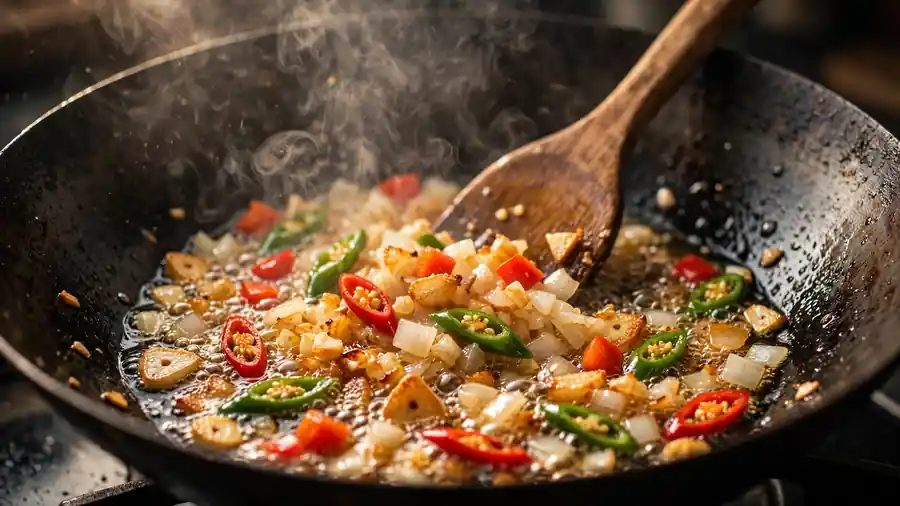
Step 4: Bloom the Aromatics
Return the heat to high and add the remaining tablespoon of oil. Add the garlic, chilies, onion, and bell pepper. Stir-fry 1 to 2 minutes until the garlic is fragrant and golden at the edges and the vegetables soften. Do not let the garlic go past golden or it will taste bitter.
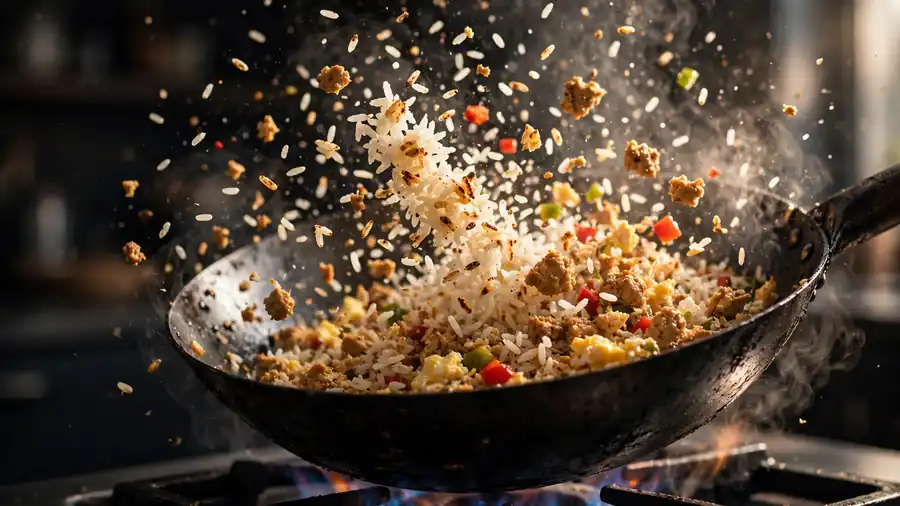
Step 5: Fry the Rice
Add the cold rice and toss to combine with the aromatics. Spread it out, let it crisp 60 to 90 seconds, then toss and repeat for 3 to 4 minutes total until the grains are hot through and lightly golden.
Step 6: Sauce, Meat, and the Basil Finish
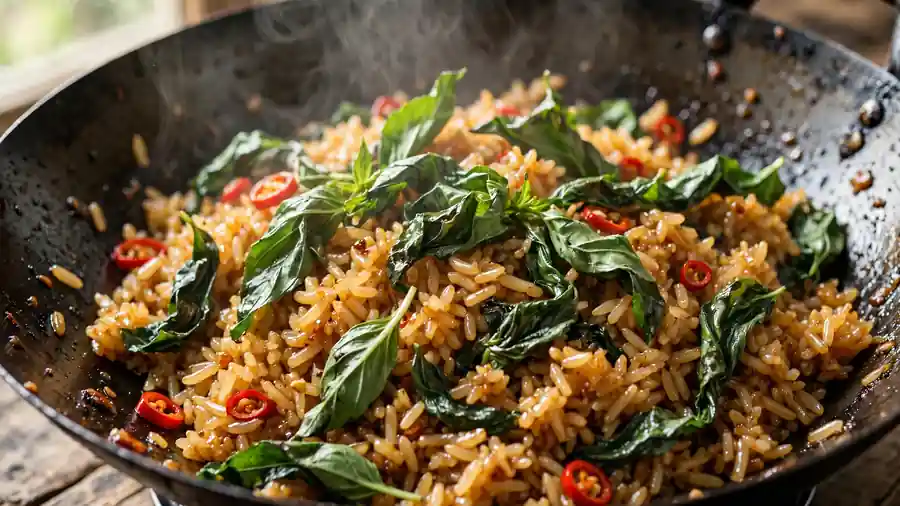
Pour the sauce evenly over the rice and toss 1 minute until glossy. Return the meat and eggs to the wok and toss to warm through. Turn off the heat or drop it to low, add all the basil leaves, and toss 30 seconds, just until the leaves wilt and turn bright green. The residual heat is enough; the basil should smell intensely fragrant. Serve immediately with extra fresh basil on top. As a Thai table condiment, a small bowl of prik nam pla, fish sauce with sliced chilies and lime, lets each person add salt and heat, a pairing many Thai basil recipes serve alongside.
Chef’s Tips for the Best Results
Dry the basil completely. Wet leaves steam and turn black. A salad spinner or a thorough pat with towels makes a visible difference.
Add the basil off high heat. Kill the burner or drop it to low before the basil goes in. Thirty seconds of gentle wilting preserves the aroma; a minute of hard heat destroys it.
Do not chop the basil. Whole leaves release their oils as they wilt and look beautiful. Chopped basil bruises and darkens faster.
Common Mistakes and How to Fix Them
| Common Problem | Why It Happens | How to Fix It |
|---|---|---|
| Basil turns black and limp | Added too early or cooked too long | Add in the final 30 seconds off high heat |
| Basil flavor is barely there | Too little basil used | Use a full 2 cups of packed leaves; it shrinks fast |
| Dish tastes bitter | Garlic burned before the rice went in | Keep garlic moving and pull it at golden, not brown |
| Rice is bland under the basil | Sauce too light or unevenly distributed | Mix the sauce first, pour evenly, and taste before adding basil |
| Basil stems in the dish | Leaves not picked properly | Pick leaves from the stems; stems are tough and woody |
Ingredient Substitutions
| Original Ingredient | Substitute | Expected Difference |
|---|---|---|
| Thai basil | Holy basil or Italian basil | Holy basil is more peppery; Italian is milder and sweeter |
| Ground chicken | Ground pork, turkey, or crumbled tofu | Pork is richer; turkey is leaner; tofu needs pressing and searing |
| Fish sauce | Soy sauce plus lime juice | Less funky depth; still savory |
| Jasmine rice | Long-grain white rice | Less fragrant; fries the same way |
| Thai chilies | Serrano pepper or red pepper flakes | Similar heat; serrano is closest |
| Oyster sauce | Extra soy sauce plus 1 tsp sugar | Less rich and glossy |
Recipe Variations
Holy basil classic: Use holy basil instead of Thai basil for the most traditional Thai flavor, if you can find it.
Shrimp basil fried rice: Swap the ground meat for 1/2 pound of shrimp, seared 90 seconds per side.
Vegetarian: Use crumbled firm tofu or extra eggs, and swap the fish sauce for vegetarian fish sauce or soy sauce with a pinch of sugar.
Extra herb: Add a handful of fresh cilantro and mint along with the basil for a multi-herb finish.
Spicy basil: Double the chilies and finish with a drizzle of chili oil.
Practical Cooking Scenario
Picture a bunch of Thai basil from the Asian market that needs using tonight, plus leftover jasmine rice in the fridge. The whole dish hinges on that basil, so it gets prepped first: picked, washed, and dried while the wok heats. Twenty minutes later the kitchen smells incredible and dinner is done. When basil is abundant in summer, double the recipe and freeze half the finished rice; the basil aroma survives freezing better than most fresh herbs.
Storage and Food Safety
Cool leftovers within 2 hours and refrigerate in airtight containers up to 4 days. The basil will darken in storage, which is normal and harmless. Freeze portions up to 2 months in freezer bags with the air pressed out; thaw overnight in the refrigerator. Discard leftovers that smell sour or sat at room temperature more than 2 hours. Reheat meat-containing leftovers to 165 degrees F (74 degrees C).
How to Reheat Basil Thai Fried Rice Recipe
The best way to reheat this basil Thai fried rice recipe is in a skillet. Heat a teaspoon of oil over medium-high, add the cold rice, and stir-fry 3 to 4 minutes until steaming hot. Toss in a small handful of fresh basil at the end to restore the aroma.
The microwave works too. Sprinkle with a tablespoon of water, cover loosely, and heat 2 minutes, stirring halfway. Add fresh basil after reheating for the best flavor.
Meal Prep Tips
Pick and dry the basil up to a day ahead; store the leaves in a container lined with a paper towel in the refrigerator. Cook the rice a day ahead and chill uncovered. Chop the vegetables and mix the sauce up to 2 days ahead. The basil should be added fresh at cook time for the brightest flavor, so keep it separate until the final step.
Nutrition Information
Approximate nutrition per serving (makes 4 servings, with ground chicken): 450 calories, 24 g protein, 52 g carbohydrates, 16 g fat, 2 g fiber, 960 mg sodium. These are estimates only and vary with brands, meat choice, and portion sizes.
More Rice Recipes to Try
If you enjoyed this recipe, you will love these other rice dishes from The World of Rice:
- Quick Basil Fried Rice Recipe Thai Style: 20-Minute Weeknight Dinner
- Thai Basil Chicken Fried Rice Recipe: Thai Street Food at Home
- Easy Thai Basil Fried Rice Recipe: Bold, Spicy & Better Than Takeout
- Authentic Thai Fried Rice Recipe: The Classic Home Version
Frequently Asked Questions
Can I use Italian basil instead of Thai basil?
Yes. The flavor will be milder and sweeter without the peppery anise note, but the method is identical. Use the same generous amount.
Why did my basil turn black?
It cooked too long or the heat was too high when it went in. Add the basil in the final 30 seconds with the heat off or on low.
What is the difference between Thai basil and holy basil?
Thai basil is sweet with anise notes; holy basil is more peppery and is the traditional choice for Thai stir-fries. Both work in this recipe.
Can I make this with dried basil?
No. Dried basil has none of the fresh aromatic punch this dish depends on. Fresh is essential.
How do I store fresh Thai basil?
Treat it like flowers: stems in a glass of water at room temperature, loosely covered. Refrigeration can blacken the leaves.
Can I prepare this ahead of time?
Prep everything ahead, but cook just before serving. The basil must be added fresh at the end for the best aroma.
Final Thoughts
This basil Thai fried rice recipe is a love letter to Thai basil: generous, fragrant, and added at the very last second. Keep the seasoning light, the wok hot, and the basil plentiful.
See the dictionary definitions for fish sauce and shrimp.

Prayvista Team is the editorial team behind Prayvista, The World of Rice. The team writes and reviews rice recipes for home cooks, and every article is checked by editor Sara Raza before publishing.





1 thought on “Authentic Basil Thai Fried Rice Recipe: Fragrant, Spicy & Better Than Takeout”