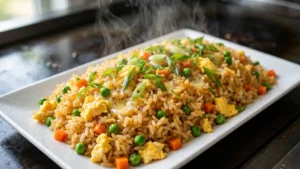
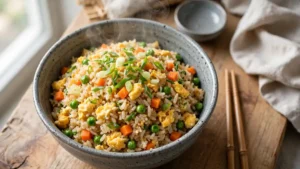
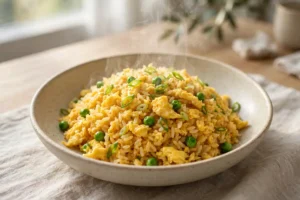
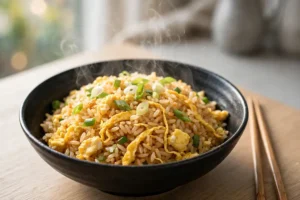
Some of the best dinners come straight from the pantry, and this tuna fried rice recipe is proof. Canned tuna, day-old rice, eggs, and a savory sesame-soy sauce turn into a complete meal in about 20 minutes, with no special shopping trip required. It is the kind of recipe that saves a busy weeknight when the fridge looks empty.
The key is treating the tuna gently and draining it well. Canned tuna is already cooked, so it only needs to warm through at the end; stirred too hard or too early, it turns to mush and makes the rice soggy.
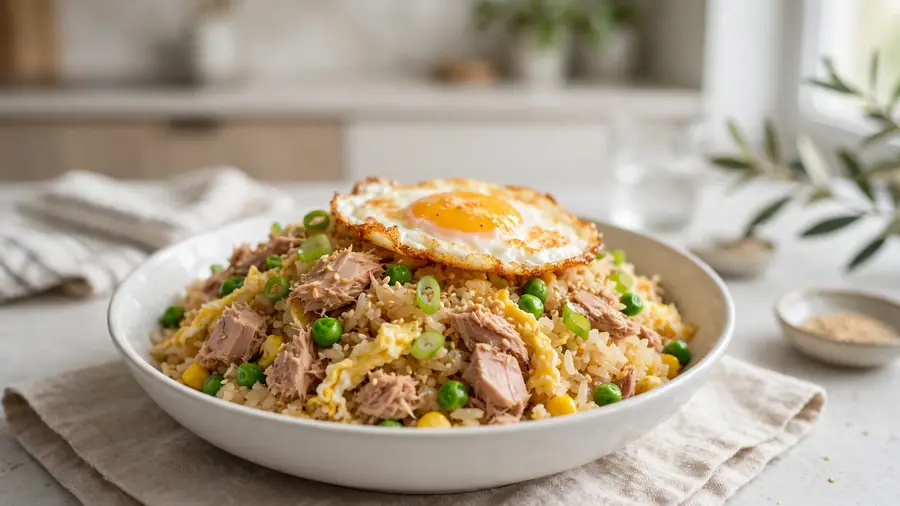
Why You’ll Love This Tuna Fried Rice Recipe
It is a true pantry dinner. Canned tuna, rice, eggs, and soy sauce are things most kitchens already have.
It cooks in 20 minutes. One of the fastest complete meals you can make.
It is budget-friendly. A couple of cans of tuna feed four people for just a few dollars.
It is high in protein. Tuna and eggs pack this simple dish with staying power.
Kids usually like it. Mild, savory flavors and familiar ingredients make it an easy sell.
What Makes This Recipe Work?
Canned tuna brings two challenges: excess liquid and a tendency to shred. This tuna fried rice recipe solves the first by draining the tuna thoroughly and even pressing it gently, and the second by adding the tuna in the final minute with only a light folding motion. The rice, meanwhile, gets fried hard and seasoned assertively with soy sauce, sesame oil, and white pepper, so the mild tuna has a flavorful base to sit in.
Eggs do double duty here, adding richness and protein that make the dish feel complete. Frozen peas and corn add sweetness and color with zero prep, and a drizzle of toasted sesame oil plus sliced green onions at the end lifts the whole pan from plain to craveable.
Menu of Tuna Fried Rice Recipe
This tuna fried rice recipe covers why it works, the full ingredient list with US measurements, how to choose the best canned tuna, the tools that help, step-by-step instructions, chef tips, a troubleshooting table, substitutions, variations, storage and reheating guidance, nutrition estimates, and answers to common questions.
Ingredients for Tuna Fried Rice Recipe
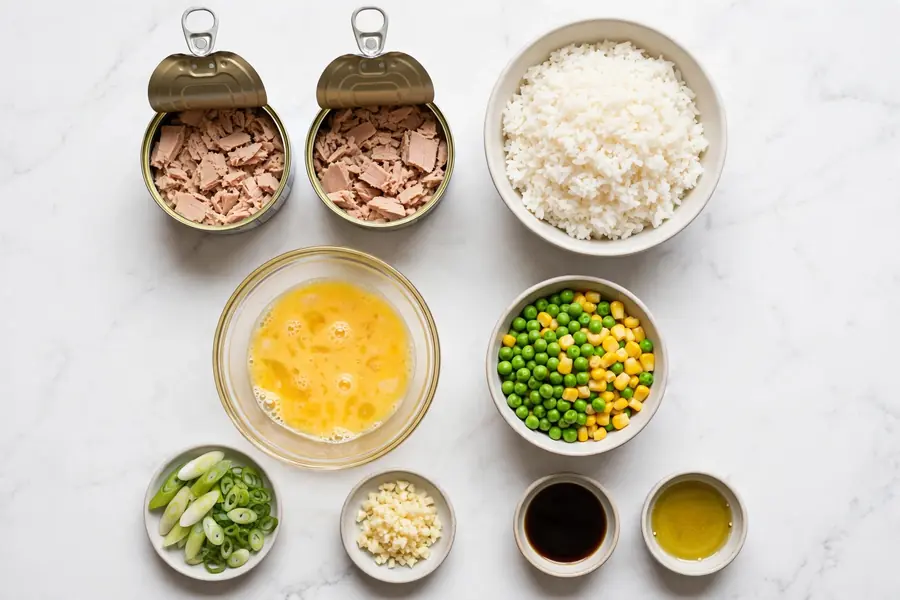
For the Fried Rice
- 2 cans (5 ounces each) tuna, drained very well
- 3 cups cooked long-grain white rice, chilled (day-old is best)
- 3 large eggs, lightly beaten
- 2 tablespoons vegetable oil, divided
- 3 cloves garlic, minced (about 1 tablespoon)
- 1 cup frozen peas and corn, thawed
- 4 green onions, thinly sliced
For the Sauce
- 2 tablespoons soy sauce
- 1 teaspoon toasted sesame oil, plus more for drizzling
- 1/2 teaspoon white pepper
- 1 teaspoon rice vinegar (optional, for brightness)
Tuna packed in water keeps the dish lighter; tuna packed in oil adds richness. Either works as long as you drain it thoroughly. Flaked or chunk light tuna both work, but chunk holds together better.
Best Ingredients to Use
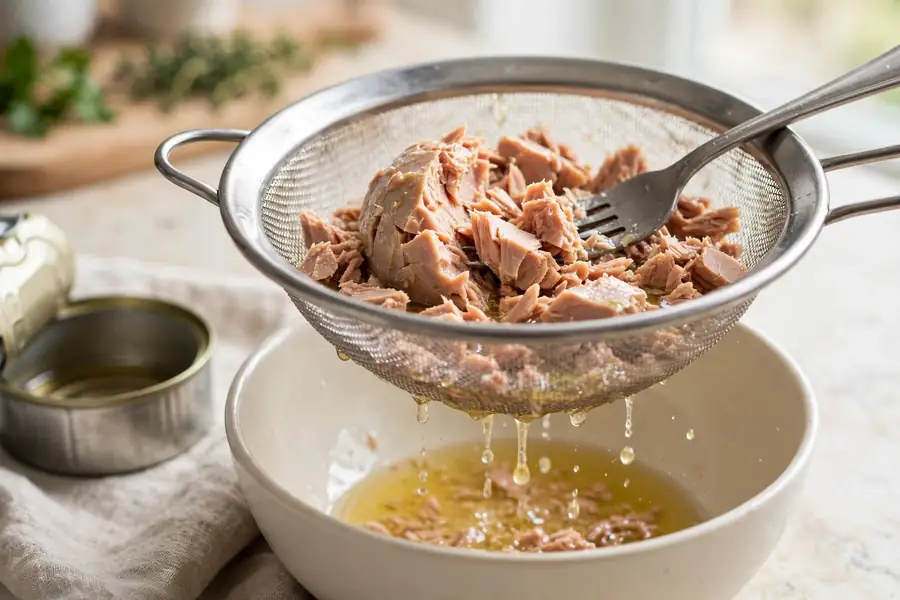
Choose a tuna you enjoy eating straight from the can, since its flavor carries the dish. Solid or chunk white albacore has a meatier texture and milder flavor; chunk light is more economical and works fine. Drain the cans completely, then press the tuna gently in a fine-mesh sieve to remove the last of the liquid; this step matters more than any other for avoiding soggy rice.
Long-grain white rice or jasmine rice, cooked a day ahead and chilled, fries up best. For soy sauce, a naturally brewed brand gives cleaner flavor. Toasted sesame oil should smell nutty and rich; it goes in at the end, never for high-heat frying.
Kitchen Tools You’ll Need
- A large wok or 12-inch skillet.
- A fine-mesh sieve for draining the tuna thoroughly.
- A wooden spoon or spatula for tossing.
- A small bowl for mixing the sauce.
How to Make Tuna Fried Rice Recipe
Step 1: Drain the Tuna
Open the cans and drain the tuna completely, then press it gently in a fine-mesh sieve to squeeze out remaining liquid. Break it into large flakes with a fork, keeping the pieces as big as possible. Set aside. Break up the cold rice so no clumps remain, beat the eggs, mince the garlic, slice the green onions, and stir the sauce ingredients together.
Step 2: Scramble the Eggs
Heat 1 tablespoon of oil in the wok over medium-high heat until shimmering. Scramble the beaten eggs into soft curds, about 30 to 45 seconds, until just set but still moist. Transfer to a plate.
Step 3: Sizzle the Garlic
Add the remaining tablespoon of oil and return the wok to high heat. Add the garlic and stir-fry 20 seconds until fragrant and pale gold. Do not let it brown past gold, or it will taste bitter.
Step 4: Fry the Rice
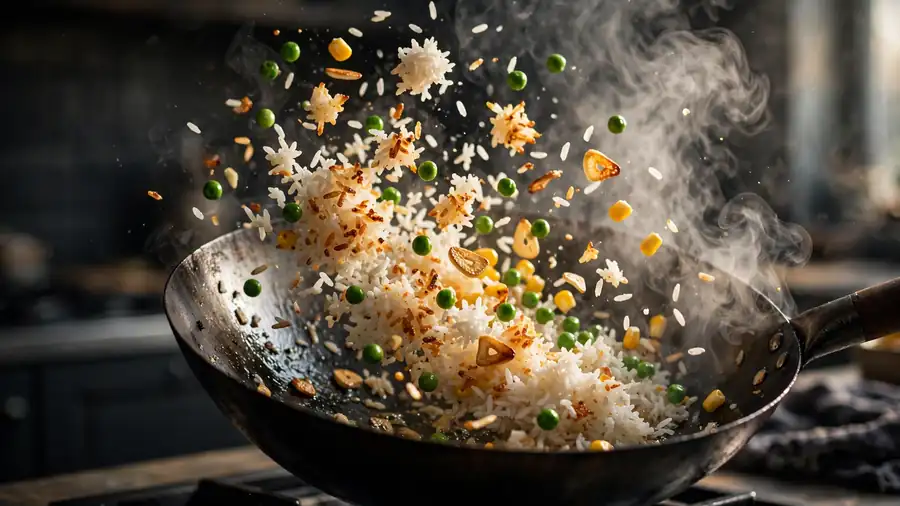
Add the cold rice and the peas and corn. Toss constantly 3 to 4 minutes, breaking up clumps, until the grains are hot through and starting to turn golden in spots. Let the rice sit against the hot wok for 20 to 30 seconds between tosses to build toasty flavor.
Step 5: Season
Pour the soy sauce mixture evenly over the rice and toss 1 minute until every grain is glossy and coated. Taste and adjust: the rice should be well seasoned on its own, since the tuna is mild.
Step 6: Fold in the Tuna
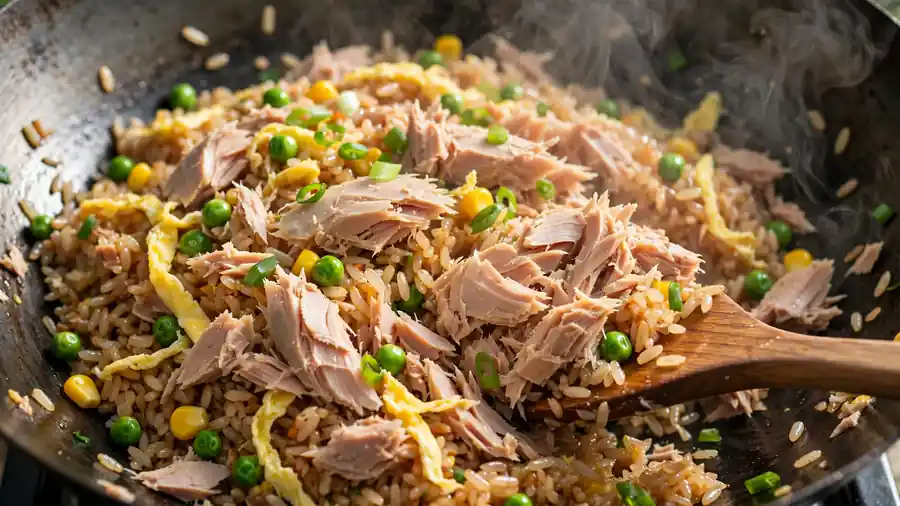
Reduce the heat to medium. Add the drained tuna and the scrambled eggs. Fold gently for 60 to 90 seconds, just until heated through, keeping the tuna in flakes. Remove from the heat, drizzle with sesame oil, and scatter the green onions over the top. This tuna fried rice recipe is best served immediately, with lime wedges on the side for anyone who wants a brighter finish.
Chef’s Tips for the Best Results
Drain the tuna like you mean it. Press it in a sieve until no more liquid comes out. Wet tuna is the number one cause of soggy tuna fried rice.
Season the rice boldly. Tuna is mild, so the rice needs to carry the flavor. Taste the rice before the tuna goes in and adjust the soy sauce then.
Add tuna last and fold gently. The tuna is already cooked; it only needs to warm through. Aggressive stirring shreds it into mush.
Finish with something fresh. Green onions, a drizzle of sesame oil, or a squeeze of lemon wake up the canned tuna flavor and make the dish taste bright.
Common Mistakes and How to Fix Them
| Common Problem | Why It Happens | How to Fix It |
|---|---|---|
| Rice is soggy | Tuna was not drained well, or its liquid went into the pan | Drain cans fully and press tuna in a sieve; add tuna only at the end |
| Tuna turns to mush | Stirred too hard or added too early | Fold gently in the final 60 to 90 seconds and keep the flakes large |
| Dish tastes bland | Rice was under-seasoned for the mild tuna | Taste the rice before adding tuna; add soy sauce a teaspoon at a time |
| Tuna tastes fishy | Low-quality tuna, or packed in oil that was not drained | Choose tuna you like plain; drain oil-packed tuna extra well |
| Garlic tastes bitter | Garlic browned past gold at high heat | Stir-fry garlic only 20 seconds and keep it moving |
Ingredient Substitutions
| Original Ingredient | Substitute | Expected Difference |
|---|---|---|
| Canned tuna in water | Canned tuna in oil, well drained | Richer and more flavorful; drain even more carefully |
| Canned tuna | Canned salmon or mackerel | Stronger fish flavor; salmon flakes hold up well |
| Soy sauce | Coconut aminos | Slightly sweeter and less salty; use 1 extra teaspoon |
| Peas and corn | Diced bell pepper or edamame | Bell pepper adds crunch; edamame adds protein |
| White pepper | Black pepper | Sharper heat; use a little less |
Recipe Variations
Spicy tuna: Add 1 to 2 teaspoons of sriracha to the sauce and finish with sliced fresh chilies.
Japanese-style: Top each serving with a fried egg, drizzle with Japanese mayonnaise, and sprinkle with furikake seasoning.
Tuna kimchi: Add 1/2 cup of chopped kimchi with the garlic and reduce the soy sauce to 1 tablespoon. The kimchi brings heat and tang.
Lemon herb: Finish with a squeeze of fresh lemon juice and 2 tablespoons of chopped parsley instead of sesame oil.
Extra protein: Add a second can of tuna or an extra egg for an even heartier version.
Practical Cooking Scenario
Picture a Tuesday night with an empty fridge, a pantry with canned tuna, and rice left over from Sunday. The tuna drains while the wok heats, the eggs scramble in under a minute, and dinner is on the table in twenty minutes flat. Keep a few cans of tuna, frozen peas, and soy sauce on hand always, and this meal is perpetually five minutes of prep away.
Storage and Food Safety
Cool leftovers within 2 hours and refrigerate in an airtight container for up to 2 days; fish-based leftovers have a shorter safe window. Do not freeze this dish, since the texture of the tuna and rice suffers. Discard leftovers that smell off or have sat at room temperature for more than 2 hours.
How to Reheat Tuna Fried Rice Recipe
The best way to reheat this tuna fried rice recipe is in a skillet. Heat a teaspoon of oil over medium-high heat, add the cold rice, and stir-fry 2 to 3 minutes until steaming. Add a splash of water if the rice looks dry, and fold gently to keep the tuna flakes intact.
The microwave works too. Place rice in a bowl, sprinkle with a tablespoon of water, cover loosely, and heat 90 seconds, stirring gently halfway. Heat leftovers to 165 degrees F (74 degrees C) throughout.
Meal Prep Tips
Cook the rice a day ahead; that is the most important step. Drain the tuna up to a day ahead and keep it sealed in the fridge. Slice the green onions and thaw the peas and corn the night before. Mix the sauce and keep it in a jar up to a week. The final cooking takes about 10 minutes, so this is an ideal prep-ahead weeknight meal.
Nutrition Information
Approximate nutrition per serving (makes 4 servings), based on tuna in water: 380 calories, 28 g protein, 48 g carbohydrates, 8 g fat, 2 g fiber, 750 mg sodium. These are estimates only and vary with the type of tuna, whether it is packed in water or oil, the soy sauce brand, portion sizes, and preparation methods.
More Rice Recipes to Try
If you enjoyed this recipe, you will love these other rice dishes from The World of Rice:
- Authentic Chinese Shrimp Fried Rice Recipe: Traditional Technique, Pure Flavor
- Authentic Egg Fried Rice Recipe: Simple, Silky & Perfectly Golden
- Authentic Fried Rice Recipe With Egg: The Traditional Golden Method
- Authentic Japanese Fried Rice Recipe: Real Yakimeshi at Home
Frequently Asked Questions
Can I use tuna packed in oil for this tuna fried rice recipe?
Yes, and many cooks prefer the richer flavor. Drain it even more thoroughly than water-packed tuna, pressing out as much oil as possible so the rice does not turn greasy.
How do I keep the tuna from turning mushy?
Drain it well, break it into large flakes, add it in the final minute, and fold gently instead of stirring. The tuna only needs to warm through.
Can I use fresh tuna instead of canned?
Yes. Sear a tuna steak 1 to 2 minutes per side, chop it into chunks, and fold it in at the end. It is a delicious upgrade, though no longer a pantry dinner.
Why does my tuna fried rice taste bland?
The rice was likely under-seasoned. Taste the rice after saucing and before adding the tuna; it should taste well seasoned on its own. A squeeze of lemon or extra green onions also helps.
How should I store leftovers?
Cool within 2 hours and refrigerate in airtight containers for up to 2 days. Reheat in a skillet with a splash of water, folding gently.
Can I make this recipe healthier?
Use tuna in water, cut the oil to 1 tablespoon plus cooking spray, use low-sodium soy sauce, and add extra vegetables like shredded cabbage or diced bell pepper.
Final Thoughts
This tuna fried rice recipe turns humble pantry ingredients into a fast, protein-packed dinner. Drain the tuna well, season the rice boldly, and fold the tuna in gently at the end.
See the dictionary definitions for soy sauce and sesame oil.

Prayvista Team is the editorial team behind Prayvista, The World of Rice. The team writes and reviews rice recipes for home cooks, and every article is checked by editor Sara Raza before publishing.