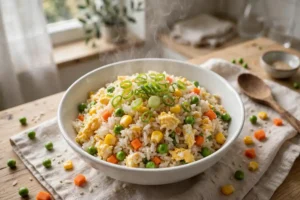
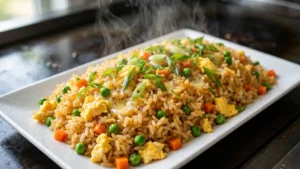
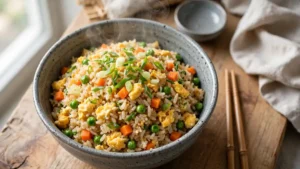
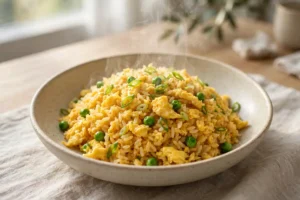
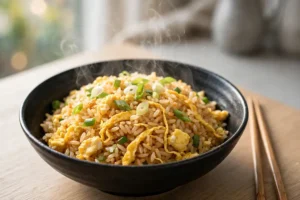
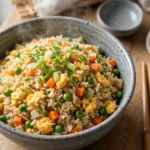
Japanese home cooking has its own version of fried rice, called yakimeshi, and this recipe for Japanese fried rice follows the classic home method. It is simpler than restaurant versions, uses everyday ingredients, and teaches the core technique every Japanese household cook knows: hot pan, cold rice, and quick, confident tossing. The seasoning stays light so the rice itself shines. A little soy sauce, a little butter or oil, egg, and a few vegetables are all it needs. If you have never made fried rice before, start here. Dinner is ready in 15 minutes.
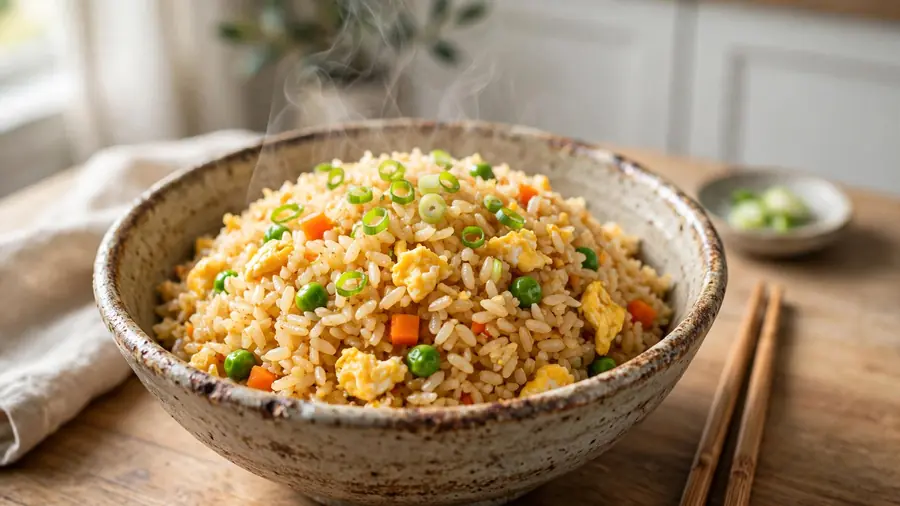
Why You’ll Love This Recipe For Japanese Fried Rice
It is simple. Everyday ingredients and one pan, with no special equipment.
It is fast. Once the rice is chilled, the whole dish cooks in about 15 minutes.
It is forgiving. The method is straightforward, and the seasoning is easy to adjust at the end.
It is flexible. Swap in whatever vegetables you have, or add ham, tofu, or mushrooms.
What Makes This Recipe Work?
Three things carry this dish. First, cold, dry rice fries instead of steaming, so the grains stay separate. Second, full high heat for the rice step gives a few golden grains and a lightly toasted flavor. Third, seasoning goes in at the end, when the rice is hot, so the soy sauce and sesame oil stay bright instead of cooking off.
Menu of Recipe For Japanese Fried Rice
This recipe for Japanese fried rice covers why it works, the full ingredient list with US measurements, ingredient selection, the tools you need, step-by-step instructions, chef tips, a troubleshooting table, substitutions, variations, storage and reheating, nutrition estimates, and answers to common questions.
Ingredients for Recipe For Japanese Fried Rice
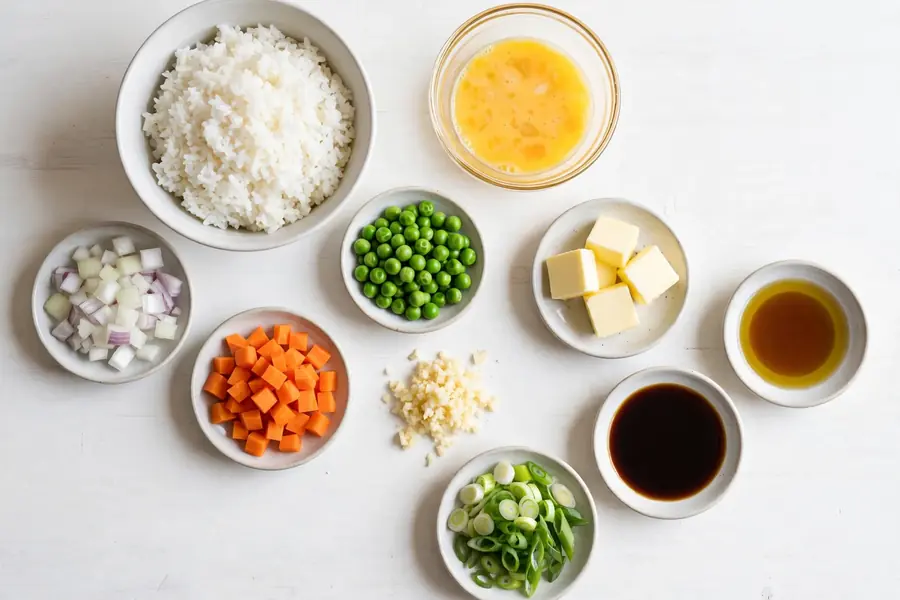
- 3 cups cooked white rice, chilled (day-old is best)
- 2 large eggs, lightly beaten
- 2 tablespoons vegetable oil, divided
- 1 tablespoon unsalted butter
- 1/2 cup diced onion
- 1/2 cup diced carrot (about 1 medium carrot)
- 1/2 cup frozen peas, thawed
- 2 cloves garlic, minced
- 2 tablespoons soy sauce
- 1 teaspoon toasted sesame oil
- 1/4 teaspoon salt
- 1/4 teaspoon white or black pepper
- 2 scallions, thinly sliced
The rice is the main ingredient, so its condition matters most. Grains should be cold, dry to the touch, and easy to separate. If the rice feels damp, spread it on a tray and refrigerate uncovered for 30 minutes before cooking, or freeze it in a thin layer for 15 to 20 minutes when you are short on time.
Best Ingredients to Use
Medium or long-grain white rice both work for this classic method. Short-grain rice is stickier and better saved for sushi. Jasmine rice adds a pleasant aroma that suits the light seasoning. Use low-sodium soy sauce if you prefer to control the salt. You can always add more at the end, but you cannot take it away.
Kitchen Tools You’ll Need
- A large skillet or wok, 12 inches or larger.
- A spatula or wooden spoon for stirring.
- A small bowl for the beaten eggs.
- A fork for breaking up the cold rice.
How to Make Recipe For Japanese Fried Rice
Step 1: Prep the Rice
Break up the chilled rice with a fork until every clump is separated into individual grains. This recipe for Japanese fried rice moves quickly once the heat is on, so have all ingredients measured and within reach before you start cooking.
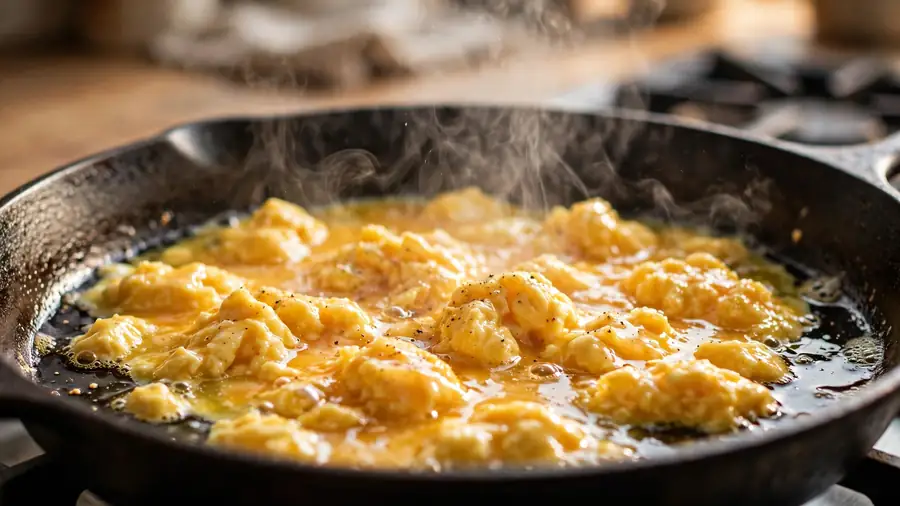
Step 2: Cook the Eggs
Heat 1 tablespoon of vegetable oil in the skillet over medium-high heat until shimmering. Add the beaten eggs and scramble 30 seconds into soft curds. Transfer to a plate and set aside.
Step 3: Soften the Vegetables
Add the remaining tablespoon of oil and the butter to the same skillet over medium-high heat. Add the onion and carrot and cook 3 minutes, stirring occasionally, until the onion is translucent and the carrot is tender. Stir in the peas and garlic and cook 1 more minute until fragrant.
Step 4: Add and Fry the Rice
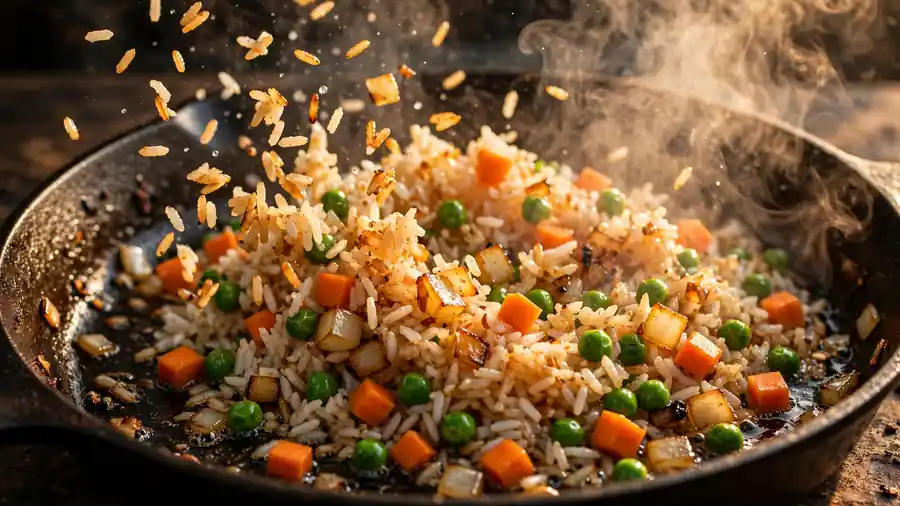
Increase the heat to high. Add the rice and toss to combine with the vegetables. Spread into an even layer, let it sit 45 seconds, then toss. Continue for 3 to 4 minutes until the rice is hot throughout and a few grains are golden.
Step 5: Season and Finish
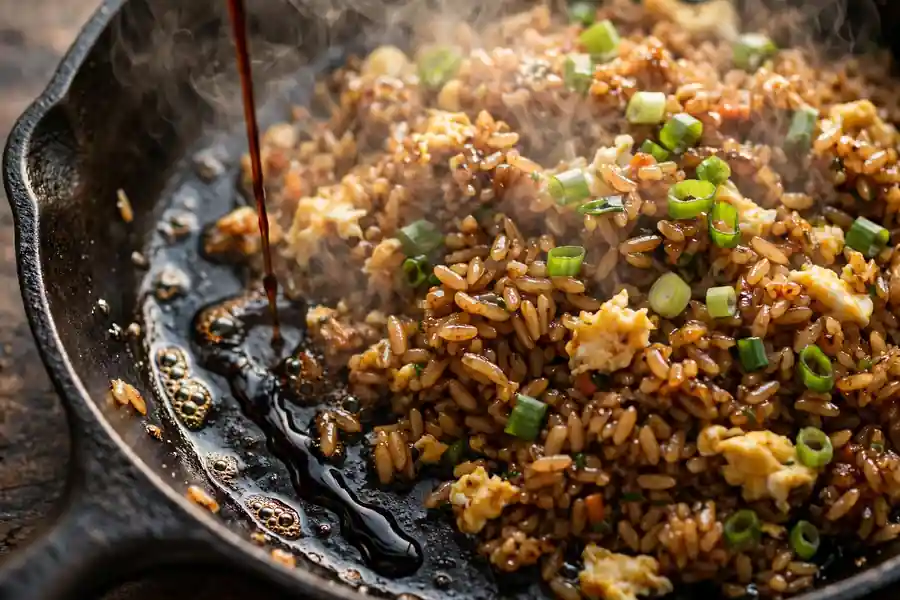
Drizzle the soy sauce around the edge of the pan so it hits the hot metal first, then toss everything together for 1 minute. Add the sesame oil, salt, and pepper, and toss again. Return the eggs to the pan with the scallions, toss 30 seconds, and remove from the heat.
Step 6: Taste and Serve
Taste a spoonful. Add another splash of soy sauce or a pinch of salt if it needs it. Serve hot, straight from the pan. For a classic presentation, pack the rice into a small bowl, press lightly, and invert it onto a plate.
Chef’s Tips for the Best Results
Break up the rice before it hits the pan. Clumps that go in cold come out as gummy lumps. A fork and 60 seconds of prep solve this completely.
Turn the heat up for the rice step. The vegetables cook on medium-high, but the rice needs full high heat to fry properly.
Season at the edges. Drizzling soy sauce onto the hot pan rim caramelizes it slightly and distributes it more evenly than pouring it over the rice.
Common Mistakes and How to Fix Them
| Common Problem | Why It Happens | How to Fix It |
|---|---|---|
| Rice is sticky and wet | Rice was fresh and warm when it went in | Chill rice at least 1 hour, preferably overnight |
| Vegetables are still crunchy | Added at the same time as the rice | Cook vegetables first, on their own, before the rice |
| Eggs disappeared into the rice | Eggs cooked too long and broke into tiny bits | Scramble briefly, remove, and add back at the end |
| Bland overall flavor | Seasoning added too early and cooked off | Season when the rice is hot, at the end |
| Burnt garlic | Garlic cooked on high heat too long | Add garlic in the last minute of vegetable cooking |
Ingredient Substitutions
| Original Ingredient | Substitute | Expected Difference |
|---|---|---|
| White rice | Leftover brown rice | Chewier, nuttier texture; fry 1 minute longer |
| Butter | Extra tablespoon of vegetable oil | Slightly less rich; the dish is still good |
| Frozen peas | Edamame, thawed | A bit more protein and a firmer bite |
| Onion | 1/2 cup chopped cabbage | Milder and sweeter; adds nice crunch |
| Sesame oil | Skip it | Less aromatic, but the core dish is unchanged |
Recipe Variations
Ham and egg: Add 1 cup of diced ham with the vegetables for a classic Japanese home-style version.
Corn: Stir in 1/2 cup of corn kernels with the peas for sweetness kids love.
Mushroom: Add 1 cup of sliced shiitake or button mushrooms with the onion for earthy depth.
Spicy: Finish with a drizzle of chili oil or a teaspoon of sriracha per serving.
Practical Cooking Scenario
Cooking for four on a weeknight, start with rice you cooked yesterday and vegetables already chopped. The eggs take 30 seconds, the vegetables take a few minutes, and the rice fries while everyone sets the table. The whole meal is on the table in about 15 minutes, with one pan to wash.
Storage and Food Safety
Cool within 2 hours and refrigerate in airtight containers up to 4 days. Freeze up to 2 months. This is an egg dish, so cool it quickly by spreading it on a plate before packing. Discard leftovers that smell sour or sat at room temperature longer than 2 hours.
How to Reheat Recipe For Japanese Fried Rice
Skillet: heat a teaspoon of oil over medium-high heat and stir-fry 3 minutes until steaming.
Microwave: sprinkle a tablespoon of water over the rice, cover loosely, and heat 2 minutes, stirring halfway through.
Meal Prep Tips
Cook extra rice whenever you make rice, and refrigerate it specifically for fried rice later in the week. Chop the onion, carrot, and scallions up to 2 days ahead. Portion cooked fried rice into single-serve containers for easy lunches.
Nutrition Information
Approximate nutrition per serving (makes 4 servings): 340 calories, 9 g protein, 52 g carbohydrates, 11 g fat, 2 g fiber, 720 mg sodium. These are estimates only.
More Rice Recipes to Try
If you enjoyed this recipe, you will love these other rice dishes from The World of Rice:
- Authentic Japanese Fried Rice Recipe: Real Yakimeshi at Home
- Best Fried Rice Recipe Japanese: Yakimeshi vs. Chahan vs. Hibachi
- Best Japanese Fried Rice Recipe: Restaurant Quality at Home
- Fried Rice Recipe Japanese: The Classic Chahan Method
Frequently Asked Questions
What rice is best for this recipe for Japanese fried rice?
Day-old medium or long-grain white rice. It should be cold and dry to the touch so the grains fry separately.
Can I make this without eggs?
Yes. Skip the eggs and add extra vegetables or diced tofu. The method and seasoning stay the same.
How do I keep fried rice from sticking to the pan?
Preheat the pan until the oil shimmers before adding anything, and use enough oil. A well-seasoned wok or nonstick skillet also helps.
Can I double this recipe?
Yes, but cook it in two batches. Overcrowding the pan steams the rice instead of frying it, so give each batch room.
Is this recipe good for meal prep?
Very good. Cooked fried rice keeps 4 days refrigerated and reheats well in a skillet or microwave.
How is Japanese fried rice different from Chinese fried rice?
Japanese yakimeshi is typically seasoned more lightly, often with butter and a restrained hand on soy sauce, while Chinese versions use bolder seasoning and sometimes oyster sauce.
Final Thoughts
This recipe for Japanese fried rice is the foundation every fried rice cook should know. Cold rice, hot pan, eggs cooked gently, seasoning at the end. Once this feels easy, every variation becomes simple. Try it tonight with whatever vegetables are in your fridge.
See the dictionary definitions for soy sauce and butter.

Prayvista Team is the editorial team behind Prayvista, The World of Rice. The team writes and reviews rice recipes for home cooks, and every article is checked by editor Sara Raza before publishing.