The most common fried rice cake problem is cakes that are hard in the middle, stuck to the pan, or swimming in a thin sauce. All three come from the same root causes: cakes that were not soaked and dried properly, and sauce added before the cakes had crisped. This fried rice cake recipe fixes both. Soak, dry, crisp first in a hot pan, then glaze at lower heat. It takes about 30 minutes, with most of that hands-off soaking time.
Menu of Fried Rice Cake Recipe
This fried rice cake recipe covers why it works, the full ingredient list with US measurements, a troubleshooting table before the steps, step-by-step instructions, chef tips, substitutions, variations, storage and reheating guidance, and answers to common questions.
Why You’ll Love This Fried Rice Cake Recipe
- The texture is unbeatable. Crisp browned edges give way to a soft, chewy center.
- It cooks in about 30 minutes. Active cooking takes under 15 minutes.
- It works as a snack, side, or main. Add vegetables and protein to make it dinner, or serve a small plate as an appetizer.
Ingredients for Fried Rice Cake Recipe

For the Rice Cakes
- 1 pound Korean rice cakes (garaetteok), about 450 g, fresh or frozen
- 3 tablespoons vegetable oil, divided
- 1 cup shredded green cabbage (optional, for bulk)
- 1/2 cup sliced Korean fish cakes (optional)
For the Sweet-Spicy Glaze
- 3 tablespoons gochujang (Korean fermented chili paste)
- 1 tablespoon soy sauce
- 1 tablespoon sugar, or 1 tablespoon honey
- 1 teaspoon toasted sesame oil
- 1/2 cup water or low-sodium chicken or vegetable stock
- 2 cloves garlic, minced (about 2 teaspoons)
- 1/2 teaspoon grated fresh ginger
For Garnish
- 2 green onions, thinly sliced
- 1 tablespoon toasted sesame seeds
Notes on ingredients: Use finger-length cylinder garaetteok, not sliced oval tteokguk cakes, for the best browning and chewiest bite. Fresh cakes need only a quick rinse. Pick a gochujang with a deep red color and balanced sweet heat; medium heat is the safest starting point, since the sugar rounds out the heat. Use a neutral oil with a high smoke point, such as vegetable, canola, or avocado oil.
You will need: a large 12-inch nonstick or well-seasoned cast iron skillet, tongs or a wooden spatula, a small bowl, and a colander.
Common Mistakes and How to Fix Them
| Common Problem | Why It Happens | How to Fix It |
|---|---|---|
| Rice cakes are hard in the center | Frozen or dried cakes were not soaked long enough | Soak in warm water a full 20 minutes; simmer finished cakes 2 extra minutes in the glaze |
| Cakes stick to the pan | Pan was not hot enough, or too little oil was used | Heat oil until shimmering before adding cakes; use a nonstick skillet and enough oil to coat the pan |
| Glaze tastes too spicy | A hot gochujang was used, or too much paste | Add another teaspoon of sugar and a splash of water; next time choose a mild gochujang |
| Sauce is thin and watery | Not simmered long enough, or too much water added | Simmer 1 to 2 minutes more, stirring, until it coats a spoon; add water only a spoonful at a time |
| Glaze burns and turns bitter | Heat was too high when the sugary sauce went in | Reduce to medium heat before adding the glaze and keep it moving; discard scorched sauce and start the glaze fresh |
How to Make Fried Rice Cake Recipe
Step 1: Soak the Rice Cakes
If your rice cakes are frozen or shelf-stable, place them in a large bowl and cover with warm (not boiling) water. Soak 20 minutes, then drain well and pat the surfaces dry with a clean towel. Fresh rice cakes only need a rinse. Dry surfaces are essential for browning, so do not skip the patting step.
Step 2: Mix the Glaze
In a small bowl, whisk together the gochujang, soy sauce, sugar, sesame oil, water or stock, garlic, and ginger until smooth. Taste it now: it should be sweet, savory, and spicy in that order. Set it near the stove, because the cooking moves quickly once the pan is hot.
Step 3: Crisp the Rice Cakes
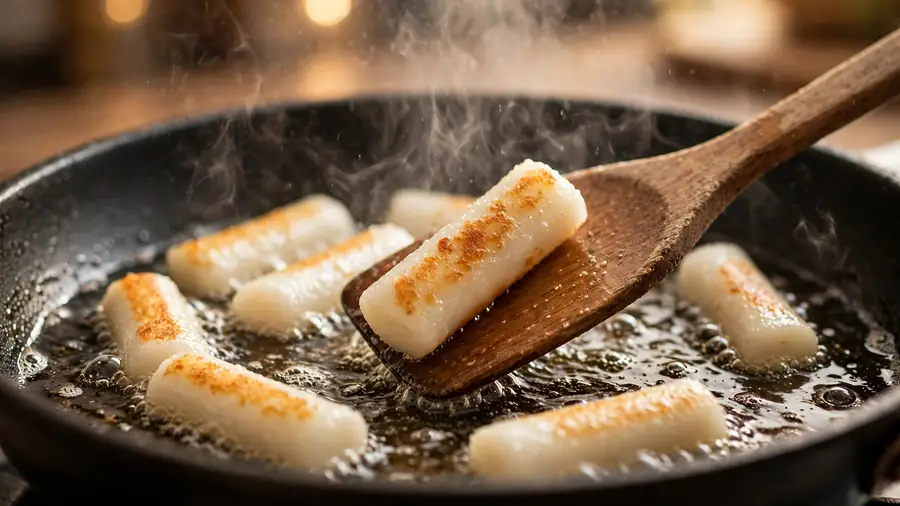
Heat 2 tablespoons of oil in the skillet over medium-high heat until it shimmers. Add the rice cakes in a single layer, leaving space between them. Cook 2 to 3 minutes without moving them, then turn and cook 2 to 3 minutes more, until golden-brown patches appear on at least two sides. Work in two batches if your skillet is crowded. Transfer the crisped cakes to a plate.
Step 4: Build the Glaze in the Pan
Reduce the heat to medium. Add the remaining tablespoon of oil and the glaze mixture. It will bubble vigorously. Stir constantly for 1 to 2 minutes as it thickens into a shiny sauce that coats the back of a spoon. If it thickens too fast, splash in a tablespoon of water.

Step 5: Coat the Cakes
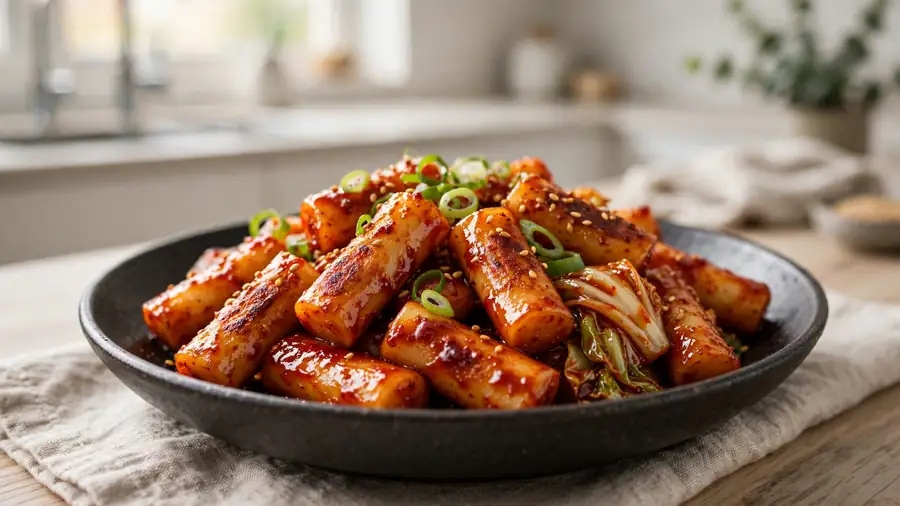
Return the rice cakes to the skillet, along with the cabbage and fish cakes if using. Toss everything in the glaze for 3 to 4 minutes, until the cakes are heated through, tender in the center, and evenly coated. The sauce should cling, not pool. Taste a cake: the center should be soft and chewy with no hard core.
Step 6: Garnish and Serve
Remove from the heat. Scatter the green onions and sesame seeds over the top and serve immediately, while the edges are still crisp. Rice cakes firm up as they cool, so this dish is at its best straight from the pan. Serve it alongside kimchi if you like: the cool, tangy crunch contrasts well with the sweet-spicy glaze. Note that this oil-fried version is drier and crisper than simmered tteokbokki, which is served in a much wetter sauce.

Chef’s Tips for the Best Results
- Soak, then dry. Soaking rehydrates the cakes, but surface moisture is the enemy of browning.
- Do not crowd the pan. Rice cakes touching each other will steam instead of fry. Two batches are worth the extra five minutes.
- Sauce after crisping, never before. The glaze contains sugar, which burns over the high heat needed to brown the cakes.
Ingredient Substitutions
| Original Ingredient | Substitute | Expected Difference |
|---|---|---|
| Gochujang | 2 tbsp sriracha plus 1 tbsp white miso | Similar heat and sweetness, less fermented depth |
| Korean rice cakes | Chinese nian gao slices | Slightly denser and sweeter chew; slice 1/2 inch thick |
| Soy sauce | Tamari | Nearly identical flavor; use for a gluten-free glaze |
| Sugar | Honey | Slightly floral note; glaze browns a little faster |
| Fish cakes | Extra cabbage and 1/2 cup sliced mushrooms | Less savory seafood flavor; still hearty |
Recipe Variations
- Cheesy: In Step 5, sprinkle 1 cup of shredded mozzarella over the glazed cakes, cover the skillet 1 minute until melted.
- Non-spicy soy glaze: Replace the gochujang with 3 tablespoons of soy sauce and 1 extra tablespoon of sugar.
- With ramen: Add a pack of cooked instant ramen noodles in Step 5 with an extra 1/4 cup of water. This combination, called rabokki, is a popular Korean street food.
- Extra vegetables: Add sliced carrots, onion wedges, or blanched broccoli with the cabbage for a fuller one-pan meal.
- Vegan: Use vegetable stock in the glaze and skip the fish cakes. Check that your gochujang contains no animal products, since most do not.
Storage and Food Safety
Cool leftovers within 2 hours and refrigerate in an airtight container for up to 3 days. The cakes will firm up and the glaze will thicken in the fridge; that is normal. This dish does not freeze well, since the rice cakes turn grainy and tough after thawing. Discard leftovers that smell sour or have been at room temperature for more than 2 hours.
Meal-prep note: soak and drain the rice cakes up to a day ahead and store them in a sealed container in the fridge tossed with a teaspoon of oil so they do not stick together. Mix the glaze up to 5 days ahead and keep it in a jar in the refrigerator. Slice the green onions and cabbage a day ahead. Do not crisp the cakes ahead of time, since they lose their texture; the final cooking takes only about 10 minutes.
How to Reheat Fried Rice Cake Recipe
The best way to reheat this fried rice cake recipe is in a skillet. Heat a teaspoon of oil over medium heat, add the leftovers with a splash of water, cover, and steam 2 to 3 minutes. Then uncover and toss 1 to 2 minutes so the edges crisp again.
The microwave works in a pinch. Place the cakes in a bowl, sprinkle with a tablespoon of water, cover, and heat 90 seconds, stirring halfway. The texture will be chewy but not crisp.
More Rice Recipes to Try
If you enjoyed this recipe, you will love these other rice dishes from The World of Rice:
- Authentic Chinese Shrimp Fried Rice Recipe: Traditional Technique, Pure Flavor
- Authentic Egg Fried Rice Recipe: Simple, Silky & Perfectly Golden
- Authentic Fried Rice Recipe With Egg: The Traditional Golden Method
- Authentic Japanese Fried Rice Recipe: Real Yakimeshi at Home
Frequently Asked Questions
Can I use frozen rice cakes for this fried rice cake recipe?
Yes, and they work very well. Soak them in warm water for 20 minutes until pliable, then drain and pat dry. Do not skip the drying step, or they will steam instead of crisp.
Where do I buy Korean rice cakes?
Find them at Korean or Asian grocery stores in the refrigerated or frozen section, and at many well-stocked supermarkets. Shelf-stable vacuum-sealed packs are also common online.
How do I make it less spicy?
Use a mild gochujang and reduce it to 2 tablespoons, adding an extra teaspoon of sugar. The non-spicy soy glaze variation above removes the heat entirely.
Can I prepare this recipe ahead of time?
You can prep every component ahead, but crisp and glaze the cakes just before serving. Reheated rice cakes are chewy but never as crisp as fresh.
Is this recipe gluten-free?
Rice cakes themselves are gluten-free, but most gochujang contains wheat. Use a certified gluten-free gochujang and tamari instead of soy sauce to make the full dish gluten-free.
Why are my rice cakes cracking in the pan?
They were probably too cold or too dry going in. Make sure frozen cakes are fully thawed and soaked, and let refrigerated cakes sit at room temperature 10 minutes before frying.
Final Thoughts
This fried rice cake recipe is proof that a short ingredient list can still deliver big texture and flavor. Soak the cakes, crisp them in a hot pan, and glaze them at the end for that ideal crunchy-chewy bite.
See the dictionary definitions for soy sauce and sugar.

Prayvista Team is the editorial team behind Prayvista, The World of Rice. The team writes and reviews rice recipes for home cooks, and every article is checked by editor Sara Raza before publishing.