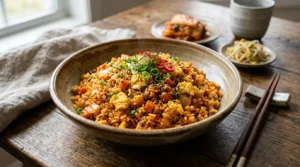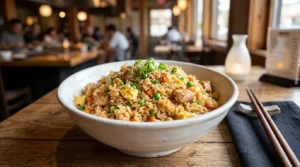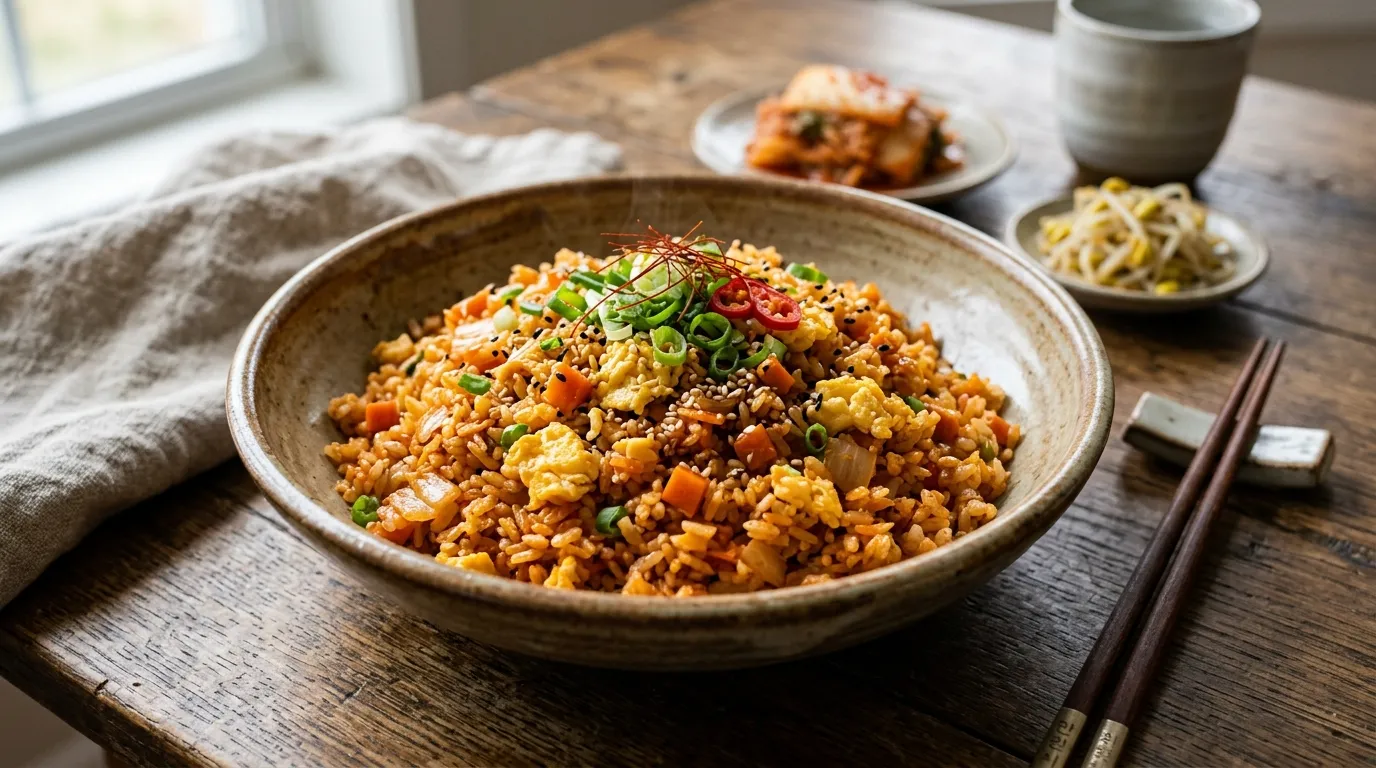
This Korean fried rice recipe combines cold cooked rice with vegetables, eggs, garlic, soy sauce, sesame oil, and Korean-inspired seasonings. It is quick, savory, slightly spicy, and ready in about 25 minutes for an easy weeknight meal.
Korean Fried Rice Recipe at a Glance
| Recipe Detail | Information |
| Prep Time | 10 minutes |
| Cook Time | 15 minutes |
| Total Time | 25 minutes |
| Servings | 4 |
| Cuisine | Korean-inspired |
| Course | Main Dish / Side Dish |
| Difficulty | Easy |
| Calories | About 390 per serving |
| Best Rice | Cold, day-old white rice |
| Main Flavor | Savory, garlicky, slightly spicy |
Why You’ll Love This Korean Fried Rice Recipe
This Korean fried rice recipe is a great way to turn leftover rice into a quick and satisfying meal. The rice becomes lightly crisp in the pan while garlic, soy sauce, sesame oil, and Korean seasonings add layers of savory flavor.
The recipe is flexible, too. You can keep it simple with vegetables and eggs or add cooked chicken, beef, shrimp, or pork when you want something more filling.
One of the most important tricks is using cold cooked rice. Freshly cooked rice contains more moisture and can become soft and clumpy when stir-fried. Chilled rice separates much more easily and gives you better fried rice texture.
A little gochujang can add the signature Korean-style spicy, slightly sweet flavor. If you prefer mild food, simply reduce the amount or leave it out.
Menu of Korean Fried Rice Recipe
- Ingredients you’ll need
- Best rice for Korean fried rice
- Kitchen tools
- How to make Korean fried rice
- Chef’s tips for better fried rice
- Common mistakes to avoid
- Easy variations
- What to serve with Korean fried rice
- Storage and reheating
- Nutrition information
- Frequently asked questions
- Final serving tips
Ingredients for Korean Fried Rice
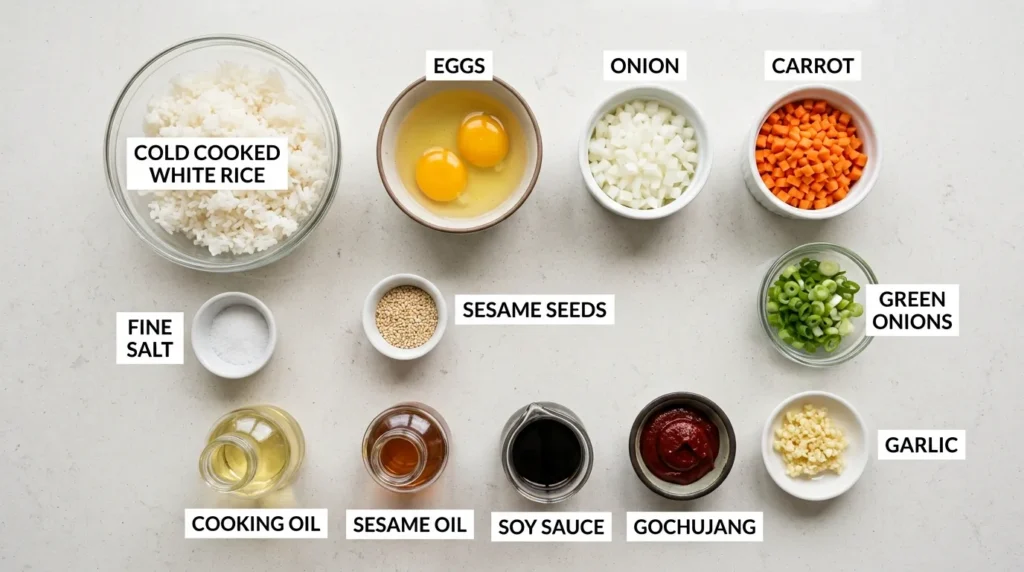
The ingredients are simple and easy to customize.
Cooked White Rice
Cold, cooked white rice is the foundation of good fried rice. Day-old rice is ideal because refrigeration dries the surface slightly, helping the grains stay separate during stir-frying.
Jasmine or long-grain white rice works particularly well.
Eggs
Eggs add protein, richness, and texture. Scramble them separately first so you get small, tender pieces throughout the finished rice.
Garlic
Fresh minced garlic provides a savory base and works especially well with sesame oil and Korean seasonings.
Onion
Diced onion adds mild sweetness and texture. Yellow or white onion both work well.
Carrots
Finely diced carrots add color, natural sweetness, and a little crunch.
Green Onions
Green onions bring a fresh, slightly sharp flavor. Save some of the green tops for garnishing the finished dish.
Soy Sauce
Soy sauce gives the rice its salty, savory umami flavor. Add it gradually because different soy sauces have different salt levels.
Gochujang
Gochujang is a Korean fermented chili paste with a combination of spicy, savory, slightly sweet, and fermented flavors.
Use more or less depending on your preferred heat level.
Sesame Oil
A small drizzle of toasted sesame oil at the end gives the fried rice a distinctive nutty aroma.
Cooking Oil
Use a neutral high-heat oil such as avocado, canola, or vegetable oil for stir-frying.
Optional Sesame Seeds
Toasted sesame seeds make an easy finishing garnish and add a little crunch.
What Rice Is Best for Korean Fried Rice?
The best rice for fried rice is cold, cooked rice that has had time to dry slightly.
Day-old rice from the refrigerator is especially convenient. If you’re making rice specifically for this recipe, cook it with slightly less water than usual, spread it on a tray, let it cool, and refrigerate it before stir-frying.
Long-grain white rice and jasmine rice are both good choices.
The main thing to avoid is very wet, freshly cooked rice. Moist rice tends to steam in the pan instead of frying, which can leave you with a soft, sticky texture.
Kitchen Tools You Need
You don’t need a special Korean cooking setup.
- Large skillet or wok
- Wooden spoon or spatula
- Cutting board
- Chef’s knife
- Small bowl for eggs
- Measuring spoons
- Rice paddle or fork
A large pan is important because overcrowding makes it harder for the rice to fry properly.
How to Make Korean Fried Rice
Step 1: Prepare the Ingredients
Before turning on the stove, chop the onion, carrot, garlic, and green onions.
Break apart any large clumps of cold rice with your fingers or a fork.
Mixing the ingredients beforehand makes the cooking process much easier because fried rice cooks quickly.
Step 2: Scramble the Eggs
Heat a little oil in a large skillet over medium-high heat.
Add the beaten eggs and gently scramble until just cooked.
Transfer the eggs to a plate and set them aside.
Don’t overcook them. They’ll go back into the hot pan later.
Step 3: Cook the Vegetables
Add another small amount of oil to the skillet.
Add diced onion and carrots. Stir-fry for about 2–3 minutes.
Add the minced garlic and cook for another 30 seconds.
The vegetables should be tender but still have a little texture.
Step 4: Add the Cold Rice
Add the chilled rice to the skillet.
Use your spatula to break apart clumps as you stir.
Spread the rice across the pan and let it cook for short periods without constant stirring. This allows some grains to make contact with the hot surface and develop light toasted edges.
Step 5: Add Soy Sauce and Gochujang
Add soy sauce and gochujang.
Stir thoroughly so the seasonings coat the rice evenly.
If your gochujang is thick, mix it with a teaspoon of water before adding it to the pan. This helps it distribute more easily.
Step 6: Return the Eggs
Add the scrambled eggs back to the skillet.
Toss everything together until the eggs are evenly distributed.
Taste the rice before adding more soy sauce because the gochujang already contains salt.
Step 7: Finish With Sesame Oil
Turn the heat down or off.
Drizzle toasted sesame oil over the fried rice and toss gently.
Adding sesame oil at the end preserves its strong nutty aroma.
Step 8: Garnish and Serve
Top with sliced green onions and toasted sesame seeds.
For extra heat, add sliced fresh chili or a small drizzle of chili oil.
Serve immediately while the rice is hot.
Chef’s Tips for Perfect Korean Fried Rice
Use Cold Rice
This is the biggest difference between good fried rice and mushy fried rice. Refrigerated rice has less surface moisture and fries more effectively.
Use High Heat
Fried rice benefits from a hot pan. High heat helps the rice develop lightly toasted edges without requiring a long cooking time.
Don’t Overcrowd the Pan
If your skillet is small, cook in batches. Too much rice at once lowers the pan temperature and causes steaming.
Prep Everything First
Have your vegetables, seasonings, eggs, and rice ready before cooking. Once the pan is hot, the recipe moves quickly.
Add Sesame Oil at the End
Toasted sesame oil is primarily a finishing ingredient. Adding it near the end gives the finished dish a stronger aroma.
Adjust the Gochujang
Start with a small amount and increase it after tasting. Different brands can vary in sweetness and heat.
Common Korean Fried Rice Mistakes
| Mistake | What Happens | Better Approach |
| Using hot fresh rice | Rice becomes sticky | Use cold day-old rice |
| Overcrowding the pan | Rice steams instead of frying | Use a large skillet |
| Too much soy sauce | Rice becomes overly salty | Add gradually |
| Too much gochujang | Flavor becomes very spicy or heavy | Start with a small amount |
| Burning garlic | Bitter flavor | Add garlic after the vegetables |
| Overcooking eggs | Eggs become rubbery | Cook until just set |
| Adding sesame oil too early | Nutty flavor becomes weaker | Add it at the end |
Easy Korean Fried Rice Variations
Korean Chicken Fried Rice
Add diced cooked chicken for a protein-rich meal.
Rotisserie chicken is a convenient shortcut for busy weeknights. Add it after the rice has been seasoned and cook until heated through.
Korean Beef Fried Rice
Cook thinly sliced beef separately, then add it to the fried rice near the end.
A little extra soy sauce and sesame oil works well with beef.
Korean Shrimp Fried Rice
Shrimp cooks quickly, making it a great choice for this recipe.
Cook the shrimp until opaque and cooked through before combining it with the rice.
Kimchi Fried Rice
For a more traditional Korean-inspired variation, add chopped kimchi to the pan with the vegetables.
Kimchi adds acidity, spice, and fermented flavor. You can also add a spoonful of kimchi juice for extra flavor.
Vegetarian Korean Fried Rice
Skip the meat and add more vegetables such as mushrooms, peas, bell peppers, spinach, or cabbage.
Use vegetarian-friendly seasonings if needed.
Spicy Korean Fried Rice
Increase the gochujang or add Korean chili flakes, known as gochugaru.
For a fresh kick, top the finished rice with sliced green chili.
What to Serve With Korean Fried Rice
Korean fried rice can be served as a complete meal, but it also works well alongside other dishes.
Korean-Style Fried Chicken
Crispy chicken and savory fried rice make a filling combination.
Grilled Meat
Serve it alongside grilled beef, chicken, or pork for a hearty dinner.
Dumplings
Steamed or pan-fried dumplings make an easy side for fried rice.
Korean Pickled Vegetables
Pickled radish or other crunchy vegetables provide a refreshing contrast to the rich rice.
Simple Cucumber Salad
A crisp cucumber salad with a light vinegar dressing can balance the savory flavors.
How to Store Korean Fried Rice
Refrigerator
Transfer leftover fried rice to a shallow airtight container and refrigerate promptly.
Use within 3–4 days.
Freezer
Cool the fried rice completely before transferring it to freezer-safe containers or bags.
Freeze in individual portions for convenient meals.
Reheating
For the microwave, place the rice in a microwave-safe bowl and add a small splash of water.
Cover loosely and heat until steaming hot, stirring once or twice.
For better texture, reheat it in a hot skillet with a small amount of oil.
Korean Fried Rice Nutrition
Approximate nutrition per serving:
| Nutrient | Amount |
| Calories | 390 |
| Carbohydrates | 55 g |
| Protein | 11 g |
| Fat | 14 g |
| Fiber | 3 g |
| Sodium | 700 mg |
Actual nutrition will vary depending on the amount of oil, soy sauce, gochujang, eggs, and other ingredients used.
Frequently Asked Questions
What makes Korean fried rice different?
Korean fried rice often uses ingredients such as gochujang, kimchi, sesame oil, and Korean chili seasonings. The exact ingredients vary by recipe, but these flavors give the dish a distinctive Korean-inspired character.
Can I use freshly cooked rice?
You can, but cold rice generally produces better fried rice. If using fresh rice, spread it in a thin layer on a tray and cool it before cooking.
Is Korean fried rice spicy?
It depends on the recipe. Gochujang and gochugaru can add heat, but you can reduce or omit them for a milder version.
Can I make Korean fried rice without gochujang?
Yes. The recipe will have a different flavor profile, but soy sauce, garlic, sesame oil, and vegetables can still make flavorful fried rice.
Can I add kimchi?
Absolutely. Kimchi is one of the most popular additions to Korean-style fried rice and adds spicy, tangy, fermented flavor.
What vegetables can I use?
Carrots, onions, peas, corn, mushrooms, cabbage, spinach, and bell peppers all work well.
Why is my fried rice soggy?
The most common causes are wet rice, too much sauce, overcrowding the pan, or cooking at too low a temperature.
Can I make this recipe ahead of time?
Yes. Cooked Korean fried rice can be refrigerated and reheated later. Store it properly in an airtight container and reheat until steaming hot.
Conclusion
This Korean fried rice recipe is an easy, flavorful way to transform leftover rice into a satisfying meal. Cold rice, crisp vegetables, tender scrambled eggs, garlic, soy sauce, gochujang, and sesame oil come together in one hot skillet.
The most important technique is using cold rice and a large, hot pan. These two details help keep the grains separate and give them the lightly toasted texture that makes fried rice so enjoyable.
You can keep the recipe simple for a quick weeknight dinner or customize it with chicken, beef, shrimp, kimchi, mushrooms, or extra vegetables.
Adjust the gochujang to your preferred spice level, finish with fragrant sesame oil, and add plenty of fresh green onions before serving.
Once you have this basic Korean fried rice recipe mastered, you’ll have an easy meal that’s flexible enough for busy weeknights and flavorful enough to serve to the whole family.
Cilantro Lime Rice Recipe: Fresh, Fluffy & Easy

I am Sara,a professional cook and recipe writer with 8 years of hands-on cooking experience. I specialize in simple, family-friendly meals and have spent years developing and testing rice recipes to make them easy, flavorful, and reliable for home cooks.