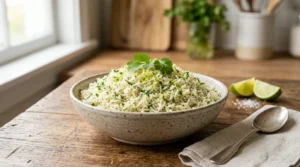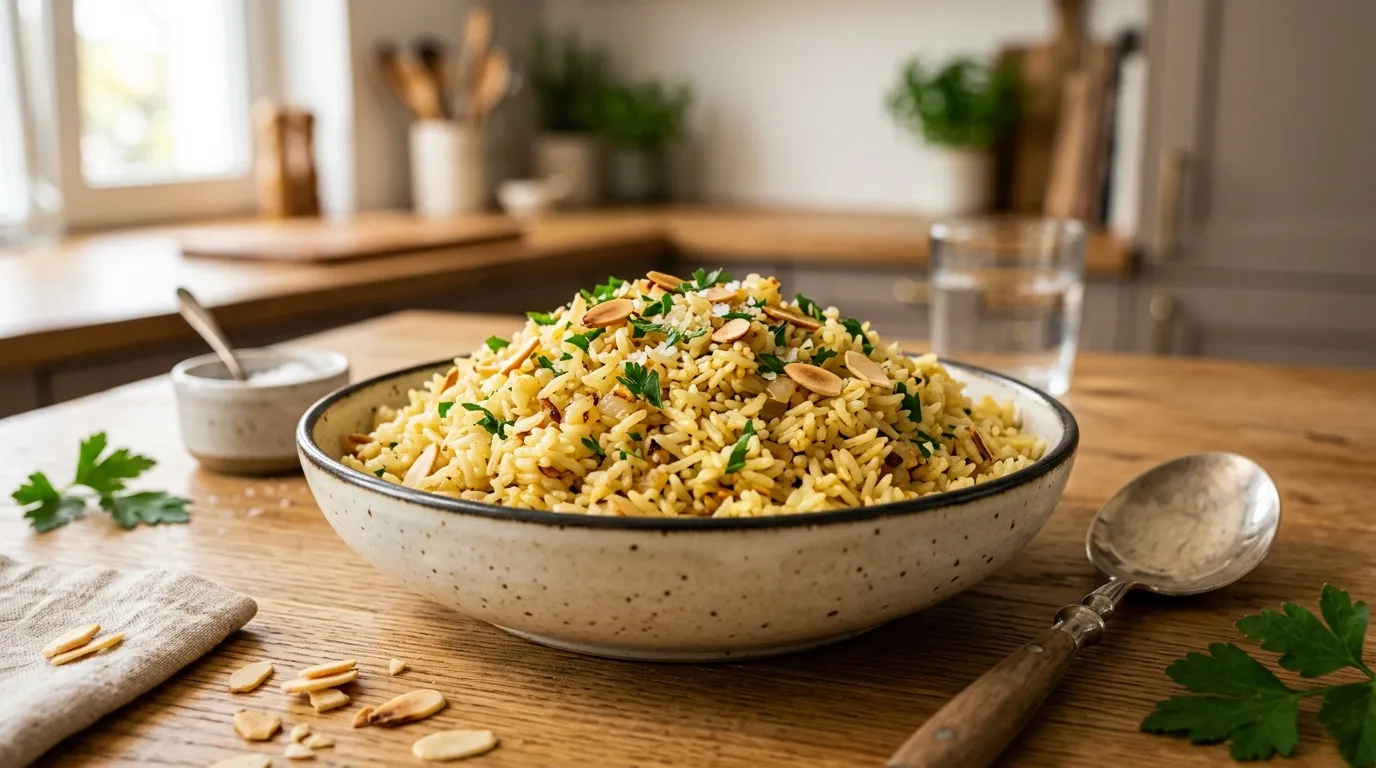
Featured Snippet: This rice pilaf recipe makes fluffy, flavorful rice by toasting long-grain rice with onion and butter before simmering it in seasoned broth. Ready in about 30 minutes, it is an easy side dish for chicken, beef, seafood, and vegetables.
Rice Pilaf Recipe at a Glance
| Recipe Detail | Information |
| Prep Time | 5 minutes |
| Cook Time | 25 minutes |
| Total Time | 30 minutes |
| Servings | 4 |
| Cuisine | American / Mediterranean-inspired |
| Course | Side Dish |
| Difficulty | Easy |
| Calories | About 245 per serving |
| Best Rice | Long-grain white rice |
| Main Flavor | Buttery, savory, aromatic |
Why You’ll Love This Rice Pilaf Recipe
This rice pilaf recipe is one of the easiest ways to make ordinary rice taste much more flavorful. Instead of simply boiling rice in water, you first toast the grains with butter and aromatics before cooking them in broth.
That extra step gives the rice a deeper, nuttier flavor while helping the grains stay separate and fluffy.
The recipe is simple enough for a weeknight dinner but flavorful enough for a holiday meal. You can serve it with roasted chicken, grilled steak, baked salmon, shrimp, or roasted vegetables.
Another reason to keep this recipe handy is how easy it is to customize. Add toasted almonds, fresh parsley, peas, carrots, mushrooms, or dried cranberries to create different versions without changing the basic cooking method.
Menu of Rice Pilaf Recipe
- Ingredients you’ll need
- Choosing the best rice
- Kitchen tools
- How to make rice pilaf
- Chef’s tips for fluffy pilaf
- Common mistakes to avoid
- Easy rice pilaf variations
- What to serve with rice pilaf
- Storage and reheating
- Nutrition information
- Frequently asked questions
- Final serving tips
Ingredients for Rice Pilaf
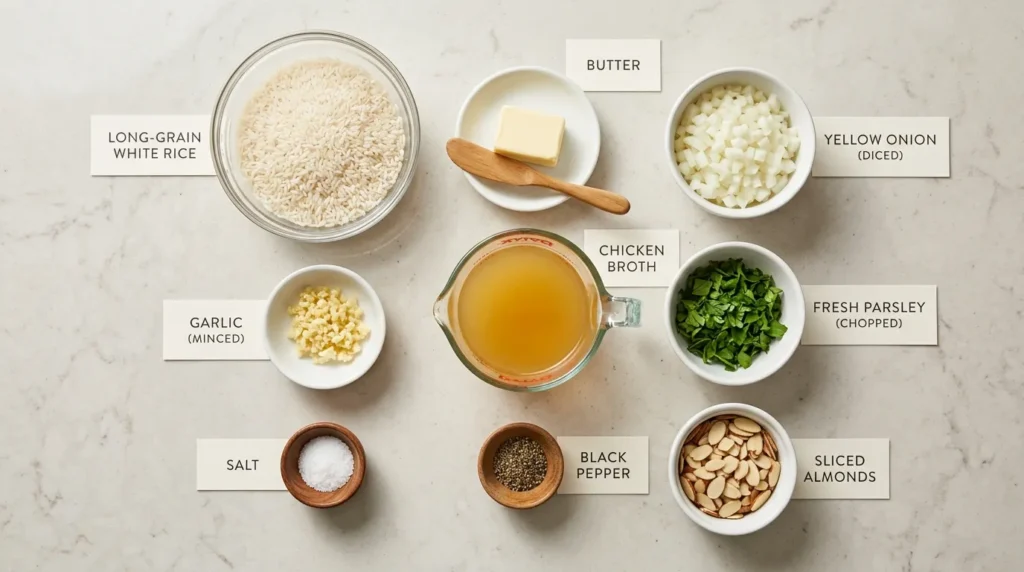
You only need a few basic ingredients to make delicious homemade rice pilaf.
Long-Grain White Rice
Long-grain white rice is the classic choice because it produces fluffy grains that remain separate after cooking.
Jasmine rice can also work if you enjoy its fragrant aroma.
Butter
Butter gives the pilaf a rich, slightly nutty flavor and helps toast the rice.
You can substitute olive oil if you prefer a dairy-free version.
Onion
Finely diced onion provides sweetness and a savory base.
Yellow or white onion works well.
Garlic
Fresh minced garlic adds another layer of flavor. Use it sparingly so it complements rather than dominates the rice.
Chicken Broth
Chicken broth provides much more flavor than plain water.
Use low-sodium broth if possible so you have better control over the final salt level.
For a vegetarian version, use vegetable broth.
Salt
Salt brings out the flavor of the rice, onion, and broth.
Black Pepper
A little freshly ground black pepper adds gentle warmth.
Parsley
Fresh parsley gives the finished pilaf a fresh flavor and attractive color.
Optional Garnishes
You can also add:
- Toasted almonds
- Sliced green onions
- Fresh lemon zest
- Dried cranberries
- Toasted pine nuts
Choosing the Best Rice for Pilaf
Long-grain white rice is the safest choice for fluffy rice pilaf.
The grains naturally stay separate, especially when you toast them before adding the broth.
Basmati rice is another excellent option if you prefer longer, more aromatic grains.
Avoid very sticky short-grain rice unless you’re intentionally creating a different style of pilaf.
One useful trick is to rinse the rice before cooking. This removes some excess surface starch and can help produce lighter grains.
After rinsing, drain the rice thoroughly so excess water doesn’t interfere with the toasting step.
Kitchen Tools You Need
This recipe requires basic kitchen equipment:
- Medium heavy-bottomed saucepan
- Tight-fitting lid
- Measuring cups
- Measuring spoons
- Cutting board
- Chef’s knife
- Wooden spoon or spatula
- Fork for fluffing
A heavy-bottomed saucepan helps distribute heat evenly and reduces the chance of burning the rice.
How to Make Rice Pilaf
Step 1: Rinse and Drain the Rice
Place the rice in a fine-mesh strainer.
Rinse under cool water until the water becomes mostly clear.
Drain the rice thoroughly.
Removing excess surface starch helps prevent overly sticky rice.
Step 2: Sauté the Onion
Melt the butter in a saucepan over medium heat.
Add the diced onion and cook for about 2–3 minutes, stirring occasionally.
The onion should become soft and translucent without turning dark brown.
Step 3: Add the Garlic
Add the minced garlic and cook for about 30 seconds.
You only need enough time for the garlic to become fragrant.
Avoid burning it because burnt garlic can give the entire pilaf a bitter taste.
Step 4: Toast the Rice
Add the drained rice to the saucepan.
Stir gently so the grains become coated with the butter.
Cook for about 2–3 minutes, stirring occasionally.
The rice should smell slightly nutty and look lightly toasted.
This is the step that gives pilaf its characteristic deeper flavor.
Step 5: Add the Broth and Seasonings
Pour in the chicken broth.
Add salt and black pepper.
Stir once to distribute everything evenly.
Bring the mixture to a gentle boil.
Step 6: Cover and Simmer
Once the broth begins boiling, reduce the heat to low.
Cover the saucepan tightly.
Let the rice simmer for about 15–18 minutes, or until the liquid has been absorbed and the rice is tender.
Avoid repeatedly opening the lid. Steam is essential for cooking the rice evenly.
Step 7: Rest the Rice
Turn off the heat but leave the saucepan covered.
Let the rice rest for about 5–10 minutes.
This allows the remaining steam to finish cooking the grains and improves the final texture.
Step 8: Fluff and Garnish
Remove the lid and gently fluff the rice with a fork.
Fold in chopped fresh parsley.
Taste and adjust the salt if necessary.
Serve warm with your favorite main dish.
Chef’s Tips for Perfect Rice Pilaf
Toast the Rice
Don’t skip the toasting step. Cooking the dry rice briefly in butter helps create a more developed, nutty flavor.
Use Broth Instead of Water
Broth gives the rice a savory foundation. Chicken broth is especially good for a classic pilaf.
Keep the Heat Low
After bringing the broth to a boil, reduce the heat immediately.
High heat can cause the bottom of the rice to burn before the grains finish cooking.
Don’t Stir While Simmering
Once the lid is on, leave the rice alone.
Stirring can release starch and make the finished pilaf sticky.
Let It Rest
A short resting period makes the grains more tender and easier to fluff.
Season Gradually
If your broth contains salt, you may need less additional salt. Taste before adding extra seasoning at the end.
Common Rice Pilaf Mistakes
| Mistake | What Happens | Better Approach |
| Skipping the toast | Less flavorful rice | Toast rice in butter first |
| Too much liquid | Mushy rice | Measure broth carefully |
| High heat throughout | Burnt bottom | Simmer gently on low |
| Opening the lid often | Uneven cooking | Keep the lid closed |
| Stirring while cooking | Sticky rice | Leave rice undisturbed |
| Not resting the rice | Less fluffy texture | Rest for 5–10 minutes |
| Too much salt | Overly salty pilaf | Use low-sodium broth |
Easy Rice Pilaf Variations
Rice Pilaf With Almonds
Toast sliced almonds in a dry skillet until lightly golden.
Sprinkle them over the finished pilaf for crunch and a delicious nutty flavor.
Vegetable Rice Pilaf
Add finely diced carrots, peas, bell peppers, or mushrooms with the onion.
This creates a colorful side dish that works particularly well with grilled chicken.
Mushroom Rice Pilaf
Sauté sliced mushrooms with the onion before adding the rice.
Mushrooms add a deep savory flavor that makes the pilaf more substantial.
Lemon Herb Rice Pilaf
Add fresh lemon zest and a small squeeze of lemon juice after cooking.
Finish with fresh parsley and dill for a bright herb flavor.
Rice Pilaf With Cranberries
Fold dried cranberries into the cooked rice and top with toasted almonds.
The sweet cranberries create a nice contrast with the savory rice.
Brown Rice Pilaf
Brown rice can be used for a heartier version, but it requires more liquid and a longer cooking time.
Follow the cooking instructions for your particular brown rice.
What to Serve With Rice Pilaf
Rice pilaf is versatile enough to accompany almost any main course.
Roasted Chicken
The buttery rice pairs beautifully with crispy roasted chicken and roasted vegetables.
Grilled Steak
Serve pilaf alongside grilled steak, sautéed mushrooms, and a fresh green salad.
Baked Salmon
The mild, savory flavor of rice pilaf works well with baked or grilled salmon.
Shrimp
Garlic butter shrimp and rice pilaf make a quick and satisfying dinner.
Roasted Vegetables
For a vegetarian meal, pair the rice with roasted broccoli, carrots, zucchini, peppers, or cauliflower.
Turkey
Rice pilaf is also an excellent addition to a holiday-style dinner with turkey, gravy, and roasted vegetables.
How to Store Rice Pilaf
Refrigerator
Allow leftover rice to cool and place it in an airtight container.
Refrigerate for up to 3–4 days.
Freezer
Cool the rice completely before transferring it to freezer-safe bags or containers.
Freeze in individual portions for easy meal preparation.
For best quality, use within about 2 months.
Reheating
Place the rice in a microwave-safe bowl and add a tablespoon of water or broth.
Cover loosely and microwave until steaming hot, stirring once.
You can also reheat it in a saucepan over low heat with a splash of broth or water.
Rice Pilaf Nutrition
Approximate nutrition per serving:
| Nutrient | Amount |
| Calories | 245 |
| Carbohydrates | 42 g |
| Protein | 6 g |
| Fat | 7 g |
| Fiber | 1 g |
| Sodium | 480 mg |
Actual nutritional values will vary depending on the type of broth, butter, rice, and seasonings used.
Frequently Asked Questions
What is rice pilaf?
Rice pilaf is a rice dish in which the rice is typically sautéed or toasted with aromatics before being cooked in seasoned broth. This creates more flavor and helps produce separate, fluffy grains.
What type of rice is best for rice pilaf?
Long-grain white rice is an excellent choice. Basmati and jasmine rice can also work well.
Should I rinse rice before making pilaf?
Yes. Rinsing removes excess surface starch and can help keep the cooked grains separate.
Why is my rice pilaf mushy?
Too much liquid, excessive stirring, or overcooking can make pilaf mushy. Measure the broth carefully and avoid stirring while the rice simmers.
Can I make rice pilaf without chicken broth?
Yes. Use vegetable broth or water instead. Vegetable broth is especially useful for a vegetarian rice pilaf.
Can I add vegetables to rice pilaf?
Absolutely. Carrots, peas, mushrooms, bell peppers, and corn are all easy additions.
Can I make rice pilaf ahead of time?
Yes. Prepare it ahead, refrigerate it properly, and reheat it with a small amount of water or broth.
Why do you toast rice before cooking?
Toasting coats the grains in butter or oil and develops a slightly nutty, savory flavor. It is one of the defining techniques of many pilaf-style rice dishes.
Conclusion
This rice pilaf recipe turns simple pantry ingredients into a flavorful, fluffy side dish that works with almost any dinner. Toasting the rice in butter with onion and garlic gives the grains a deeper flavor before they simmer gently in savory broth.
The technique is simple but important. Rinse the rice, toast it briefly, use the right amount of broth, keep the heat low, and let the finished rice rest before fluffing.
Once you understand the basic method, you can easily customize your pilaf with almonds, mushrooms, vegetables, herbs, lemon, or dried cranberries.
Serve it with roasted chicken, grilled steak, salmon, shrimp, turkey, or roasted vegetables for a complete meal.
If you’re looking for a dependable side dish that feels more special than plain rice without requiring complicated cooking, this rice pilaf recipe is an easy one to keep in your recipe collection.
Korean Fried Rice Recipe: Easy & Flavorful

I am Eliaz ,a professional cook and food writer with over 10 years of experience in the kitchen. I have worked with a wide range of rice dishes and cooking styles, and I enjoy sharing the techniques and practical lessons I have learned through years of cooking.