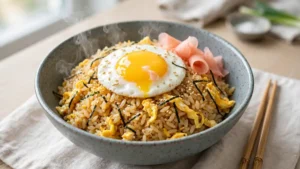
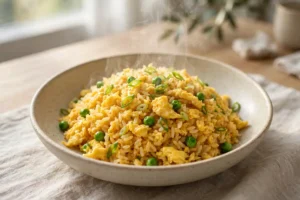
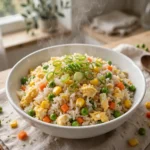
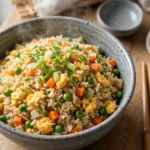
When the fridge holds leftover rice and a jar of kimchi that needs using up, dinner is basically decided. This recipe kimchi fried rice is the Korean comfort classic for that exact situation: tangy fermented cabbage, tender chicken, and day-old rice tossed in a hot pan until every grain turns glossy and red. It takes about 25 minutes.
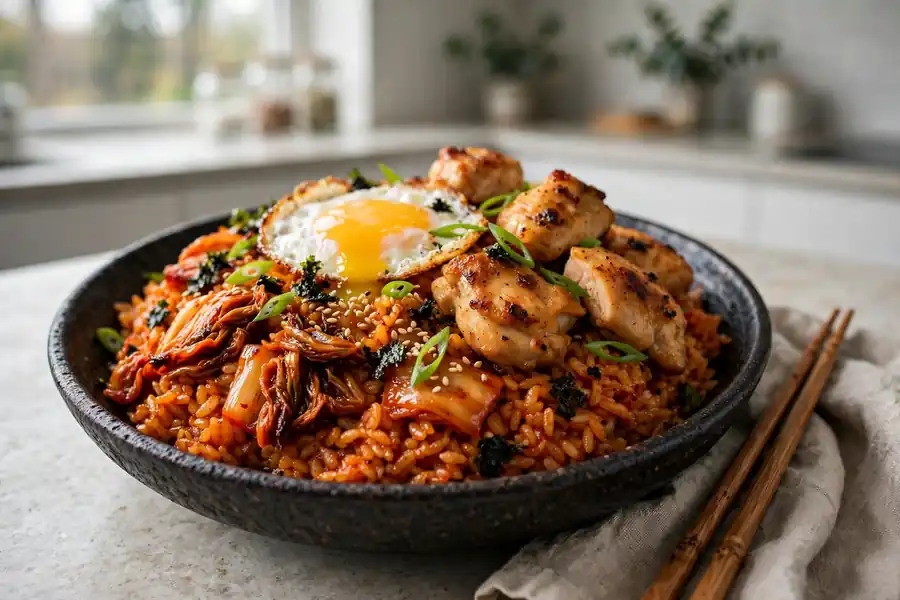
Menu of Recipe Kimchi Fried Rice
This recipe kimchi fried rice guide includes the complete ingredient list with US measurements, numbered step-by-step instructions, chef tips folded into the steps, a troubleshooting table, ingredient substitutions, variations, storage and reheating guidance, and frequently asked questions.
Ingredients for Recipe Kimchi Fried Rice
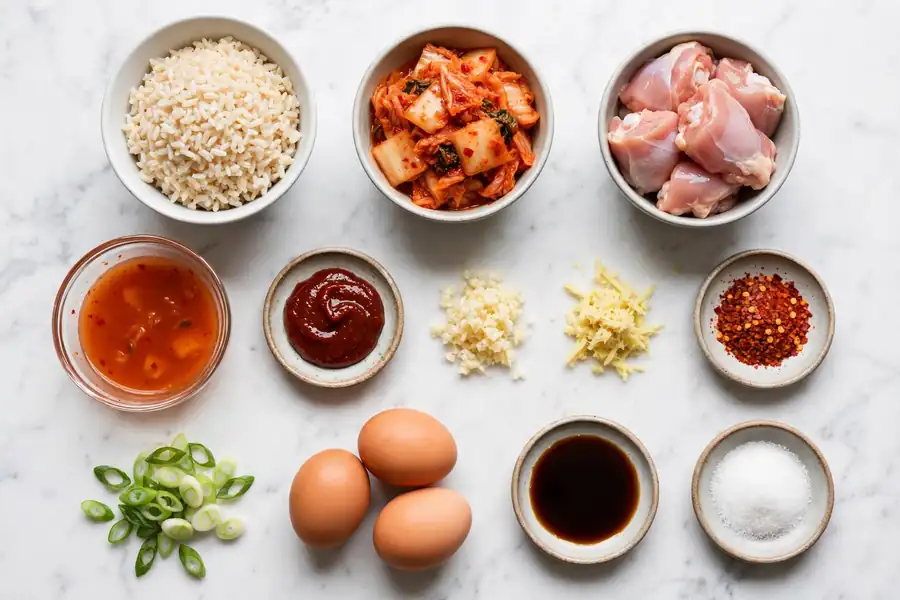
For the Fried Rice
- 3 cups cooked medium grain rice, chilled overnight
- 1 1/4 cups napa cabbage kimchi, chopped, plus 3 tablespoons kimchi juice
- 12 ounces boneless, skinless chicken thighs, cut into 1/2-inch pieces
- 3 green onions, sliced, whites and greens separated
- 4 cloves garlic, minced
- 1 teaspoon grated fresh ginger
- 3 tablespoons vegetable oil, divided
- 1 tablespoon gochujang
- 1 1/2 tablespoons soy sauce
- 2 teaspoons sugar
- 1 teaspoon gochugaru (Korean chili flakes), optional
For Serving
- 2 teaspoons toasted sesame oil
- 4 large eggs
- 1 tablespoon toasted sesame seeds
- 1/4 cup roasted seaweed snacks, crumbled
Notes on ingredients: Chicken thighs are worth seeking out; they stay tender and juicy through high-heat cooking, and their richer flavor stands up to bold kimchi. Choose kimchi from the refrigerated section that lists simple ingredients and looks a little translucent, which signals good fermentation. A jar open for one to three weeks is ideal. If you only have fresh kimchi, let the jar sit at room temperature for a day to develop more tang, or add an extra spoonful of kimchi juice. Medium grain rice is traditional and gives a pleasantly chewy bite; it must be cooked a day ahead and refrigerated uncovered or loosely covered so the surface dries out.
You will need: a large wok or 12-inch heavy skillet, a wooden spoon or heatproof spatula, a small bowl for whisking the sauce, and a nonstick skillet for frying the eggs.
How to Make Recipe Kimchi Fried Rice
Step 1: Prep the Ingredients
Chop the kimchi, slice the green onions, mince the garlic, and grate the ginger. Cut the chicken thighs into small, even pieces and pat them dry with paper towels so they sear instead of steam. Whisk the kimchi juice, gochujang, soy sauce, sugar, and gochugaru in a small bowl. Break up the cold rice so no clumps remain. Tip: whisking the sauce first matters, since gochujang is thick and clumpy straight from the tub and would otherwise leave red streaks in the rice.
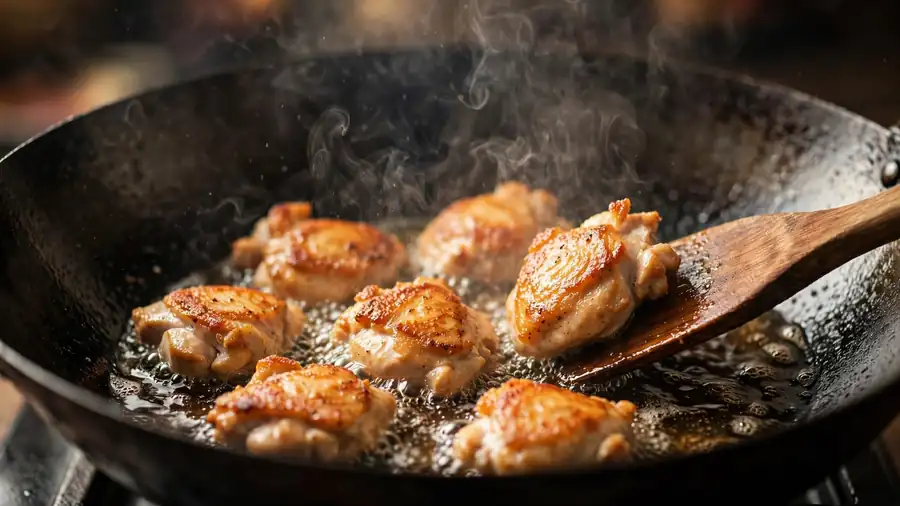
Step 2: Sear the Chicken
Heat 1 tablespoon of oil in the wok over high heat until it shimmers and just starts to smoke. Add the chicken in a single layer and cook 4 to 5 minutes, turning once, until browned on the outside and cooked through to 165 degrees F. Remove to a plate. Searing in a single layer gives browned, flavorful pieces instead of pale steamed ones.
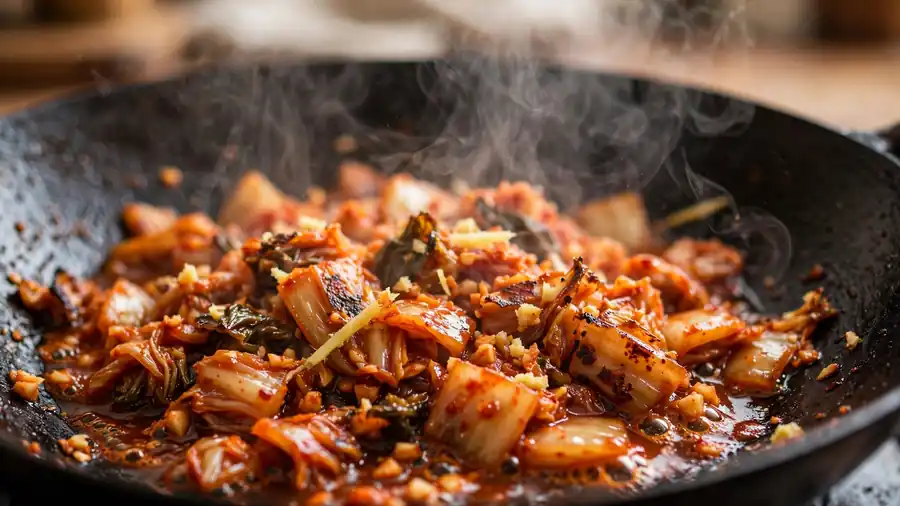
Step 3: Cook the Kimchi and Aromatics
Add another tablespoon of oil to the wok. Add the chopped kimchi, the white parts of the green onions, the garlic, and the ginger. Stir-fry 2 to 3 minutes until the kimchi softens, its liquid evaporates, and the edges start to caramelize. The pan should look nearly dry and smell toasty and tangy.
Step 4: Fry the Rice
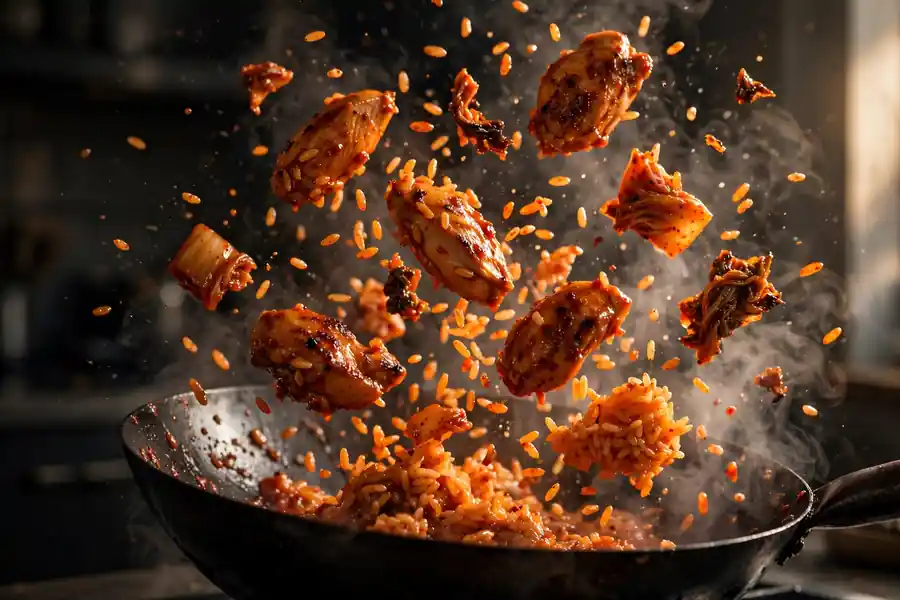
Add the remaining tablespoon of oil and the cold rice. Spread the rice out, press it down lightly, and let it sit for 1 minute so the bottom crisps, then toss and stir-fry 3 to 4 minutes. Look for grains that are hot through with scattered golden, crispy bits. Constant stirring prevents those crispy spots, so spread, wait, then toss.
Step 5: Season and Combine
Pour the sauce mixture evenly over the rice and toss for 1 to 2 minutes until every grain is coated in a glossy red glaze. Return the chicken to the wok and toss to combine. Taste and adjust with more soy sauce for salt, sugar for balance, or gochugaru for heat. Note: kimchi brands vary a lot in saltiness, so taste before adding extra soy sauce.
Step 6: Finish and Serve
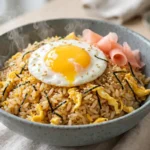
Take the wok off the heat. Drizzle over the toasted sesame oil and toss with the green parts of the green onions. Save the sesame oil for the end, since high heat destroys its nutty aroma. Fry the eggs sunny-side up in the nonstick skillet until the whites are set and the edges are crisp, about 2 to 3 minutes. Divide the rice among bowls, crown each with an egg, and scatter over the sesame seeds and crumbled seaweed. Serve hot.
Common Mistakes and How to Fix Them
| Common Problem | Why It Happens | How to Fix It |
|---|---|---|
| Chicken turns out dry and tough | Chicken breast was used, or pieces were overcooked | Use chicken thighs and remove them from the wok as soon as they reach 165 degrees F |
| Gochujang forms red lumps in the rice | Thick paste was added straight to the pan | Whisk gochujang into the kimchi juice and soy sauce first, then pour evenly over the rice |
| Rice tastes steamed, not fried | The wok was crowded or the heat was too low | Cook over high heat in a single layer; make the batch in two rounds if the pan is small |
| Dish is too sour to enjoy | Extremely aged kimchi with no balancing sweetness | Stir in extra sugar a half teaspoon at a time, or mix in some fresher kimchi |
| Sesame oil flavor disappears | It was added while the wok was still over the flame | Drizzle toasted sesame oil over the rice after removing the pan from the heat |
Ingredient Substitutions
| Original Ingredient | Substitute | Expected Difference |
|---|---|---|
| Chicken thighs | Boneless chicken breast or pork loin | Breast dries out faster; cut pieces small and cook quickly |
| Gochujang | 2 tsp gochugaru plus 1 tsp miso paste | Similar heat and fermented flavor, slightly less sweet |
| Medium grain rice | Jasmine rice | Lighter, more separate grains; still works well |
| Toasted sesame oil | Perilla oil | A different but pleasant nutty, herbal note common in Korean cooking |
| Fresh ginger | 1/4 tsp ground ginger | Less bright and aromatic, but acceptable |
Recipe Variations
- Pork belly version: Swap the chicken for 8 ounces of thinly sliced pork belly, rendered until crisp.
- Tuna melt style: Use a drained can of tuna instead of chicken and top with shredded mozzarella, covering the pan for a minute to melt.
- Mushroom vegetarian: Replace the chicken with 8 ounces of sliced shiitake or king oyster mushrooms, seared until golden. Confirm your kimchi is vegetarian.
- Mild kid-friendly: Skip the gochugaru and halve the gochujang. The kimchi still gives plenty of flavor without much heat.
- Kimchi fried rice balls: Cool the finished rice, roll into balls, stuff each with a cube of mozzarella, and pan-fry until crisp and golden.
-
Onion and mushroom: Add a small diced onion with the kimchi and a handful of sliced mushrooms with the chicken for a heartier pan.
-
Enoki mushroom version: Cook a handful of enoki mushrooms separately in sesame oil and garlic for about a minute until just wilted, then fold them back in at the end. Cooked with the rice, they turn soggy and drag the sauce down.
- Bloom the gochujang: Stir the gochujang with the garlic for about 30 seconds before the kimchi goes in. The brief fry takes the raw edge off the paste and deepens its flavor.
Store, Reheat, and Prep Ahead
Cool the rice within 2 hours of cooking. Spread it on a sheet pan to cool fast, then pack into airtight containers. Refrigerate for up to 4 days. Freeze in portioned bags for up to 2 months, pressing out the air, and thaw overnight in the refrigerator. Throw out leftovers that have been at room temperature longer than 2 hours or that smell sour in an unpleasant way.
To reheat, use a hot skillet: add a teaspoon of oil over medium-high heat, add the cold rice, and stir-fry 3 to 4 minutes until steaming, splashing in a tablespoon of water if it seems dry. For the microwave, place the rice in a bowl, sprinkle with water, cover loosely, and heat 2 minutes, stirring halfway. Reheat chicken-containing leftovers to 165 degrees F (74 degrees C) all the way through. Fry the eggs fresh at mealtime.
For prep ahead, cook the rice the day before serving. The chicken can be cut and refrigerated up to a day ahead, the kimchi chopped two days ahead, and the sauce whisked and stored in a jar for a week.
More Rice Recipes to Try
If you enjoyed this recipe, you will love these other rice dishes from The World of Rice:
- Easy Kimchi Fried Rice Recipe: Spicy, Tangy & Ready in 20 Minutes
- Kimchi Fried Rice Recipe: Classic Korean Kimchi Bokkeumbap
- Kimchi Fried Rice Recipe Easy: Spicy, Tangy & Ready in 20 Minutes
- Kimchi Fried Rice Recipe Spam: Crispy Spam, Kimchi, and Melty Cheese
Frequently Asked Questions
What is the difference between kimchi and kimchee?
Nothing in the kitchen. Kimchee is simply an older English spelling of kimchi, the Korean fermented cabbage. Recipes using either word describe the same dish.
Do I need gochujang for kimchi fried rice?
Not strictly, but it adds depth and a glossy red color. You can substitute gochugaru mixed with a little miso, or leave it out and rely on kimchi and its juice.
Why is my kimchi fried rice not red?
Pale results come from fresh, mild kimchi or skipped gochujang. Use well-fermented kimchi, include the juice, and add gochujang for that signature red glaze.
Can I use chicken breast instead of thighs?
Yes. Cut it into small pieces and sear it quickly so it does not dry out. Thighs are more forgiving, but breast works with careful timing.
Is kimchi fried rice healthy?
It can be part of a balanced diet. Kimchi provides probiotics and fiber, and you control the oil and sodium. Use less oil, load up on vegetables, and choose lean protein to lighten it.
Final Thoughts
This recipe kimchi fried rice turns pantry staples into a dinner with real personality. Sear the chicken well, caramelize the kimchi, season in layers, and finish with sesame oil off the heat.
See the dictionary definitions for Jasmine rice and soy sauce.

Prayvista Team is the editorial team behind Prayvista, The World of Rice. The team writes and reviews rice recipes for home cooks, and every article is checked by editor Sara Raza before publishing.