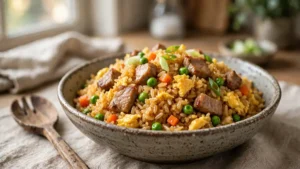
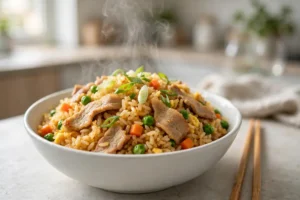
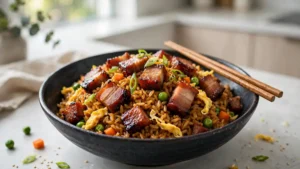
The most common kimchee fried rice problem is rice that turns soggy and kimchi that tastes raw and sharp. Both come from the same mistake: adding rice while the kimchi is still wet. The fix is patience. Cook the kimchi down until the pan looks almost dry, then fry cold rice in a hot wok. This kimchee fried rice recipe follows that order, and it takes about 20 minutes.

Menu of Kimchee Fried Rice Recipe
This kimchee fried rice recipe covers why it works, the full ingredient list with US measurements, a troubleshooting table before the steps, step-by-step instructions, chef tips, substitutions, variations, storage and reheating guidance, and answers to common questions.
Why You’ll Love This Kimchee Fried Rice Recipe
- It is fast. Twenty minutes from chopping to serving.
- It uses up leftovers. Day-old rice and an open jar of kimchi are the foundation.
- The flavor is bold. Tangy, spicy, savory, and a little sweet, with no blandness.
Ingredients for Kimchee Fried Rice Recipe

For the Fried Rice
- 3 cups cooked short or medium grain rice, chilled overnight
- 1 cup well-fermented napa cabbage kimchi, roughly chopped
- 2 tablespoons kimchi juice from the jar
- 8 ounces Spam, diced into 1/2-inch cubes (about 1 1/2 cups)
- 4 green onions, thinly sliced, white and green parts separated
- 2 tablespoons neutral oil, such as vegetable or canola, divided
- 1 tablespoon soy sauce
- 1 tablespoon gochujang (Korean chili paste)
- 1 teaspoon sugar
- 1/2 teaspoon garlic powder or 2 cloves fresh garlic, minced
For Finishing
- 2 teaspoons toasted sesame oil
- 4 large eggs, for frying and serving on top
- 1 tablespoon toasted sesame seeds
- 2 sheets roasted seaweed (nori), cut into thin strips
Notes on ingredients: Aged kimchi is the star. Look for a jar open for at least a week or two; it should smell pleasantly sour and look slightly translucent. Fresh, crunchy kimchi works in a pinch but tastes milder. Short or medium grain rice is traditional and holds the red sauce well; jasmine or long grain rice works too, but avoid freshly cooked rice of any kind. If your kimchi is very sour, a little extra sugar balances it. If it is mild, add a teaspoon of gochugaru (Korean chili flakes) for more kick.
You will need: a large wok or 12-inch skillet, a wooden spoon or wok spatula, a small bowl for the sauce, and a nonstick skillet for frying the eggs.
Common Mistakes and How to Fix Them
| Common Problem | Why It Happens | How to Fix It |
|---|---|---|
| Rice turns mushy | Fresh rice was used, or the wok was overcrowded | Use cold, day-old rice and cook in a single layer or in batches |
| Dish tastes harshly sour | Very old kimchi with no balancing sweetness | Add a little more sugar and gochujang; next time mix in some fresher kimchi |
| Flavor is flat | The kimchi juice was discarded | Always use the juice in the sauce; it carries most of the fermented flavor |
| Kimchi burns and tastes bitter | Heat was too high while the kimchi’s sugars cooked | Use medium-high heat, keep the kimchi moving, and add a splash of water if the pan gets too dark |
| Fried egg sticks or breaks | Pan was not hot enough, or too little oil was used | Heat oil until shimmering in a nonstick skillet before cracking the eggs |
How to Make Kimchee Fried Rice Recipe
Step 1: Prep Everything
Chop the kimchi into bite-size pieces and measure out the kimchi juice. Dice the Spam, slice the green onions, and stir the kimchi juice, soy sauce, gochujang, sugar, and garlic together in a small bowl. Break up the cold rice so no clumps remain. This kimchee fried rice recipe moves quickly once the heat is on, so keep everything within arm’s reach.
Step 2: Crisp the Spam
Heat 1 tablespoon of oil in the wok over medium-high heat until it shimmers. Add the diced Spam in a single layer and cook 4 to 5 minutes, stirring once or twice, until the edges turn golden and crisp. Scoop the Spam onto a plate and set aside.

Step 3: Sizzle the Kimchi
Add the remaining tablespoon of oil to the same wok. Add the chopped kimchi and the white parts of the green onions. Stir-fry 2 to 3 minutes until the kimchi softens, darkens slightly, and most of its liquid has evaporated. You should smell a tangy, toasty aroma. Do not rush this step; it concentrates the flavor.
Step 4: Fry the Rice
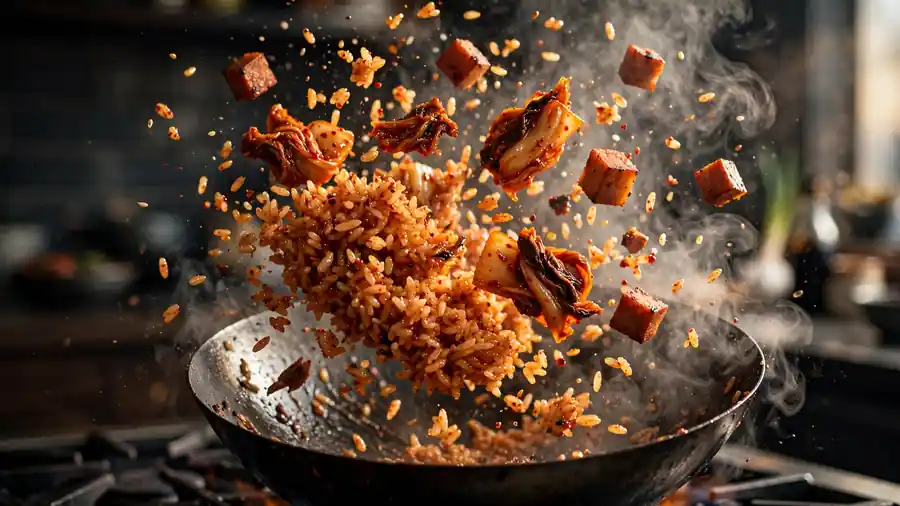
Add the cold rice to the wok. Spread it into an even layer and let it sit undisturbed for 1 minute so the bottom grains toast, then toss and stir-fry 3 to 4 minutes total. The rice should be hot through, with a few golden, slightly crispy spots. If the wok looks dry, drizzle in a little more oil. For an extra crispy bottom, press the finished rice flat and leave it undisturbed for 2 to 3 minutes over medium heat before serving.
Step 5: Add the Sauce and Spam
Pour the mixed sauce evenly over the rice and toss everything for 1 to 2 minutes until each grain turns a rich reddish orange and looks glossy. Return the crispy Spam to the wok and toss to combine. Taste and adjust: more kimchi juice for tang, a pinch of sugar for balance, or more gochujang for heat.
Step 6: Finish and Serve
Remove the wok from the heat. Drizzle over the toasted sesame oil and toss with the green parts of the green onions. Meanwhile, fry the eggs in the nonstick skillet until the whites are set and the edges are lacy, about 2 to 3 minutes. Spoon the rice into bowls, top each with a fried egg, and sprinkle with sesame seeds and nori strips. Serve immediately while the yolk is still runny.

Chef’s Tips for the Best Results
- Use sour, well-fermented kimchi. Fresh kimchi tastes fine raw but turns bland when cooked.
- Let the kimchi cook down fully. If you add the rice while the kimchi is still watery, the dish steams instead of fries.
-
Balance sour with sweet. A teaspoon of sugar does not make the dish sweet; it rounds out the sharp acidity.
-
Squeeze the kimchi juice into a bowl before chopping. That juice is the base of the sauce. If the bowl looks short, top it up straight from the jar so the gochujang has enough liquid to coat every grain.
- Reach for a heavy cast iron skillet when you can. Its wide, flat bottom lets more rice sit against the hot surface at once, which is what builds an even crisp crust.
Ingredient Substitutions
| Original Ingredient | Substitute | Expected Difference |
|---|---|---|
| Spam | Diced pork belly, bacon, or chicken | Pork belly is richer; chicken is leaner and milder |
| Gochujang | 1 tsp gochugaru plus 1 tsp sugar, or sriracha | Similar heat but less fermented depth |
| Napa cabbage kimchi | Cubed radish kimchi (kkakdugi) | Crunchier texture and a slightly different tang |
| Toasted sesame oil | A neutral oil plus extra sesame seeds | Less nutty aroma; the finish will be milder |
| Short grain rice | Jasmine or long grain rice | Grains stay more separate; still delicious |
Recipe Variations
- Cheesy kimchi fried rice: Sprinkle 1 cup of shredded mozzarella over the finished rice, cover the wok 1 minute until melted, and serve.
- Tuna kimchi fried rice: Replace the Spam with one drained 5-ounce can of tuna, added with the sauce.
- Vegetarian: Skip the Spam and use cubed firm tofu or extra mushrooms. Check that your kimchi is vegetarian, since many brands contain fish sauce or shrimp paste.
- Extra spicy: Add 1 teaspoon of gochugaru with the kimchi and finish with a drizzle of chili oil.
- Seaweed crumble: Toss in a handful of crushed roasted seaweed snacks with the green onions for extra umami and crunch.
Storage and Food Safety
Cool leftovers within 2 hours. Spread the rice on a plate or sheet pan so it cools quickly, then transfer to airtight containers. Refrigerate for up to 4 days. Freeze portions in sealed freezer bags with the air pressed out for up to 2 months; thaw overnight in the refrigerator. Discard leftovers that smell off or have sat at room temperature for more than 2 hours.
Meal-prep note: cook the rice a day ahead, chop the kimchi and dice the Spam up to 2 days ahead and store them separately, and mix the sauce and keep it in a jar for up to a week. Fry the eggs fresh at serving time.
How to Reheat Kimchee Fried Rice Recipe
The best way to reheat this kimchee fried rice recipe is in a skillet. Heat a teaspoon of oil over medium-high heat, add the cold rice, and stir-fry 3 to 4 minutes until steaming hot, adding a splash of water if it looks dry. The microwave also works: place the rice in a bowl, sprinkle with a tablespoon of water, cover loosely, and heat 2 minutes, stirring halfway through. Heat any leftovers containing meat to 165 degrees F (74 degrees C) throughout.
More Rice Recipes to Try
If you enjoyed this recipe, you will love these other rice dishes from The World of Rice:
- Authentic Chinese Shrimp Fried Rice Recipe: Traditional Technique, Pure Flavor
- Authentic Egg Fried Rice Recipe: Simple, Silky & Perfectly Golden
- Authentic Fried Rice Recipe With Egg: The Traditional Golden Method
- Authentic Japanese Fried Rice Recipe: Real Yakimeshi at Home
Frequently Asked Questions
Can I use fresh kimchi instead of fermented kimchi?
Yes, but the flavor will be milder and less tangy. Add an extra tablespoon of kimchi juice and a little more gochujang to make up for the missing depth.
How do I keep kimchi fried rice from getting soggy?
Cook the chopped kimchi until its liquid evaporates before adding the rice, and use cold, day-old rice. A very hot wok also helps the grains fry instead of steam.
Is kimchi fried rice very spicy?
It is moderately spicy with the gochujang in this recipe. Reduce or skip the gochujang for a mild version, or add gochugaru for more heat.
Can I make this recipe vegetarian?
Yes. Use firm tofu or mushrooms instead of Spam, and check that your kimchi is made without fish sauce or shrimp paste.
What rice is best for kimchi fried rice?
Short or medium grain rice is traditional and holds the sauce well. Whatever you use, it must be cooked and chilled a day ahead.
What is kimchi bokkeumbap?
It is the Korean name for kimchi fried rice: kimchi and rice stir-fried together, usually topped with a fried egg. This recipe is that dish.
Final Thoughts
This kimchee fried rice recipe shows how two leftovers can become the best thing you eat all week. Let the kimchi caramelize, use cold rice, balance the sour with a little sweet, and finish with sesame oil and a runny egg.
See the dictionary definitions for soy sauce and fish sauce.

Prayvista Team is the editorial team behind Prayvista, The World of Rice. The team writes and reviews rice recipes for home cooks, and every article is checked by editor Sara Raza before publishing.