Some recipes earn the word “best” by being easy. This one earns it by being worth the effort. The best pork fried rice recipe is the definitive version: pork shoulder caramelized in a homemade char siu-style glaze, rice fried in batches for maximum char, and a seasoning blend balanced to the last drop. Every detail here has a reason, and the result is fried rice that beats takeout on every measure. It takes a little more time than the weeknight version, but each step builds flavor that shortcuts cannot match.
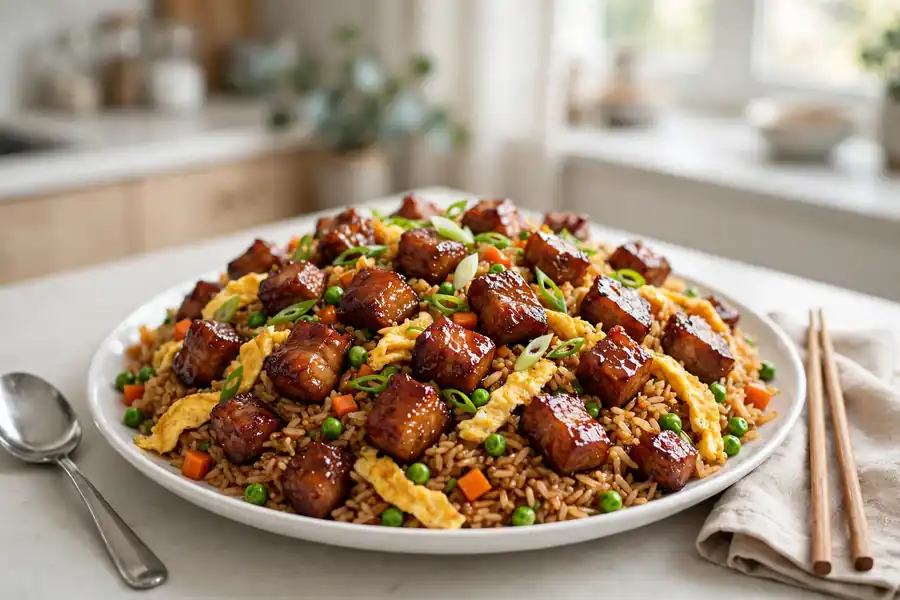
Why You’ll Love This The Best Pork Fried Rice Recipe
Every element is optimized. The pork, the rice, the heat, the seasoning: each one is handled the way that gives the best result.
Homemade caramelized pork. A quick char siu-style glaze on pork shoulder gives you sweet, lacquered pork without a specialty store trip.
Maximum wok char at home. The batch-frying method coaxes real smoky flavor out of an ordinary home burner.
Feeds a crowd beautifully. Six generous servings that hold up on a buffet table and reheat well.
The recipe to memorize. Once you learn the method, you can riff on it forever with total confidence.
What Makes This Recipe Work?
The pork shoulder gets a homemade glaze of hoisin, honey, soy, and five-spice, then sears hard so the sugars caramelize into a lacquered crust. The rice is fried in two batches, because a crowded pan is the enemy of char, and each batch gets the press-and-rest treatment that creates golden, smoky grains.
The seasoning is built in layers: soy sauce for salt, dark soy for color, sugar for roundness, white pepper for warmth, and sesame oil for aroma. Nothing is dumped in all at once. Each addition hits hot metal at the right moment, which is the difference between seasoned rice and truly flavorful rice.
Menu of The Best Pork Fried Rice Recipe
This the best pork fried rice recipe guide covers why it works, the full ingredient list with US measurements, the best ingredients to choose, the tools that help, step-by-step instructions, chef tips, a troubleshooting table, substitutions, variations, a practical cooking scenario, storage and food safety, reheating, meal prep tips, nutrition estimates, and answers to common questions.
Ingredients for The Best Pork Fried Rice Recipe
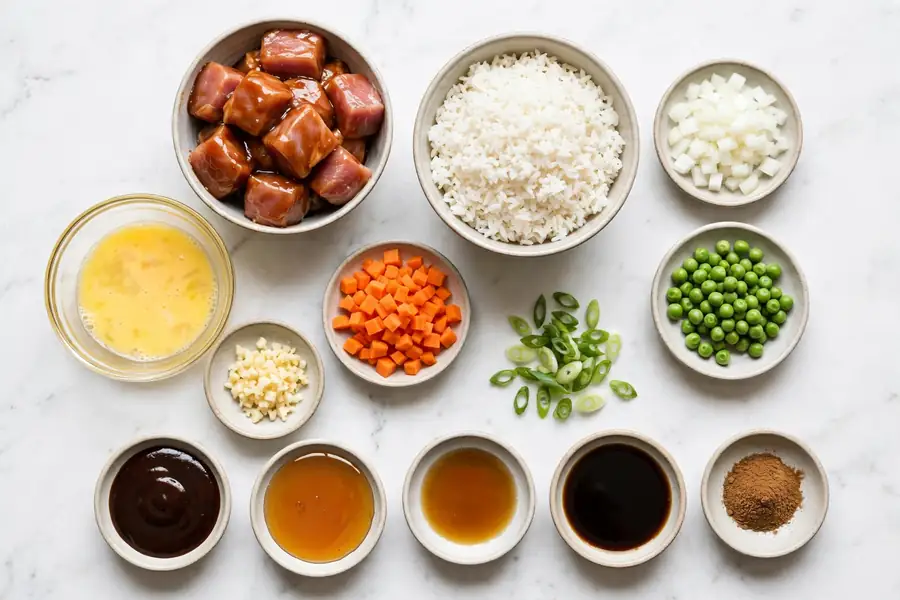
For the Glazed Pork
- 12 ounces pork shoulder, cut into 1/2-inch cubes (about 340 g)
- 2 tablespoons hoisin sauce
- 1 tablespoon honey
- 1 tablespoon light soy sauce
- 1/2 teaspoon five-spice powder
- 1 clove garlic, minced
For the Fried Rice
- 4 cups cooked jasmine rice, chilled (day-old is best)
- 3 large eggs, beaten
- 1/4 cup vegetable oil or peanut oil, divided
- 3 cloves garlic, minced (about 1 tablespoon)
- 1/2 cup finely diced carrots
- 1/2 cup frozen peas, thawed
- 1/2 cup diced yellow onion
- 4 scallions, thinly sliced
For the Balanced Seasoning
- 2 tablespoons light soy sauce
- 1 tablespoon dark soy sauce
- 1 teaspoon sugar
- 1/2 teaspoon white pepper
- 1 teaspoon toasted sesame oil
Pork shoulder is the ideal cut here. Its marbling keeps it juicy through the hard sear, and the cubes caramelize beautifully in the glaze.
Best Ingredients to Use
Pork shoulder, also sold as pork butt, has the fat content that keeps cubes juicy and flavorful. Do not substitute very lean cuts; they dry out under the intense heat this recipe needs. Five-spice powder is the shortcut to char siu flavor at home; check that yours is fresh, since ground spices lose punch after a year. Jasmine rice, day-old and chilled, is essential for the texture. Both light and dark soy sauces are needed: one seasons, the other colors.
Kitchen Tools You’ll Need
- Your largest wok or 12-inch heavy skillet. You will fry the rice in two batches, so size matters.
- A wok spatula or flat metal spatula for pressing the rice.
- A sharp knife and cutting board for cubing the pork.
- Measuring cups and spoons, plus bowls for the glaze and seasoning.
How to Make The Best Pork Fried Rice Recipe
Step 1: Glaze and Marinate the Pork
In a bowl, stir the hoisin, honey, light soy sauce, five-spice powder, and minced garlic. Toss the pork cubes in the glaze until well coated. Cover and refrigerate at least 30 minutes, or up to 8 hours. The longer it marinates, the deeper the flavor.
Step 2: Prep Everything
Mix the light soy sauce, dark soy sauce, sugar, white pepper, and sesame oil in a small bowl. Break up the cold rice completely. Beat the eggs, mince the garlic, dice the carrots and onion, thaw the peas, and slice the scallions. Line up everything near the stove. If you have no day-old rice, spread hot rice on a sheet pan and refrigerate it uncovered for at least an hour before cooking.
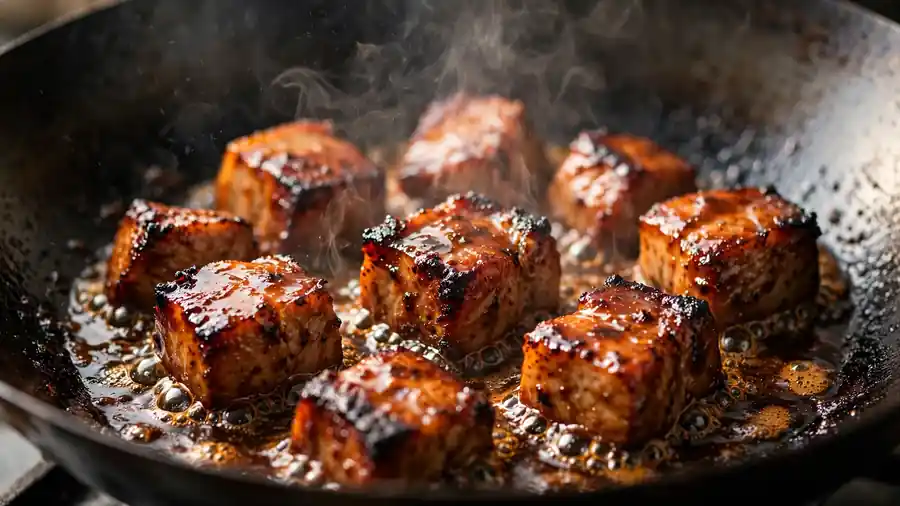
Step 3: Sear the Glazed Pork
Heat 1 tablespoon of oil in the wok over high heat until it lightly smokes. Add the pork cubes in a single layer, letting excess glaze drip off first. Sear undisturbed for 2 minutes to caramelize, then toss and cook 3 to 4 minutes more until cooked through with a lacquered, charred crust. Transfer to a plate. Work in two batches if needed to avoid crowding. Excess marinade burns before the pork browns, so shake off the extra so the cubes sear instead of stewing in sauce.
Step 4: Scramble the Eggs
Add 1 tablespoon of oil over medium-high heat. Scramble the eggs into large, soft ribbons, about 30 to 45 seconds, and move them to the plate with the pork.
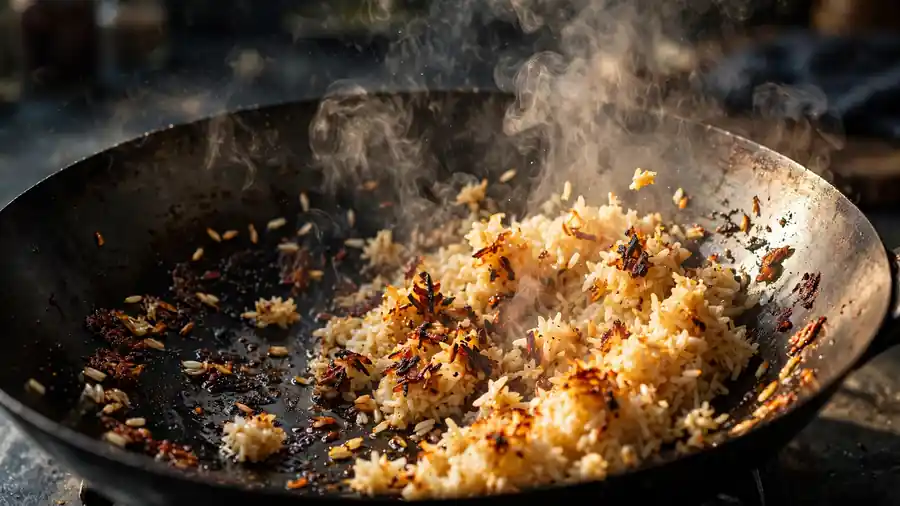
Step 5: Fry the Rice in Two Batches
Add 1 tablespoon of oil and turn the heat to high. Add half the cold rice. Press it into the hot surface, let it sit 1 minute, then toss. Repeat for 3 to 4 minutes until golden and lightly crisped. Transfer to a large bowl. Repeat with the remaining rice and another tablespoon of oil. Batch-frying is the secret to real char on a home burner.
Step 6: Vegetables, Seasoning, and Assembly
Add the last tablespoon of oil. Stir-fry the garlic, onion, and carrots for 2 to 3 minutes until softened, then add the peas for 30 seconds. Return all the rice to the wok. Pour the seasoning around the hot edge so it sizzles, and toss 1 to 2 minutes until every grain is glossy and amber. Fold in the pork, eggs, and scallions. Toss 30 seconds, taste, and adjust. Serve immediately.

Chef’s Tips for the Best Results
Fry the rice in batches. This is the single biggest upgrade you can make. Half the rice per batch means every grain touches hot metal, which is where the smoky char comes from.
Let the glaze drip off before searing. Excess marinade burns before the pork browns. Shake off the extra so the cubes sear instead of stewing in sauce.
Marinate the pork as long as you can. Thirty minutes is the minimum, but an 8-hour marinade transforms the flavor. Plan it in the morning for an evening cook.
Taste at the end, not the middle. The seasoning concentrates as the rice fries. Wait until everything is combined before deciding it needs more soy sauce.
Common Mistakes and How to Fix Them
| Common Problem | Why It Happens | How to Fix It |
|---|---|---|
| Pork burns before browning | Too much glaze in the pan | Shake off excess marinade; sear in a single layer over high heat |
| Rice is pale and soft | Fried all at once in a crowded pan | Fry in two batches with the press-and-rest method |
| Glaze tastes flat | Five-spice is old or honey skipped | Use fresh five-spice; honey is essential for the lacquered crust |
| Dish is too sweet | Too much honey or hoisin | Measure carefully; the teaspoon of sugar in the seasoning is enough beyond the glaze |
| Eggs are lost in the rice | Over-scrambled into tiny pieces | Cook large soft ribbons and fold them in at the very end |
Ingredient Substitutions
| Original Ingredient | Substitute | Expected Difference |
|---|---|---|
| Pork shoulder | Pork tenderloin cubes | Leaner; reduce searing time by 1 minute to avoid drying |
| Hoisin sauce | Char siu sauce or barbecue sauce | Char siu sauce is closest; barbecue sauce is smokier and less sweet |
| Five-spice powder | 1/4 tsp cinnamon plus 1/4 tsp ground star anise | Approximate but workable in a pinch |
| Honey | Brown sugar | Similar caramelization; honey gives a glossier crust |
| Dark soy sauce | 1 tbsp light soy plus 1/2 tsp molasses | Close match in color and mild sweetness |
Recipe Variations
Pineapple: Fold in 1 cup of diced pineapple with the pork for a sweet and savory showstopper.
Spicy: Add 2 teaspoons of chili crisp to the seasoning blend.
Shrimp and pork: Add 1/2 pound of seared shrimp with the pork for a deluxe combination.
Cashew crunch: Toss in 1/2 cup of toasted cashews at the end for richness and crunch.
Lettuce cups: Serve in crisp butter lettuce cups for an elegant presentation.
Practical Cooking Scenario
You are hosting six friends for dinner and want one dish that feels like an event. In the morning, toss the pork cubes in the glaze and refrigerate. An hour before guests arrive, prep all the vegetables and mix the seasoning; the rice has been chilling since yesterday. When everyone is seated with drinks, the wok work takes 20 minutes, and the sizzle and aroma become part of the evening. Serve family-style straight from a big platter.
Storage and Food Safety
Cool leftovers within 2 hours. Spread the rice on a plate to release steam quickly, then transfer to airtight containers. Refrigerate up to 4 days. Freeze for up to 2 months in portioned freezer bags; thaw overnight in the refrigerator. Discard leftovers that smell sour or have sat at room temperature for more than 2 hours. For buffet serving, keep the rice hot above 140 degrees F (60 degrees C) and do not leave it out more than 2 hours.
How to Reheat The Best Pork Fried Rice Recipe
The skillet is best. Heat a teaspoon of oil over high heat, add the cold rice, and stir-fry 3 to 4 minutes, adding a splash of water if it looks dry. The high heat revives the charred edges. The microwave works for quick portions: place the rice in a bowl, sprinkle with a tablespoon of water, cover loosely, and heat 2 minutes, stirring halfway. Heat pork leftovers to 165 degrees F (74 degrees C) throughout.
Meal Prep Tips
Marinate the pork up to 8 hours ahead. Cook the rice 1 to 2 days ahead and refrigerate uncovered for the first hour. Dice the vegetables and mix the seasoning blend up to 2 days ahead. The actual wok cooking is best done fresh, but with everything prepped, it takes 20 minutes.
Nutrition Information
Approximate nutrition per serving (makes 6 servings): 450 calories, 22 g protein, 54 g carbohydrates, 15 g fat, 2 g fiber, 920 mg sodium. These are estimates only and vary with ingredient brands, pork cut, portion sizes, and preparation methods.
More Rice Recipes to Try
If you enjoyed this recipe, you will love these other rice dishes from The World of Rice:
- Authentic Pork Fried Rice Recipe: Cantonese Homestyle Comfort
- Bbq Pork Fried Rice Recipe: Sweet, Smoky & Takeout Style
- Best Pork Fried Rice Recipe: Smoky, Savory & Better Than Takeout
- Chinese Pork Fried Rice Recipe: Classic Takeout Style at Home
Frequently Asked Questions
What makes this the definitive best version?
Every component is optimized: homemade glazed pork, batch-fried rice for real char, and layered seasoning. No shortcuts, no compromises.
Can I use store-bought char siu instead of making the glazed pork?
Yes. Use 12 ounces of diced char siu and skip the marinating step. Sear it the same way to crisp the edges.
Why fry the rice in two batches?
Home burners cannot keep a full wok hot enough. Half batches let every grain touch the hot surface, which creates the smoky char that defines great fried rice.
How far ahead can I marinate the pork?
Up to 8 hours in the refrigerator. Thirty minutes is the minimum for good flavor.
Can I double this recipe for a big party?
Yes, but keep frying the rice in half batches. Double everything else and assemble in a very large bowl or roasting pan.
What if I do not have five-spice powder?
A mix of cinnamon and ground star anise approximates it. Or use 2 tablespoons of char siu sauce in place of the hoisin and skip the five-spice.
Final Thoughts
The best pork fried rice recipe is not about one trick. It is about doing everything right: the glazed pork, the batch-fried rice, the seasoning at the perfect moment. Make it once with care, and it becomes your signature dish.
See the dictionary definitions for wok and soy sauce.

Prayvista Team is the editorial team behind Prayvista, The World of Rice. The team writes and reviews rice recipes for home cooks, and every article is checked by editor Sara Raza before publishing.