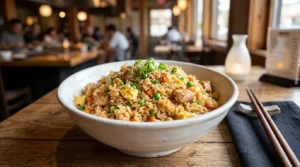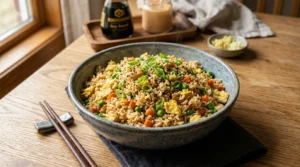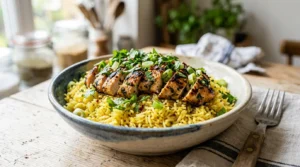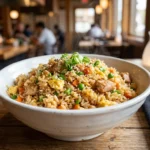
Pork fried rice recipe is a quick, savory meal made with tender pork, cold cooked rice, eggs, vegetables, soy sauce, and simple seasonings. It is perfect for busy weeknights, families, meal prep, or anyone who wants fluffy, restaurant-style fried rice at home without complicated ingredients.
The first time I made pork fried rice for a busy family dinner, I thought the recipe would be almost impossible to mess up. I was wrong. I used warm rice, crowded the skillet, and ended up with a soft, greasy mess instead of the fluffy fried rice I wanted. After a few more attempts, I learned that cold rice, high heat, and cooking in the right order make all the difference.
Now this pork fried rice recipe is one of my favorite ways to turn leftover rice and a small piece of pork into a complete dinner. The pork gets beautifully browned, the rice stays separate, and every bite has that savory takeout flavor. Keep reading because the simple technique is what makes this recipe work so well.
Quick Recipe Information
| Detail | Information |
| Prep Time | 15 minutes |
| Cook Time | 15 minutes |
| Total Time | 30 minutes |
| Servings | 4 |
| Cuisine | Chinese-American |
| Course | Main Course |
| Difficulty | Easy |
| Calories | Approximately 480 per serving |
Why You’ll Love This Pork Fried Rice Recipe
- Uses everyday ingredients: You probably already have rice, eggs, soy sauce, and vegetables in your kitchen.
- Perfect for leftover rice: Day-old rice gets a second life instead of going to waste.
- Tender, flavorful pork: Small pieces of pork brown quickly and distribute flavor throughout the dish.
- One-pan convenience: Once your ingredients are prepared, everything comes together in one wok or skillet.
- Easy to customize: Add more vegetables, increase the protein, or make it spicy.
- Great for meal prep: It reheats well and makes satisfying lunches for the next few days.
Ingredients for Pork Fried Rice
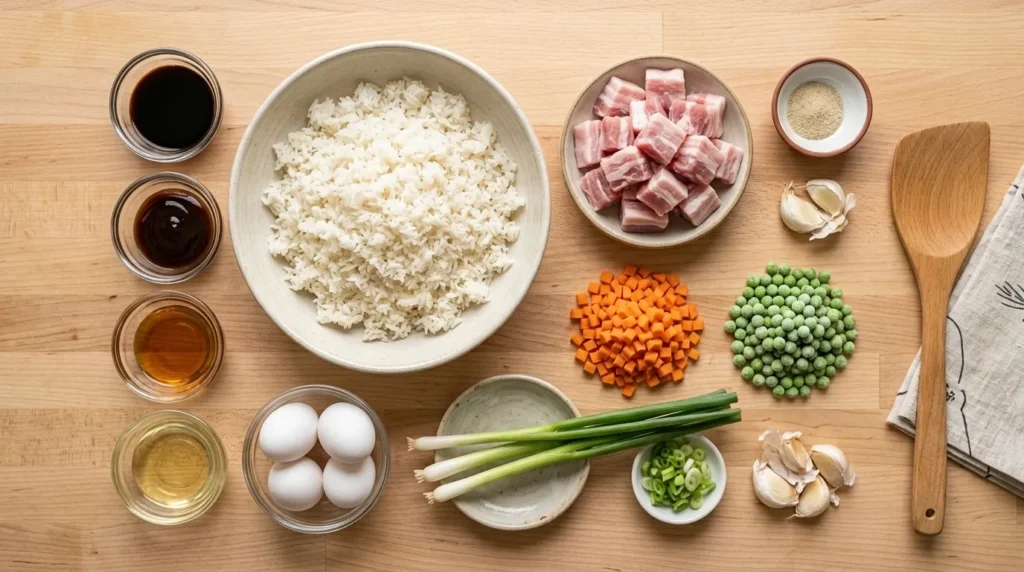
Cooked Jasmine Rice
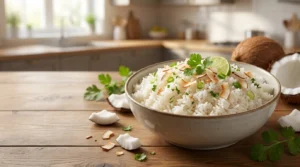
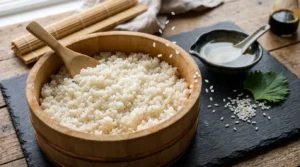
You need 4 cups cooked, chilled jasmine rice. Cold rice has less surface moisture, so the grains fry instead of becoming mushy.
Substitute: Long-grain white rice or basmati rice.
Chef tip: Cook the rice a day ahead and refrigerate it uncovered for a little while before storing it. This helps dry the surface.
Pork
Use 1 pound boneless pork loin or pork shoulder, cut into small bite-size pieces.
Pork loin is lean and cooks quickly, while pork shoulder has more fat and a richer flavor.
Buying tip: Choose pork with a little marbling rather than extremely lean meat.
Eggs
Use 2 large eggs. They add richness, texture, and extra protein.
Carrots
Add ½ cup finely diced carrots for sweetness, color, and a little crunch.
Frozen mixed vegetables can replace fresh carrots if you’re short on time.
Frozen Peas
Use ½ cup frozen peas. There’s no need to thaw them first.
Green Onions
Use 4 green onions, sliced. Add some during cooking and reserve a little for garnish.
Garlic
Use 3 finely minced garlic cloves for a fresh savory aroma.
Soy Sauce
Use 2 tablespoons soy sauce to season the rice.
For a less salty version, use low-sodium soy sauce.
Oyster Sauce
Add 1 tablespoon oyster sauce for deeper savory flavor and that familiar restaurant-style taste.
Sesame Oil
Use 1 teaspoon toasted sesame oil at the end. It adds aroma without making the fried rice greasy.
Cooking Oil
Use 2 tablespoons neutral oil, such as vegetable, canola, or avocado oil.
White Pepper
Add ½ teaspoon white pepper. It gives the dish subtle warmth without overpowering the pork.
Salt
Add only as needed after tasting. Soy sauce and oyster sauce already contain salt.
Kitchen Tools You’ll Need
- Large wok or skillet
- Sharp chef’s knife
- Cutting board
- Wooden spoon or spatula
- Mixing bowl
- Measuring spoons
A wok is ideal because its shape makes tossing ingredients easy. If you don’t own one, use the largest skillet you have and cook in batches rather than overcrowding it.
How to Make Pork Fried Rice Recipe
Step 1: Prepare the Rice and Ingredients
Before turning on the stove, break apart the chilled rice with your fingers or a fork. Dice the pork, carrots, and green onions, mince the garlic, and beat the eggs.
This recipe moves quickly once cooking starts, so having everything ready prevents overcooking.
What to look for: The rice should be cold, dry, and separated into individual grains.
Avoid: Dumping a solid block of refrigerated rice directly into the hot pan.
Step 2: Cook the Pork
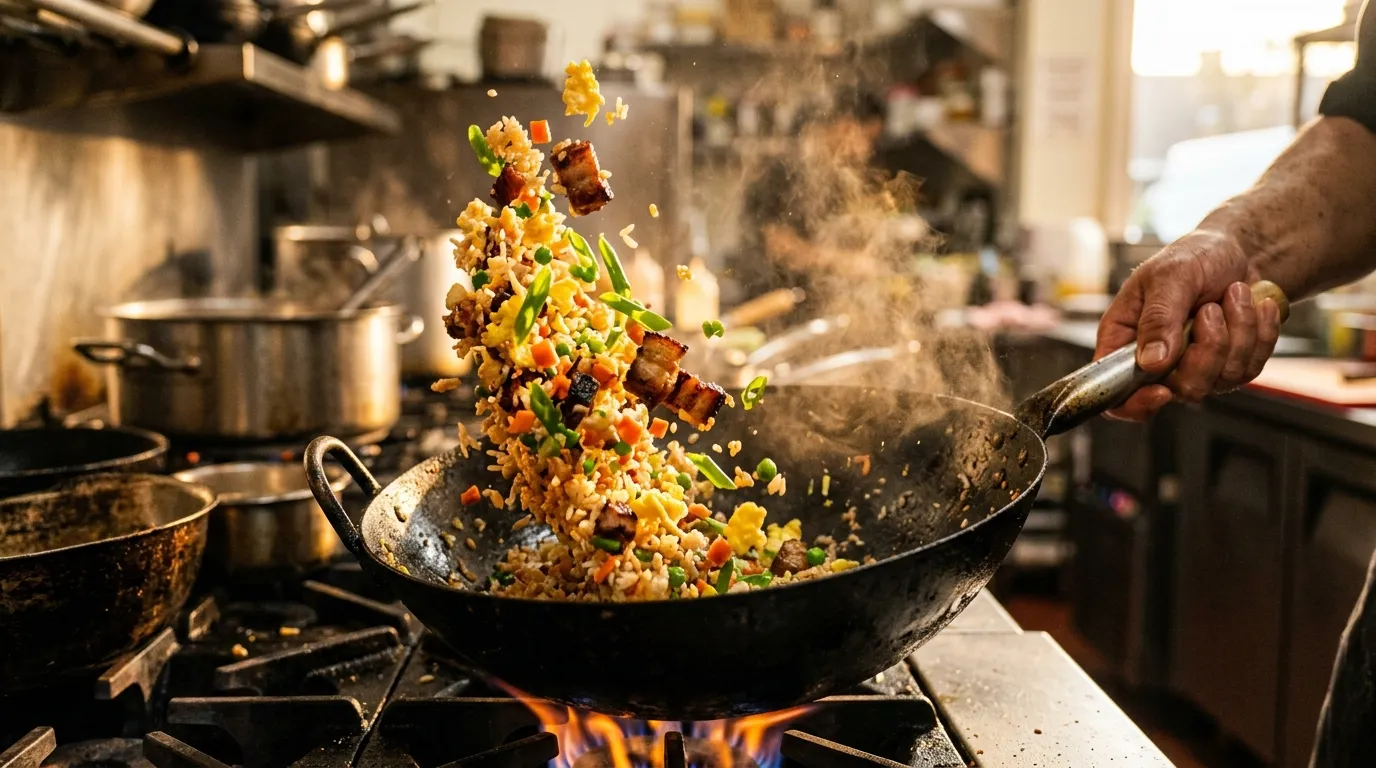
Heat your wok or skillet over medium-high to high heat. Add about 1 tablespoon of oil, then spread the pork pieces into a single layer.
Let them cook undisturbed for about 2 minutes before stirring. Continue cooking until the pork is browned on the outside and cooked through, about 4–6 minutes depending on the size of the pieces.
Why it matters: Giving the pork contact with the hot pan creates better browning and deeper flavor.
Remove the pork and set it aside.
Chef tip: Don’t constantly move the pork around. A little patience gives you much better color.
Step 3: Scramble the Eggs
Add a small splash of oil if the pan looks dry. Pour in the beaten eggs.
Stir gently until they form soft curds, then transfer them to the same plate as the pork.
Avoid: Cooking the eggs until completely dry. They’ll return to the hot pan later.
Step 4: Sauté the Vegetables
Add the remaining oil to the pan.
Add the carrots and cook for about 2 minutes. Stir in the peas and garlic and cook for another 30–60 seconds.
You should smell the garlic clearly, but it should never smell burnt.
Step 5: Fry the Rice
Add the chilled rice and spread it across the pan.
Let it sit against the hot surface for about 30 seconds before tossing. Continue stir-frying for 2–3 minutes.
Why it matters: Direct contact with the hot pan removes moisture and gives the rice a lightly toasted flavor.
If the rice is sticking badly, your pan may not be hot enough or it may be overloaded.
Step 6: Season the Rice
Pour the soy sauce and oyster sauce around the sides of the hot pan rather than dumping everything into one spot.
Toss the rice thoroughly until the seasoning is evenly distributed.
Add white pepper and stir.
Chef tip: Adding sauce around the hot sides of a wok helps it heat quickly and develop more aroma.
Step 7: Add the Pork and Eggs
Return the cooked pork and scrambled eggs to the pan.
Toss everything together for about 1–2 minutes.
The pork should be hot, the eggs should be in small tender pieces, and the rice should remain fluffy.
Step 8: Finish With Green Onions and Sesame Oil
Turn off the heat.
Add most of the green onions and drizzle in the sesame oil. Toss once more.
Taste before adding additional salt or soy sauce.
Garnish with the remaining green onions and serve immediately.
Chef’s Tips for Better Pork Fried Rice
Use Cold, Dry Rice
This is the biggest difference between fluffy fried rice and a sticky result. Refrigerated rice fries much better than freshly cooked rice.
Cut Pork Into Small Pieces
Large chunks take longer to cook and can make the rice overcook while you’re waiting for the pork.
Don’t Overcrowd the Pan
If everything is packed together, the ingredients release steam instead of developing that delicious fried texture.
Keep the Heat High
Fried rice needs enough heat to cook quickly. A very low temperature can leave the rice soft and greasy.
Add Sesame Oil at the End
Sesame oil is mainly for aroma. Adding it after cooking preserves its distinctive nutty fragrance.
Common Pork Fried Rice Mistakes
| Mistake | Why It Happens | How to Fix It |
| Using warm rice | Fresh rice contains too much moisture | Use refrigerated day-old rice |
| Overcrowding the pan | Too many ingredients release steam | Cook in batches |
| Cutting pork too large | Large pieces cook slowly | Cut into small, even pieces |
| Adding too much sauce | Extra liquid makes rice wet and salty | Measure sauces carefully |
| Overcooking the eggs | Eggs are cooked too long | Remove them while still slightly soft |
Pork Fried Rice Recipe Variations
Healthy Version
Use brown rice, lean pork tenderloin, extra vegetables, and low-sodium soy sauce. You can also reduce the oil slightly.
Spicy Version
Add 1–2 teaspoons chili crisp, sriracha, or crushed red pepper. For serious heat, add sliced fresh chili peppers.
Vegetable-Packed Version
Add broccoli, bell peppers, corn, mushrooms, cabbage, or edamame. This is an easy way to turn fried rice into a more vegetable-heavy meal.
High-Protein Version
Increase the pork to 1¼ pounds and add an extra egg. You can also mix in shrimp for a surf-and-turf version.
Budget-Friendly Version
Use leftover roasted pork, pork chops, or a small amount of cooked ground pork. Fried rice is particularly good at stretching a modest amount of meat into several servings.
What to Serve With Pork Fried Rice
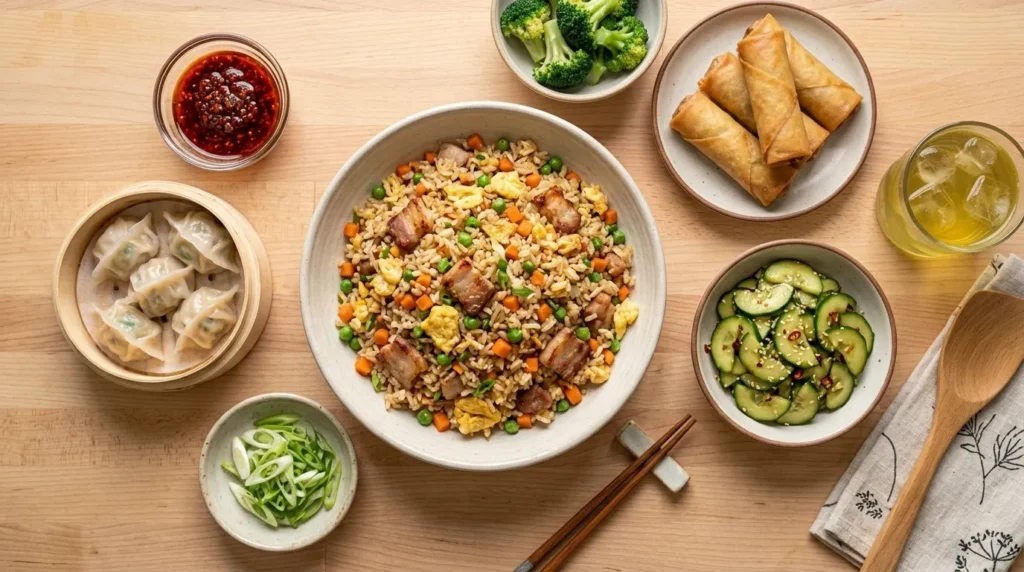
Pork fried rice is filling enough to serve as a complete meal, but a few sides can turn it into a full takeout-style dinner.
Try serving it with:
- Steamed broccoli
- Asian cucumber salad
- Vegetable spring rolls
- Egg drop soup
- Hot and sour soup
- Steamed dumplings
- Chili crisp or sriracha
- Iced green tea
For dessert, fresh pineapple or mango makes a refreshing finish after the savory rice.
Storage and Reheating
Refrigerator Storage
Transfer leftover pork fried rice to an airtight container and refrigerate promptly. Use it within 3–4 days.
Freezer Storage
Let the fried rice cool completely, portion it into freezer-safe containers or bags, and freeze for up to 2 months for best quality.
Meal Prep
Divide the cooled rice into individual containers for easy weekday lunches. Keep portions refrigerated and reheat only what you plan to eat.
Best Reheating Method
For the best texture, reheat fried rice in a skillet over medium-high heat. Add a tablespoon of water, cover briefly, then uncover and stir until steaming hot.
A microwave is faster: cover the rice loosely and heat in short intervals, stirring between each one.
Food safety tip: Reheat leftovers until they are steaming hot throughout, and avoid repeatedly cooling and reheating the same portion.
Nutrition Information
Approximate nutrition per serving:
| Nutrient | Amount |
| Calories | 480 |
| Protein | 28g |
| Carbohydrates | 52g |
| Fat | 18g |
| Fiber | 3g |
Nutrition values are estimates and can vary depending on the cut of pork, amount of oil, rice, sauces, and other ingredients used.
Frequently Asked Questions About Pork Fried Rice Recipe
What kind of pork is best for fried rice?
Pork loin, pork shoulder, or leftover cooked pork all work well. Pork loin is lean and quick-cooking, while shoulder provides more fat and flavor. Cut the pork into small, evenly sized pieces so it cooks at the same rate.
Can I use freshly cooked rice for pork fried rice?
You can, but chilled rice gives much better results. Fresh rice contains more moisture and is more likely to become soft or sticky. If you must use fresh rice, spread it on a baking sheet and refrigerate it until thoroughly chilled and dried.
How do you keep pork fried rice from getting soggy?
Use cold rice, a hot pan, and avoid adding too much sauce. Most importantly, don’t overcrowd the skillet. The ingredients need enough space for moisture to evaporate instead of steaming the rice.
Can I make pork fried rice with leftover pork?
Absolutely. Leftover roasted pork, grilled pork, pork chops, or cooked ground pork can all work. Since the pork is already cooked, add it near the end just long enough to heat through.
Can I freeze pork fried rice?
Yes. Cool it quickly, portion it into airtight freezer-safe containers, and freeze for up to about 2 months for best quality. Thawing overnight in the refrigerator and reheating in a skillet usually gives the best texture.
Conclusion
The secret to a great pork fried rice recipe isn’t complicated it comes down to cold rice, properly browned pork, high heat, and adding each ingredient at the right time. That’s what finally fixed my first sticky batch and turned fried rice into one of my favorite quick dinners.
Once you master the basic method, you can change the vegetables, seasonings, and protein to suit whatever you have in the refrigerator. Give this recipe a try on your next busy weeknight, and share your results with family or friends.
Crab Fried Rice Recipe (Better Than Takeout)

I am Eliaz ,a professional cook and food writer with over 10 years of experience in the kitchen. I have worked with a wide range of rice dishes and cooking styles, and I enjoy sharing the techniques and practical lessons I have learned through years of cooking.