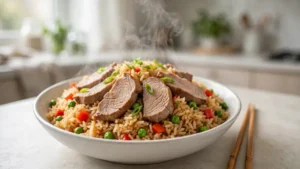
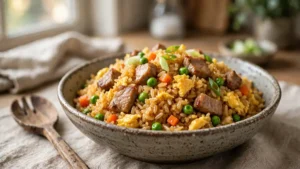
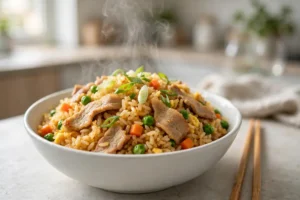
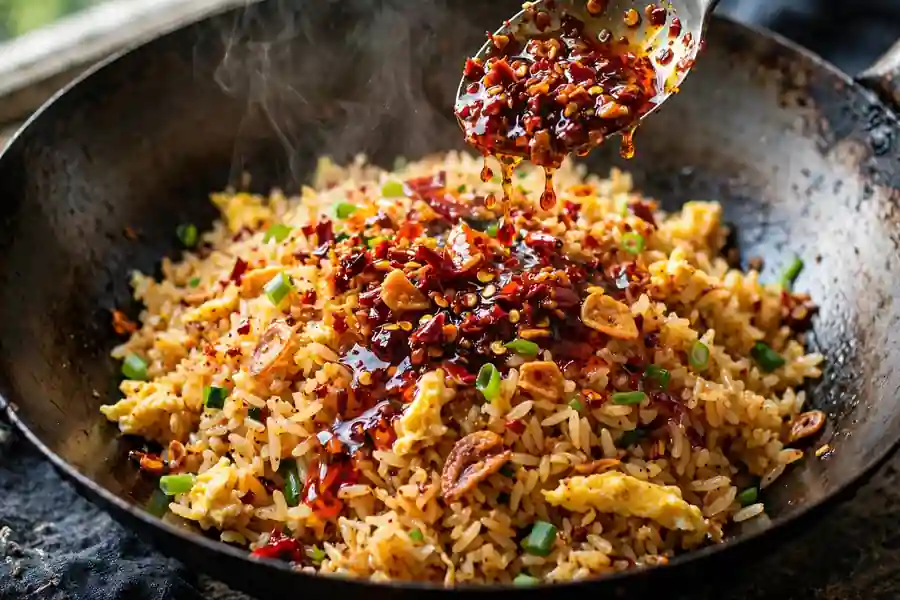
Some fried rice comforts you; this one wakes you up. Layers of heat from fresh chilies, chili garlic sauce, and a finishing drizzle of chili crisp build a slow burn that keeps every bite interesting. This spicy fried rice recipe balances that fire with savory soy sauce, sweet vegetables, and fluffy egg, so the heat excites rather than overwhelms. It takes about 25 minutes.
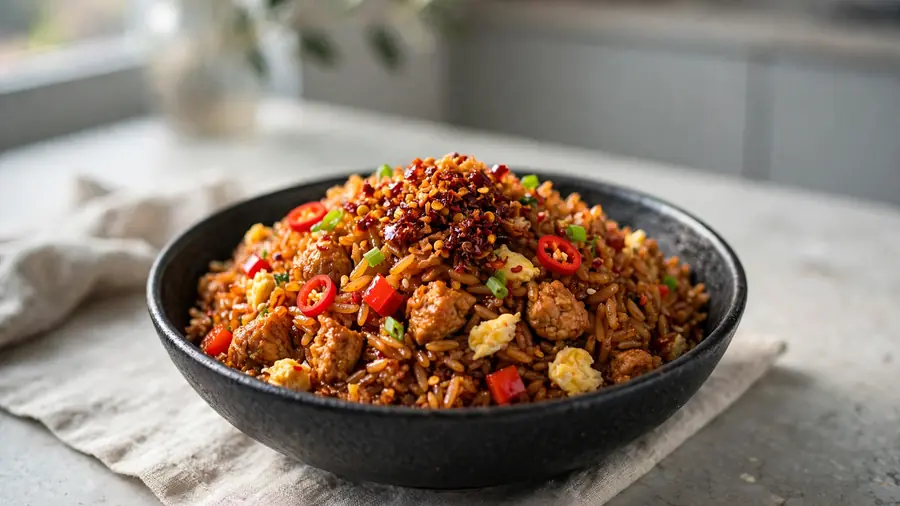
Menu of Spicy Fried Rice Recipe
This spicy fried rice recipe guide covers the full ingredient list with US measurements, step-by-step instructions, why layered heat works, chef tips, a troubleshooting table, substitutions, variations, storage and reheating guidance, and answers to common questions.
Ingredients for Spicy Fried Rice Recipe
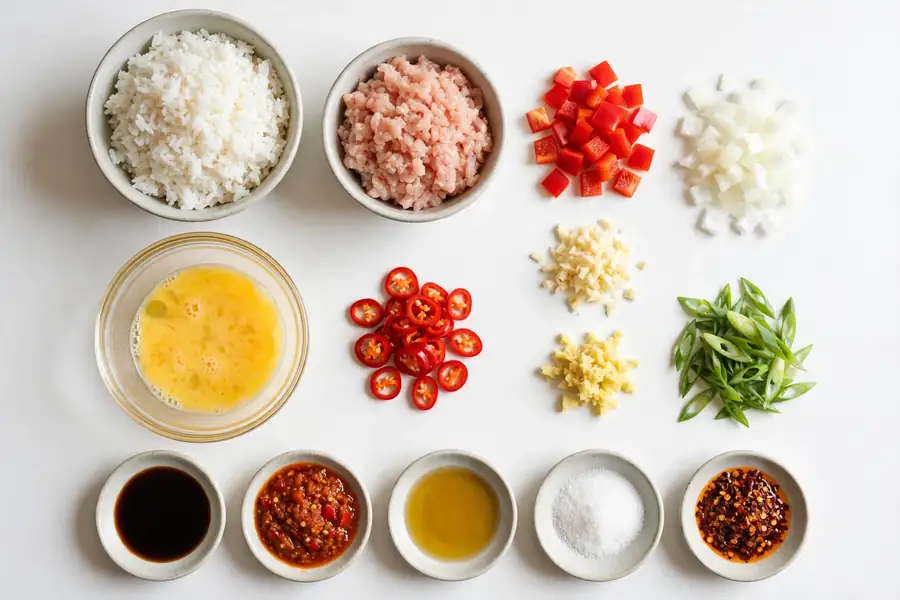
For the Fried Rice
- 3 cups cooked jasmine or long-grain rice, chilled (day-old is best)
- 3 large eggs, lightly beaten
- 1/2 pound ground chicken or ground pork
- 2 to 4 fresh red chilies (Thai, Fresno, or serrano), thinly sliced
- 1 red bell pepper, diced
- 1/2 medium onion, diced
- 3 cloves garlic, minced (about 1 tablespoon)
- 1 tablespoon fresh ginger, minced
- 3 tablespoons vegetable oil, divided
- 3 green onions, sliced
For the Spicy Sauce
- 3 tablespoons soy sauce
- 1 tablespoon chili garlic sauce, plus more to taste
- 1 teaspoon toasted sesame oil
- 1 teaspoon sugar
- 1/2 teaspoon ground black pepper
- 1 to 2 tablespoons chili crisp, for serving
Notes on ingredients: Start with 2 chilies if you are unsure of your heat tolerance; you can always add more. Fresno chilies give bright, moderate heat, Thai chilies run hotter, and serranos land in between. Use fresh chilies with firm, glossy skin; wrinkled chilies have lost their punch. Chili garlic sauce, the chunky kind with visible chili pieces, gives better flavor than smooth hot sauces, which often bring mostly vinegar. Chili crisp adds crunchy texture and a different kind of heat, so it is worth having. Jasmine rice is ideal for its fragrance, but any cold, day-old long-grain rice works. Ground chicken keeps the dish lighter, while ground pork adds richness that stands up to the heat.
You will need: a large wok or 12-inch skillet, a wooden spoon or wok spatula, measuring cups and spoons, a small bowl for the sauce, and kitchen gloves if you are sensitive to handling fresh chilies.
How to Make Spicy Fried Rice Recipe
Step 1: Prep Everything
Break up the chilled rice so no clumps remain. Slice the chilies, mince the garlic and ginger, dice the onion and bell pepper, and slice the green onions. Beat the eggs. Stir the soy sauce, chili garlic sauce, sesame oil, sugar, and black pepper in a small bowl. This spicy fried rice recipe moves fast once the wok heats.
Step 2: Brown the Meat
Heat 1 tablespoon of oil in the wok over high heat until shimmering. Add the ground chicken in an even layer and let it sit 1 minute to brown, then break it up and cook 3 to 4 minutes until no pink remains. Remove to a plate.
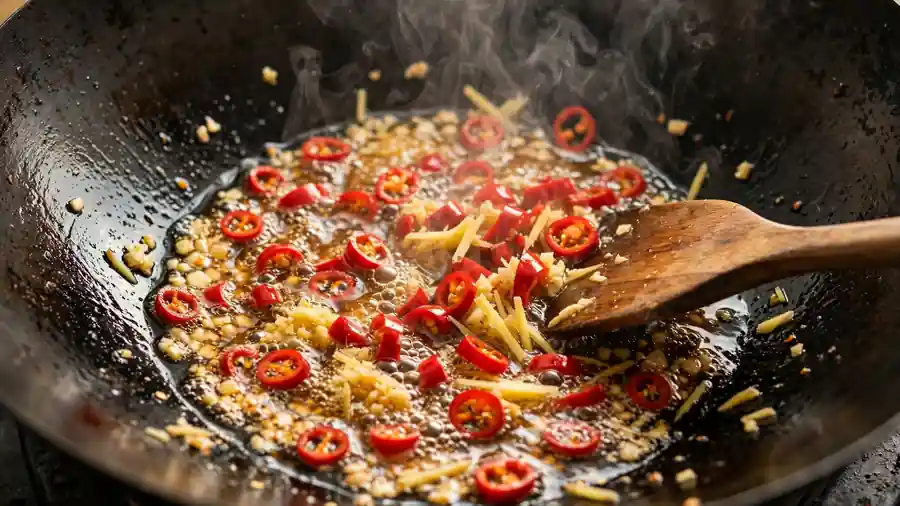
Step 3: Bloom the Chilies and Aromatics
Add another tablespoon of oil to the hot wok. Add the sliced chilies, garlic, and ginger and stir-fry 30 to 45 seconds until fragrant. This blooming step is where the heat and aroma infuse the oil. Add the onion and bell pepper and stir-fry 2 minutes until slightly softened.
Step 4: Scramble the Eggs
Push the vegetables to the side of the wok. Add the beaten eggs to the empty space and scramble 30 to 45 seconds into soft curds, then stir them into the vegetables.
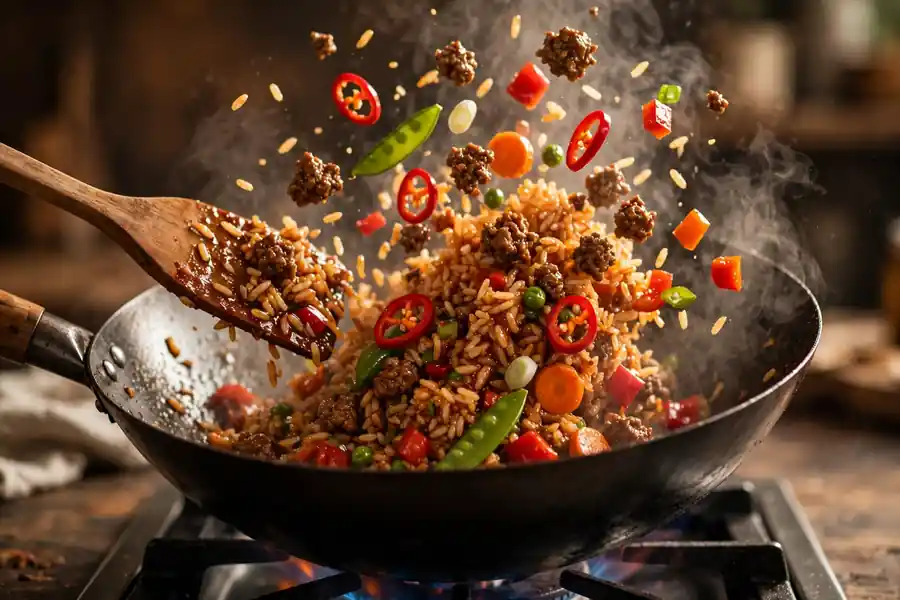
Step 5: Fry the Rice
Add the remaining tablespoon of oil and the cold rice. Break up any clumps and stir-fry 3 to 4 minutes, tossing constantly, until the grains are hot through and lightly toasted in spots.
Step 6: Sauce and Finish
Pour the spicy sauce evenly over the rice and toss 1 to 2 minutes until every grain is glossy and coated. Return the meat to the wok and add the green onions. Toss 1 minute more until heated through. Taste and add more chili garlic sauce if you want extra fire. Serve immediately with chili crisp spooned over each portion, and a simple cucumber salad on the side if you want something cool between spicy bites.
Why This Works
- Heat is layered, not dumped. Chilies bloomed in oil, chili garlic sauce in the seasoning, and chili crisp at the table create depth. One source alone tastes flat and harsh.
- Capsaicin dissolves in fat, not water. Frying the chilies and chili garlic sauce in oil blooms their flavor and distributes heat evenly instead of leaving harsh, raw hot spots.
- Balance matters as much as heat. A touch of sugar tames the burn, soy sauce adds savory depth, and the egg and vegetables give your palate places to rest between spicy bites.
- Heat builds as the dish sits. Tasting at the end and adjusting upward cautiously keeps the final heat where you want it.
Chef’s Tips for the Best Results
- Layer the heat, don’t dump it. Chilies bloomed in oil, chili garlic sauce in the seasoning, and chili crisp at the table create depth.
- Taste before you finish. Heat builds as the dish sits. Taste at the end of cooking and adjust upward cautiously; you can add heat at the table but cannot take it away.
- Balance with a little sugar. The teaspoon of sugar does not make the dish sweet; it rounds off the sharp edges of the chilies and lets the savory flavors come forward.
- Finish with toasted sesame seeds if you like. A light sprinkle adds a nutty note and a little texture without changing the heat.
Common Mistakes and How to Fix Them
| Common Problem | Why It Happens | How to Fix It |
|---|---|---|
| Dish is painfully hot | Too many chilies or too much chili sauce at once | Start with less, taste, and add more; serve dairy or extra rice alongside to cool bites |
| Heat tastes harsh and raw | Chilies added late without blooming in oil | Fry chilies in hot oil 30 to 45 seconds before other ingredients |
| Rice turns mushy | Fresh rice used, or vegetables released water | Use cold day-old rice; cook vegetables over high heat so moisture evaporates |
| Flavor is one-dimensional | Only one heat source used | Combine fresh chilies, chili garlic sauce, and chili crisp for layered heat |
| Garlic burns and tastes bitter | Garlic added to a screaming-hot wok too early | Add garlic with the chilies after the meat, and keep everything moving |
Ingredient Substitutions
| Original Ingredient | Substitute | Expected Difference |
|---|---|---|
| Fresh red chilies | 1 to 2 tsp red pepper flakes | Similar heat but less fresh, fruity chili flavor |
| Chili garlic sauce | Sriracha or sambal oelek | Sriracha is sweeter and smoother; sambal is closer in chunky texture |
| Ground chicken | Ground pork, turkey, or crumbled tofu | Pork is richer; turkey is leaner; tofu makes it vegetarian |
| Chili crisp | Chili oil or extra chili garlic sauce | Less crunchy texture but still adds heat |
| Jasmine rice | Long-grain white or brown rice | Brown rice is chewier and needs a longer fry |
Recipe Variations
Extra fire: Double the fresh chilies, use hot chili crisp, and finish with a pinch of cayenne in the sauce.
Mild and warm: Use 1 mild Fresno chili, skip the chili crisp, and keep just 1 teaspoon of chili garlic sauce for gentle warmth.
Spicy shrimp: Swap the ground meat for 1/2 pound of shrimp, seared 2 minutes per side and added back at the end.
Korean gochujang: Replace the chili garlic sauce with 1 1/2 tablespoons of gochujang and 1 teaspoon of honey for a sweet-spicy profile.
Veggie loaded: Skip the meat, double the bell pepper, and add zucchini, mushrooms, and baby corn for a hearty vegetarian version.
Store, Reheat, and Prep Ahead
Cool leftovers within 2 hours and refrigerate in airtight containers up to 4 days. Freeze in portioned bags up to 2 months with the air pressed out, thawing overnight in the refrigerator. The heat level may mellow slightly after freezing. Discard leftovers that smell off or sat at room temperature longer than 2 hours.
To reheat, warm in a skillet over medium-high heat with a teaspoon of oil, stirring, for 3 to 4 minutes with a splash of water until steaming. Add a fresh spoonful of chili crisp after reheating to restore the top-note heat. The microwave works for single portions: sprinkle with a tablespoon of water, cover loosely, and heat 2 minutes, stirring halfway. Heat meat leftovers to 165 degrees F (74 degrees C) throughout.
For prep ahead, cook the rice 1 to 2 days ahead. Slice the chilies and prep the vegetables up to 2 days in advance; store chilies separately and wash your hands after handling them. Mix the sauce in a jar up to a week ahead. Brown the meat a day ahead if you want to split the work.
More Rice Recipes to Try
If you enjoyed this recipe, you will love these other rice dishes from The World of Rice:
- Spicy Basil Fried Rice Recipe: Fiery, Fragrant & Ready in 25 Minutes
- Spicy Chicken Fried Rice Recipe: Bold Heat, Big Flavor, 30 Minutes
- Spicy Thai Fried Rice Recipe: Fiery Flavor You Can Control
- Authentic Chinese Shrimp Fried Rice Recipe: Traditional Technique, Pure Flavor
Frequently Asked Questions
How can I make spicy fried rice less spicy?
Use fewer fresh chilies, cut the chili garlic sauce in half, and skip the chili crisp. Adding extra egg or vegetables also dilutes the heat per bite.
What is the best chili for fried rice?
Thai chilies give authentic Southeast Asian heat, Fresnos give bright moderate heat with great color, and serranos are a reliable middle ground. Choose based on your tolerance.
Can I use dried chilies instead of fresh?
Yes. Use 4 to 6 dried red chilies, snipped into pieces, and bloom them in the hot oil the same way. They give a smokier, deeper heat.
Why does my spicy fried rice taste bitter?
The garlic or chilies likely burned. Keep the aromatics moving in the hot oil and cook them just until fragrant, 30 to 45 seconds, before adding the vegetables.
Can I make this recipe vegetarian?
Yes. Replace the ground meat with crumbled extra-firm tofu or double the vegetables and add edamame. Use vegetarian chili sauces.
Final Thoughts
This spicy fried rice recipe shows that heat done right is about layers, not punishment. Bloom the chilies, balance with soy and a touch of sugar, and finish with chili crisp for texture and fire. Start milder than you think and work your way up.
See the dictionary definitions for garlic and soy sauce.

Prayvista Team is the editorial team behind Prayvista, The World of Rice. The team writes and reviews rice recipes for home cooks, and every article is checked by editor Sara Raza before publishing.