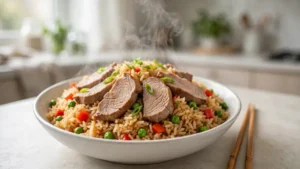
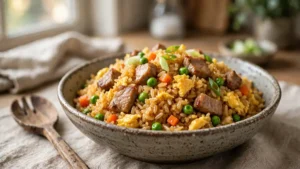
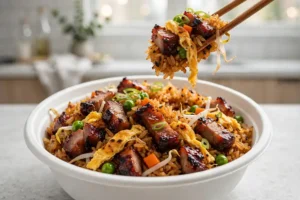
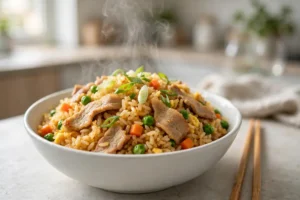
Few dishes carry as much history as Yangzhou fried rice, the golden, multi-ingredient classic from China’s Jiangsu province, also known by its Cantonese name, Yeung Chow fried rice. This Yangzhou fried rice recipe brings that restaurant elegance home: fluffy rice studded with sweet barbecue pork, plump shrimp, golden egg, peas, and scallions, seasoned simply with salt, white pepper, and a whisper of soy. It is refined, balanced, and surprisingly easy.
The secret is restraint. Unlike American takeout fried rice loaded with heavy sauce, the authentic version is lightly seasoned so each ingredient shines. The rice should look pale gold, not brown, and every grain should be separate and glossy.

Menu of Yangzhou Fried Rice Recipe
This Yangzhou fried rice recipe covers the full ingredient list with US measurements, step-by-step instructions, chef notes folded into the steps, a troubleshooting table, substitutions, variations, storage and reheating guidance, and answers to common questions.
Ingredients for Yangzhou Fried Rice Recipe
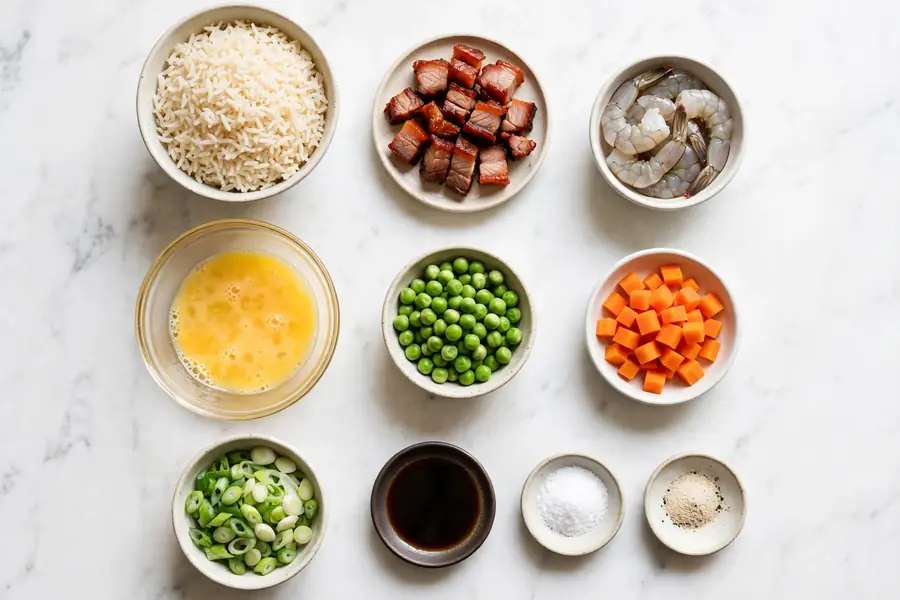
For the Fried Rice
- 3 cups cooked long-grain white rice or jasmine rice, chilled (day-old is best)
- 6 ounces char siu (Chinese barbecue pork), cut into 1/4-inch dice (about 170 g)
- 1/2 pound medium shrimp, peeled, deveined, and cut into 1/2-inch pieces (about 225 g)
- 3 large eggs, lightly beaten
- 3 tablespoons vegetable oil or peanut oil, divided
- 1/2 cup frozen peas, thawed
- 1/2 cup diced carrots, blanched or thawed
- 3 green onions, thinly sliced, white and green parts separated
For the Seasoning
- 1 tablespoon light soy sauce
- 1 teaspoon salt, or to taste
- 1/2 teaspoon white pepper
- 1 teaspoon Shaoxing wine (optional, for the shrimp)
Notes on ingredients: Char siu is the heart of this dish. Find it at Chinese barbecue shops or Asian grocery stores, where it is sold in red-roasted slabs. If you cannot find it, a thick-cut honey-glazed ham is a reasonable stand-in. Light soy sauce is thinner and saltier than regular soy; a small amount gives seasoning without darkening the rice. Use long-grain white rice for the most authentic texture; jasmine rice is a fine alternative with a little more fragrance. Buy shrimp that smell fresh and sweet, and cut larger shrimp into bite-size pieces so they cook evenly. Blanch diced carrots for 2 minutes in boiling water if they are fresh, so they are tender-crisp before they hit the wok. Keep the peas thawed and drained so they do not water down the pan.
You will need: a large wok or 12-inch skillet, a wooden spoon or wok spatula, and a small bowl for the beaten eggs and another for the seasoning.
How to Make Yangzhou Fried Rice Recipe
Step 1: Prep Everything
Dice the char siu into 1/4-inch cubes. Peel and devein the shrimp and cut larger ones into 1/2-inch pieces. Thaw the peas, blanch or thaw the carrots, slice the green onions, and beat the eggs. Break up the cold rice so no clumps remain. This recipe moves fast once the heat is on, so keep everything within reach.
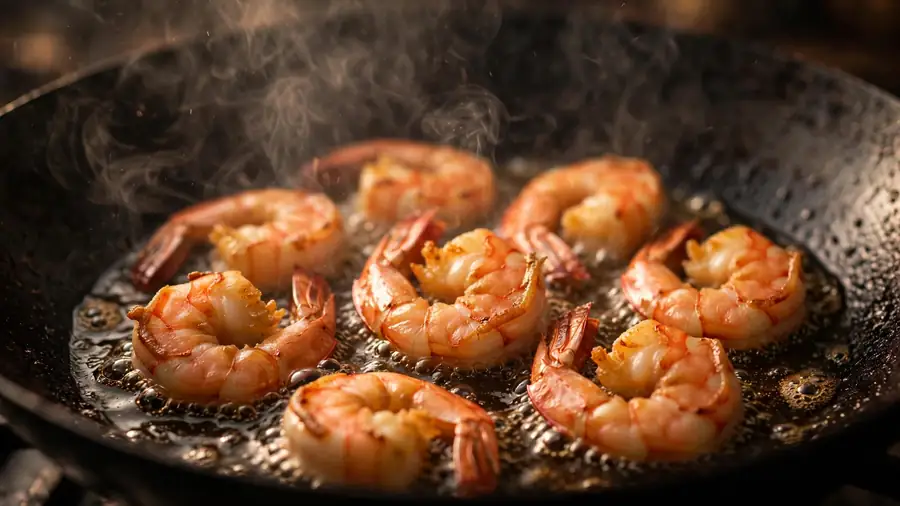
Step 2: Cook the Shrimp
Heat 1 tablespoon of oil in the wok over high heat until it shimmers. Add the shrimp in a single layer and sear 1 to 2 minutes, tossing once, until pink and just curled. If using Shaoxing wine, splash it in now and toss 15 seconds. Remove to a plate. Tip: pull the shrimp early, since they finish cooking when they return to the hot rice; overcooked shrimp turn rubbery and shrink.
Step 3: Scramble the Eggs
Reduce the heat to medium-high and add 1/2 tablespoon of oil. Pour in the beaten eggs and scramble gently into thin shreds, about 30 to 45 seconds, until just set. Move to the plate with the shrimp. Tip: stir gently so the eggs form thin ribbons that weave through the rice, not large chunks.
Step 4: Warm the Pork and Vegetables
Add 1/2 tablespoon of oil and turn the heat back to high. Stir-fry the diced char siu 1 minute until the edges start to caramelize. Add the white parts of the green onions, the peas, and the carrots. Toss 1 minute until heated through and fragrant. Tip: a quick sear caramelizes the sugary edges of the barbecue pork and releases its aroma into the oil.
Step 5: Fry the Rice
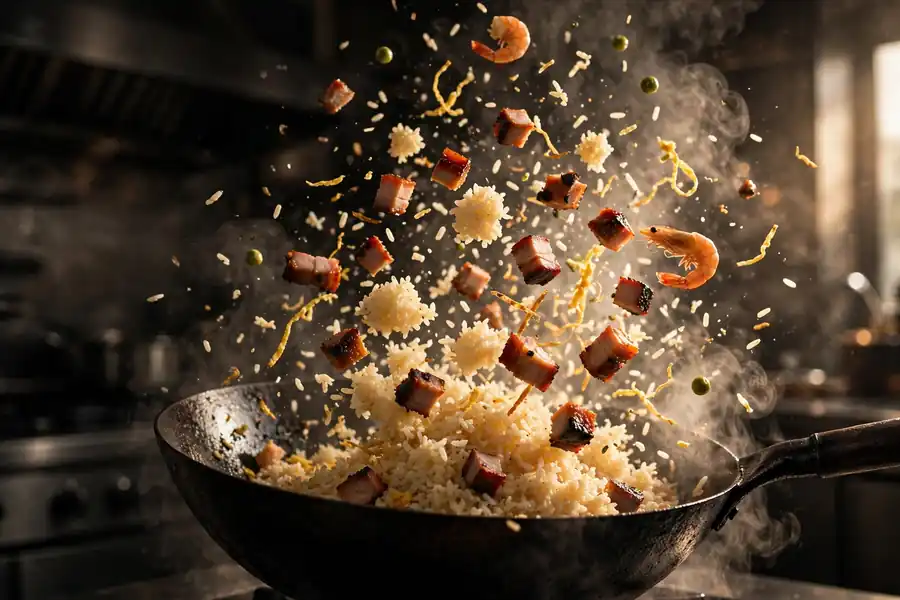
Add the cold rice and the remaining tablespoon of oil. Break up any clumps and stir-fry 3 to 4 minutes, tossing constantly, until the grains are hot through and lightly toasted. Let the rice sit undisturbed for 30 seconds between tosses to develop golden spots and a faint smokiness. The rice must be cold and dry so the grains stay separate.
Step 6: Season and Finish
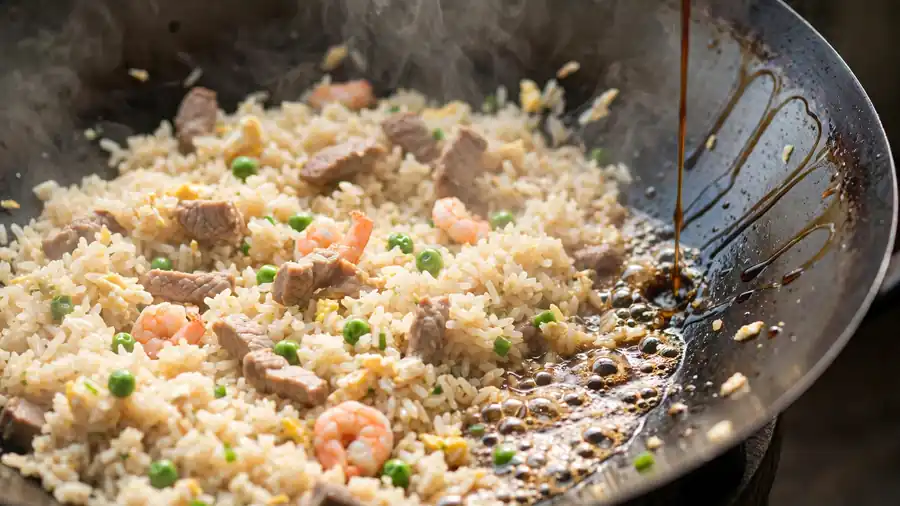
Sprinkle the salt and white pepper evenly over the rice, then drizzle the light soy sauce around the edge of the wok so it sizzles before hitting the rice. Toss 1 minute until every grain is pale gold and glossy. Tip: a light hand with the soy sauce is what separates Yangzhou fried rice from darker American-style versions; the rice should look golden, not brown. Return the shrimp and eggs, add the green parts of the green onions, and toss 30 seconds more. Taste and adjust the salt. Serve immediately.
Common Mistakes and How to Fix Them
| Common Problem | Why It Happens | How to Fix It |
|---|---|---|
| Rice turns dark brown | Too much soy sauce was used | Use only 1 tablespoon of light soy sauce; add salt separately for seasoning |
| Rice turns mushy | Fresh rice was used, or the pan was overcrowded | Use cold, day-old rice and cook in a single layer or in batches |
| Shrimp is rubbery | It was overcooked in the wok | Sear just until pink and let it finish in the hot rice |
| Eggs clump together | The eggs were scrambled into large chunks | Stir gently into thin shreds and keep them small |
| Dish tastes bland | Seasoning was too light or unevenly distributed | Sprinkle salt and pepper evenly over the rice, then taste and adjust |
Ingredient Substitutions
| Original Ingredient | Substitute | Expected Difference |
|---|---|---|
| Char siu | Thick-cut honey ham, diced | Similar sweet-savory flavor, slightly less smoky |
| Shrimp | Diced chicken breast | Heartier; sear 3 to 4 minutes until cooked through |
| Light soy sauce | Regular soy sauce | Darker color; use 2 teaspoons instead of 1 tablespoon |
| Shaoxing wine | Dry sherry | Very close; adds the same aromatic lift |
| White pepper | Black pepper | Sharper bite instead of gentle warmth |
Recipe Variations
- Vegetarian Yangzhou style: Skip the pork and shrimp. Use diced king oyster mushrooms and extra egg, with vegetable stock powder in place of some salt.
- Extra seafood: Add small bay scallops along with the shrimp, seared for just 1 minute per side.
- Mushroom version: Add 1 cup of diced shiitake mushrooms with the vegetables for earthy depth.
- Spicy version: Add 1/2 teaspoon red pepper flakes with the peas and carrots, keeping the light seasoning otherwise.
- Luncheon meat version: Some modern Chinese kitchens use diced luncheon meat instead of char siu. Pan-fry the cubes until golden for a crispy, savory twist.
- Serving idea: Serve as the centerpiece with a simple soup or cucumber salad on the side, as is traditional at Chinese family meals.
Store, Reheat, and Prep Ahead
Cool leftovers within 2 hours and refrigerate in airtight containers for up to 4 days. Freeze portions in freezer bags with the air pressed out for up to 2 months, and thaw overnight in the refrigerator. Discard leftovers that smell sour, feel slimy, or sat at room temperature longer than 2 hours. Because this dish contains pork, shrimp, and eggs, refrigerate it promptly.
To reheat, warm it in a skillet over medium-high heat with a teaspoon of oil, stirring, for 3 to 4 minutes, adding a splash of water if it looks dry. The microwave works too: sprinkle with a tablespoon of water, cover loosely, and heat 2 to 3 minutes, stirring halfway. Reheat leftovers containing pork, shrimp, and eggs to 165 degrees F (74 degrees C) throughout.
For prep ahead, cook the rice a day ahead; that is the single most important prep step. Dice the char siu and store it in the refrigerator for up to 3 days, peel the shrimp and keep them cold for up to 1 day, and blanch the carrots and thaw the peas up to 2 days ahead. Keep the rice separate from the prepped proteins until cooking time.
More Rice Recipes to Try
If you enjoyed this recipe, you will love these other rice dishes from The World of Rice:
- Authentic Chinese Shrimp Fried Rice Recipe: Traditional Technique, Pure Flavor
- Authentic Egg Fried Rice Recipe: Simple, Silky & Perfectly Golden
- Authentic Fried Rice Recipe With Egg: The Traditional Golden Method
- Authentic Japanese Fried Rice Recipe: Real Yakimeshi at Home
Frequently Asked Questions
What makes Yangzhou fried rice different from regular fried rice?
It is seasoned lightly with salt, white pepper, and a little light soy sauce, so the rice stays pale gold. Char siu pork, shrimp, and egg are the classic trio of proteins.
Can I make Yangzhou fried rice without char siu?
Yes. Thick-cut honey ham is the closest substitute. In a pinch, diced cooked pork or even luncheon meat works.
Why is my Yangzhou fried rice brown instead of golden?
Too much soy sauce. The authentic version uses only about a tablespoon of light soy sauce, with salt providing most of the seasoning.
Can I use freshly cooked rice?
It is not recommended. Fresh rice is too moist and turns gummy. Spread fresh rice on a sheet pan and refrigerate uncovered for at least 4 hours if you forgot to cook it ahead.
How should I store leftovers?
Cool within 2 hours and refrigerate in airtight containers up to 4 days. Freeze portions up to 2 months and thaw overnight in the fridge.
Final Thoughts
This Yangzhou fried rice recipe is a reminder that great Chinese cooking is often about restraint. Keep the seasoning light, the rice cold, and the pan hot, and every ingredient gets to shine. Try it this weekend with good char siu from a local shop.
See the dictionary definitions for shrimp and salt.

Prayvista Team is the editorial team behind Prayvista, The World of Rice. The team writes and reviews rice recipes for home cooks, and every article is checked by editor Sara Raza before publishing.