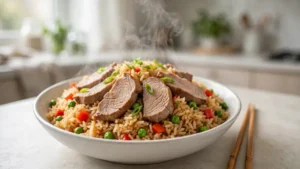
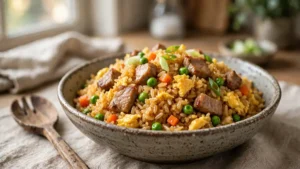
Ground pork is one of the most underrated fried rice ingredients. This Ground Pork Fried Rice Recipe browns the pork into savory crumbles, seasons them with spicy doubanjiang and sweet hoisin, and tosses everything with day-old rice for a dinner that is bold, satisfying, and ready in 25 minutes. Ground meat has a real advantage here: its large surface area browns quickly and soaks up sauce, so every bite carries flavor.

Menu of Ground Pork Fried Rice Recipe
This Ground Pork Fried Rice Recipe covers the full ingredient list with US measurements, step-by-step instructions, why the browning and blooming steps work, chef tips, a troubleshooting table, substitutions, variations, storage and reheating guidance, and answers to common questions.
Ingredients for Ground Pork Fried Rice Recipe
For the Pork
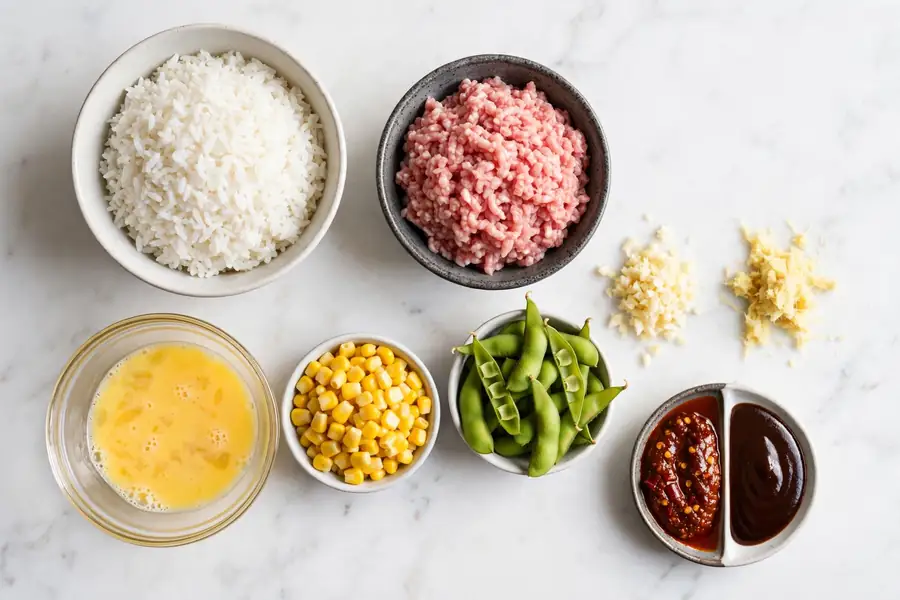
- 1/2 pound ground pork (about 225 g)
- 1 tablespoon doubanjiang (spicy fermented chili bean paste)
- 1 tablespoon hoisin sauce
- 1 teaspoon soy sauce
For the Fried Rice
- 3 cups cooked jasmine rice or long-grain white rice, chilled (day-old is best)
- 2 large eggs, lightly beaten
- 2 tablespoons vegetable oil, divided
- 3/4 cup frozen corn kernels, thawed and patted dry
- 3/4 cup frozen edamame, thawed
- 3 scallions, sliced
- 2 cloves garlic, minced (about 2 teaspoons)
- 1 teaspoon fresh ginger, grated
Notes on ingredients: Ground pork with some fat content, around 80/20, browns best. Very lean pork can taste dry, so avoid extra-lean grinds here. Doubanjiang comes in jars at Asian grocery stores; look for one labeled spicy bean paste with visible chili flakes and fermented soybeans. Thaw the corn and edamame and pat them dry so they do not steam the rice.
You will need: a large wok or 12-inch skillet, a wooden spoon or spatula for breaking up the meat, and a small bowl for the sauce.
How to Make Ground Pork Fried Rice Recipe
Step 1: Prep Everything
Break up the chilled rice so no clumps remain. Thaw and pat dry the corn and edamame. Beat the eggs, slice the scallions, mince the garlic, grate the ginger, and stir the doubanjiang, hoisin, and soy sauce together in a small bowl. Keep everything within reach.
Step 2: Brown the Pork
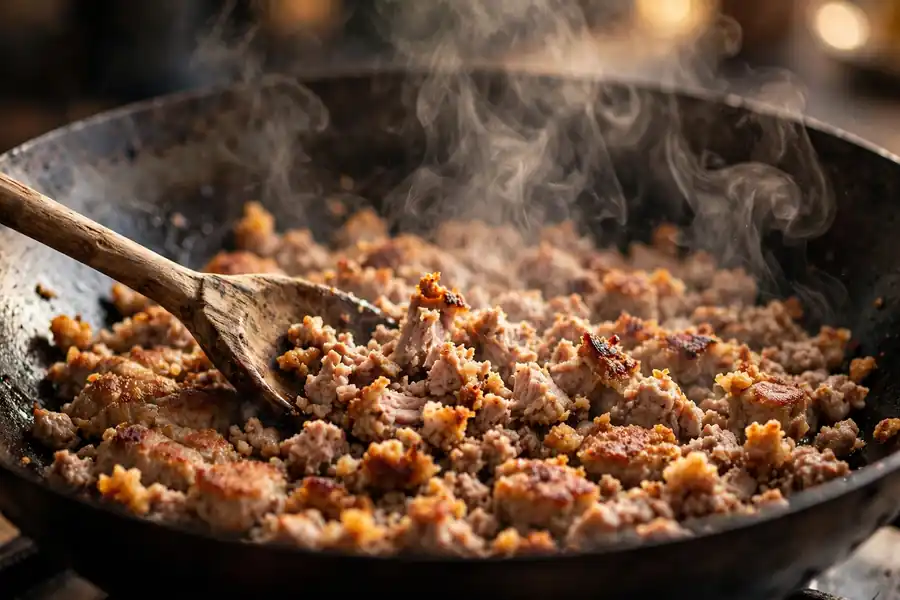
Heat 1 tablespoon of oil in the wok over high heat until shimmering. Add the ground pork in an even layer and let it sit undisturbed for 1 minute to brown. Break it into crumbles with a wooden spoon and cook 3 to 4 minutes total, stirring occasionally, until no pink remains and the edges are crispy. Move to a plate.
Step 3: Bloom the Doubanjiang
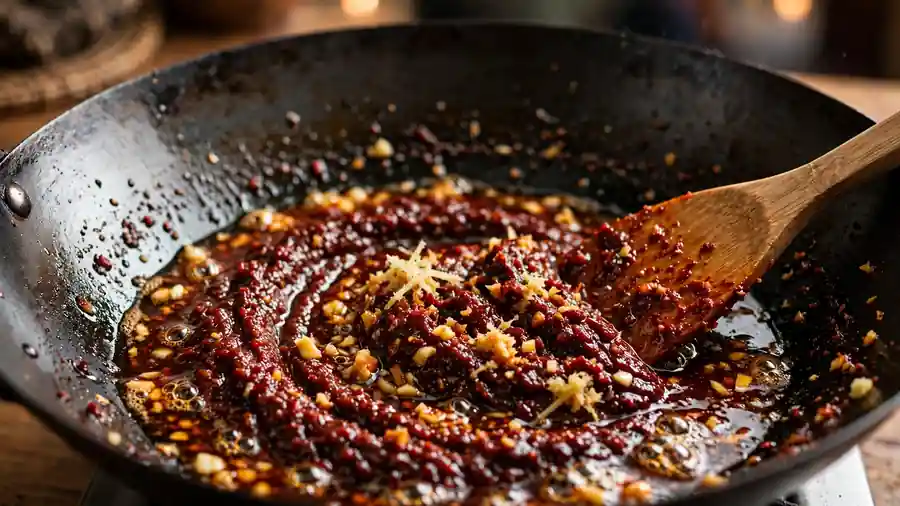
Lower the heat to medium-high. Add the remaining 1 tablespoon of oil, the garlic, and the ginger. Stir 20 seconds until fragrant. Add the doubanjiang mixture and stir 30 seconds until it darkens slightly and smells rich and toasty. This blooming step builds the flavor base.
Step 4: Scramble the Eggs
Push the aromatics to one side. Pour in the beaten eggs and scramble 30 to 45 seconds into soft curds. Stir to combine with the aromatics.
Step 5: Fry the Rice
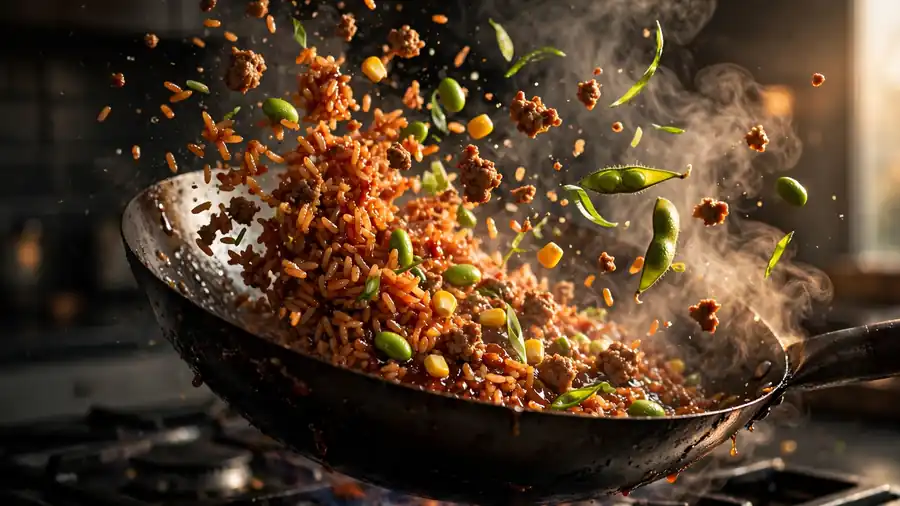
Add the cold rice, corn, and edamame. Toss 3 to 4 minutes over high heat, breaking up clumps, until the grains are hot and starting to toast in spots. The rice will pick up the reddish color from the doubanjiang.
Step 6: Combine and Finish
Return the browned pork to the wok and toss 1 minute until everything is hot and evenly coated. Scatter the scallions over the top, toss once more, and serve immediately, when the pork crumbles are at their crispiest.
Why This Works
- Browning beats steaming. Spreading the meat in an even layer and letting it sit undisturbed for a minute creates caramelized bits, instead of the gray, steamed texture that constant stirring produces.
- Blooming wakes up the paste. Stirring doubanjiang into hot fat for 30 seconds deepens its flavor. Rice added after this step absorbs the seasoned fat evenly.
- Two salty sauces need tasting, not more salt. Doubanjiang and hoisin carry most of the salt, so taste the finished rice before reaching for extra soy sauce.
- Cold rice keeps it fluffy. Chilled day-old rice fries up separate and toasty; fresh or wet vegetables steam it instead.
Chef’s Tips for the Best Results
- Do not stir the pork right away. That first minute of undisturbed contact creates the browned crust that makes the crumbles taste meaty instead of steamed.
- Bloom the doubanjiang. Thirty seconds in hot oil transforms it from harsh to deeply savory. Skipping this step leaves the heat raw and one-dimensional.
- Drain excess fat if needed. Ground pork releases fat as it browns. If more than a tablespoon pools in the pan, spoon some off before adding the aromatics.
- Taste before adding salt. Doubanjiang and hoisin are both salty. Taste the finished rice before reaching for extra soy sauce.
Common Mistakes and How to Fix Them
| Common Problem | Why It Happens | How to Fix It |
|---|---|---|
| Pork is gray and steamy, not browned | Stirred too soon, or pan overcrowded | Let it sit 1 minute undisturbed in a hot pan; cook in batches if needed |
| Dish is too salty | Extra soy sauce added on top of salty pastes | Taste before seasoning; the doubanjiang and hoisin carry most of the salt |
| Doubanjiang tastes harsh | Added without blooming, or too much used | Bloom 30 seconds in hot oil; start with 1 tablespoon |
| Rice is soggy | Fresh rice, or corn and edamame went in wet | Use chilled day-old rice; thaw and pat dry the vegetables |
| Pork crumbles are dry | Extra-lean pork, or overcooked | Use 80/20 ground pork and remove it as soon as no pink remains |
Ingredient Substitutions
| Original Ingredient | Substitute | Expected Difference |
|---|---|---|
| Ground pork | Ground chicken or turkey | Lighter and leaner; add an extra teaspoon of oil |
| Doubanjiang | 2 tsp chili garlic sauce plus 1 tsp miso | Similar heat with less fermented depth |
| Hoisin sauce | 1 tbsp barbecue sauce plus 1/2 tsp soy sauce | Sweeter and smokier, less complex |
| Edamame | Frozen peas | Sweeter and softer, similar color |
| Jasmine rice | Long-grain white rice | Less fragrant but equally fluffy |
Recipe Variations
Mapo Style: Add 1/2 block of cubed soft tofu with the rice for a mapo tofu fried rice hybrid.
Lettuce Cups: Serve the fried rice in crisp lettuce cups with extra scallions for a fun, lighter presentation.
Sweet Corn Extra: Double the corn and add 1/2 cup diced bell pepper for a sweeter, more colorful version.
Non-Spicy: Skip the doubanjiang and double the hoisin for a mild, kid-friendly version.
Store, Reheat, and Prep Ahead
Cool leftovers within 2 hours and refrigerate in airtight containers up to 4 days. Freeze portions up to 2 months in sealed freezer bags with the air pressed out; thaw overnight in the refrigerator. Discard leftovers that smell off or sat at room temperature more than 2 hours. Ground pork must reach 160 degrees F (71 degrees C) during cooking; reheat leftovers to 165 degrees F (74 degrees C).
To reheat, use a skillet: heat a teaspoon of oil over medium-high heat, add the cold rice, and stir-fry 3 to 4 minutes until steaming, adding a splash of water if dry. The pork crumbles crisp up again nicely. The microwave works for speed: sprinkle with a tablespoon of water, cover loosely, and heat 2 minutes, stirring halfway.
For prep ahead, thaw and dry the corn and edamame up to 2 days ahead, mince the garlic and ginger the day before, mix the sauce ingredients and keep them in a jar up to a week, and cook the rice a day ahead.
More Rice Recipes to Try
If you enjoyed this recipe, you will love these other rice dishes from The World of Rice:
- Authentic Pork Fried Rice Recipe: Cantonese Homestyle Comfort
- Bbq Pork Fried Rice Recipe: Sweet, Smoky & Takeout Style
- Best Pork Fried Rice Recipe: Smoky, Savory & Better Than Takeout
- Chinese Pork Fried Rice Recipe: Classic Takeout Style at Home
Frequently Asked Questions
What is doubanjiang, and where do I buy it?
Doubanjiang is a spicy fermented chili bean paste central to Sichuan cooking. Find it in jars at Asian grocery stores or online. It keeps for months in the refrigerator after opening.
Can I use ground chicken instead of ground pork?
Yes. Ground chicken or turkey both work. They are leaner, so add an extra teaspoon of oil and watch that the crumbles do not dry out.
How spicy is this dish?
Moderately spicy. One tablespoon of doubanjiang gives a pleasant warmth. Reduce to 2 teaspoons for mild, or add chili oil at the table for more heat.
Can I make this without the spicy bean paste?
Yes. Replace the doubanjiang with 2 teaspoons of chili garlic sauce plus 1 teaspoon of miso, or skip it and double the hoisin for a mild version.
What if I do not have day-old rice?
Spread freshly cooked rice on a tray in a thin layer and cool it for at least 30 minutes, or chill it uncovered in the refrigerator. Drier, cooler rice fries up far better than warm, moist rice.
Final Thoughts
This Ground Pork Fried Rice Recipe proves that ground meat and a spoonful of the right paste can carry a whole dinner. Brown the pork well, bloom the doubanjiang, use cold rice, and season with care.
See the dictionary definitions for soy sauce and jasmine rice.

Prayvista Team is the editorial team behind Prayvista, The World of Rice. The team writes and reviews rice recipes for home cooks, and every article is checked by editor Sara Raza before publishing.