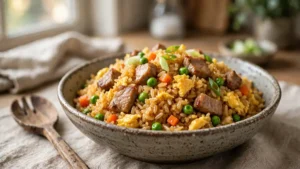
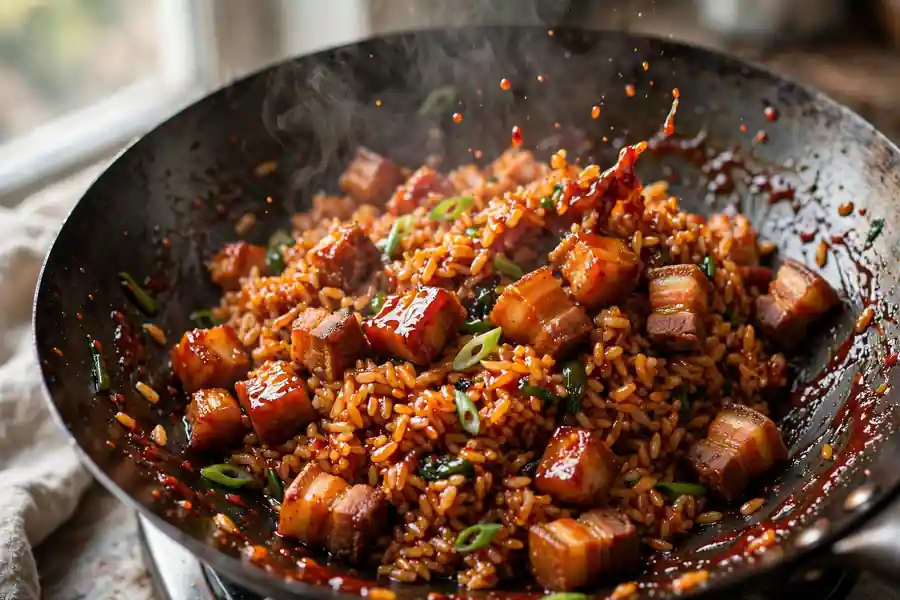
Pork belly turns fried rice into something special. This Pork Belly Fried Rice Recipe starts with slow-crisped cubes of pork belly, then fries day-old rice in the rendered fat until the edges turn golden. The result is rich, savory, and deeply satisfying, with crispy bits of pork in every bite.
Pork belly needs a different approach than lean pork. It renders slowly over medium heat, and patience rewards you with crackling edges and melting centers. A touch of gochujang in the sauce adds gentle heat and sweetness that cuts through the richness beautifully.
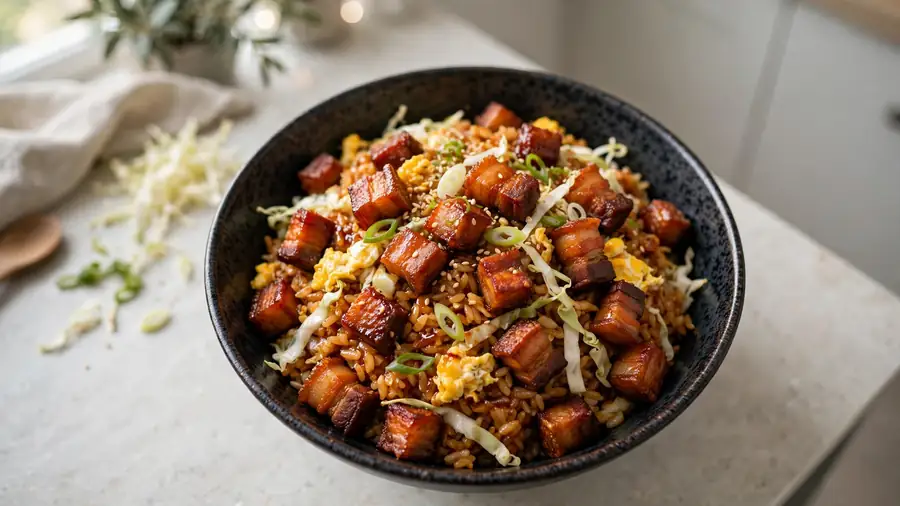
Why You’ll Love This Pork Belly Fried Rice Recipe
The pork belly is the star. Crisp edges and melting centers make every bite interesting.
The flavor is restaurant quality. Rendered pork fat fried rice tastes like something from a good Korean or Chinese kitchen.
The heat is balanced. A little gochujang adds warmth without overpowering the pork.
It is a showstopper. This is the fried rice you make when you want to impress.
Leftovers are amazing. The flavors deepen overnight, making lunch the next day a treat.
What Makes This Recipe Work?
Pork belly works when you render it low and slow first, then finish it hot. Starting the cubes in a cold pan over medium heat lets the fat melt out gradually. Once most of the fat has rendered, you crank the heat and crisp the edges. Rushing this step leaves you with flabby, greasy cubes.
The second principle is acid and heat as balance. Pork belly is rich, so the sauce includes gochujang for gentle heat and rice vinegar for brightness. Without that contrast, the dish would feel heavy.
Menu of Pork Belly Fried Rice Recipe
This Pork Belly Fried Rice Recipe covers why it works, the full ingredient list with US measurements, how to choose the best pork belly and rice, the tools that help, step-by-step instructions, chef tips, a troubleshooting table, substitutions, variations, storage and reheating guidance, nutrition estimates, and answers to common questions.
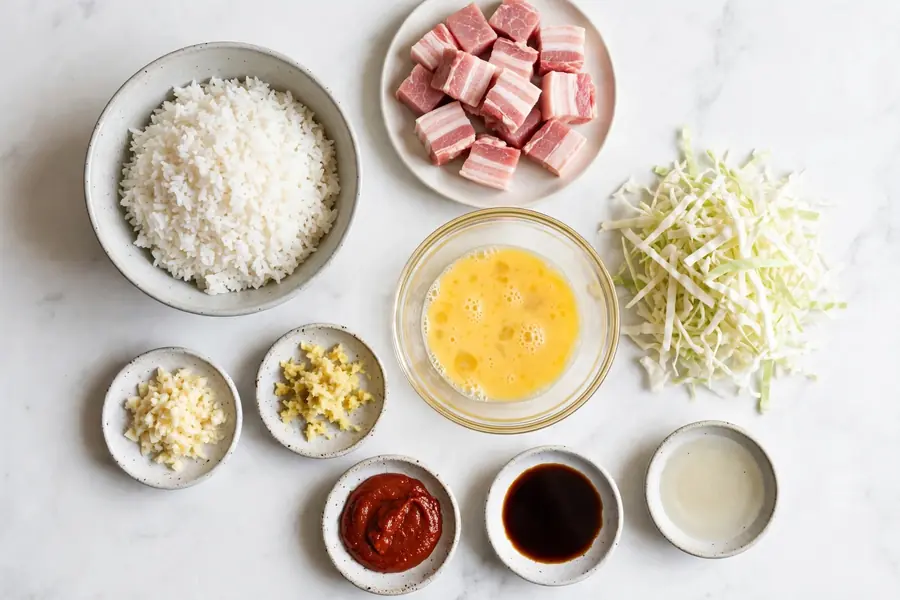
Ingredients for Pork Belly Fried Rice Recipe
For the Pork Belly
- 3/4 pound pork belly (about 340 g), skin removed if attached, cut into 3/4-inch cubes
- 1/2 teaspoon kosher salt
- 1/4 teaspoon black pepper
For the Fried Rice
- 3 cups cooked short-grain or jasmine rice, chilled (day-old is best)
- 2 large eggs, lightly beaten
- 1 cup shredded cabbage or chopped kimchi, drained
- 3 scallions, sliced
- 3 cloves garlic, minced (about 1 tablespoon)
- 1 teaspoon fresh ginger, grated
For the Sauce
- 1 tablespoon gochujang (Korean chili paste)
- 1 tablespoon soy sauce
- 1 teaspoon rice vinegar
- 1 teaspoon toasted sesame oil
- 1 teaspoon honey or sugar
Cut the pork belly into even cubes so they render at the same rate. If the belly has skin, remove it, since skin does not crisp well in this quick application.
Best Ingredients to Use
Look for pork belly with a good balance of meat and fat, not a solid slab of fat. Asian grocery stores often sell it sliced or in whole pieces; either works as long as you can cube it. Fresh is better than frozen for even rendering, but thawed belly works fine.
Gochujang is the soul of the sauce. It brings heat, sweetness, and fermented depth in one spoonful. Find it in the international aisle or at Asian markets. Short-grain rice gives a pleasantly chewy result, while jasmine keeps things classic and separate.
Kitchen Tools You’ll Need
- A large wok or heavy 12-inch skillet. Good heat retention matters for crisping.
- Tongs for turning the pork belly cubes.
- Paper towels on a plate for draining the crisped pork.
How to Make Pork Belly Fried Rice Recipe
Step 1: Prep Everything
Cut the pork belly into 3/4-inch cubes and toss with the salt and pepper. Break up the chilled rice so no clumps remain. Beat the eggs, shred the cabbage, slice the scallions, mince the garlic, grate the ginger, and whisk the sauce ingredients together in a small bowl.
Step 2: Render the Pork Belly
Place the pork cubes in a cold wok or skillet in a single layer. Set over medium heat and cook 8 to 10 minutes, turning occasionally, until the fat has rendered and the cubes are golden on most sides. The pan will fill with liquid fat; this is expected. Turn the heat to high and cook 2 to 3 minutes more, until the edges are deeply browned and crisp.

Step 3: Drain and Set Aside
Lift the crisped pork belly out with a slotted spoon or tongs onto a paper-towel-lined plate. Pour off all but about 2 tablespoons of the rendered fat. Keep the heat on, since the next steps move quickly.
Step 4: Eggs and Aromatics
Add the beaten eggs to the hot fat and scramble 30 to 45 seconds into soft curds. Push them aside, add the garlic and ginger, and stir 20 seconds until fragrant. Add the cabbage and stir-fry 2 minutes until it softens and picks up some color.
Step 5: Fry the Rice
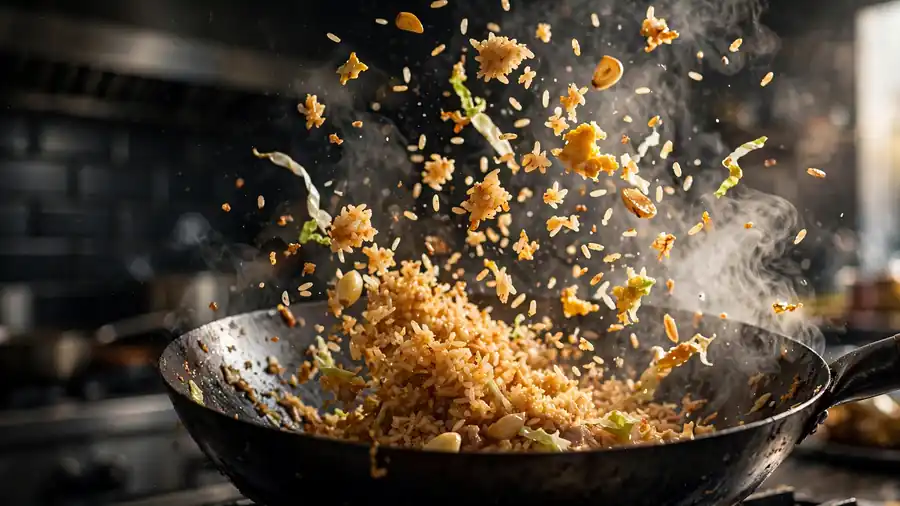
Add the cold rice and toss 3 to 4 minutes over high heat, breaking up clumps, until the grains are hot and the edges start to crisp in the pork fat. Those golden, slightly crunchy bits are the best part.
Step 6: Sauce and Finish
Pour the gochujang sauce evenly over the rice and toss 1 to 2 minutes until every grain is coated in a glossy, reddish glaze. Return the pork belly to the wok and toss 30 seconds. Scatter the scallions over the top and serve hot. This Pork Belly Fried Rice Recipe is rich, so modest portions go a long way.
Chef’s Tips for the Best Results
Be patient with the rendering. Ten minutes of medium heat gives you crisp, golden cubes. Rushing over high heat browns the outside while the inside stays flabby.
Drain most of the fat. Two tablespoons is plenty to fry the rice. Leaving all the rendered fat in the pan makes the dish greasy instead of rich.
Balance the gochujang. Taste the sauce before it hits the pan. If your gochujang is very hot, use 2 teaspoons instead of a full tablespoon.
Serve it hot and fresh. Crisp pork belly softens as it sits. Get it to the table quickly for the best texture contrast.
Common Mistakes and How to Fix Them
| Common Problem | Why It Happens | How to Fix It |
|---|---|---|
| Pork belly is flabby, not crisp | Heat too high too fast, or rendering rushed | Start in a cold pan over medium heat; crisp at high heat only at the end |
| Dish is greasy | Too much rendered fat left in the pan | Pour off all but 2 tablespoons of fat before frying the rice |
| Rice is soggy | Fresh rice, or cabbage added wet | Use chilled day-old rice; drain kimchi or pat cabbage dry |
| Sauce tastes too hot | Too much gochujang for your brand’s heat level | Start with 2 teaspoons, taste, and add more |
| Pork belly burns | Left unattended during the final crisping | Turn the cubes regularly during the last 2 to 3 minutes |
Ingredient Substitutions
| Original Ingredient | Substitute | Expected Difference |
|---|---|---|
| Pork belly | Thick-cut bacon, chopped | Less rich and meaty; renders faster, so shorten cook time |
| Gochujang | 2 tsp chili garlic sauce plus 1 tsp miso | Similar heat with less fermented sweetness |
| Rice vinegar | Apple cider vinegar | Slightly fruitier; use the same amount |
| Cabbage | Kimchi, well drained | Tangier and spicier; reduce gochujang slightly |
| Honey | Brown sugar | Nearly identical sweetness in the sauce |
Recipe Variations
Pork Belly and Kimchi: Replace the cabbage with 1 cup of chopped kimchi for a tangy, classic Korean pairing.
Pork Belly and Pineapple: Add 1/2 cup diced pineapple with the rice to cut the richness with sweetness.
Crispy Pork Belly Bao Style: Serve the fried rice with extra pork belly on top and a drizzle of hoisin.
Spicy Extra: Double the gochujang and finish with sliced fresh chilies and a drizzle of chili oil.
Practical Cooking Scenario
Imagine pork belly from the weekend market and rice left from last night, with friends coming over in an hour. Render the belly slowly while you prep everything else. The whole dish takes about 35 minutes, and the crispy pork makes it feel special enough for guests. Double the rice but not the pork if you need to stretch it; the flavored fat carries the dish.
Storage and Food Safety
Cool leftovers within 2 hours and refrigerate in airtight containers up to 4 days. Freeze portions up to 2 months in sealed freezer bags with the air pressed out; thaw overnight in the refrigerator. Pork belly is fatty, so a layer of solidified fat on top of cold leftovers is normal; it melts back in during reheating. Discard leftovers that smell off or sat at room temperature more than 2 hours. Reheat to 165 degrees F (74 degrees C).
How to Reheat Pork Belly Fried Rice Recipe
The best way to reheat this Pork Belly Fried Rice Recipe is in a skillet. Heat a teaspoon of oil over medium-high heat, add the cold rice, and stir-fry 3 to 4 minutes until steaming and re-crisped. This brings back the texture better than any other method.
The microwave works in a pinch. Place rice in a bowl, sprinkle with a tablespoon of water, cover loosely, and heat 2 minutes, stirring halfway. Heat all the way through to 165 degrees F (74 degrees C).
Meal Prep Tips
Cube the pork belly up to 2 days ahead and keep it covered in the fridge. Cook the rice a day ahead. Shred the cabbage and mix the sauce a day or two in advance. For the best pork texture, cook the belly fresh and combine it with prepped components; fully cooked portions still keep 4 days refrigerated.
Nutrition Information
Approximate nutrition per serving (makes 4 servings): 640 calories, 22 g protein, 56 g carbohydrates, 34 g fat, 3 g fiber, 720 mg sodium. These are estimates only. This is a rich dish, so smaller portions alongside a vegetable side make a balanced meal.
More Rice Recipes to Try
If you enjoyed this recipe, you will love these other rice dishes from The World of Rice:
- Authentic Pork Fried Rice Recipe: Cantonese Homestyle Comfort
- Bbq Pork Fried Rice Recipe: Sweet, Smoky & Takeout Style
- Best Pork Fried Rice Recipe: Smoky, Savory & Better Than Takeout
- Chinese Pork Fried Rice Recipe: Classic Takeout Style at Home
Frequently Asked Questions
Can I use bacon instead of pork belly?
Yes. Chop thick-cut bacon and render it the same way, but shorten the cooking time since bacon renders faster. The result is smokier and less meaty.
Where do I buy pork belly?
Asian grocery stores, butcher shops, and many large supermarkets carry it. Look for a piece with a good mix of meat and fat, and ask the butcher to remove the skin if you prefer.
What is gochujang, and is there a substitute?
Gochujang is a Korean fermented chili paste that is spicy, sweet, and savory. Chili garlic sauce mixed with a little miso is the closest substitute.
How do I keep the pork belly crispy?
Render it slowly, crisp it at high heat at the end, drain it well, and add it back to the rice only in the final minute. Serve immediately.
Can I use leftover cooked pork belly?
Yes. Cut already-cooked pork belly into 3/4-inch cubes and crisp it in a hot skillet for 4 to 5 minutes, turning so all sides brown, then use it exactly as in Step 3 onward. It renders less fat this way, so add a little oil if the pan looks dry.
Can I make pork belly fried rice ahead of time?
Yes, it keeps 4 days refrigerated. Reheat in a hot skillet to re-crisp the rice and pork. The pork will be slightly less crisp than fresh.
Final Thoughts
This Pork Belly Fried Rice Recipe rewards patience: render low and slow, crisp hot at the end, drain the fat, and balance the richness with gochujang and vinegar. Serve it hot, while the pork is still crisp.
See the dictionary definitions for salt and pepper.

Prayvista Team is the editorial team behind Prayvista, The World of Rice. The team writes and reviews rice recipes for home cooks, and every article is checked by editor Sara Raza before publishing.